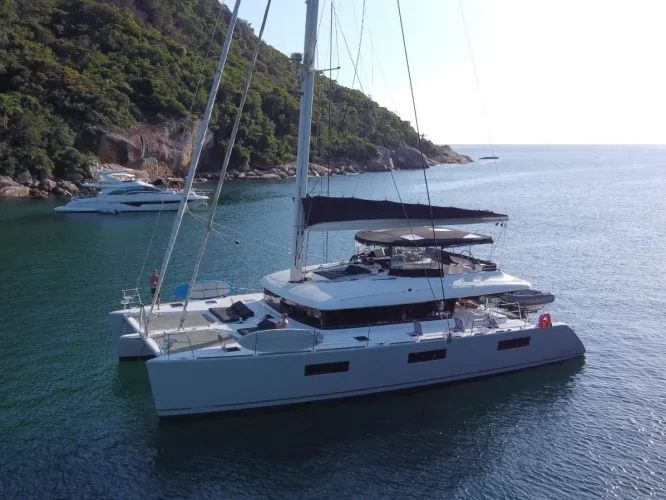
Brazil's charter fleet is not in Rio. All 22 boats lie in the Costa Verde, the stretch of coast west of the city where Ilha Grande and a scatter of smaller islands shelter a bay roughly sixty miles across: fourteen at Paraty at the western end, seven at Angra dos Reis. It is one of the most protected pieces of water in the Atlantic, because the big island and its neighbours break the ocean swell before it reaches you.
Two things about the season run against instinct. The first is timing. This is the southern hemisphere, so you might reasonably book December to February — but that is the rainy period here, when the downpours are heaviest, and the better months are April to September, with April–May and September–November the sweet spots. The second is wind. The Costa Verde sits below the trade wind belt, which means strong breeze is the exception rather than the rule: light airs and calms are common, and the prevailing south-easterly rarely blows hard. If you are coming for the sailing itself you may be disappointed; if you are coming for a sheltered bay full of islands, warm water and a town like Paraty at the end of it, this is unusually easy cruising, and a reasonable place to learn.
Brazil does ask for a certificate. At least one person on board must be a qualified skipper over 21, and the accepted qualifications are the Brazilian grades — Arrais Amador, Mestre Amador, Capitão Amador — or a certificate from a recognised sailing association, an ICC or an IPC. A licence issued by the maritime authority of your own country is accepted.
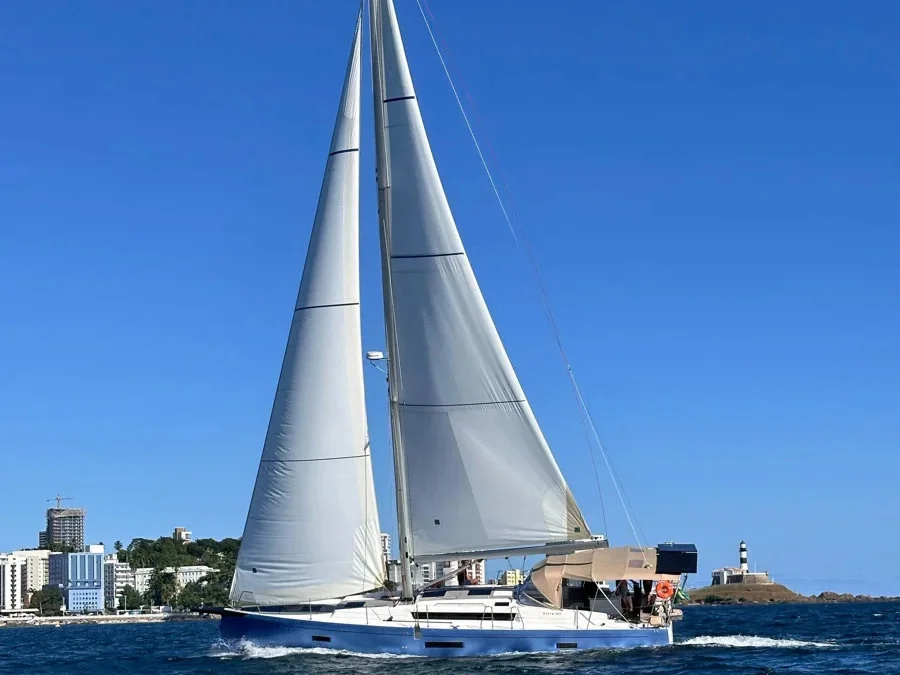
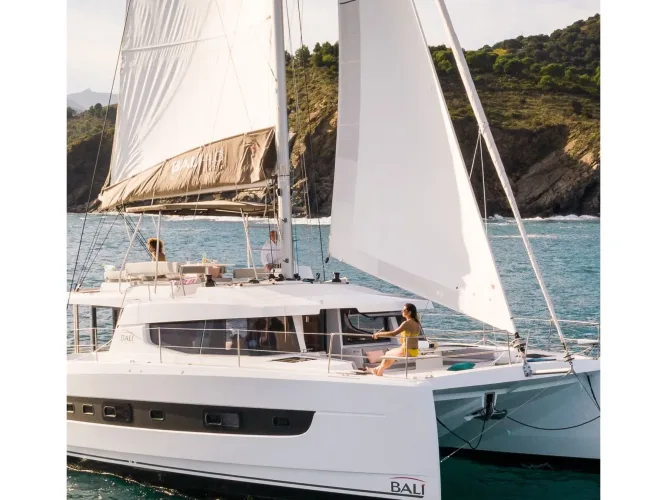
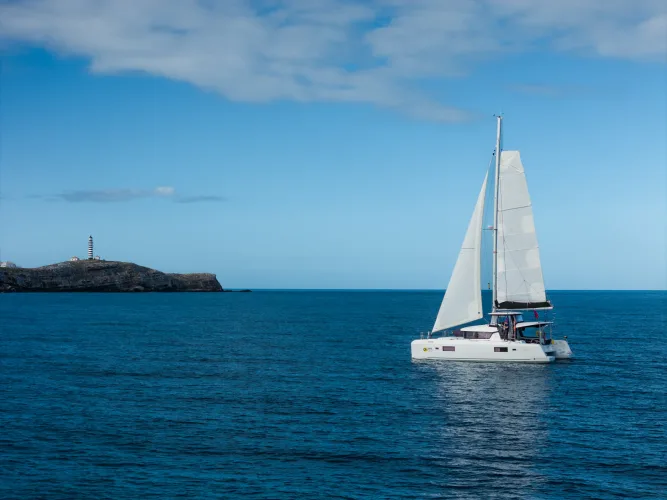
The fleet averages 13.2 metres and 3.5 cabins with an average build year of 2022, split almost evenly between monohulls and catamarans. Changeover is Saturday throughout.