Sailnboat
West Coast Central America

Ecuador

Yacht charter in West Coast Central America

43 yachts available in West Coast Central America. Departing from 2 marinas. Prices from €16,330 per week.

  • 43
    Yachts available
  • €16,330
    From / week
  • 2
    Marinas & bases

Practical info

Chartering from West Coast Central America: the basics

Charter week
Saturday to Saturday

39% of the bookings in our calendar start on a Saturday.

Departure marinas
2

Bases you can start the week from.

Licence needed?
Not always

43 boats here can be booked with a professional skipper, so no licence is required.

On the water

Sailing conditions in West Coast Central America

Where the boats actually are
43 in the Galápagos, 13 in Mexico

36 at Baltra, 7 at San Cristóbal, 10 at La Paz, 3 at Puerto Vallarta. About 1,500 nautical miles apart — not combinable.

Galápagos: the route is fixed
Pre-approved park itinerary

Every vessel runs an itinerary approved in advance. You pick the boat and the dates; the national park determines the islands and the landings.

A naturalist guide is mandatory
Aboard for the whole charter

Licensed, and a separate role from the captain. All visits to protected areas must be accompanied, and the guide clears each landing with a park officer.

Lead time
Six to twelve weeks of paperwork

Park permits, regulated landing slots and mandatory biosecurity inspection. This is not a destination you book at short notice.

The vessels
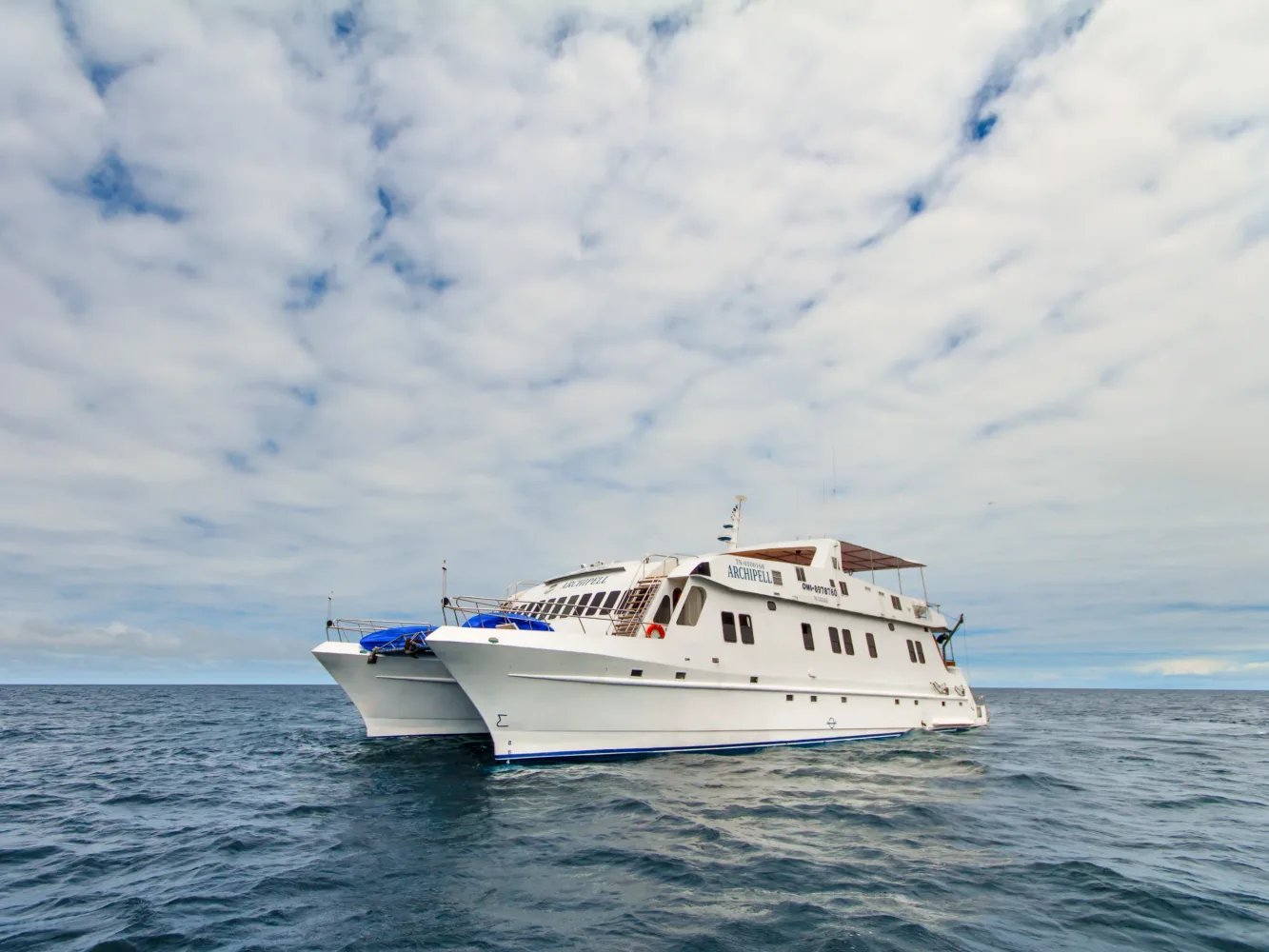
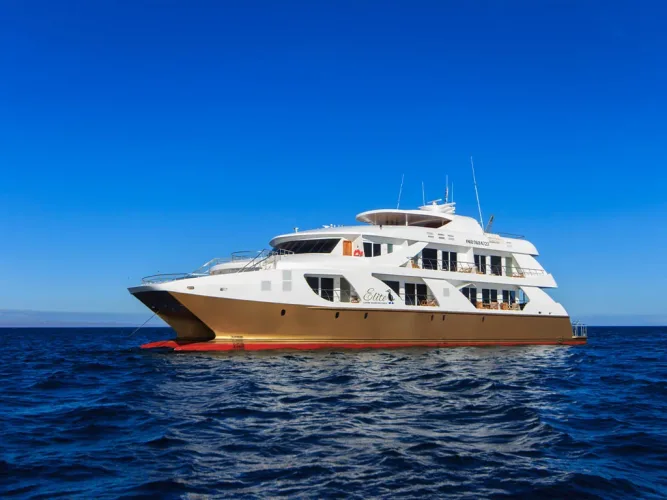
30.2 m average, 49 of 56 crewed

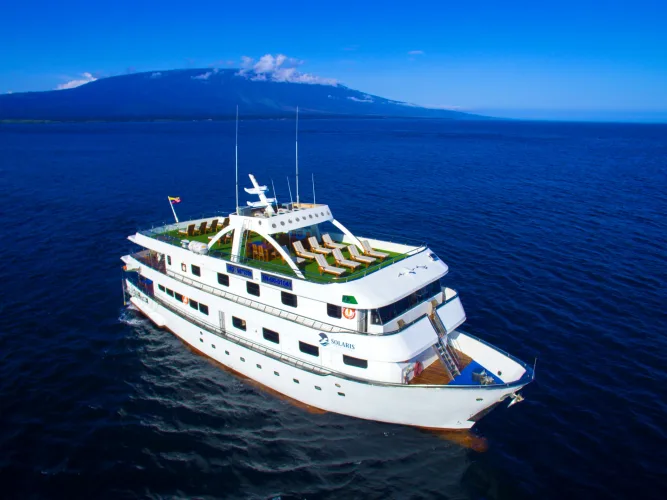
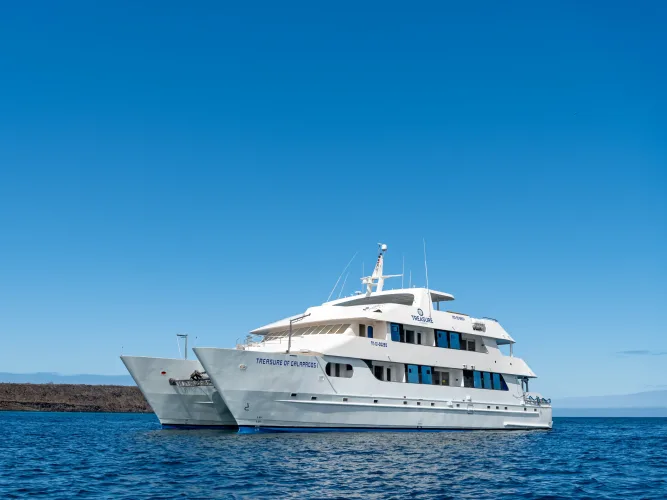
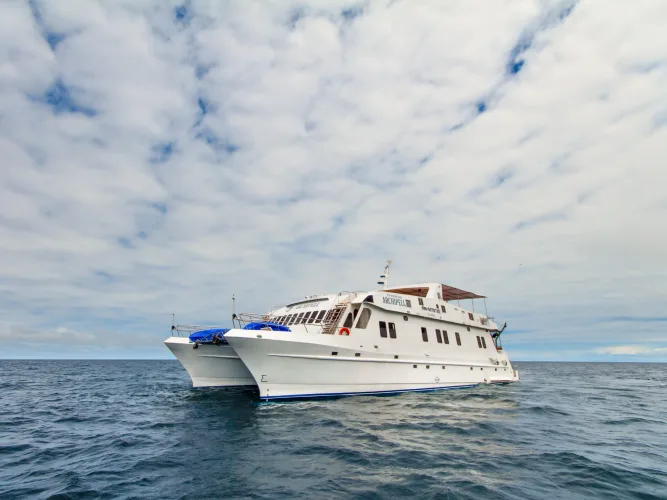
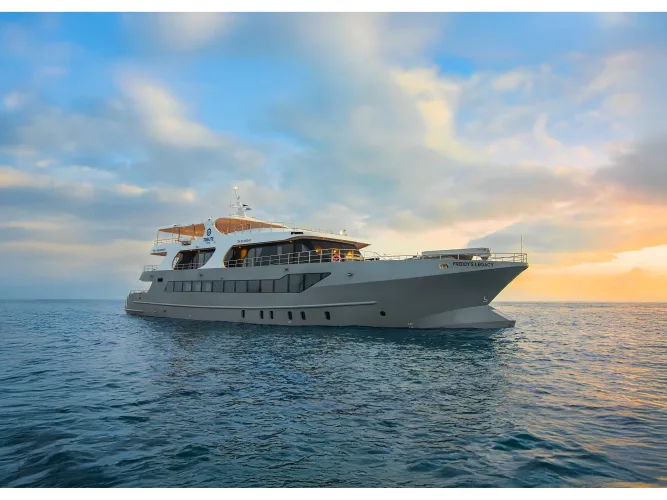
Licensed expedition yachts rather than charter yachts. You buy out the whole boat for your party; rates run from about €4,900 to €147,000 a week.

Mexico is a normal market
Bareboat, October – May

13 catamarans in the Sea of Cortez and Banderas Bay, with wildlife seasons rather than permits driving the dates. See the Mexico page.

Worth the detour

Where to drop anchor in West Coast Central America

  • 1

    Baltra and the central islands

    Thirty-six boats start here, beside the airport that serves Santa Cruz. The central group — Santa Cruz, Santa Fé, South Plaza, Seymour Norte — is the most common first part of a fixed itinerary.

  • 2

    San Cristóbal

    The eastern island and the other embarkation point, with sea lions on the town waterfront and Kicker Rock offshore. Seven of our boats are based here.

  • 3

    Española

    The oldest island and the only nesting site of the waved albatross. A landing site with strict ratios and limited slots — whether you get it depends on your vessel's approved route.

  • 4

    Isabela and Fernandina

    The young western islands, still volcanically active, with flightless cormorants and the largest marine iguanas. The western itineraries are the ones serious naturalists choose.

  • 5

    Genovesa

    A caldera in the far north-east, entered through a breach in the crater wall, with vast seabird colonies. Reaching it requires a northern route and an overnight passage.

  • 6

    Why the animals do not run

    Not a highlight so much as the explanation: controlled numbers, fixed paths and licensed guides for decades. The restrictions are the attraction.

  • 7

    Espíritu Santo, Mexico

    The other half of this region: red volcanic islands off La Paz with a sea lion colony at Los Islotes. Bareboat and self-planned, and a completely different proposition.

  • 8

    Banderas Bay, Mexico

    Three boats at Puerto Vallarta, with humpbacks from December to March and the Marietas islands at the bay's northern corner.

Suggested routes

A week out of West Coast Central America

A Galápagos week — what is actually fixed

7 days

This is a shape rather than a route, because your vessel's approved itinerary decides the islands. The daily rhythm, however, is the same on every licensed boat.

  1. 1

    Baltra or San Cristóbal

    Fly in, biosecurity inspection, park fees, boarding. The naturalist briefs the week over dinner.

  2. 2

    First landings

    Panga ashore before breakfast, a guided walk, snorkelling from the tender before lunch. Two visitor sites a day is the norm.

  3. 3

    A longer passage island

    Most routes include at least one overnight steam to reach a group the day boats cannot.

  4. 4

    The far point

    Depending on the approved route: the west for volcanoes and cormorants, the north-east for seabirds, the south-east for albatross.

  5. 5

    Snorkelling day

    Sea lions, turtles, rays and — in the right channels — hammerheads. From the tender, with the guide in the water.

  6. 6

    Working back

    Toward the embarkation island, usually with a highland visit on Santa Cruz or the tortoise reserve.

  7. 7

    Disembark

    Morning transfer to the airport. No flying-after-diving issue unless you have been diving, which most itineraries do not.
Find a boat for this route

Before you book

Local rules and paperwork in West Coast Central America

No bareboat in the Galápagos
Licensed vessels and crews only. There is no self-skippered option. No licence or sailing resume is needed from you; the captain, crew and naturalist are part of what you are buying.
Licensed naturalist guide
Required for every visit ashore. All visitors to protected areas must be accompanied. The guide is a separate role from the captain and is aboard for the duration.
The itinerary is pre-approved
You cannot change it. Vessels must comply with their park itinerary, and landing slots are allocated. If a particular island matters to you, choose a boat whose approved route includes it — you cannot add it later.
Permits and biosecurity
Six to twelve weeks of lead time. Park approvals, regulated landings and mandatory inspections. Book early; short-notice Galápagos charters essentially do not exist.
Visitor ratios ashore
Enforced at every site. Strict passenger-to-guide ratios at landing sites, which is why groups move in small parties on marked paths. Expect to be told where to stand, and why.
Mexico is a separate booking
Different country, different rules. The 13 Mexican boats are conventional charters with wildlife seasons rather than permits. Confirm which half of this region holds your boat before booking flights.

Checked October 2026. Rules change — confirm the detail that matters for your trip when you book.

What is here

The West Coast Central America fleet at a glance

The fleet in West Coast Central America is made up of 40 catamarans and 3 motor yachts.

Most boats here are catamarans, averaging 35.6 metres.

Weekly prices start in the over €12,000 range, where 29 boats are listed.

Boats sleep between 2 and 18 guests, with cabins up to 11.

The most common size band is over 20 m, with 43 boats.

43 boats can be chartered with a skipper; 0 are available bareboat.

The fullest month on the calendar right now is Nov 2026: 23% of the fleet already has at least one booking, while 33 boats are still completely open.

Budget

Charter prices in West Coast Central America

Weekly rate, set by the operator. No booking fee.

Space on board

Boat sizes

Sleeping 2–18 guests

  • over 20 m 43

Availability

How full is the calendar in West Coast Central America?

Share of the West Coast Central America fleet that already holds at least one reservation, for each of the next twelve months. Taken from the operators' own calendars and refreshed daily — a boat with one week booked can still be chartered in the others.

Months further out look emptier simply because they are further away — most charters are booked a few months ahead, not a year.

Most booked month

Nov 2026

23% of the fleet already booked

Most still open

Feb 2027

41 boats with no booking yet

Most common models in West Coast Central America

Counted from our live catalogue.

About the destination

Why charter from West Coast Central America

The region name is misleading and the data says so plainly. Of the 56 boats here, 43 are in the Galápagos — 36 at Baltra and 7 at San Cristóbal — and the remaining 13 are in Mexico, at La Paz and Puerto Vallarta, roughly 1,500 nautical miles further north. These are two destinations sharing a label, not one cruising ground.

The Galápagos half is unlike anything else in this guide, and the single most important thing to understand is that you do not plan the route. Every vessel operates a pre-approved national park itinerary, and the route is fixed. A licensed naturalist guide must be aboard for the whole charter — a separate role from the captain, running the daily programme and clearing each landing with a park officer. Landing slots are regulated, passenger-to-guide ratios at the sites are enforced, and biosecurity inspection is mandatory. Operators typically start the paperwork six to twelve weeks before embarkation.

What you are buying, then, is the whole of a licensed expedition vessel for your party — which is why these boats average 30.2 metres and why 49 of the 56 come with a crew. You choose the boat and the departure date; the park chooses the islands.

That sounds restrictive and in practice it is the reason the place still works. The animals are unafraid of people because the number of people and where they may stand has been controlled for decades.

The Mexican half is a conventional charter market: 13 catamarans in the Sea of Cortez and on Banderas Bay, bareboat available, and a season running October to May. It is covered properly on the Mexico page, because nothing it shares with the Galápagos is more than a compass bearing.

Charter bases

Marinas in West Coast Central America

Baltra

36 yachts

Baltra

View yachts

San Cristobal

7 yachts

Espanola

View yachts

Browse by type

What kind of yacht are you after?

Good to know

Frequently asked questions

Our West Coast Central America listings include 40 catamarans, 3 motor yachts.
Weekly rates here fall mostly in the over €12,000 range. Prices are set by the charter operator; we add no booking fee.
In Nov, 23% of boats here already hold at least one reservation, with 33 still completely open.

Ready to explore West Coast Central America by sea?

43 verified yachts, real-time availability, transparent pricing.