Sailnboat
Caribbean Islands

St. Vincent and the Grenadines

Yacht charter in Caribbean Islands

23 yachts available in Caribbean Islands. Departing from 2 marinas. Prices from €3,186 per week.

  • 23
    Yachts available
  • €3,186
    From / week
  • 2
    Marinas & bases

Practical info

Chartering from Caribbean Islands: the basics

Charter week
Saturday to Saturday

34% of the bookings in our calendar start on a Saturday.

Departure marinas
2

Bases you can start the week from.

Licence needed?
Not always

4 boats here can be booked with a professional skipper, so no licence is required.

On the water

Sailing conditions in Caribbean Islands

Prevailing wind
Easterly trades, firmest December – April

Year-round and unusually consistent. The most predictable wind in this guide — you plan around a direction rather than a forecast.

Hurricane season
June – November, peaking August – September

Operators commonly restrict or reprice bareboat charter and insurance terms change. The southern end of the chain is statistically safer but not exempt.

Typical boat
Catamaran — 430 of 538

Eighty per cent of the boats across the thirteen countries, averaging 13.7 m and 4 cabins with a 2022 build year. The newest and most multihull-dominated basin we list.

Qualification
A sailing resume, not a certificate

Most of the region asks for recent experience in writing rather than a licence — though several countries are genuine exceptions with government paperwork.

Borders
Usually one per island

Clearing in and out takes time and money at both ends of a leg. A handful of jurisdictions cover a whole island chain in a single clearance.

Changeover day
Saturday

533 of the 538 boats across the region.

Worth the detour

Where to drop anchor in Caribbean Islands

  • 1

    The British Virgin Islands

    253 boats, nearly half the regional fleet. The islands ring a single sheltered channel about twenty miles long, so you navigate by eye and the next anchorage is usually in view. The most forgiving week in the Caribbean, and the most expensive.

  • 2

    Martinique and Guadeloupe

    72 and 20 boats. French overseas departments, which means euros, EU rules and — in Guadeloupe's case — an archipelago you can cruise without clearing customs once.

  • 3

    The Grenadines

    Saint Vincent and the Grenadines holds 19 boats and the chain's best argument: one country covering roughly sixty miles of islands, so you clear in once. The Tobago Cays sit inside a horseshoe reef with the Atlantic breaking on the far side.

  • 4

    Grenada and the southern end

    21 boats, the cheapest Caribbean entry in our catalogue, and Carriacou and Petite Martinique as domestic water. Also where the hurricane-latitude question gets its most careful answer.

  • 5

    Antigua

    11 boats, all of them berthed inside a working Georgian naval dockyard that is a UNESCO World Heritage Site. Nowhere else does handover happen on an 18th-century quay.

  • 6

    The Bahamas

    37 boats, and a different kind of water entirely — vast shallow banks rather than deep channels between high islands. Eyeball navigation and tides matter here in a way they do not further south.

  • 7

    Belize and Panama

    16 and 12 boats on the western side. Belize has the northern hemisphere's largest barrier reef and the strictest rulebook in the region; Panama's San Blas is an autonomous indigenous territory with its own permit system.

  • 8

    Cuba

    14 boats and 300 miles of almost uncruised southern cays. It also has the region's most consequential paperwork, including restrictions that apply specifically to US persons.

Suggested routes

A week out of Caribbean Islands

How a Caribbean week is shaped

7 days

Rather than one route — these thirteen countries are spread across two thousand miles — this is the pattern a week here almost always follows. The country pages carry the actual itineraries.

  1. 1

    Handover, late afternoon

    Briefing, provisioning and clearance paperwork. Move one short leg rather than committing to a passage on day one.

  2. 2

    The first anchorage

    Usually a mooring buoy rather than your own anchor — the norm across much of the region to protect coral.

  3. 3

    Working to windward

    Go east or upwind early in the week while the crew is fresh. The trades make the return the easy half.

  4. 4

    The far point

    Often a border, which means clearing out and in. Build the office hours into the day, not just the mileage.

  5. 5

    A reef or park day

    Most countries here have at least one managed marine area with buoys, fees collected on the water, and a reason to be there early.

  6. 6

    The downwind run back

    Faster than the way out. This is the day most crews actually enjoy the sailing rather than managing it.

  7. 7

    Back to base

    Short final leg for the Saturday handover. Clear in if you have been out of the country.
Find a boat for this route

Before you book

Local rules and paperwork in Caribbean Islands

Sailing resume, not a licence — usually
Most countries here have no certificate requirement. Operators judge recent experience on comparable boats instead. Send the resume when you enquire rather than at handover; a thin one is normally met with an offer of a skipper for the first days rather than a refusal.
The real exceptions
Some countries require government paperwork, with lead times. Belize issues a temporary Certificate of Competency through its Port Authority and wants the application at least two weeks before arrival. Antigua and Anguilla both issue cruising permits on clearing in, Panama's San Blas has a Guna Congress fee system of its own, and Cuba requires an approved itinerary for every leg. Check the country page before booking flights.
Hurricane season terms
Read the storm clauses. From June to November availability, pricing and insurance all change. Latitude reduces the statistical risk toward the southern end of the chain; it does not remove it.
Mooring buoys are the norm
Often mandatory, not optional. Across much of the region anchoring is restricted to protect coral and buoys are laid instead, with park fees collected on the water. Carry cash — rangers frequently do not take cards.
Budget for clearance
Fees at both ends of every border. Separate from the charter price, and they add up on an island-hopping week. Passports travel with you on day trips, not just on the flight.
Check the cruising-area limit
Many agreements restrict which countries you may visit. A neighbouring island being eight miles away does not mean your charter permits it. Confirm the allowed area in writing before planning a route across a border.

Checked October 2026. Rules change — confirm the detail that matters for your trip when you book.

What is here

The Caribbean Islands fleet at a glance

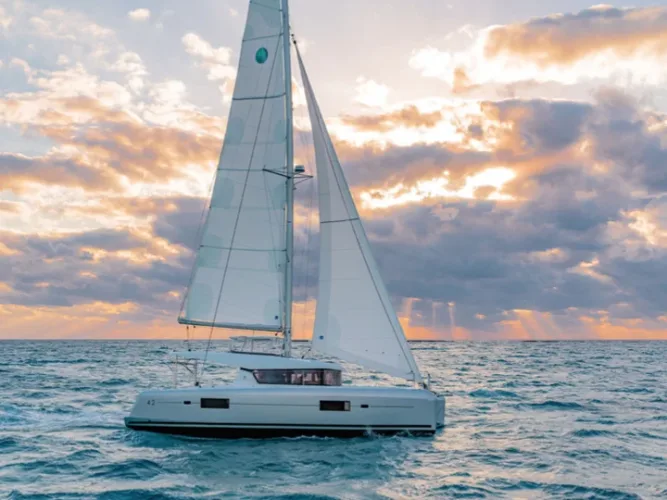
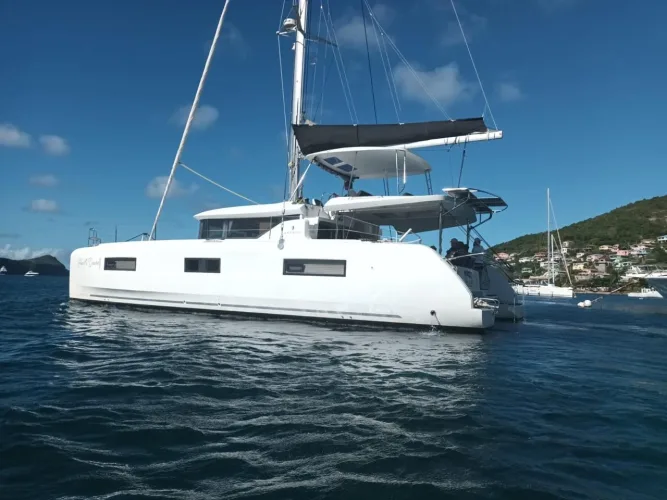
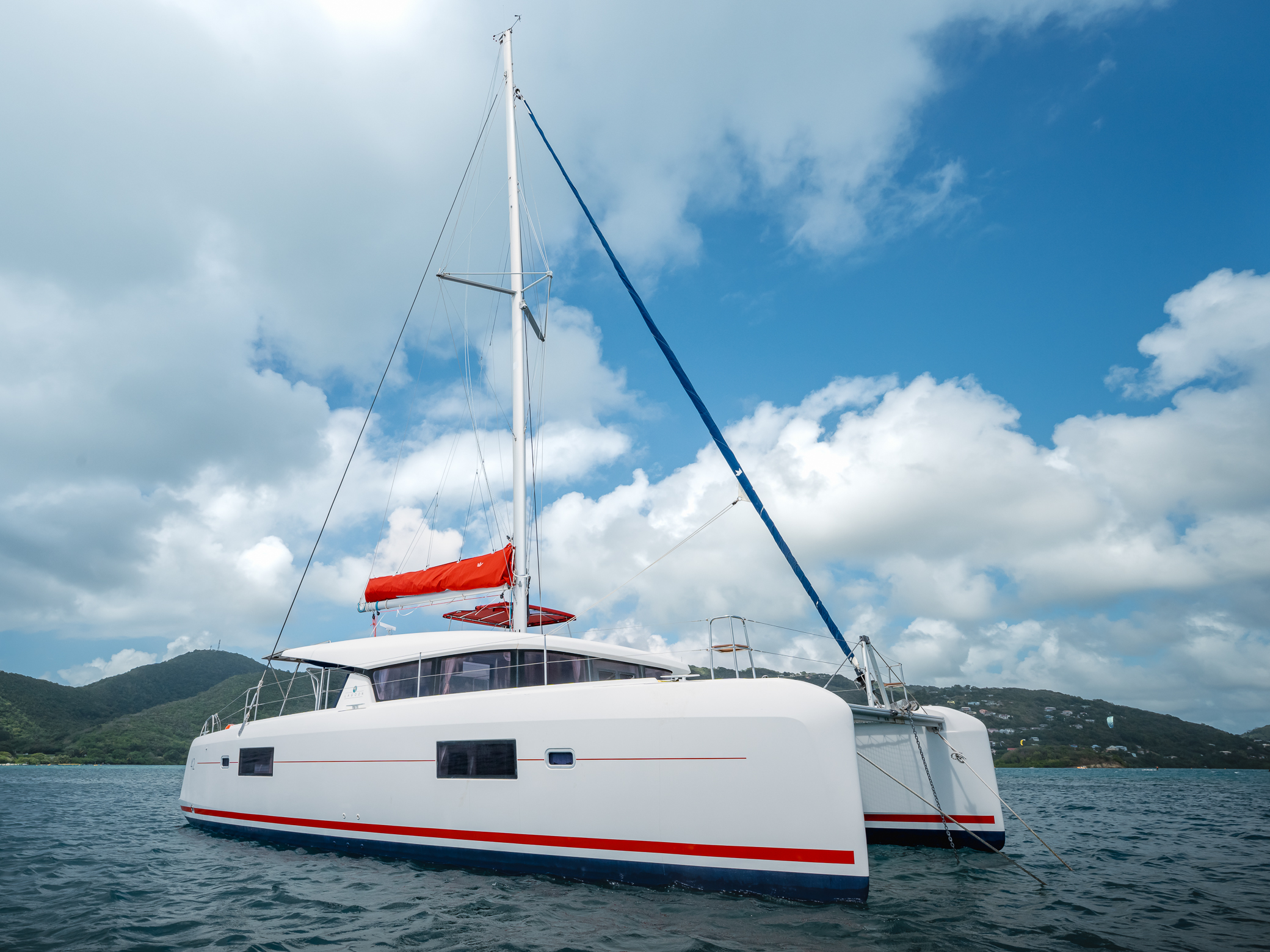
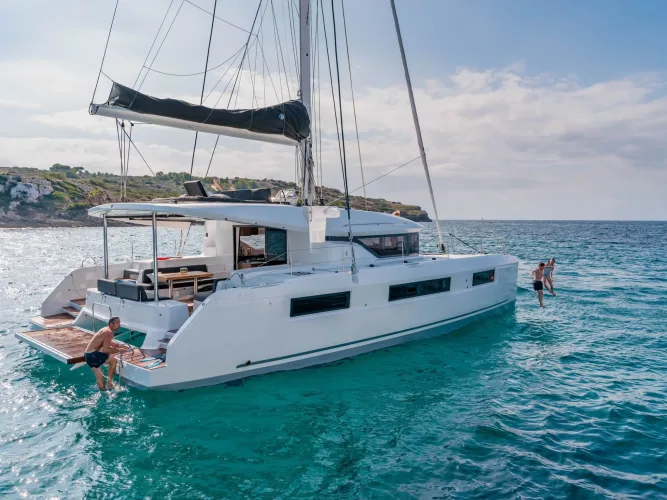
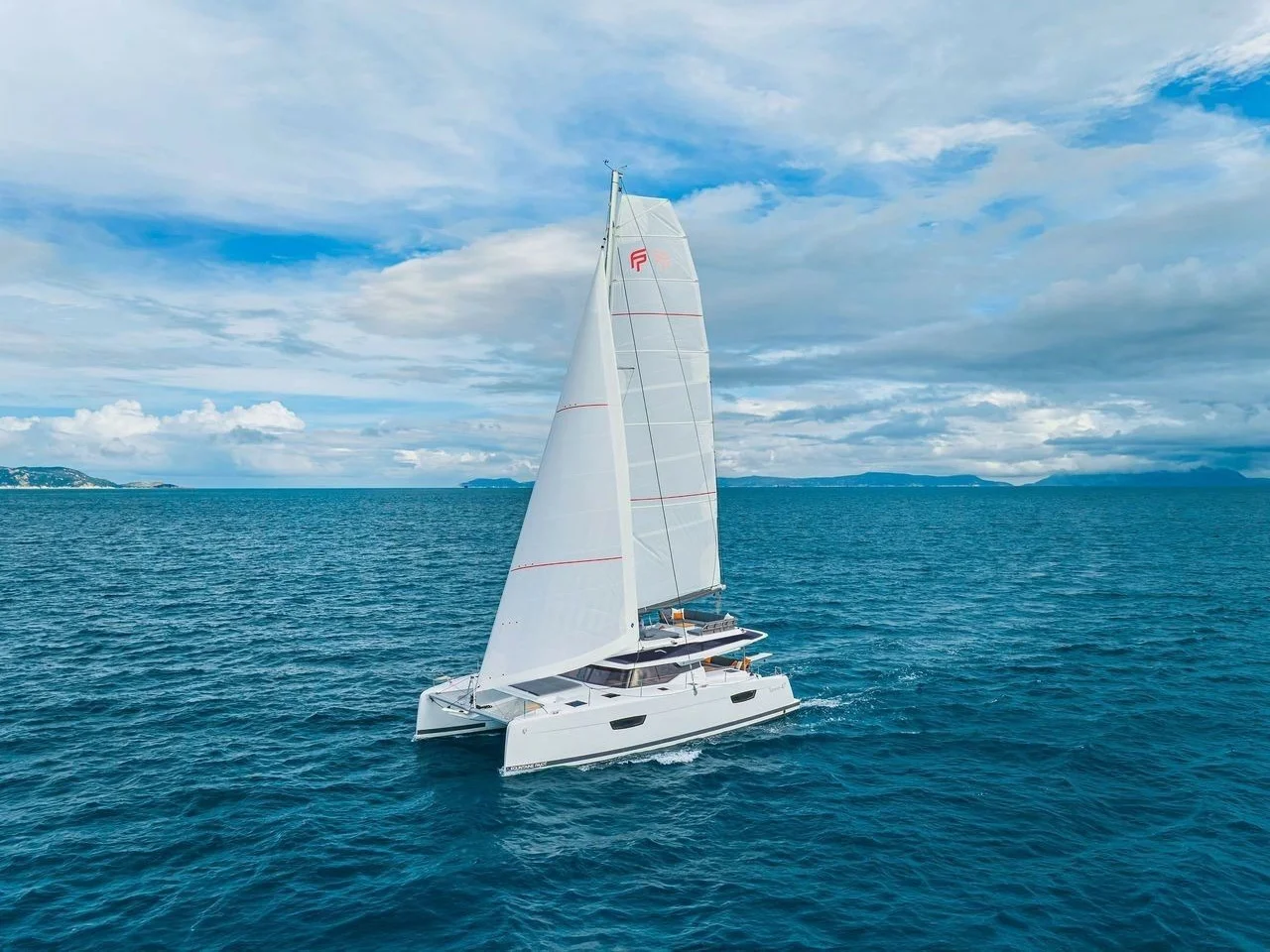
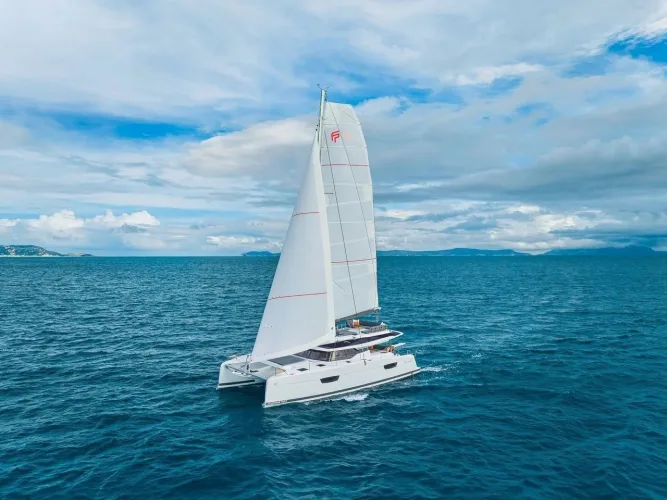
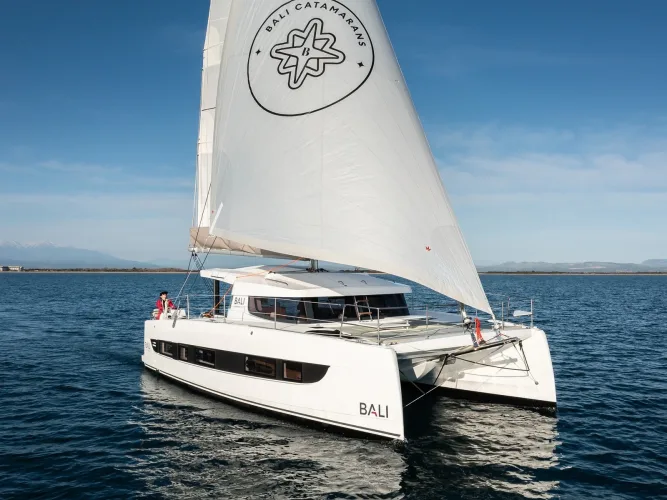
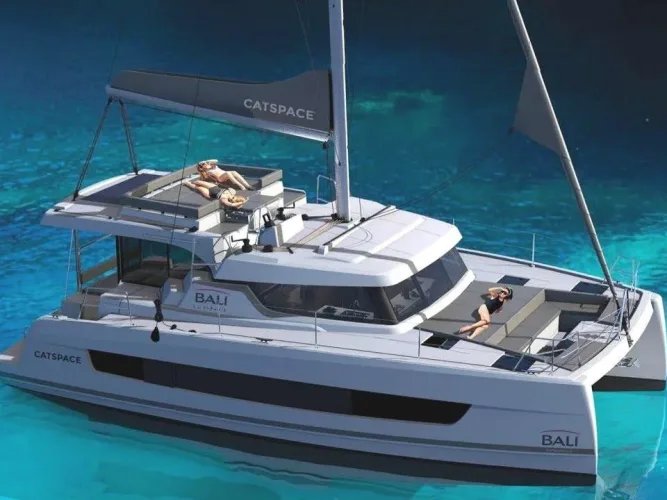
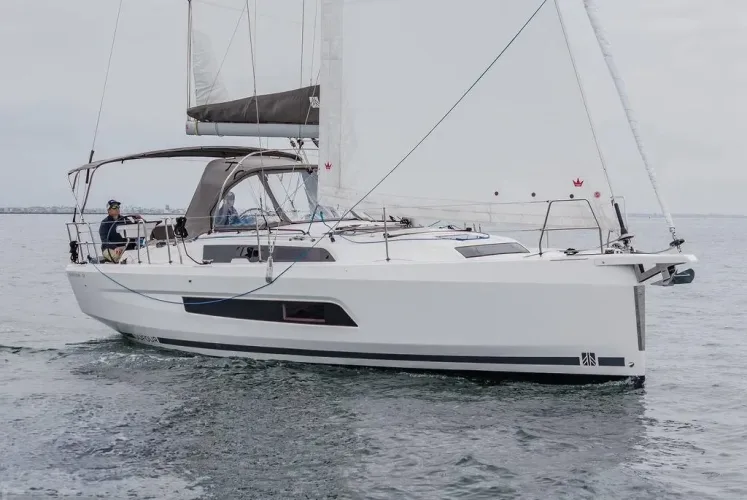
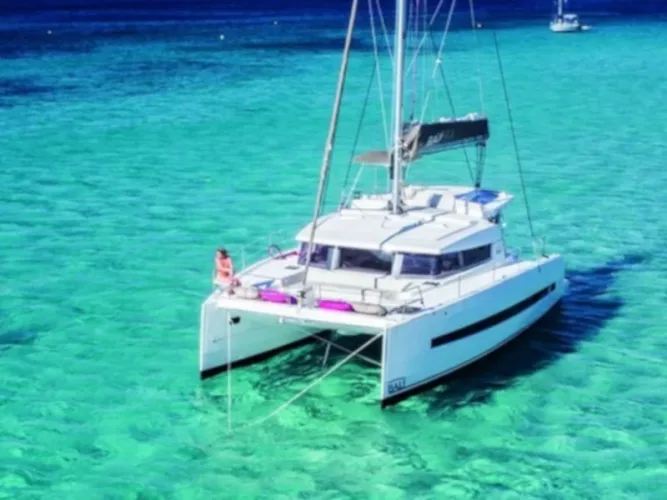
The fleet in Caribbean Islands is made up of 15 catamarans and 8 sailing yachts.

Most boats here are catamarans, averaging 13.4 metres.

Weekly prices start in the €3,000 – €6,000 range, where 9 boats are listed.

Boats sleep between 2 and 10 guests, with cabins up to 5.

The most common size band is 10 – 13 m, with 10 boats.

4 boats can be chartered with a skipper; 19 are available bareboat.

The fullest month on the calendar right now is Jan 2027: 74% of the fleet already has at least one booking, while 6 boats are still completely open.

Budget

Charter prices in Caribbean Islands

Weekly rate, set by the operator. No booking fee.

Space on board

Boat sizes

Sleeping 2–10 guests

  • 10 – 13 m 10
  • 13 – 16 m 9
  • 16 – 20 m 1

Availability

How full is the calendar in Caribbean Islands?

Share of the Caribbean Islands fleet that already holds at least one reservation, for each of the next twelve months. Taken from the operators' own calendars and refreshed daily — a boat with one week booked can still be chartered in the others.

Months further out look emptier simply because they are further away — most charters are booked a few months ahead, not a year.

Most booked month

Jan 2027

74% of the fleet already booked

Most still open

Jul 2027

22 boats with no booking yet

About the destination

Why charter from Caribbean Islands

Across the thirteen countries that share this water we list 538 boats, and 430 of them are catamarans. No other cruising ground in this guide is so decisively multihull — eighty per cent, against 106 monohulls and two trimarans. The reason is what a Caribbean week actually consists of: anchoring in shallow water close to a beach, swimming, and sailing short legs between islands in a warm steady breeze. Shallow draught and deck space matter more than windward performance.

Four things are true almost everywhere here, and they are what this page is for.

The trade winds. The easterlies blow year-round and firm up from December to April, which is why the season concentrates there. They are the most reliable wind in this guide: you can plan a week around a direction rather than a forecast.

The hurricane season, June to November, peaking in August and September. Most operators restrict or reprice bareboat charter in that window and insurance terms change. Latitude matters — the southern end of the chain is statistically safer and some insurers draw a named-storm line around 12°40'N — but 2024 showed that a line on a chart is not immunity.

Every island is a country. This is the practical fact that shapes itineraries more than wind does. The next island in sight usually has its own immigration, its own fees and its own office hours, and clearing in and out takes time at both ends of a leg. A few jurisdictions are the exception and cover a whole chain in one clearance, which is a genuine advantage worth seeking out.

And no licence, but a resume. Unlike Europe, most of the Caribbean has no formal skipper certificate requirement. Instead operators ask for your sailing experience in writing — boats skippered, sizes, types and waters — and want recent time on something comparable. There are real exceptions with government paperwork and lead times.

The specifics differ sharply between these thirteen countries, so the country pages carry them. The fleet averages 13.7 metres and 4 cabins with a 2022 build year, 113 of the 538 boats are crewed, and weekly rates run from about €2,090.

Charter bases

Marinas in Caribbean Islands

Blue Lagoon

17 yachts

St Vincent

View yachts

Bequia Marina

6 yachts

Admiralty Bay

View yachts

Good to know

Frequently asked questions

Our Caribbean Islands listings include 15 catamarans, 8 sailing yachts.
Weekly rates here fall mostly in the €3,000 – €6,000 range. Prices are set by the charter operator; we add no booking fee.
In Jan, 74% of boats here already hold at least one reservation, with 6 still completely open.

Ready to explore Caribbean Islands by sea?

23 verified yachts, real-time availability, transparent pricing.