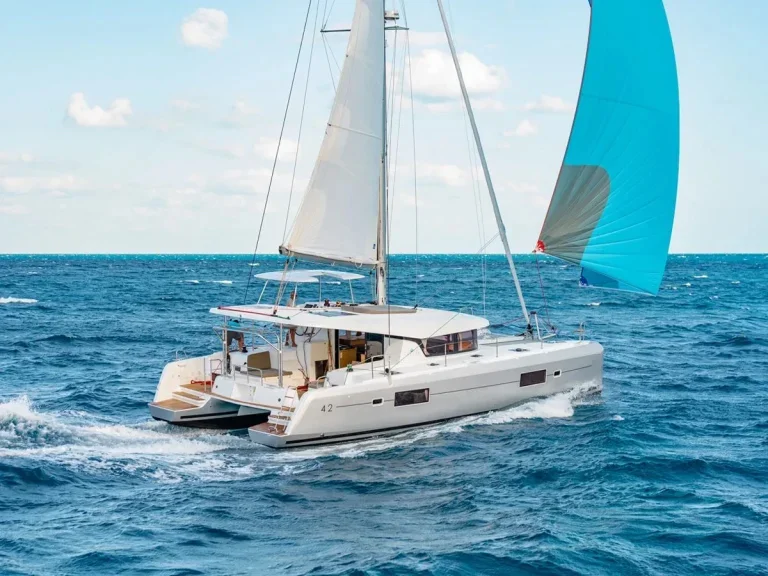
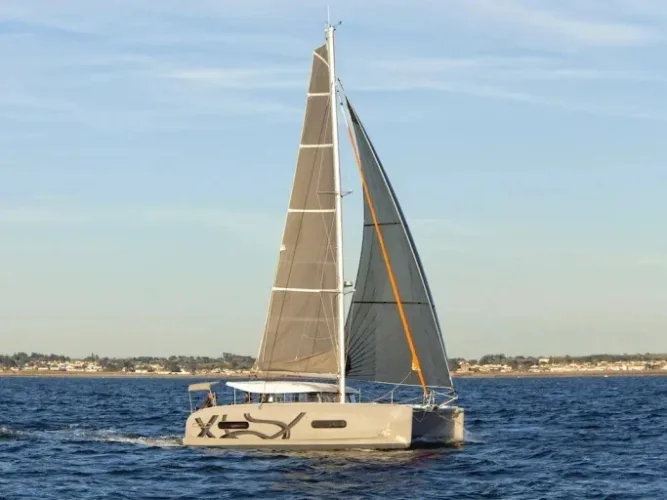
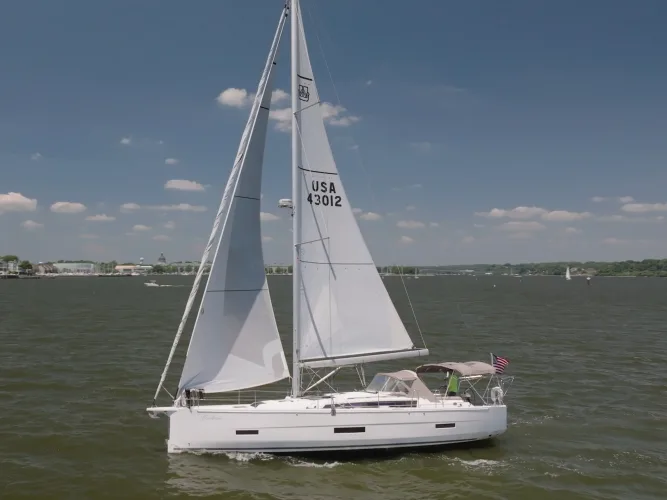
We should be precise about this one: we list four boats in the United States and all four are at Annapolis, Maryland, on the Chesapeake Bay. There is nothing in Florida, New England, California or the US Virgin Islands. If you came here looking for the Keys or San Diego, this is not that page.
What it is instead is one of the better-kept secrets in American sailing. Annapolis sits where the Severn River opens into the bay and calls itself America's sailing capital with some justification — the Naval Academy is here, the boat shows are here, and the bay behind the town gives hundreds of miles of protected, mostly flat water. The Chesapeake is a drowned river valley rather than a coastline: a shallow estuary of islands, marshes, tidal creeks and sand flats that rearrange themselves with every wind shift. The skill it asks for is reading depth, not handling weather.
The season runs opposite to the way most people would guess. July and August are often hot and light — poor sailing. The good months are spring and autumn, and September is widely reckoned the best of the year: steady wind, lower humidity, comfortable temperatures. April and November are the quiet shoulders, cooler, with better light and fewer boats. The one caution is that the second half of the hurricane season overlaps the best of the autumn, so a long cruise in late September or October carries more weather risk than the sailing conditions alone suggest.
The four boats average 13.5 metres and 3.3 cabins with an average build year of 2018, and weekly rates run roughly €8,600 to €11,100 — high for the size, which reflects a small, well-equipped fleet in an expensive market.