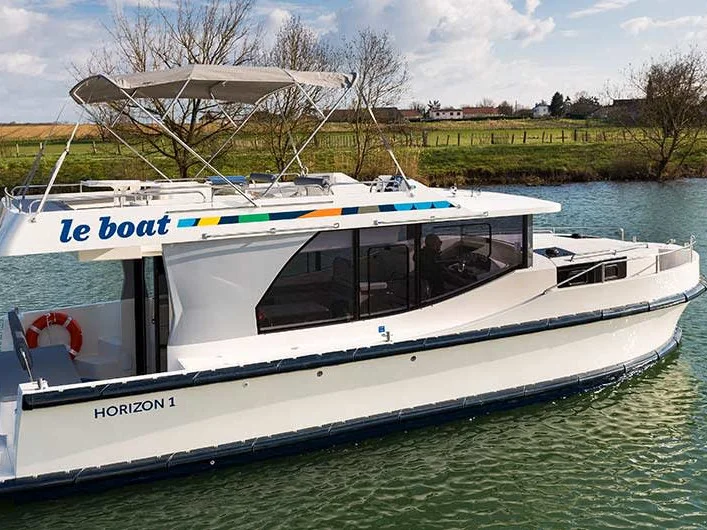
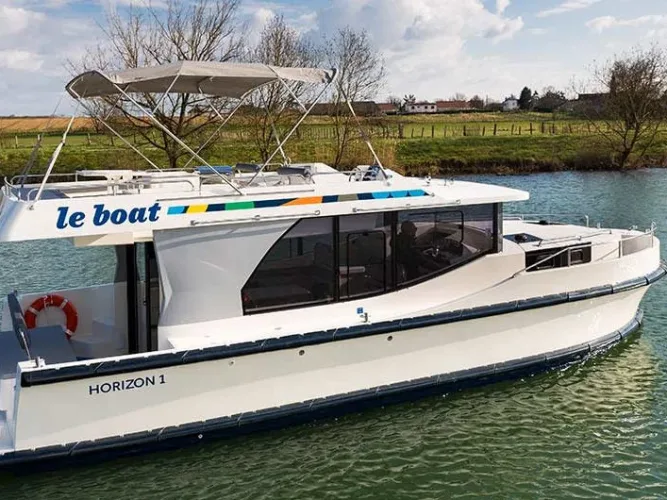
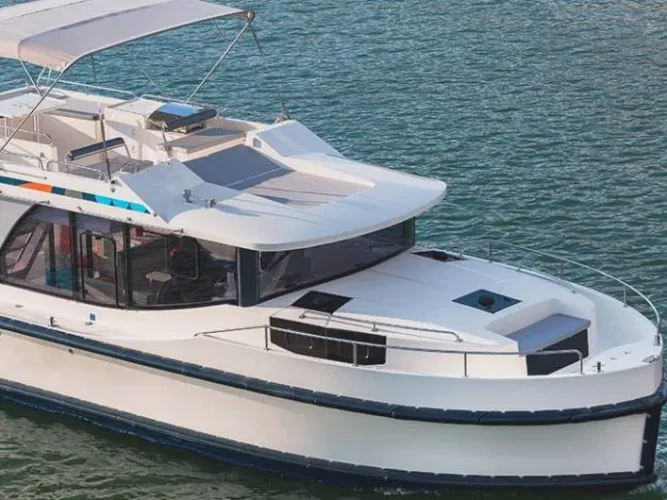
All 14 boats here are motor cruisers at Horseshoe Bay, twenty minutes from Vancouver, and from the marina you are inside Howe Sound within the hour. That is the cruising ground: a fjord ringed by mountains, with three substantial islands — Bowen, Gambier and Keats — to work around and sheltered anchorages on most of them.
Two things make this different from the Rideau Canal at the other end of the country, and both need respecting. It is tidal, and the currents in the narrows matter more than engine power — timing a passage beats pushing through it. And the wind here is local rather than meteorological: outflow air funnels down the sound from the interior and the afternoon breeze builds a short, steep chop on the way back toward the city. Morning departures are the rule, not a preference.
The anchorages are good and close together. Snug Cove on Bowen Island is an hour from base and the standard first night. Plumper Cove on Keats is a marine park with mooring buoys. Gambier's long inlets — Halkett, Centre and West Bay — are deep, quiet and the best anchoring in the sound. At the head of the fjord, Squamish sits under the Stawamus Chief and the coast mountains, and it is also the source of the wind: the run up is best taken early.
The season runs June to September in practice. Spring and autumn sail but the rain on this coast is serious and the mountains hold cloud.
One expectation to set, because it is the commonest mistake here: Desolation Sound, the cruising ground British Columbia is famous for, is about 130 nautical miles further north. That is most of a week one way. The Canada page explains why it needs a one-way charter or a fortnight rather than an optimistic Saturday.
Licensing is on the Canada page: proof of competency is required for every motorised boat, and the rental-boat safety checklist completed at handover is one of the accepted forms.