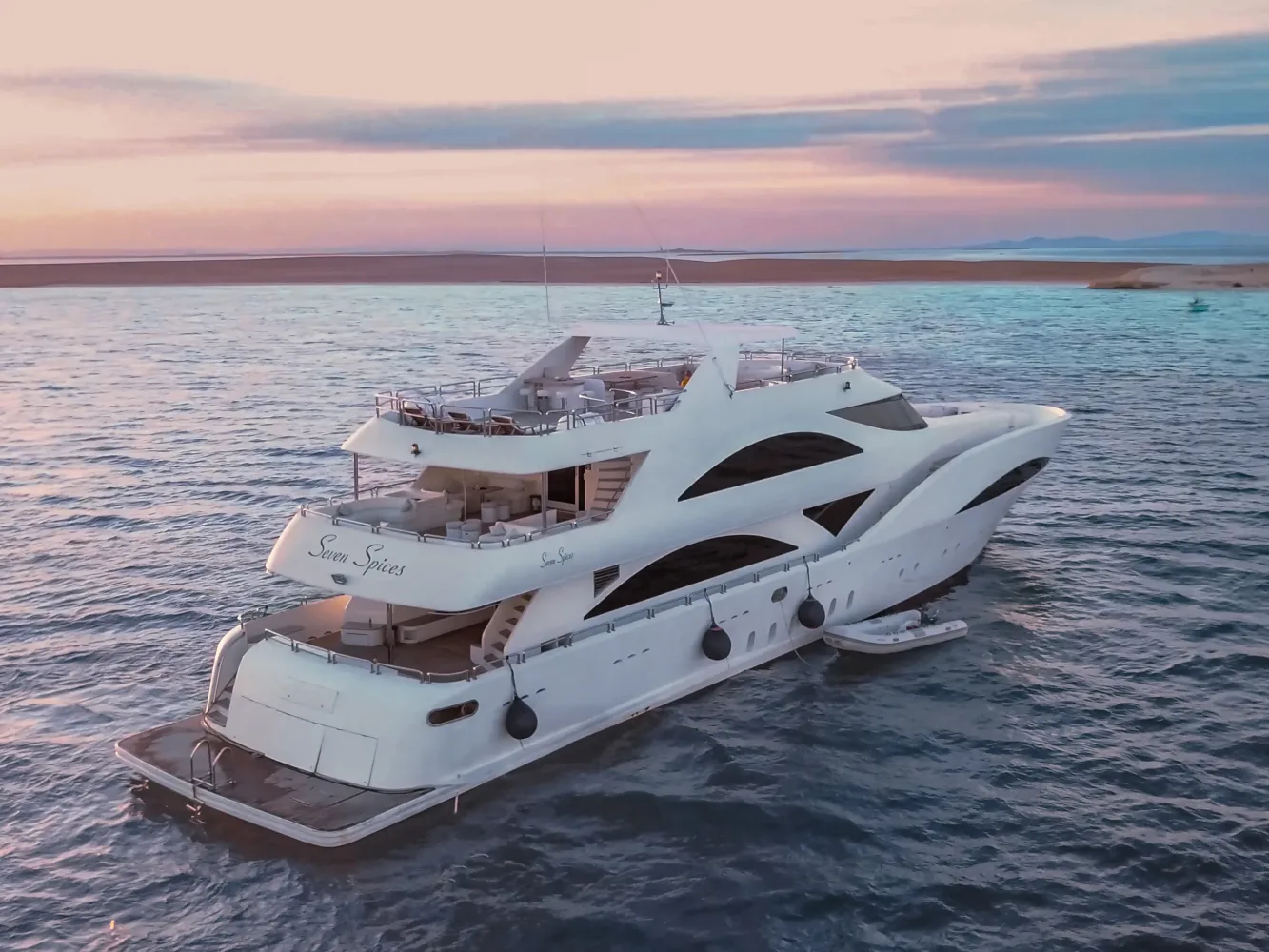
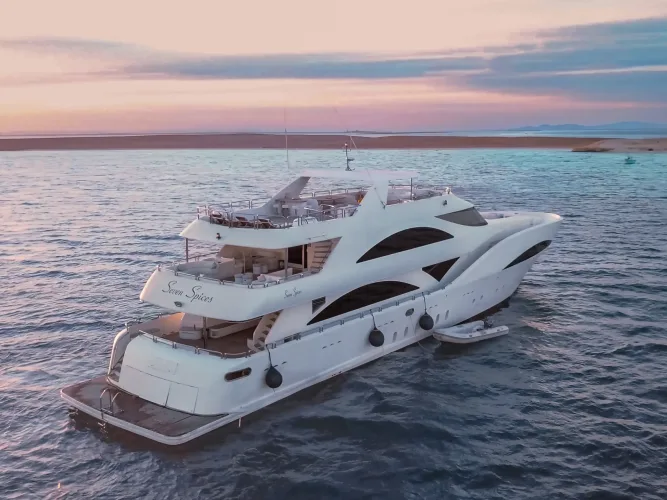
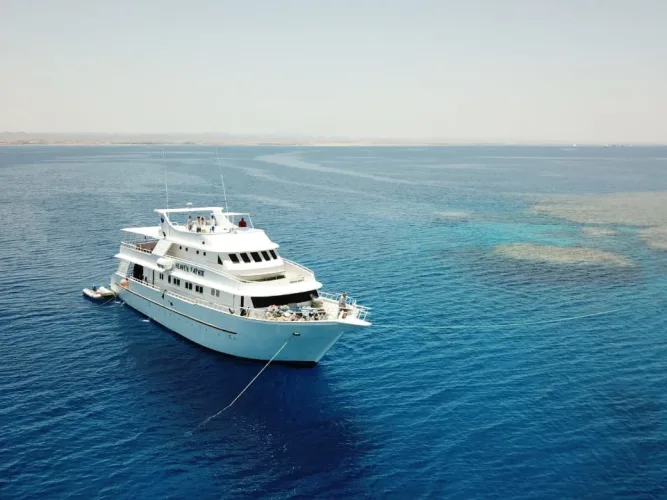
Four boats, all Egyptian, all crewed, averaging 33.8 metres with eight cabins each. That combination describes exactly one thing: Red Sea liveaboard dive vessels. The cabins matter more than the length here, because the boat exists to sleep sixteen to twenty divers and put them on a reef at dawn.
The geography explains why. The Red Sea is a long narrow rift with fringing reef along both shores and isolated offshore reefs and islands out in the middle, and the best of it is not reachable from a hotel. Ras Mohammed sits at the tip of Sinai where two gulfs meet; the Thistlegorm lies in the Strait of Gubal; Abu Nuhas has four wrecks piled on one reef. Further out and further south are the pelagic sites — the Brothers, Daedalus and Elphinstone — which are open water with walls dropping into deep blue and the shark action that makes divers plan years ahead.
You reach all of it by sleeping on the boat. Two of our four are at Sharm el-Sheikh, one at Abu Tig Marina in El Gouna and one at Marina Hurghada; those ports, with Safaga and Marsa Alam further south, are where the Egyptian safari fleet works from, and the route you book determines which airport you fly to.
April and May are generally reckoned the best months, with water between 21 and 30 °C across the year. The caveat is the offshore sites: winter wind limits access to the Brothers, Daedalus and Elphinstone, and operators differ on whether they treat that as a closed season or a weather call. If those reefs are the reason you are going, confirm the schedule with the specific boat rather than assuming it runs.
Certification levels, park fees and the flying-after-diving interval are on the Egypt country page.