Best Beaches in BVI to Visit by Yacht: Sand, Snorkel, and Sunset
A practical, yacht-focused guide to the best beaches in the British Virgin Islands — dinghy access, mooring notes, crowd windows, snorkel highlights and sunset spots.

If you want the short answer: the best beaches in BVI for yacht visitors are White Bay (Jost Van Dyke) and The Baths (Virgin Gorda) for the iconic experience, Cane Garden Bay and Smuggler’s Cove on Tortola for beach bars and sheltered water, Loblolly Bay on Anegada for long sand and snorkelling, and Savannah Bay on Virgin Gorda for roomy, quieter evenings. Each of these is accessible by yacht but the way you arrive—mooring ball, anchoring outside and dinghy in, or using a small public dock—changes the plan, the crowd level and the safety considerations you must budget for.
Top Beaches in the BVI Accessible by Yacht
Below are the beaches yacht crews actually choose, with the practical points you need to make an immediate decision: how to tie up, how busy it gets, what you’ll snorkel, and whether there’s a bar or a loo.
White Bay, Jost Van Dyke
- Moorings / dinghy: Multiple mooring balls are laid across the bay (east and west sets); day- and overnight options vary and the two beach bars (Soggy Dollar on the western side and Ivan’s on the eastern side) are the usual payment/booking points for moorings. Dinghy landing is possible but the shore can have a small surf—time your approach to the swell.
- Crowds & timing: White Bay is one of the BVI’s busiest day stops, often filling by mid-morning in high season; arrive early (before 09:30) for a quieter stretch and snag a better mooring.
- Snorkel: Sheltered patches near the edges and around the rocky sections give easy snorkels; don’t expect a large reef system like Anegada, but you will see reef fish in the shallows.
- Sunset & photography: The west end offers unobstructed horizon views—late afternoon shots work well if you don’t need the beach cleared of day-visitors.
- Amenities: Soggy Dollar Bar (home of the Painkiller) and several beach bars/restaurants, plus lounger rental; public facilities are limited and can be crowded.
The Baths, Virgin Gorda
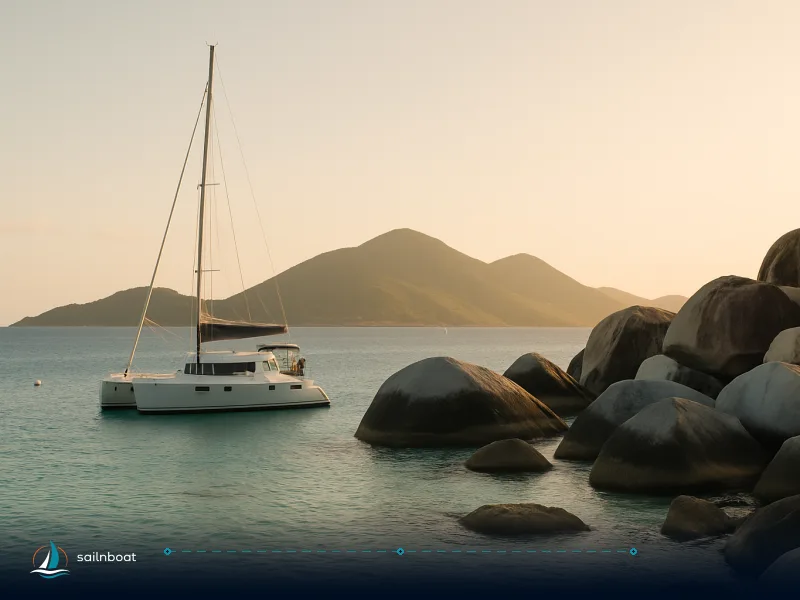
- Moorings / dinghy: The Baths are inside a National Park mooring field — anchoring is prohibited in the protected area and boats must pick up a National Parks mooring ball (day-use rules apply; overnight on park balls is typically not allowed). You dinghy from the mooring to the beach/rock maze.
- Crowds & timing: The Baths is the BVI’s signature attraction and attracts cruise parties and day-charter cats; arrive at opening or late afternoon for much quieter conditions. The National Parks Trust operates a flag/ball status system and a permit structure for day visitors.
- Snorkel: The rock-shelf channels, pools and the swim-throughs around Devil’s Bay make for unusual snorkelling (swim carefully and avoid surge areas). Good mid-morning with calm seas.
- Sunset & photography: The Baths faces roughly south-west around the Virgin Gorda headland; photographic best light is late afternoon but crowds often persist—plan photographer windows accordingly.
- Amenities: Small park-side facilities, walking trails, and a handful of nearby restaurants in Spanish Town/Top of the Baths; no full-service marina on the beach itself.
Cane Garden Bay, Tortola
- Moorings / dinghy: A well-laid mooring field with both first-come moorings and commercial/reservable balls; there is also a public dinghy dock near the main beach so you can land if required. Moorings fill early in season.
- Crowds & timing: Busy in high season and weekends—mid-week mornings give you space. The bay is one of Tortola’s main social beaches.
- Snorkel: Reef patches on the bay’s fringes offer easy snorkels; stronger snorkelling is often a short dinghy ride away.
- Sunset & photography: The bay faces northwest; you get good late-afternoon light and a lively beach-bar scene for sunset shots.
- Amenities: Multiple restaurants and bars, plus the historic Callwood Rum Distillery a short walk inland (open hours vary). Expect basic facilities and a lively beach vibe.
Smuggler’s Cove, Tortola
- Moorings / dinghy: Smaller, quieter crescent with room to dinghy ashore; fewer moorings than the main bays—it rewards those willing to commit to a short run ashore or to arrive earlier in the day.
- Crowds & timing: One of Tortola’s more secluded beaches—weekdays and mornings will often leave you alone; it’s a destination for crews who want a quieter beach day.
- Snorkel: The reef off the western arm gives one of Tortola’s more reliable snorkels—good for turtles and reef fish when conditions are calm.
- Sunset & photography: Smuggler’s Cove sits toward the west end; if winds allow, you’ll get a clean western horizon for sunset shots.
- Amenities: Very limited; a small roadside bar or pop-up vendors at times—plan to be self-sufficient.
Loblolly Bay, Anegada (and Big Bamboo)
- Moorings / dinghy: Anegada’s shallow lagoon means you normally pick up a mooring or anchor at Setting Point and dinghy across or take a short taxi from Potter’s dock; the approach to Loblolly itself is shallow (2–4 m in places) so most larger yachts stay at Setting Point.
- Crowds & timing: Anegada’s remoteness keeps crowds lower than the Sir Francis Drake Channel islands; day visits from the anchorage at Setting Point are common—arrive mid-morning for calmer water.
- Snorkel: Excellent fringing reef and shallow flats around Loblolly — turtles and abundant reef life are common; clarity improves in the mid-morning to early afternoon when winds are light.
- Sunset & photography: The long, low north shore is dramatic at golden hour; be aware the north exposure can be windier, so plan sunset anchoring on the protected south side (Setting Point) if northerlies are forecast.
- Amenities: Big Bamboo and a few beach restaurants provide lunch, cold drinks and a place ashore to sit — full provisioning is at Setting Point/Anegada Reef Hotel.
Savannah Bay, Virgin Gorda
- Moorings / dinghy: A broad, shallow bay with sand shoals; many captains anchor in sand outside the shallow fringe or pick up nearby moorings when available—approach slowly and pick a sand patch clear of coral heads. Savannah is not a full-service marina stop.
- Crowds & timing: The bay’s length spreads visitors out and even busy days feel roomy—late afternoon and weekdays are especially quiet.
- Snorkel: Fringing reef edges give good shore snorkel and you can spot larger reef fish, squid and occasionally lobster in the grassier patches. Mid-morning is best for visibility.
- Sunset & photography: Savannah faces west along the Sir Francis Drake Channel and gives a clean silhouette of islands at sunset — an excellent evening anchorage when seas permit.
- Amenities: Minimal on the beach itself — pair a Savannah stop with a North Sound visit (Leverick, Saba Rock) if you want dinner ashore and full services.
Dinghy Landing and Mooring Options
Mooring Fees and Regulations
- Expect wide variability: National Park day moorings and some commercial moorings are charged separately from private marina slips. In practice, ball fees commonly fall in the range of about $25–$55 (USD) per night depending on operator and whether a boat uses first-come or a reservable BoatyBall. National Parks Trust moorings at protected sites are usually day-use with a separate parks permit/fee. Use the BoatyBall app where available and check your charter paperwork for included extras.
- What to expect at check-in: Some mooring fields are managed by beach bars or local operators (White Bay, Cane Garden), others are run by resorts or BoatyBall. National Parks moorings usually require presentation of a permit/weekly pass or payment at an official point.
Dinghy Landing Tips
- Look for official dinghy docks first (Cane Garden Bay, Setting Point/Potter’s); if none exist, land at sandy or sea-grape framed points and secure the dinghy clear of the surf. On surf-prone beaches (parts of White Bay, Loblolly in north swell) time your landing for small swells and use a stern-first approach.
- Leave valuables on the mother-ship or secured; beach theft is uncommon but unattended gear is an unnecessary risk. If a beach has a beach bar or dock, those operators often expect a small dinghy fee or tip—budget a few USD per person for beach access/use in busy spots. (Local practice varies.)
Best Times to Visit for Tranquility
Peak vs. Off-Peak Times
- Weekdays beat weekends for quieter beaches and moorings in all main BVI spots; within a day, the quiet windows are early morning (first light–09:30) and late afternoon (after 16:00) when day-charter traffic drops. High season (December–April) has the most boats and visitors; if you want the beaches to yourself, aim for shoulder-season sailing or midweek stops.
Seasonal Considerations
- The dry, popular cruising season runs roughly from December through April — steadier trade winds, drier weather, and larger crowds. The lower-traffic months bring more variable winds but fewer day-charters and less competition for balls. Adjust your plan to weather windows: some beaches exposed to northerly swell (Anegada’s north shore, parts of Tortola’s north coast) are better in settled easterly trade-wind conditions.
Top Snorkeling Spots in the BVI
Notable marine life and sites
- The Baths: unusual boulder channels, crevices and pools with reef fish and small schooling species — an experience as much geological as biological.
- Loblolly Bay (Anegada): shallow reef flats and seagrass edges with frequent turtle sightings and dense reef fish populations.
- Smuggler’s Cove and surrounding reefs on Tortola: reliable shore-entry snorkel reefs for modest currents and visible fish life.
- Norman Island/Indians/Rhone: if your charter has time, the Indians and the Rhone wreck (Norman Island) are top snorkel/dive sites in the BVI with moorings managed for day visitors (park rules apply at some sites).
Recommended snorkeling times
- Mid-morning after any overnight breeze slackens is often best for visibility; check current and wind reports — avoid snorkelling in strong surge areas or when the swell runs hard into a small bay. Bring reef-safe sunscreen and a floatation device if your group varies in skill.
Sunset Viewing Opportunities
Ideal sunset spots
- White Bay (Jost Van Dyke): clear western horizon and beach bars for an informal sunset drink.
- Savannah Bay (Virgin Gorda): long west-facing sand line gives regular, camera-friendly sunsets with island silhouettes.
- Cane Garden Bay and many north-shore Tortola anchorages also give good evening light depending on wind direction; choose an inner, sheltered mooring for calm evening photos.
Practical timing for photography
- Sunset times in the BVI vary with season: roughly between about 17:45 (winter months) and 19:40 (summer months) local time — check the exact sunset for your date and arrive at least 30 minutes early to set composition and secure a comfortable landing or anchorage. (Local weather and cloud cover dominate the final look.)
Amenities at BVI Beaches
Dining and refreshment options
- White Bay: Soggy Dollar (famous Painkiller) and other beach bars — expect busy service lines in peak hours.
- Cane Garden Bay: beach restaurants and the Callwood Rum Distillery a short walk away; casual beachfront dining dominates.
- Loblolly Bay: Big Bamboo provides a proper beach lunch stop; full provisioning remains at Setting Point.
- The Baths / Spanish Town: small park facilities and nearby restaurants but limited beach-front amenities immediately inside the boulder field.
Facilities and services
- Public docks exist at a few locations (Setting Point/Anegada, Cane Garden) and marinas/resorts (Leverick Bay, Bitter End, Saba Rock) provide water, fuel, showers and provisioning; many beaches have no toilets or fresh water, so plan accordingly. Mooring ball systems (some run by resorts, others by BoatyBall) and National Parks permits are the operational details you’ll handle on arrival.
Quick comparison table — at a glance
| Beach | Island | How you land | Mooring / anchoring notes | Typical crowd level (seasonal) | Snorkel highlights |
|---|---|---|---|---|---|
| White Bay | Jost Van Dyke | Dinghy / swim ashore (sandy) | Mooring balls managed by beach operators; surf can be present. | High in season, busy midday | Shallows, reef-edge fish. |
| The Baths (Devil’s Bay) | Virgin Gorda | Dinghy from park mooring | National Park moorings only; day-use; no anchoring on reef. | Very high (iconic site) | Unique boulder channels & pools. |
| Cane Garden Bay | Tortola | Public dinghy dock / beach | Plentiful moorings & dock; fills early in season. | High | Coastal reef patches; easy shore snorkels. |
| Smuggler’s Cove | Tortola | Dinghy to sand | Fewer balls; quieter but limited facilities. | Low–moderate | Reef off western arm; turtles possible. |
| Loblolly Bay | Anegada | Dinghy from Setting Point/ Potter’s | Shallow approach; day-use best; Setting Point moorings. | Low–moderate | Excellent shallow-reef snorkel; turtles. |
| Savannah Bay | Virgin Gorda | Anchor in sand / dinghy | Shallow fringe; find sand patch clear of coral. | Low–moderate | Fringing reef; varied fish life. |
Practical checklist for your yacht day on BVI beaches
- Moorings & permits: Budget for ball fees in the $25–$55 range per night and confirm whether a National Parks weekly permit covers day moorings at park sites. Book BoatyBall reservables where available.
- Dinghy readiness: Keep a fender and line on the dinghy, reef-safe sunscreen, water and a small dry bag for keys/phone. When landing in surf-prone beaches, plan your get-in/get-out window on the tide and small-swell intervals.
- Snorkel safety: Mid-morning in calm wind equals best visibility. Use a buddy system, watch for boat traffic near mooring fields, and avoid snorkelling across strong channel currents.
- Timing: For quieter beaches, aim for arrival before 09:00 or after 16:00, and pick weekdays in season. National Park sites are busiest through late morning and early afternoon.
Plan your stops around the wind and the marine-park rules — that trade-off (access vs protection) is the organising constraint of any BVI yacht trip. If you want a single actionable route: arrive at The Baths early, push to Savannah or North Sound for a calm afternoon, run to White Bay the next morning for the beach bar scene, then take a day to do Anegada (Setting Point + Loblolly) when the sea state is settled.
Ready to turn the plan into a charter? Book your base, check current mooring fees and park-permit arrangements with your operator, and schedule morning arrivals for the quietest beach time. Plan conservatively for shallow approaches (Anegada, Savannah), pack reef-safe sun protection, and bring your snorkel kit — the BVI rewards the crew that prepares.
Frequently Asked Questions
Top yacht-friendly beaches are White Bay (Jost Van Dyke), The Baths (Virgin Gorda), Cane Garden Bay (Tortola), Smuggler's Cove (Tortola), Loblolly Bay (Anegada), and Savannah Bay (Virgin Gorda), each offering distinct mooring and dinghy-access profiles.
Most beaches require you to pick up a mooring ball for the mother-ship, then use the dinghy; some beaches have small dinghy docks (Cane Garden Bay, Setting Point/Anegada) while others need a swim-or-tether landing (The Baths, some parts of White Bay).
Weekdays, early mornings and late afternoons are quietest; the high season (December–April) is busiest so consider shoulder months or midweek stops to reduce crowds.
Top snorkel sites include the fringing reefs off Loblolly Bay (Anegada), the swim-throughs and reef channels at The Baths, the reef off Smuggler’s Cove and the Indians/Norman Island dive areas; visibility and marine life are best mid-morning in calm conditions.
White Bay (Jost Van Dyke) and Savannah Bay (Virgin Gorda) are excellent for silhouette and horizon sunsets; west-facing anchorages at Tortola’s north shore also give dramatic evening light.
Expect beach bars and restaurants at White Bay (Soggy Dollar / Ivan’s area), Cane Garden Bay (restaurants and Callwood Rum Distillery nearby), and Big Bamboo at Loblolly; other beaches may have no facilities, so provision accordingly.
Written by
Sailnboat Editorial
The Sailnboat editorial desk covers yacht and boat chartering worldwide — routes, bases, seasons, boat types, paperwork and the practical costs that decide a trip. We are a charter marketplace, not a boat owner or a local agency: what we sell is judgement and support, so our guides are written to help you make a decision, not to sell you a specific boat. Every guide is checked against live operator and marina data before it goes out.
Fact-checked against live operator and marina data, and published under our editorial standards. Last reviewed: .