Best Time to Sail the Amalfi Coast: A Month-by-Month Guide
A practical month-by-month guide to the best time to sail the Amalfi Coast, covering typical wind windows, when anchorages are crowded, value months and a 7-day sample itinerary from Naples/Salerno.

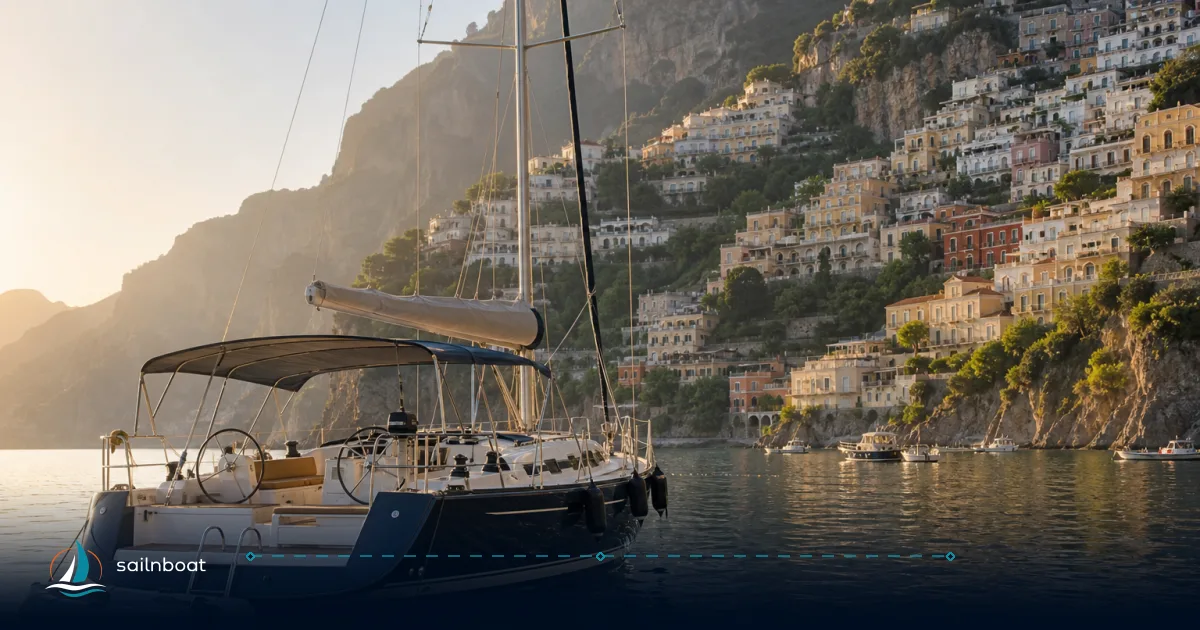
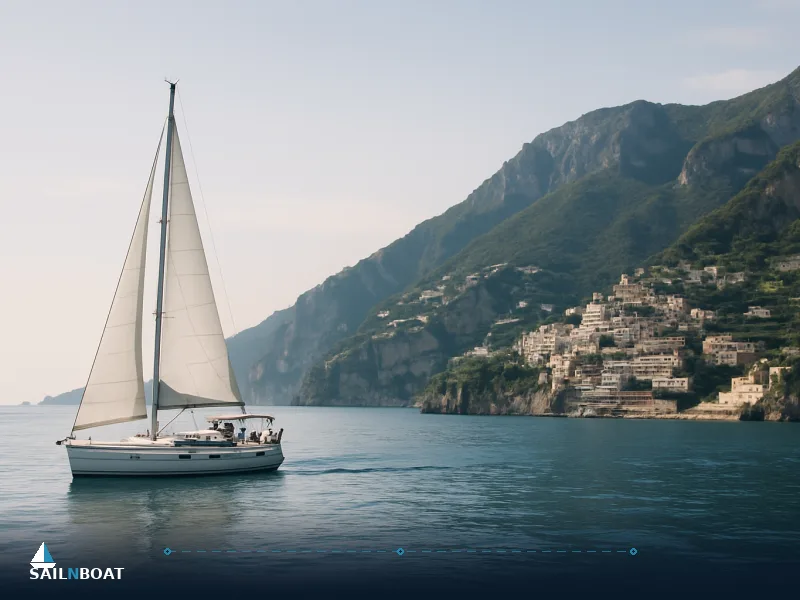
The best time to sail the Amalfi Coast is the shoulder windows — late May to early June and mid‑September — when the sea is warm, afternoon thermal breezes are reliable and the on‑water crowds thin out compared with July–August.
Monthly Weather Patterns and Wind Conditions
Below are practical, operational summaries you can use when planning a week‑long charter. I give typical wind ranges and sea behaviour; local forecasts will confirm the day‑to‑day picture.
January to March
- Wind: Generally light to moderate; synoptic systems (southerly scirocco or northerly maestrale/tramontana) bring stronger winds and occasional gales. Typical everyday winds are often light to moderate, but frontal days can exceed that. (Seasonal variability is high.)
- Sea: Cooler water, variable swell — southerly swell from scirocco can make exposed anchorages bouncy. Wave heights can rise quickly during storms.
- Suitability: Possible for experienced crews who accept schedule risk; many shore services run reduced hours.
April to June
- Wind: The thermal (sea‑breeze) pattern establishes as land warms. Expect light mornings with increasing afternoon breezes; typical afternoon strengths often run 8–15 kt on settled days. Spring frontal systems still occur (short windows of stronger winds).
- Sea: Warmer than winter, increasingly calm after the morning hours. Visibility and water clarity improve.
- Suitability: Late April–June is an ideal compromise: comfortable sailing, fewer crowds than summer, and most marinas open.
July to September
- Wind: The most predictable thermal pattern. On fair days you’ll usually see steady afternoon on‑shore or westerly winds commonly 8–15 kt — pleasant for sailing and transfers. However, transient maestrale or scirocco events can push sustained winds above 20 kt with higher gusts.
- Sea: Warmest water (late July–August), generally calm mornings and choppier afternoons if the thermal is strong. Ferry and day‑boat traffic is heavy.
- Suitability: Best for guaranteed warm water and full services — but expect busy anchorages, higher marina fees and reduced berthing availability.
October to December
- Wind: Thermal winds taper off. October can still carry pleasant days (often 8–12 kt), but Atlantic systems become more frequent from November and increase wind, swell and unsettled weather.
- Sea: Rapidly cooling; autumn storms can raise wave heights. Late autumn is less predictable.
- Suitability: Good for short, adventurous cruises in October; November–December is for experienced crews only and with flexible plans.
Notes on wind behaviour and safety
- Thermal breezes are strongest in the late afternoon and often die overnight — plan passages so longer crossings start early.
- Synoptic winds (maestrale from NW, scirocco from SE) are less predictable and can be stronger and longer‑lasting; treat gusts above 25 kt as a reason to alter the plan.
- Check local VHF, Meteo forecasts and the Guardia Costiera before you leave the marina.
Crowd Levels and Their Impact on Anchoring
Crowds change how you cruise here: they affect where you can anchor safely, whether you’ll have marina berths, and how early you should arrive.
- Peak tourist season (July–August)
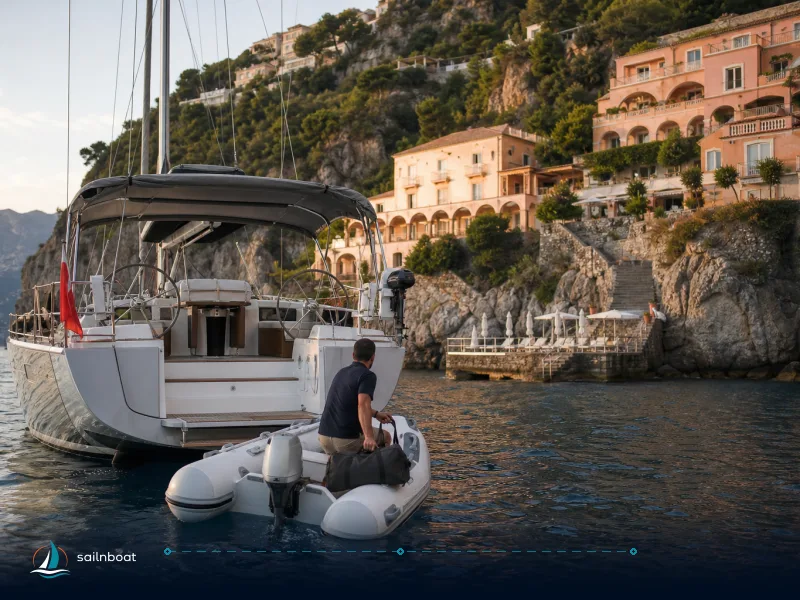
- On‑water congestion is at its highest. Positano, Capri (Marina Grande), Amalfi and Nerano have full mooring fields and busy anchorages by mid‑morning.
- Swing room is limited; add buffer to anchor scopes and consider tending to and securing shorelines. Plan to arrive before 09:30 to secure a buoy or an acceptable anchorage.
- Marina berth fees and short‑stay charges are at their maximum. Book berths well in advance.
- Shoulder seasons (late April–June, September–early October)
- Significantly more space at anchor and easier access to marinas. Many operators prefer these windows for a week‑long charter: warm water, reliable winds and less on‑water traffic.
- Some seasonal beach clubs and restaurants may still be closed in April.
- Off‑peak (November–March)
- Few pleasure boats. Many marinas reduce services; several tourist facilities close. Weather windows are narrower and swell can make exposed anchorages uncomfortable.
Table — how crowds affect decisions
| Month(s) | Typical crowd level | Effect on anchoring/marinas |
|---|---|---|
| July–Aug | Very high | Early arrivals needed; marinas full by midday; crowded anchorages |
| Late May–Jun | Medium–low | Easier to find buoys and anchorages; most services open |
| Sep (first 3 wks) | Medium | Warm sea, thinning day‑boat traffic after Labour Day weekends |
| Apr, Oct | Low–medium | Good value; some businesses may still be closed |
| Nov–Mar | Low | Limited marina services; risk of exposed swell |
Practical tip: if you want an overnight shore visit in Positano or Capri during July–August, reserve a berth at least 4–8 weeks in advance. Buoy fields and eco‑moorings (see next section) are a practical alternative to a marina berth.
Best Months for Value and Pricing Insights
What makes a month “good value” depends on boat type and priorities (calm seas vs lowest price).
- Best value months: Late April–early June and September. These months combine lower charter and marina rates than July–August and still give warm water and reliable sailing days.
- Off‑peak discounts: Charter operators and marinas typically reduce weekly prices outside July–August; expect meaningful percentage savings in March/November compared with peak season. For marina fees, locations such as Amalfi can range widely — high‑season nightly rates are substantially higher than shoulder season rates.
- Typical charter pricing structure: Weekly charter rates depend on yacht size and type (catamaran, monohull, motor). Mid‑size yachts commonly fall into a mid‑range market; exact prices vary by year and operator. Many operators require an APA (advance provisioning allowance) for crewed charters; bareboat deposits and insurance conditions also change by operator.
Operational money tips
- Book the yacht early for July/August; for shoulder months you can often secure better rates with 6–8 weeks lead time.
- Consider starting/ending at Salerno or Marina di Stabia for lower berth costs and greater availability than small, central Amalfi marinas.
Regulations for Anchoring in Protected Areas
Two protected areas matter most operationally: the Punta Campanella Marine Protected Area (AMP) and the areas around the Li Galli islets.
Punta Campanella Marine Protected Area (AMP)
- Zonation: The park has zones with different rules — integral reserves (zone A), zone B (regulated) and zone C (less restrictive). Some local ordinances prohibit anchoring, restrict transit speeds, and limit where vessels can moor. The park operates sanctioned eco‑moorings (buoy fields) in selected places such as the Le Mortelle / Marina del Cantone area for overnight use.
- Operational constraints you will meet: speed limits close to shore (a low knot limit inside some buffers), prohibition of anchoring on Posidonia meadows, and area‑specific time windows for daytime anchoring in some zone C areas.
- Practical steps: use designated park buoys where provided; avoid dropping anchor on seagrass; follow the park’s local instructions; the AMP publishes coordinates for permitted moorings.
Li Galli islets
- Li Galli lie inside the Punta Campanella AMP. They sit in a zone where anchoring is generally prohibited; transit and slow approaches are permitted for small craft in specified channels, but you must not anchor or go ashore where private ownership or conservation rules forbid it.
- If you plan a swim stop or photo pass, keep moving or use authorised buoys — do not drop anchor.
Always treat the AMP rules as operational constraints that affect your plan. The fine for breaching protected‑area rules can be significant and can affect insurance outcomes; plan using the park’s latest guidance and the Coast Guard notices for the relevant harbour master.
Recommended Sailing Itinerary for a Week
This is a practical, short‑hop 7‑day loop based on a Salerno embarkation (shorter day hops and simpler transfers). Distances are approximate and route‑dependent; I show estimated passage times for three common cruising speeds so you can judge each day.
Typical cruising speeds used:
- Sailing monohull: typically around 6–7 kt
- Catamaran: often 8–10 kt
- Motor yacht (planing/cruising): commonly 18–25 kt
Itinerary table
| Day | Route | Distance (nm, approx) | Est. time (sail 7 kt / cat 9 kt / motor 20 kt) | Notes |
|---|---|---|---|---|
| 1 | Salerno → Cetara | 3 nm | 0.5 h / 0.4 h / 0.15 h | Short hop — great for provisioning and a relaxed first evening. |
| 2 | Cetara → Amalfi | 6 nm | 0.9 h / 0.7 h / 0.3 h | Tender ashore to Amalfi; use Marina Coppola if you need a berth. |
| 3 | Amalfi → Positano | 6–7 nm | 1.0 h / 0.8 h / 0.35 h | Anchor outside or book a buoy/berth early in season. |
| 4 | Positano → Capri (Marina Grande) | 11–13 nm | 1.6–1.9 h / 1.2–1.4 h / 0.6–0.7 h | Capri is busy; aim to arrive early or overnight at nearby anchorages. |
| 5 | Capri → Nerano / Marina del Cantone | 7–8 nm | 1.0–1.2 h / 0.8–0.9 h / 0.35–0.4 h | Park buoy fields off Mortelle; good for lunch at Nerano (famous restaurants). |
| 6 | Nerano → Amalfi (for Ravello) | 11 nm | 1.5–1.7 h / 1.2–1.4 h / 0.5–0.6 h | Anchor at Amalfi or Maiori and transfer overland to Ravello (no marina at Ravello). |
| 7 | Amalfi → Salerno | 8–10 nm | 1.2–1.5 h / 0.9–1.1 h / 0.4–0.5 h | Return and disembark; Salerno has larger marina availability and simpler exit logistics. |
Notes on the itinerary and routing
- Distances above are route‑dependent and reflect typical short coastal hops used by charter skippers; they are intentionally kept short so you have shore time every day.
- If you embark in Naples, add an extra early leg: Naples → Positano commonly measures ~18–20 nm (expect 2.5–3.5 h at cruising sail speeds).
- Ravello has no marina — plan a tender + road transfer from Amalfi, Minori or Maiori to visit Ravello and its concerts.
Practical route decisions and trade‑offs
- Choose Salerno or Marina di Stabia if you prefer easier berthing and lower berth rates; choose Sorrento/Naples if you want to include Ischia/Procida or arrive directly from Naples airport.
- Trade‑off: July/August gives warmer sea water and full services but demands tight booking and flexibility on anchoring; shoulder months give calmer marinas, cheaper rates and more spontaneous plans.
Final operational checklist before you go
- Check the local marine forecast for the exact week — thermal breezes are reliable but synoptic systems happen.
- Reserve berths or eco‑moorings if you plan to stay in Capri/Positano/Amalfi overnight during July–August.
- Carry a paper or electronic chart of the area and mark AMP zones; plan approaches to Li Galli and the Nerano buoys to avoid prohibited anchoring.
- Plan main passages in the morning where possible — afternoons can freshen with thermal winds.
- Account for local transfers (Ravello has no marina) and allow time for provisioning in Salerno/Cetara.
Plan your dates around the trade‑offs above: if you want warm water and full services choose July–August and book early; if you want quieter anchorages and better value choose late May–early June or mid‑September and enjoy the Amalfi Coast with fewer daily crowds. CTA: Plan your Amalfi Coast sailing adventure today.
Frequently Asked Questions
Winter (Jan–Mar): lighter, more changeable synoptic winds and larger swell on southerly gales; Spring (Apr–Jun): building thermal breezes, typically 6–15 kt in the afternoons; Summer (Jul–Sep): most predictable thermal winds, commonly 8–15 kt with occasional stronger maestrale/scirocco events (20–30+ kt gusts possible); Autumn (Oct–Dec): decreasing thermal activity, more frequent Atlantic systems and choppier seas. Always check a local forecast before sailing.
Crowds peak in July–August (on-water congestion and full marinas). Shoulder months (late May–June and September–early October) are noticeably quieter and still warm; April and October offer value but some services may be reduced.
Shoulder months — late May–June and September — typically offer the best combination: lower charter and marina rates than July–August, warm seas, and fewer crowds; off‑peak (March, November) is cheapest but weather and services are patchy.
The Punta Campanella Marine Protected Area has zonation: some zones forbid anchoring (zone A/B), others permit regulated anchoring or mooring via the park’s buoy fields. The Li Galli islets fall inside the AMP and anchoring is generally prohibited there; sanctioned eco‑moorings exist off Marina del Cantone/Mortelle.
Yes — see the 'Recommended Sailing Itinerary for a Week' section below for a Salerno‑based 7‑day loop with daily distances in nautical miles and estimated passage times for common yacht types.
Written by
Sailnboat Editorial
The Sailnboat editorial desk covers yacht and boat chartering worldwide — routes, bases, seasons, boat types, paperwork and the practical costs that decide a trip. We are a charter marketplace, not a boat owner or a local agency: what we sell is judgement and support, so our guides are written to help you make a decision, not to sell you a specific boat. Every guide is checked against live operator and marina data before it goes out.
Fact-checked against live operator and marina data, and published under our editorial standards. Last reviewed: .