Best Anchorages in the Gulf of Naples: A Sailor's Guide
A focused, practical guide to the gulf of naples anchorages — Marina Piccola and the Blue Grotto (Capri), Ischia Porto and Sant’Angelo, Procida’s Chiaiolella and Corricella, and Baia di Miseno/Parco Sommerso.

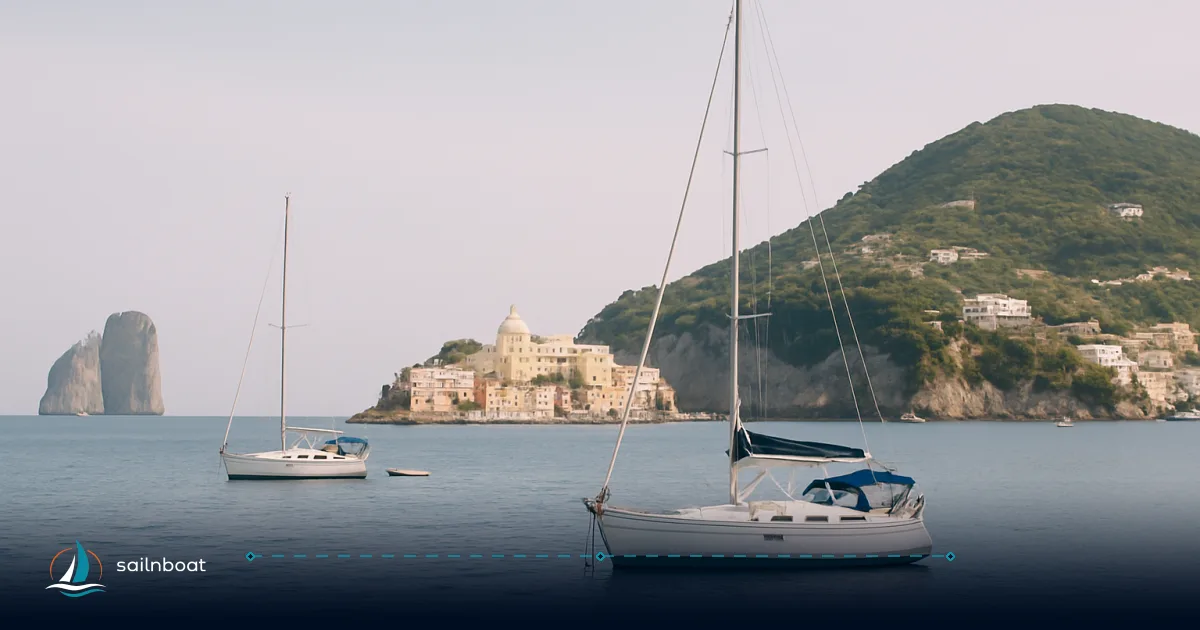
The safest, most useful gulf of naples anchorages for cruising yachts are Marina Piccola (Capri), Ischia Porto and Sant’Angelo (Ischia), Chiaiolella and Corricella (Procida), and the Baia / Cape Miseno area; each offers a distinct trade‑off between shelter, holding and services.
Overview of Gulf of Naples Anchorages
The Gulf of Naples is compact: island stops are 5–25 nm apart and heavily served by hydrofoils and conventional ferries. That density is an advantage (frequent shuttle options ashore) and a hazard (wash, wake and tightly spaced moorings). Anchorages break into three practical types:
- Sheltered harbour basins with marina services (Marina Grande/Capri, Ischia Porto, Marina di Procida) — good to excellent holding, full services, but often limited swing room and frequent commercial traffic.
- Small sheltered bays suitable for overnight on anchor (Chiaiolella, parts of Marina Piccola, Sant’Angelo) — usually sand or sand/mud with good holding but limited shore services; pick early arrival for a good patch of sand.
- Archaeological / protected zones (Parco Sommerso di Baia) and postcard harbours (Corricella) — valuable to visit but subject to mooring‑buoy rules and anchoring prohibitions over Posidonia or ruins. Check zone maps and approach markers before you drop.
Table — quick comparison (use this to pick a stop)
| Anchorage | Typical depth (m) | Bottom type | Holding | Recommended alarm radius (m) | Key facilities |
|---|---|---|---|---|---|
| Marina Piccola (Capri) | 4–15 | sand / posidonia / rock | Fair (sand patches) | 100 | Restaurants, dinghy landings; limited marina services in Capri town. |
| Grotta Azzurra approach (Capri) | 3–8 | rock / cave approaches | Fair to poor | 120 | Scenic stop only; limited ashore facilities. |
| Ischia Porto | 3–7 | mud / mixed | Excellent (mud) | 70 | Full marina services, fuel, water, chandlery, VHF channel info. |
| Sant'Angelo Bay (Ischia) | 5–15 | sand / volcanic gravel | Good | 80 | Limited ashore services, restaurants; dinghy landing to village. |
| Chiaiolella / Marina di Chiaiolella (Procida) | 3–8 | sand / mud | Good | 80 | Small marina/berths nearby; restaurants and provisions ashore. |
| Corricella Harbour (Procida) | 5–15 | sand / posidonia mix | Fair | 100 | Daytime dinghy visits, eateries; inner harbour often restricted to buoys. |
| Parco Sommerso di Baia | 4–8 (site depths) | mixed / archaeological seabed | Fair (avoid anchoring on ruins) | 100 | Visitor/dive centres, protected‑area buoys; anchoring restricted in zones. |
| Baia di Miseno / Cape Miseno | 4–12 | sand | Good | 80 | Local marina options, quay landings and shore services in Pozzuoli/Bacoli area. |
(Notes: table values synthesise recent navigation and anchorage databases and official marina brochures; depths are typical ranges encountered within the roadsteads — always sound the final approach and dive to check bottom before setting the hook.)
Capri: Marina Piccola and Grotta Azzurra
Capri is the gulf’s marquee stop; but its anchorages are specialized.
Marina Piccola
- Depth & bottom: 4–15 m with the inner lunch/swim area most commonly 6–10 m; seabed is sand with extensive Posidonia patches and intermittent rock.
- Holding: Fair on sand patches; Posidonia and mixed bottoms give variable set — dive to confirm a clean sand patch before trusting an overnight stay. Recommended anchor types are modern fluke/roll‑bar anchors (Rocna, Spade) and stern lines to shore in crowded conditions.
- Anchor alarm: Safety Anchor Alarm recommends a 100 m alarm radius for Marina Piccola because the bay is shallow-to-deep and crowded, and Scirocco can build swell rapidly. Plan swing room accordingly.
- Facilities: No fuel; restaurants and private beach clubs ashore; dinghy landings limited and often fee‑based; full marina services require a visit to Marina Grande/Capri town.
- When to visit: Best in May–June or September–October for fewer crowds; day‑stops are the norm in high season. Avoid overnighting when any SE/Scirocco forecast exists.
- Practical tip: Many experienced skippers approach Marina Piccola as a protected day anchorage, stern‑to near the cliff with a bow anchor or bow line ashore — but Posidonia and exclusion zones around the Faraglioni restrict where you can legally set the anchor.
Grotta Azzurra (Blue Grotto) — approach anchorage
- Depth & bottom: approaches are shallow; the cave entrance area and immediate lee is rocky and unsuitable for routine overnight anchoring (roughly 3–8 m in approach channels).
- Holding & use: Fair to poor — the Blue Grotto is primarily a short‑stop/photograph and tender operation area; authorised rowing boats handle cave entry. Do not attempt to anchor inside the cave; observe local exclusion markers.
Ischia: Ischia Porto and Sant'Angelo Bay
Ischia gives variety — the crater harbour at Ischia Porto is a dependable refuge; Sant’Angelo is a showpiece.
Ischia Porto
- Depth & bottom: generally 3–7 m inside the crater harbour; the inner basin is typically mud/sand with excellent holding.
- Holding: Excellent — the crater walls give near all‑round shelter and strong holding in mud; the narrow entrance is the main operational hazard. Recommended alarm radius quoted in harbour guides is ~70 m in the inner basin.
- Facilities: Full marina services commonly available — fresh water, shore power, fuel (check berth size/depth restrictions), chandlery and waste services are listed for Ischia Porto marinas and commercial harbour offices. VHF channel details and berth booking are available locally.
- Safety: Entrance channel can have regulated one‑way traffic at times; call the Capitaneria on VHF before entry. Hydrofoils and car ferries operate several times per day — keep clear of main ferry approaches.
Sant'Angelo Bay
- Depth & bottom: typically 5–15 m with sandy and volcanic gravel areas; the bay deepens quickly off the beach.
- Holding: Good on verified sand; recommended alarm radii commonly listed are around 80 m because of depth variation and traffic. Water‑taxi lanes must be avoided when selecting a spot.
- Facilities & character: The village is car‑free and reached by dinghy; few shore services beyond restaurants and dinghy landings — no fuel. The thermal attractions of Ischia (spas, fumaroles near Maronti) add a cultural draw.
Procida: Cava dell'Isola and Corricella Harbour
Procida is compact and authentic; anchor choice depends on whether you want a calm overnight or the Corricella atmosphere.
Cava dell'Isola (Procida / Forio‑type bay)
- Depth & bottom: local guides indicate mixed sand with rocky patches and depth varying 5–20 m in some clefts; confirm conditions on approach. Safety Anchor Alarm flags mixed bottoms and advises careful placement.
- Holding: Fair where sand exists; poor over rock or Posidonia. Use a set dive/snorkel to confirm a sand patch before committing to overnight.
Corricella Harbour (Procida)
- Depth & bottom: 5–15 m outside the inner harbour; inner sections are shallow and busy with fishing craft.
- Holding: Fair; limited swing room and many buoys — Safety Anchor Alarm lists Corricella as better for daytime visits while Chiaiolella (SW side) is preferred for overnight. Recommended alarm radius is around 100 m due to fair holding and ferry/wake exposure.
- Facilities: Limited berthing in the picturesque inner harbour (often buoyed for local boats); dinghy ashore for excellent local restaurants. If you need fuel or major services, use Marina di Procida.
Baia di Miseno: Marina di Chiaiolella and Parco Sommerso di Baia
(Outline pairs Marina di Chiaiolella here — note Chiaiolella is on Procida but commonly used in Gulf itineraries that include Miseno/Bacoli approaches.)
Marina di Chiaiolella (Procida) — included for gulf itineraries
- Depth & bottom: shallow, 3–8 m over sand/mud in the bay roadstead; good holding is reported for overnighting. Recommended alarm radius commonly given as 80 m.
- Facilities: Marina di Procida / Chiaiolella area provides water, electricity and fuel at the main marina (check opening hours and berth depth limits). Restaurants and provisioning are nearby in walking distance.
Parco Sommerso di Baia (Baia / Pozzuoli)
- Depth & bottom: the submerged archaeological park contains remains at roughly 4–8 m in many areas, with a larger extent down to ~15 m in places; the seabed holds Roman ruins and mosaics.
- Holding & rules: Holding is fair in sand patches but anchoring is limited or prohibited in protected zones — maps show Zone A (no entry), Zone B (mooring buoys only) and Zone C (limited anchoring on sand). Enforcement is active; use official zone charts and buoys.
- Facilities: Baia/Pozzuoli have dive operators and visitor services rather than full marina infrastructure; nearest full marina services are in Pozzuoli or Marina di Procida.
Safety Considerations and Best Times to Visit
The Gulf of Naples rewards local knowledge. Here’s what to build into your plan.
Weather Patterns and Winds
- Scirocco (SE): Scirocco can build a 2–3 m swell across the gulf quickly; anchorages exposed to SE (Marina Piccola south side, Capri Faraglioni) become unsafe with a Scirocco forecast. Many anchorage guides advise immediate departure from SE‑exposed bays at the first sign of Scirocco.
- Libeccio (SW): Libeccio funnels into southern bays such as Sant’Angelo or Chiaiolella and can make those anchorages untenable at F4+. Plan escape routes north to Ischia Porto or larger harbours.
- Practical: Always check professional marine forecasts and have a firm plan to move to an enclosed harbour (Ischia Porto, Marina di Procida) if forecasts shift.
Ferry Traffic and Local Regulations
- Expect heavy hydrofoil and ferry activity between Naples and the islands (Molo Beverello for hydrofoils, Calata Porta di Massa for car ferries); schedules are dense in season and create persistent wakes near main channels. Keep well outside ferry lanes and avoid anchoring where regular crossings and landing ramps concentrate traffic.
- Protected areas and Posidonia: Italy enforces protection of Posidonia meadows and heritage marine parks; fines for anchoring on Posidonia are significant and enforced at scale. Use dive checks and official zone charts before dropping anchor, especially in Baia and near Capo Miseno.
Recommended anchor alarm radii and scope guidance
- Use anchor alarms sized to the depth and likely swing radius. As a practical rule from recent anchorage guides: small sheltered bays in 3–8 m: 60–80 m alarm radii; mixed/variable bottoms or busy bays: 100–120 m; enclosed harbours with good mud holding: 50–80 m. These ranges reflect verified anchor‑location data across the gulf — match your alarm to depth x scope and the local traffic environment.
Best times to visit
- Shoulder seasons (May–June; September–October) give lighter ferry schedules, cooler nights and safer anchoring windows. July–August is peak tourism — anchorages like Marina Piccola and Corricella are crowded by day and may be noisy overnight.
Final operational checklist before you arrive
- Confirm current marina opening hours, fuel availability and maximum berth depth with the marina office (Capri/Ischia/Procida marinas publish differing berth depth limits).
- Sound and visually inspect the seabed before setting the hook; if Posidonia or archaeological remains are present, find a clean sand patch or use a marina/clearly designated buoy.
- Set anchor alarm to the recommended radius for that anchorage and factor in ferry/wake traffic: larger radii for deeper or busier bays.
Plan your trip If you want a calm, serviceable overnight with fuel and straightforward logistics, plan to use Ischia Porto or Marina di Procida as your main stop and reserve Marina Piccola or Chiaiolella for daytime swims and evenings ashore. If you intend to visit the Parco Sommerso di Baia for diving or archaeology, contact the park office for current zone maps and permitted mooring buoys before you go.
Plan your sailing trip to the Gulf of Naples and use this anchor‑by‑anchor checklist to choose the right stop for the conditions, crew and services you need — and always file a weather check and harbour radio call before committing to an overnight on anchor.
Frequently Asked Questions
The consistent choices are Marina Piccola and the Blue Grotto approach at Capri; Ischia Porto and Sant’Angelo on Ischia; Chiaiolella (Procida) and Corricella (day visits) on Procida; and Baia di Miseno / Parco Sommerso di Baia near Cape Miseno.
Typical ranges: Marina Piccola 4–15 m (sand, posidonia, patches of rock); Grotta Azzurra approaches shallow 3–8 m (rock); Ischia Porto 3–7 m (mud/sand); Sant’Angelo 5–15 m (sand/volcanic gravel); Chiaiolella 3–8 m (sand/mud); Corricella 5–15 m (sand/posidonia); Parco Sommerso di Baia 4–8 m over archaeological remains.
Marina/harbour berths (Capri Marina Grande, Ischia Porto, Marina di Procida) provide fuel, water and shore services; many small bays (Marina Piccola, Chiaiolella) have restaurants and dinghy landings but limited fuel; Baia and protected sites offer visitor centres or dive operators rather than full marina services.
Watch Scirocco (SE) swell and Libeccio (SW) funneling into southern bays, avoid Posidonia meadows, allow large alarm radii where holding is fair, and keep clear of frequent ferry/hydrofoil lanes and local water‑taxi routes.
Shoulder months (May–June and September–October) offer the best balance of shelter and lighter crowds; July–August sees peak crowds and stronger ferry traffic which affects day anchorages.
Scirocco (SE) can build a rapid 2–3 m swell across the gulf; many anchorages open to SE become unsafe quickly — a clear departure plan is essential when a Scirocco is forecast.
Written by
Sailnboat Editorial
The Sailnboat editorial desk covers yacht and boat chartering worldwide — routes, bases, seasons, boat types, paperwork and the practical costs that decide a trip. We are a charter marketplace, not a boat owner or a local agency: what we sell is judgement and support, so our guides are written to help you make a decision, not to sell you a specific boat. Every guide is checked against live operator and marina data before it goes out.
Fact-checked against live operator and marina data, and published under our editorial standards. Last reviewed: .