Crew Background Checks: Essential Insights for Charter Clients
Exactly what to ask for, what a broker can reasonably confirm, and how to handle short‑notice hires; a practical checklist and sample broker language for crew background checks.

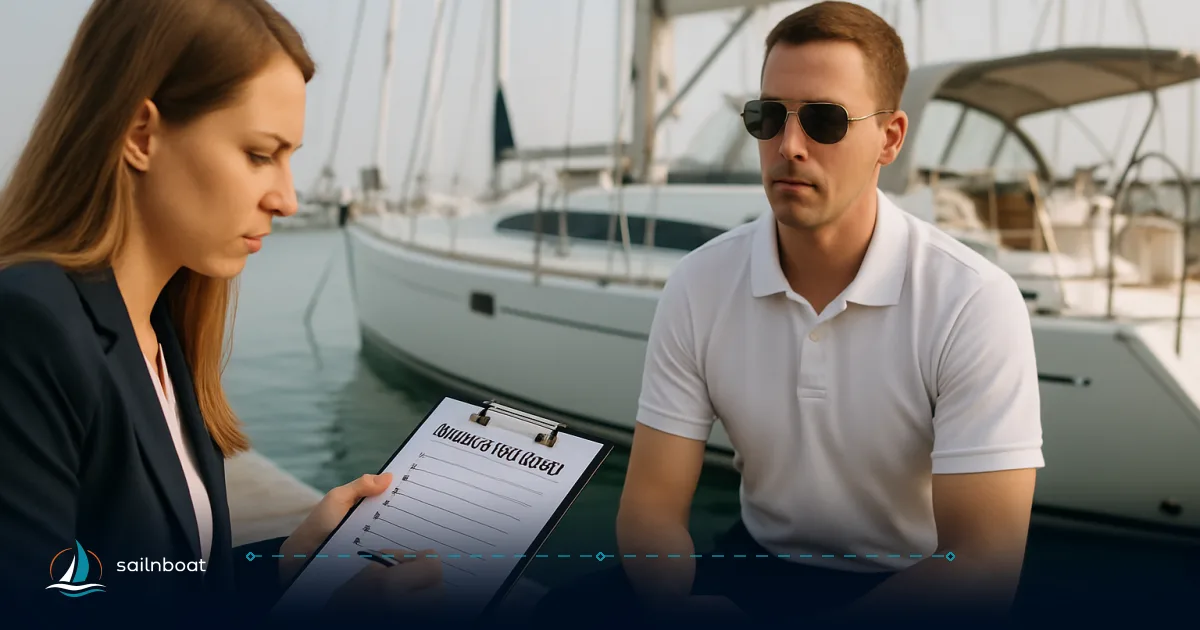
Ask for these four items at handover — a valid STCW certificate/CoC with the correct endorsements, a current seafarer medical (ENG1/ML5), passport/visa and two independent employer references — and you will have the practical baseline for crew background checks. Those items answer the core question you face as a charter client: is the person legally qualified and fit for the role today? Read on for what each check actually proves, what brokers routinely do, how to handle short‑notice hires, the legal limits on collecting data, the red flags to watch for and a client checklist plus sample broker wording you can copy into an offer.
Understanding Crew Background Checks
A thorough crew background check is multi‑layered. No single document proves a person is risk‑free; every check addresses a different question: identity and right to be on board; qualifications and currency of endorsements; fitness for duty; and past behaviour or convictions that could affect safety, security or reputation.
- Key documents and what they prove
- Identity & immigration: passport (identity + nationality) and applicable visas — proves identity and ability to join/leave ports.
- Qualifications: STCW certificates, Certificates of Competency (CoC) and endorsements (GMDSS, tanker endorsements) — show training and legal competence under STCW.
- Medical fitness: ENG1 or equivalent seafarer medical fitness certificate — shows the seafarer met medical standards required for sea service; medical certificates are framed by STCW and national implementation.
- Employment history & sea service: discharge book / seafarer’s book entries or employer confirmation — needed for revalidation and sea‑time requirements.
- References: at least two independent, phone‑verified references from prior employers or captains — behavioural issues most often emerge here.
- Criminal / police checks: country police certificate, DBS, ACRO or national police checks where lawful and relevant; availability and scope vary by jurisdiction and role.
Table — what each check covers at a glance
| Check | What it verifies | Who issues / source | How to verify quickly |
|---|---|---|---|
| STCW / CoC / endorsements | Training, grade and endorsements required for the role | Flag‑state maritime authority / issuing administration | Inspect original; check issuing register where available or ask broker for timestamped verification record (third‑party verification tools exist). |
| ENG1 / ML5 medical | Fit for sea service (vision, hearing, general health) | Approved medical practitioner / national authority | Inspect original / stamped copy; note expiry (medical certificates commonly valid up to two years under STCW rules). |
| Passport / visa | Identity, nationality, right to embark/disembark | National passport office / consular service | Sight original; match photo and passport number to manifest. |
| Employment / sea‑service | Previous positions, sea time for revalidation | Previous employers, discharge book | Phone referees; obtain sea‑service records or stamped discharge pages. |
| Criminal / police check | Convictions or criminal records in a jurisdiction | National police / Disclosure bodies (DBS/ACRO/etc.) | Where lawful, obtain certificate; where impractical, request a signed disclosure and verify via third‑party vendor. |
| Behavioural / OSINT check | Reputation, patterns of misconduct | Independent vetting firms / OSINT analysts | Ask broker for an intelligence‑led vetting report (services like SafeSail/CrewPass provide multi‑source checks). |
(Use the table to decide which checks you require for commercial vs private charters — behavioural vetting is sometimes used for family or high‑profile charters.)
Verification Challenges for Short‑Notice Hires
Short lead times are the most common operational reason vetting is incomplete. Know the realistic limitations and the practical mitigations.
Common obstacles
- Time: formal police or national criminal certificates and some flag‑state verifications can take days to weeks depending on country and backlog. Rapid identity and document sighting can be immediate, but deeper checks take time.
- Cross‑jurisdiction gaps: a certificate issued by one administration may be straightforward to check; others require direct contact with the issuing authority. Non‑standard formats increase verification time.
- Third‑party reliability: recruiters, agencies and ad‑hoc referees sometimes recycle the same referees; independent referee development requires phone time and local knowledge. Professional vetting firms specialise in this but add cost and time.
Practical workarounds for short notice
- Staged acceptance: require originals sighted at embarkation, immediate phone verification of referees, and conditional acceptance subject to receipt of outstanding formal checks within a timeframe agreed with your operator.
- Temporary restrictions: limit the crew member’s duties initially (no unsupervised bridge or vault access) until checks complete.
- Rapid vendors: use a documented, timestamped third‑party verification snapshot (document‑verification platforms and specialist crew‑vetting firms can provide near‑real‑time evidence that documents are genuine).
- Signed declaration and immediate drug test: a signed personal disclosure (criminal history, pending charges) plus on‑board or port drug screening reduces immediate risk, but it is not a substitute for full background checks.
Privacy and Legal Considerations
Data protection and employment laws constrain what you can collect, how long you may retain it and how you may use it.
Key legal frameworks
- GDPR / UK data protection: pre‑employment vetting is lawful where necessary for the role or where consent and a lawful basis exist; processing criminal‑conviction data is high‑risk and typically requires a specific legal condition and strong safeguards. Employers and brokers should follow national guidance (ICO) on recruitment vetting.
- UK criminal checks: DBS checks are governed by eligibility rules — not every role is eligible for standard or enhanced checks; employers must follow the DBS code of practice.
- US: the Fair Credit Reporting Act (FCRA) controls use of consumer‑report background checks and requires disclosure, consent and adverse‑action procedures; EEOC guidance restricts how criminal history may be applied to avoid discrimination and advises individualized assessment. If you use a CRA to run checks you must comply with FCRA steps.
What this means for you
- Ask the broker who is the data controller/processor for each check and for a brief privacy summary explaining retention and lawful basis.
- Do not demand extraneous personal data; request only what is proportionate to safety and compliance (qualification documents, criminal checks where lawful, references, medical fitness).
- Expect different processes by jurisdiction: what’s routine and rapidly obtained in one country may be restricted or slow in another.
Identifying Red Flags in the Hiring Process
Red flags often show up in cross‑checks rather than a single document. Treat any one inconsistency as a prompt to dig deeper.
Common red flags and actions
- Inconsistent dates or overlapping roles on a CV: call the past employer and ask for sea‑service records.
- Referees who provide only email confirmations or are slow to respond: insist on a phone call or an alternative referee; slow/no response is a practical warning sign.
- Documents that are photocopies with missing stamps or unclear issuer details: request certified scans or originals; use a document‑verification provider if in doubt.
- Repeated short contracts with several brief dismissals: ask for reasons and look for corroboration in references.
- Refusal to consent to a lawful check or to provide contactable referees: decline the candidate for safety reasons.
- Behavioural warnings from OSINT or intelligence vetting (patterned harassment, reputational flags): consider independent investigative vetting; these often bypass criminal‑record checks entirely.
Requesting Pre‑Embarkation Assurances — Client Checklist
Use this checklist when you instruct your broker or charter manager. Ask for written answers and dated evidence.
Client checklist (items to request in writing)
- Identity: passport number and scanned photo page (sighted originals at check‑in).
- Qualifications: signed/initialled copies of STCW/CoC, certificates and endorsements with expiry dates and issuer noted.
- Medical: copy of ENG1/ML5 or equivalent with issue and expiry date.
- Sea service: copy of discharge book pages or employer confirmation showing required sea‑time.
- References: names, roles and direct phone numbers for at least two prior captains or managers; request broker to complete phone checks and summarise answers.
- Criminal checks: state whether a national police certificate or DBS was obtained; if not available pre‑embarkation, request a signed disclosure and timeline for receipt of formal certificate.
- Vetting provider: name of any third‑party vetting service used and a copy (PDF) of the vetting report or a verification summary (timestamped).
- Expiry tracking: confirmation that broker/manager will monitor expiry dates during the charter period and notify you if anything lapses, where this is agreed as part of their service.
- Substitution & recourse: contractual clause that allows a named substitution process or refund/compensation if adverse information arises within X days of embarkation (agree the X with the broker; common practice is to define a narrow window).
- Duty limits: for short‑notice hires, request temporary duty restrictions until full checks are completed.
Sample Language for Brokers
Copyable clauses for offers — use these as starting points and adapt to law and operator practice.
Concise assurance (for routine charters)
- "The Broker confirms that, as at [date], the crew proposed for the Charter have provided originals or certified copies of identity documents, STCW/CoC certificates and a seafarer medical certificate (ENG1/ML5 or equivalent), and that the Broker has examined these documents and holds a dated verification record. The Broker makes no representation and gives no guarantee as to the absence of any unrecorded convictions; where a criminal‑record check has been requested, the report issuer and date are noted in the attached verification summary."
Stronger, conditional wording (for private/high‑profile charters)
- "The Broker engaged [vetting provider name] to undertake document authentication, reference checks and an adverse‑media review for each proposed crewmember; dated vetting reports are attached. The Owner/Charterer will be notified immediately of material adverse findings; if material adverse information arises within [X] days of embarkation that could materially affect safety or security, the Owner/Charterer may require replacement of the affected crew member and compensation per Clause [Y]."
Operational clause for short notice hires
- "Where full national police clearance cannot be obtained before embarkation due to local processing times, the Charterer accepts provisional embarkation subject to: (a) originals sighted; (b) telephone reference verification completed and documented; (c) a signed disclosure by the crewmember; and (d) completion of outstanding formal checks within [agreed timeframe], failing which the Charterer may require immediate replacement without penalty."
Language tips
- Use "to the best of the Broker’s knowledge" where appropriate (avoids absolute guarantees).
- Always request the vetting provider name and a dated report — that gives you an auditable trail.
- Include substitution and recourse mechanics with specific time windows and compensation mechanics.
Final practical steps (what you should do next)
- Insist on the client checklist above in writing and require the broker to attach dated verification records.
- For short‑notice hires demand staged verification, temporary duty limits and a defined recourse window.
- If the charter involves high vulnerability (family, high net worth, VIPs), require an intelligence‑led vetting report from a specialist provider (behavioural/OSINT checks) in addition to document checks.
Charter safety and reputation depend on procedures and judgement more than a single certificate. Use the checklist and the sample clauses above to force clarity from your broker: who did what, when, and what happens if something turns up.
Frequently Asked Questions
A complete check covers identity (passport), certificates (STCW, CoC/GMDSS endorsements), seafarer medical (ENG1/ML5), police/criminal‑record checks where lawful, employment and sea‑service verification, and at least two independent references.
Inspect originals or certified scans, check issuing authority registers where available, and ask the broker for timestamped verification or a third‑party vetting report (CrewPass and similar services provide document verification and expiry tracking).
Time is the main constraint: formal police certificates and cross‑jurisdiction verification can take days to weeks; you can mitigate with rapid document inspection, phone referees, conditional embarkation and post‑boarding checks.
In the EU/UK the GDPR (and national data‑protection acts) governs collection and processing; in the US the FCRA controls consumer‑report usage and the EEOC limits how criminal history is applied; local law also matters for police checks (DBS in the UK, etc.).
Inconsistent dates or sea service, unverifiable referees, multiple short contracts, unusual gaps, unexplained document replacements, refusal to allow provenance checks, adverse social/media signals or behavioural allegations.
Ask for a written checklist of documents sighted, the scope of checks performed, the vendor name if an external vetting provider was used, date of verification and a clause outlining substitution and recourse if new adverse information appears.
Written by
Sailnboat Editorial
The Sailnboat editorial desk covers yacht and boat chartering worldwide — routes, bases, seasons, boat types, paperwork and the practical costs that decide a trip. We are a charter marketplace, not a boat owner or a local agency: what we sell is judgement and support, so our guides are written to help you make a decision, not to sell you a specific boat. Every guide is checked against live operator and marina data before it goes out.
Fact-checked against live operator and marina data, and published under our editorial standards. Last reviewed: .