How to Reserve a Mooring Buoy: Apps, Timing, and Tips
Practical, step-by-step tactics for reserving a mooring buoy in peak season using Moorbuoys, OnBuoy and BoatyBall, plus device checks, approach safety and fallbacks.

You can reliably secure a mooring buoy in busy cruising grounds by knowing which app to use, preparing your device and account in advance, and syncing your booking attempt with the platform’s release window. This is a practical guide to reserving mooring buoys—covering the best apps for each region, the exact timing to secure your spot, device and connectivity tactics, and hands-on captain’s advice for both successful mooring and fallback options if your first choice is gone.
Overview of Mooring Buoy Reservation Platforms
Start by matching the reservation system to your cruising area. Not every app covers every region, and the workflow—from instant booking to request-based—varies. Some platforms list only public park buoys, others connect you to private owners, and a few operate formal reservation programs in popular destinations.
Key Reservation Apps
- Moorbuoys: This platform maps both public and private buoys, displaying practical info such as maximum vessel size, last inspection date, and—where available—depth at the mooring. For private buoys, you can book instantly and pay via card or Apple Pay (where supported). Options for hourly or daily stays depend on the listing. Coverage is strongest in U.S. state parks and is expanding.
- OnBuoy: Designed as a community-driven “Airbnb for moorage,” OnBuoy lets private buoy or dock owners host their own listings. Some are instantly bookable, others require a request and approval. The “public check-in” feature allows users to flag buoys as occupied or free in real time, which helps the community judge availability. Coverage is regional, with a focus on the Pacific Northwest and select U.S. coastal communities.
- BoatyBall: A mainstay in the British and U.S. Virgin Islands, BoatyBall manages a subset of moorings released for reservation each morning at 7:00 local time. The system operates on a noon-to-noon check-in/check-out cycle for reservables, and offers membership tiers that can unlock earlier booking windows. The app clearly documents payment and check-in routines.
Comparison Table — At a Glance
| Platform | Typical Region(s) | Booking Model | Notable Features |
|---|---|---|---|
| Moorbuoys | U.S. state parks, private buoys (expanding coverage) | Instant booking for private buoys; info only for public | Safety info, real-time availability, Apple Pay, hourly/daily options (where available) |
| OnBuoy | Community/regional (Puget Sound, U.S. coastal) | Host-controlled: Book Now or Request | Community check-in, host rules, GPX export, real-time availability |
| BoatyBall | BVI, USVI, similar programs | Daily release, membership tiers | 7:00 local release, advanced-reservation upgrades, noon-to-noon stays, detailed payment routines |
How to pick: If your cruising plan includes a region with a well-known program (e.g. BVI → BoatyBall), use that platform. In U.S. mainland waters, compare Moorbuoys and OnBuoy for both coverage and the fine print on each listing.
Timing Strategies for Peak Season Reservations
In high season, demand for reservable mooring buoys far outstrips supply—especially in anchorages with limited space or protected status. Success comes down to preparation and timing, not luck.
Advance Reservation Tips
- Know the release rules: Many platforms release reservable buoys on a strict daily schedule. For example, BoatyBall drops its new batch at 7:00 local time. Be logged in, with your account and payment ready, several minutes before.
- Use membership upgrades: If you sail a high-demand area regularly, consider paid membership or upgrades (such as BoatyBall’s advanced-reservation tier) that can grant earlier access to bookings. This is often the only way to consistently secure a spot during peak weeks.
- Pre-save vessel and payment details: Most platforms give you only a short window to complete checkout. Enter your vessel specs and billing info in your profile before attempting a reservation. Moorbuoys, for example, supports Apple Pay for fast transactions.
- Automate reminders and use multiple devices: Set an alarm 5–10 minutes ahead of the release. Keep two devices handy—if your phone drops signal, a tablet or laptop with mobile data as backup can save the day. Some seasoned skippers even refresh both the app and the web version in parallel.
- Monitor supply trends: Many apps show real-time or historic occupancy data. Track your target bay for a few days before your trip—if it fills by midday, plan to reserve the evening before or arrive early. OnBuoy’s community check-in makes live demand visible.
Device and Connectivity Considerations
A well-charged phone is essential, but a stable, responsive data connection is often the true bottleneck at the moment of booking.
App Compatibility and Internet Access
- Device compatibility: Moorbuoys currently requires iOS 16.4+ or a recent Android version. OnBuoy also needs a modern OS. Always check the app store for the latest minimum requirements before your trip, especially if you’re using an older device.
- Account readiness: Stay logged in, enable push or SMS alerts, and keep your vessel and payment info saved in the app. This reduces the time spent at checkout and avoids last-second data entry errors.
- Connectivity choices: A strong 4G/5G cellular signal is usually best for booking attempts; marina Wi-Fi often struggles during peak periods and should be a fallback. For remote anchorages, a crew member’s mobile hotspot or, in rare cases, a dedicated marine satellite link can help—but be aware that satellite connections have higher latency and cost.
- Practical device tips: Disable auto-lock, pre-load the reservation page for your target bay, and use both the app and browser versions in parallel if possible. Sometimes, one responds faster than the other.
Best Practices for Mooring Buoy Approaches
Securing a reservation is only half the story—you still need to moor safely and efficiently, particularly when other boats are circling the same bay.
Safety Protocols and Equipment
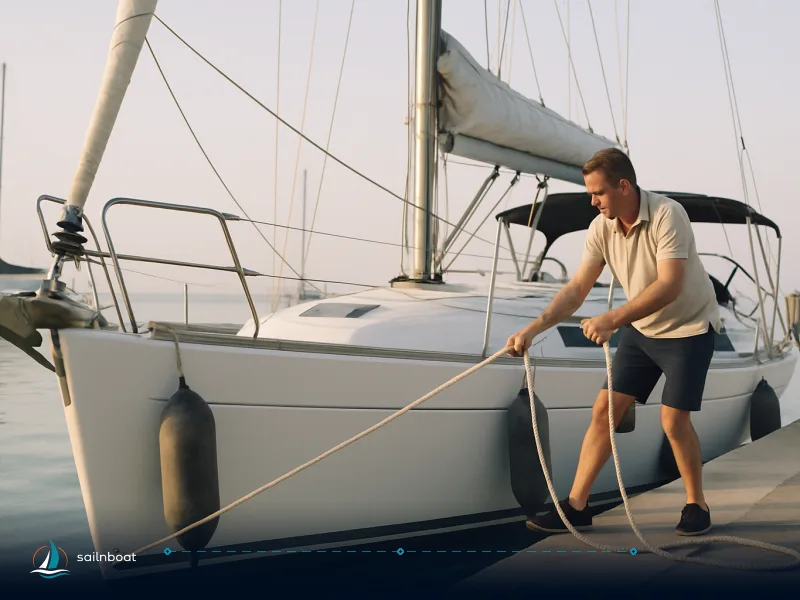
- Have the right kit ready: At minimum, prepare a boat hook or telescoping buoy pole, gloves, at least two fenders per side, a 10–15 m bow or stern line coiled and ready, an extra line or bridle, and personal flotation devices for crew working at the rail. Moorbuoys and other platforms highlight the importance of proper gear for safe buoy handling.
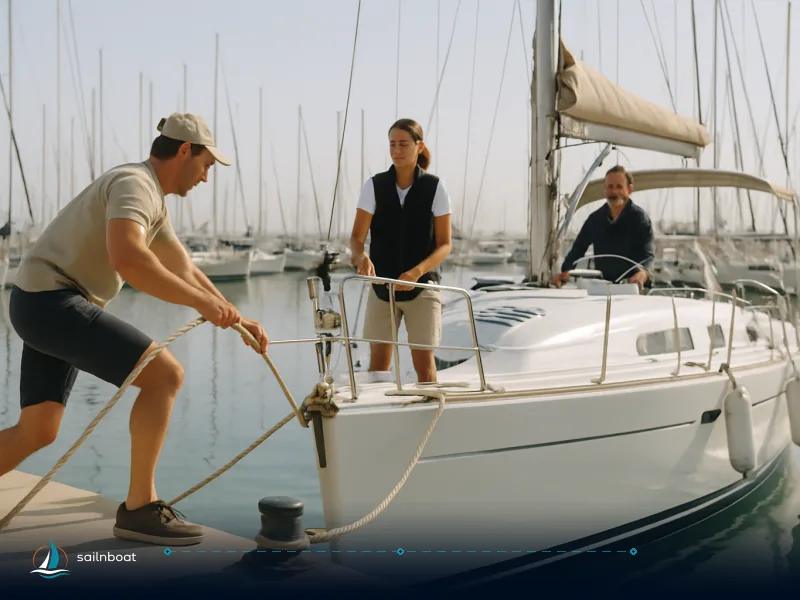
- Brief your crew: Assign clear roles—one person at the bow with the hook, one at the stern to manage the line, and a helmsman focusing on steady, slow approach. State commands once and review the plan before entering the bay.
- Approach technique: Always approach into wind or current to maintain control. When alongside the buoy, stop the engine if safe, or keep minimal forward thrust to hold position. Use the boat hook to pick up the pennant, pass your line through and cleat off. Add a second line or bridle to reduce chafe and swinging. Avoid sudden maneuvers or forceful grabs—controlled, methodical handling is safer for both crew and equipment.
- Inspect before trusting: Visually check the pennant, chain, and shackle for wear or fouling before committing weight to the buoy. Many platforms display a last inspection date and a maximum vessel size; use this info to judge if it’s safe for your boat.
Contingency Planning for Unavailable Reservations
Even with perfect preparation, busy anchorages fill fast. Always have a fallback ready.
Alternative Strategies
- Contact the harbor office or marina: If the app is sold out, local authorities may have last-minute slips or overflow moorings, or can point you to where first-come buoys remain. Use the harbor’s published phone number or working VHF channel—not Channel 16—for operational inquiries.
- Leverage your charter base: Charter operators often have local contacts or standing arrangements for their clients. If you’re close to your base, ask if they can arrange an overnight solution or flexible check-in/out.
- Arrive early for first-come buoys: If all reservable options are gone, an early arrival is your best chance. In popular bays, being on station at first light often beats a mid-morning approach. Plan your fuel, meals, and crew rest accordingly.
- Safe anchoring alternatives: Identify designated anchorages or quieter bays within easy reach of your intended stop. Check charted depths and tidal swings. When anchoring, pick a sheltered area, scope your rode for the expected wind and tide, and rig your dinghy painter for access. Only use a trip line if there’s a known risk of fouling—such as rocky or debris-prone bottoms—and mark it clearly with a float to avoid entanglement by passing boats. Loose lines in the water can create hazards in crowded anchorages.
- Community help via VHF or dinghy: In smaller bays, local skippers often know when a boat is about to depart or if a mooring is unexpectedly free. A polite call on the harbor’s working VHF channel, or a quick dinghy visit (without intrusion), can sometimes turn up a spot.
Etiquette for Mooring Buoy Reservations
Respecting the system and your fellow cruisers ensures everyone gets a fair shot at scarce space.
- Follow posted stay limits and check-in/out times: Platforms set these rules to maximize access. BoatyBall, for example, enforces a noon-to-noon window for reservable moorings. Don’t overstay, even if the bay is quiet.
- Check out when you leave: Use the app’s check-out or community check-in feature so the next skipper knows the buoy is free. OnBuoy is particularly strong on this, with real-time status updates helping everyone.
- Leave the spot tidy: Remove all trash, clear any lines from the water, and report damage in the app if available (Moorbuoys has a report-issue function).
- Respect size limits and special rules: If a buoy lists a maximum vessel size or specific instructions, follow them exactly. These limits are set for safety and to protect the equipment.
Final Checklist — What to Do the Morning You Try to Reserve
- Account: Logged in, vessel and payment details saved.
- Devices: Two devices ready (phone + tablet/laptop), auto-lock disabled.
- Connection: Strong cellular or backup hotspot; test loading the booking page before the release time.
- Crew: Roles assigned for mooring approach and lines.
- Plan B: Harbor contact number saved, alternate anchorage identified and charted.
Wrapping Up: Your Next Steps
Install the right apps, confirm your account details, and practice your approach in calm conditions so your crew can execute quickly when the busy-season window opens. If you charter, ask your base which platform local owners prefer and whether they maintain a harbor-office contact list—local intelligence often saves an anxious evening on the hook.
When it comes to peak-season mooring, preparation, timing, and knowing your options make the difference between a secure overnight and a scramble for alternatives. Start setting up now, and you’ll be ready when the window opens.
Frequently Asked Questions
Moorbuoys, OnBuoy and BoatyBall are the most widely used platforms; each targets different regions and workflows—Moorbuoys maps public/private buoys with instant booking, OnBuoy connects private hosts and public moorages with check-in visibility, and BoatyBall runs a reservations program (notably in the Virgin Islands) with daily releases for reservables.
It depends on the platform and the buoy owner: BoatyBall offers an advanced-reservation upgrade (some members can reserve up to 24 hours ahead) while most platforms let hosts set availability—many reservable buoys are released daily at a fixed local time, so check the specific listing and membership options.
Use a smartphone or tablet supported by the app (Moorbuoys supports iOS 16.4+ and Android; OnBuoy’s iPhone app lists iOS 17+), stay logged in, enable location services, and have a fast data connection or marina Wi‑Fi plus a backup hotspot; pre‑save payment methods for faster checkout.
Contact the harbor master or marina by phone or VHF (use their published working channel), ask your charter base for assistance, arrive early to try first-come buoys, and be prepared to anchor in the designated anchorage if necessary.
Approach slowly into wind/current, stop alongside or slightly forward of the buoy, use a boat hook or buoy pole to gather the pennant, pass a bow or stern line and add a second line or bridle; brief crew, wear lifejackets, and keep fenders in place.
Written by
Sailnboat Editorial
The Sailnboat editorial desk covers yacht and boat chartering worldwide — routes, bases, seasons, boat types, paperwork and the practical costs that decide a trip. We are a charter marketplace, not a boat owner or a local agency: what we sell is judgement and support, so our guides are written to help you make a decision, not to sell you a specific boat. Every guide is checked against live operator and marina data before it goes out.
Fact-checked against live operator and marina data, and published under our editorial standards. Last reviewed: .