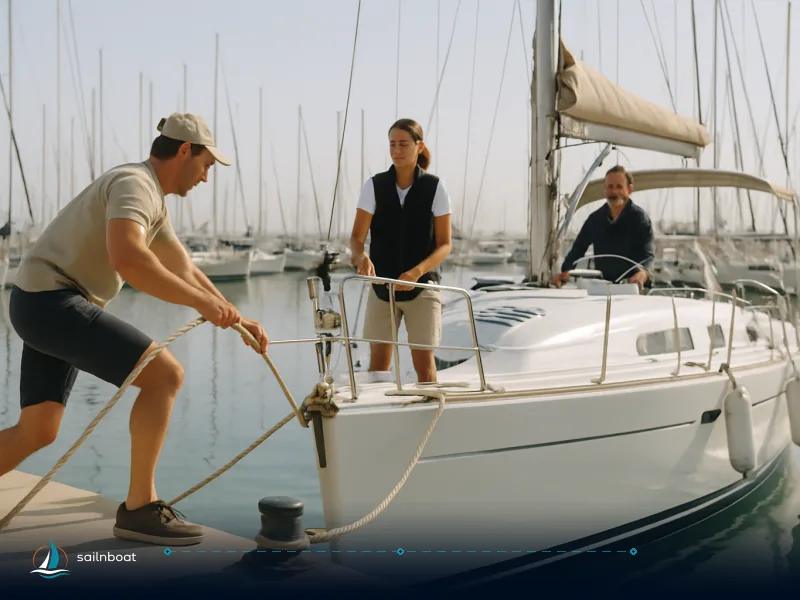
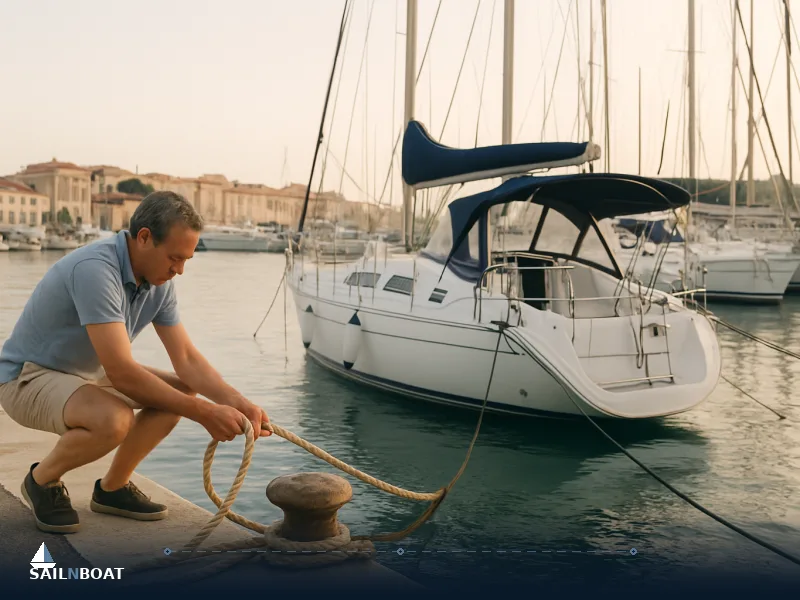
Docking Made Easy: Step-by-Step Techniques for Charterers
Clear, practical docking techniques for charterers: how to plan the approach, place fenders, rig lines, avoid common mistakes and dock single‑handed with confidence.

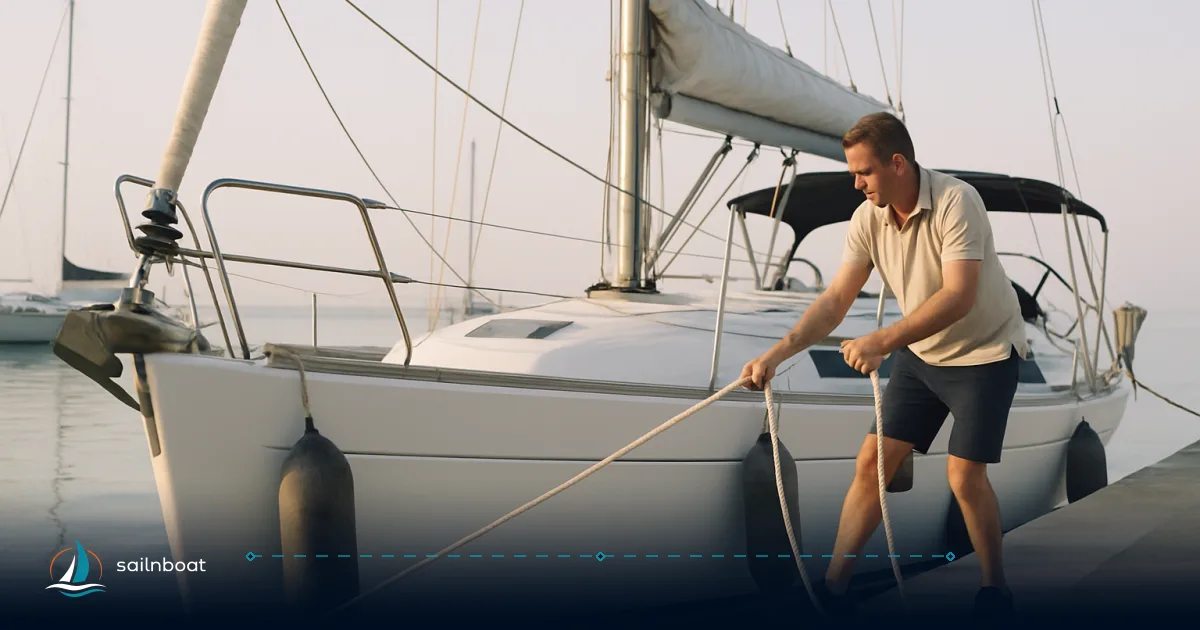
Docking Techniques: What Charterers Need to Know Before Approaching the Berth
Approaching a marina berth is about control, not speed. Most marinas require you to approach at a 20°–45° angle at near-idle speed, giving you time to judge, stop, and use lines to pivot as needed. These docking techniques give you margin for error—which is exactly what you want when you’re handling a charter yacht in an unfamiliar port.
Understanding Wind and Current Impact on Docking
Wind and current are the two main forces that shape your docking plan. Identify which is stronger, estimate your drift, and adjust your approach and the first line you’ll put ashore.
Wind Effects
- When the wind pushes you toward the dock, use a shallower angle and let the wind guide you for the last meter.
- If the wind pushes you off, come in steeper into the wind. Arrive with enough momentum to get alongside, correcting the bow with short engine bursts.
- Gusts can make the last 20–30 meters unpredictable. Anticipate strong corrections but avoid oversteering.
Current Considerations
- Currents act on the whole hull and can be harder to correct than wind. If current dominates, approach from downstream to keep control.
- In strong cross-current, a midship or stern spring is often essential. Use the engine gently against that spring to hold position and pivot.
- In tidal marinas, slack water is typically the safest docking window. When slack isn’t available, plan for the stronger force and rig lines accordingly.
Med-Mooring and Bow-to Docking: Mediterranean Docking Techniques
If you’re chartering in the Mediterranean, expect to use med-mooring or bow-to docking. These are standard practices in most marinas in Croatia, Greece, Italy, and Turkey, where space is limited and pontoons are few.
Med-Mooring Explained
Med-mooring means reversing (stern-to) or going bow-to the quay, dropping your anchor off the bow—or picking up a laid mooring line—and then securing stern or bow lines ashore. This setup maximizes berthing density and is common in the region, though some marinas use finger pontoons or alongside berths.
Practical Steps
- Brief the crew: Assign roles for anchor handling, stern lines, and fender management before you’re near the quay.
- Prepare fenders: Place fenders along both sides, especially at the corners and transom or bow.
- Drop anchor or pick up a mooring line: If anchoring, drop at a distance that gives you a 3:1 or 4:1 scope to the quay. For lazy lines, use a boat hook.
- Approach slowly: Reverse or go forward toward the quay at idle speed, adjusting for wind and current.
- Secure lines: Pass stern or bow lines to the quay. Use springs for extra control if possible.
- Check alignment and tension: Adjust anchor chain or mooring line tension to keep the boat off the quay.
Bow-to vs. Stern-to
- Stern-to: Easier for most crews, as you can step off the swim platform, but requires good reverse control.
- Bow-to: Useful for boats with limited reverse control or when the quay is low. Use a passerelle (gangway) for access.
Key Med-Mooring Tips
- Maintain at least 0.5–1 meter between the boat and the quay to avoid hull damage from surge.
- Use large fenders at the corners and stern or bow.
- Confirm anchor holding and scope before leaving the boat unattended.
- In busy ports, marina staff may handle lines ashore, but always check the condition yourself.
Typical Berth Depths, Fender Sizes, and Line Diameters
Berth depths, fender sizes, and line diameters vary by region and marina. There is no universal standard, and depths can change due to silting or dredging. Always check with your charter base or the marina office for recent information, especially if your yacht draws more than 2 meters.
Quick Reference Table: Fender Sizes, Dock Line Diameters, and Typical Berth Depths
| LOA (m) | Typical Berth Depth (m) | Fender Size (cm) | Dock Line Diameter (mm) |
|---|---|---|---|
| 8–10 | 2–3+ | 15–20 x 50–60 | 10–12 |
| 10–13 | 2.5–4+ | 20–25 x 60–70 | 12–14 |
| 13–16 | 3–4+ | 22–28 x 70–80 | 14–16 |
| 16–20 | 3.5–5+ | 25–30 x 80–90 | 16–18 |
- Depth: Confirm the actual water depth at your assigned berth, especially for drafts above 2 meters. Some older harbours can silt up, and seasonal dredging may have changed depths.
- Fender size: Larger fenders provide better protection, especially in concrete marinas. These sizes are general recommendations—bring extra if possible.
- Dock lines: Thicker lines handle more load and reduce chafe, especially in exposed berths. If in doubt, ask your base for the recommended size for your yacht.
Step-by-Step Docking Procedures
These procedures work for most charter boats, but adjust for your yacht’s size, propulsion, and the marina layout.
Approach Techniques
- Crew briefing (30–60 seconds): Assign line handlers, fender duty, and who will use the heaving line. Decide which side and cleat you’ll use first.
- Pre-rig: Fenders at the beam and corners, lines ready, heaving line coiled. Do this before the final 50 meters.
- Set approach: Steer for a point slightly forward of your intended tie-up. Approach at a 20°–45° angle to preserve steerage and margin for error.
- Control speed: Use near-idle, with short bursts in and out of gear. Maintain just enough speed for steerage—most boats handle best at 0.5–1.5 knots on approach.
Docking Techniques Reference Table
| Condition | Approach Angle | Speed | First Action When Close |
|---|---|---|---|
| Calm/light wind | 20°–30° | 0.5–1.5 kt | Bow line ashore, then stern |
| Wind onto dock | 10°–20° | Very slow | Ease alongside, take breast lines |
| Wind off dock | 30°–45° | Near-idle | Forward spring to pivot bow |
| Strong crosswind | Steep, into wind | Slow w/ bursts | Midship spring first to control surge |
| Strong current | Downstream | Slow w/ momentum | Line-first stop (spring) |
| Med-mooring | 0° (perpendicular) | Idle reverse/forward | Anchor/mooring line, then stern/bow lines |
Securing the Vessel
- Get one line ashore early: Bow or midship line first to stop the boat and let you pivot with the engine.
- Use springs: An aft spring holds the stern, a forward spring holds the bow. Power gently against a spring to pivot the opposite end.
- Allow for movement: Don’t over-tighten. Leave enough slack for tide or floating docks.
Safety Measures When Docking
Preparation is your best safety margin. Set up before the final approach.
Fender Placement
- Place fenders at the widest sections and at bow, midships, and stern. Three is the minimum; more for tight slips.
- Hang fenders so the center sits at or just above the hull’s widest point or waterline.
- Use larger fenders for wider beams or concrete docks.
Line Readiness
- Prepare at least two dock lines (bow and stern) plus one or two springs. Coil lines so they run clear.
- Standard knots: cleat hitch for dock cleats, bowline for fixed loops.
- Safety: Never wrap lines around hands. Keep fingers away from loaded cleats. Lifejackets should be accessible for all crew, especially newcomers.
Common Mistakes to Avoid During Docking
- Approaching too fast: Reduces reaction time and increases risk. Slow earlier and be ready to abort.
- Not pre-rigging fenders/lines: Many scrapes happen because someone was still rigging as the boat touched.
- Poor communication: Use short, clear calls: “bow line,” “stern line,” “hold.” One person gives commands.
- Overreliance on electronics: Bow thrusters and joysticks are helpful, but don’t rely on them alone. Practice engine and spring techniques.
- Forcing a bad plan: If the angle or space is wrong, back off and try again. Accepting the abort is good seamanship.
Single-Handed Docking Strategies
Short-handed docking is common on charters. With preparation, you can dock safely alone.
Preparation Techniques
- Pre-rig fenders and lines before the final 50 meters.
- Decide if you’ll step ashore or use a boat hook. If stepping off, slow to a walking pace, use a boarding ladder, and keep the engine idling.
- Many solo skippers use a midship spring as the first secure point.
Execution Tips
- Use the “line-first” or “midship spring stop” method: get a line ashore, make it fast, then pivot the boat with the engine.
- Work in short throttle bursts and frequent neutrals. If unsure, set up for a second attempt.
Best Practices for Docking a Chartered Yacht
Charter boats vary in handling. Treat every handover as unique.
Pre-Docking Checklist (Quick Reference)
- Review documentation: Ask about prop walk, idle characteristics, bow thruster, and any marina-specific rules.
- Walk the berth: Check actual depth, fendering, obstacles, and cleat positions.
- Brief the crew: Assign roles, confirm who handles each line, and agree on an abort signal.
Post-Docking Routines
- Coil and stow lines, secure fenders, and check for any scuffs or equipment issues.
- Check mooring tension after tidal changes or wind shifts. Adjust springs and breast lines as needed.
- Log any damage or near misses with the charter base promptly.
Weather Windows and Local Docking Variations
- Weather windows: In tidal marinas, slack water is the calmest time to dock. In the Mediterranean, tides are minimal, and the main challenge is wind—strong afternoon breezes are common in summer.
- Berth depths: Depths can vary widely. Some older harbours silt up, especially after storms or winter; always check charts and ask your base or marina for the latest soundings. If possible, confirm depth with a handheld lead line or echo sounder before committing.
- Reservation process: In many Mediterranean marinas, advance booking is recommended in high season, especially in Croatia and Italy. Some marinas accept reservations by phone or online, while others operate on a first-come, first-served basis. Expect a mooring fee, but rates vary: for a 45-foot yacht, fees can range widely depending on location, season, and facilities—in some popular marinas, peak-season rates may exceed €100 per night, while smaller or less central harbours may be less.
- Fee inclusions: Mooring fees often include water and electricity; some marinas add charges for showers, waste disposal, or Wi-Fi. Always confirm what’s included when you check in.
Troubleshooting Docking Challenges
- Anchor won’t hold: If the anchor drags during med-mooring, reset it with a longer scope or try a different spot. In crowded harbours, you may need to wait for a better position or request a lazy line from marina staff.
- Wind too strong: If wind conditions make docking unsafe, consider waiting for a lull or requesting assistance from marina staff. Use extra fenders and springs for better control.
- Berth too shallow: If you suspect the berth is too shallow, ask the marina for an alternative or check depth with your sounder or a lead line before entering.
- Can’t get a line ashore: If you can’t throw a line far enough, use a heaving line or ask for help from nearby boats or marina staff. Don’t force the approach—hold off and regroup if necessary.
Summary Checklist: Docking Techniques Quick Reference
- Approach at near-idle speed, angle 20°–45°, adjusting for wind/current.
- Brief crew and assign roles before the final 50 meters.
- Pre-rig fenders (widest point, bow/stern) and lines (bow, stern, springs).
- Confirm berth depth with charts, sounder, or marina staff—especially for drafts >2m.
- Use a bow or midship line as your first line ashore.
- Don’t over-tighten lines; allow for movement.
- Abort and reset if the approach isn’t working—never force it.
- Report any damage immediately to both the marina and your charter base.
- Ask for help if needed—marina staff and nearby crews are resources, not obstacles.
Docking a charter yacht is about preparation and calm execution, not bravado. Know your techniques, brief your crew, and always be ready to adapt to the conditions at hand.
Frequently Asked Questions
Prepare fenders and lines, plan an approach into/against wind or current at a controlled angle and near‑idle speed, use a spring line to control surging, and communicate one clear role per crew member.
Wind and current change the effective approach angle and closing speed—head into the stronger force for control or use a shallow angle and let the wind lay you alongside if it pushes you onto the dock.
Position fenders at the hull’s widest points, pre‑run bow/stern/spring lines, assign a single line handler, keep hands and feet clear of cleats and lines, and keep engine at the ready for quick aborts.
Rig fenders and heaving line(s) before you approach, coil and stow excess dock lines so they run free, brief the crew on roles and signals, and recon the berth from outside when possible.
Approaching too fast, not having fenders/lines ready, poor crew communication, trying to force a bad angle instead of aborting, and underestimating wind/current effects.
Pre-rig fenders and primary lines before you arrive, use a midship spring or line‑first stop technique, keep speed minimal, and use short bursts of power with neutral pauses to control pivoting.
Written by
Sailnboat Editorial
The Sailnboat editorial desk covers yacht and boat chartering worldwide — routes, bases, seasons, boat types, paperwork and the practical costs that decide a trip. We are a charter marketplace, not a boat owner or a local agency: what we sell is judgement and support, so our guides are written to help you make a decision, not to sell you a specific boat. Every guide is checked against live operator and marina data before it goes out.
Fact-checked against live operator and marina data, and published under our editorial standards. Last reviewed: .