Mastering Med-Mooring: A Step-by-Step Guide for Charterers
A practical, step-by-step primer that shows charterers how to Med-moor (stern‑to) safely and efficiently in Mediterranean harbours, including equipment, common problems and safety checks.

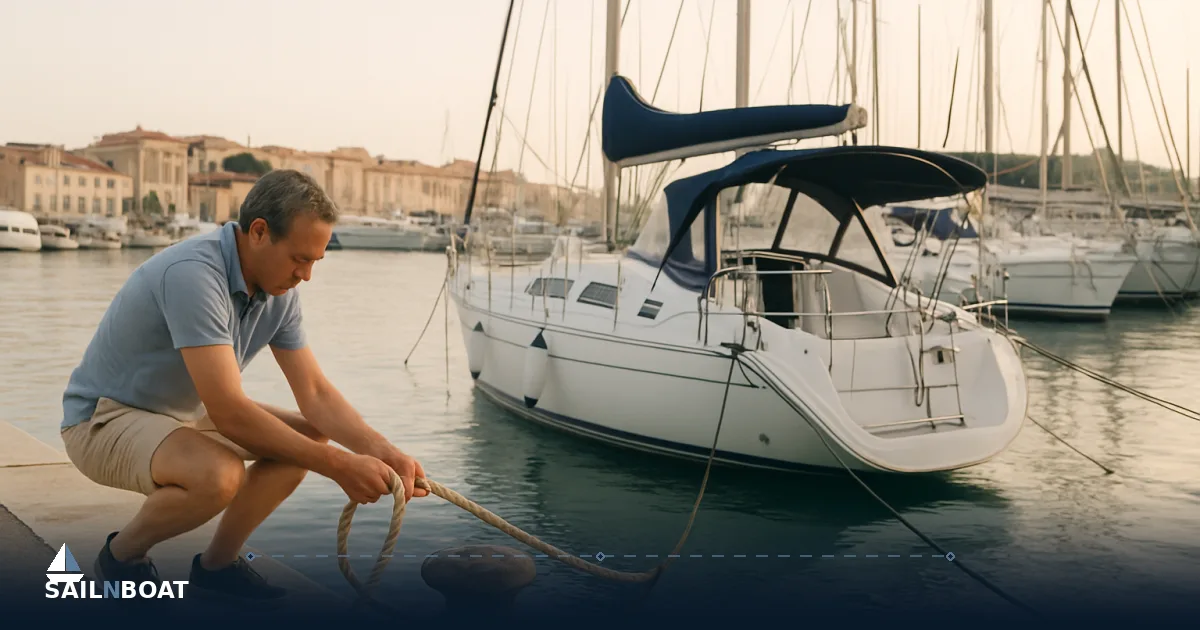
Med-mooring is the stern‑to docking method used across Mediterranean harbours: you either pick up a pre‑laid “lazy line” from the quay or drop your anchor several boat‑lengths out, then reverse in and secure stern lines—this guide gives the exact sequence, gear list and safety checks you need to execute it cleanly. Read this if you want a repeatable, crew‑ready procedure that will get you on the quay without damage or drama.
Understanding Med-Mooring
What is Med-Mooring?
Med-mooring (often written “Med mooring”) is the practice of berthing stern‑to a quay or pontoon with the bow held off the wall by either:
- a pre‑laid mooring (commonly called a lazy line or slime line) running from quay to a heavy sinker on the seabed, or
- your own anchor and rode set in the fairway.
Why it’s used: Mediterranean harbours tend to have small tidal range and dense, narrow quays; Med-mooring allows many boats to be lined end‑on and gives easy access ashore from the stern, so most charter bases and town quays expect you to be able to do it.
Trade‑off (decision you must make): lazy lines are faster and avoid anchor fouling when many boats are close together, but they require a boathook, clean handling and shore cooperation; anchoring gives independence in places without lazy lines but needs a reliable windlass and room to set.
Step-by-Step Procedure for Med-Mooring
This section gives a practical, crew‑drilled sequence you can run through before each approach. Use short, clear commands — “windward stern on,” “lazy line pickup,” “bow secure.”
Preparing for Med-Mooring
- Assign roles before entering the fairway: helm, windward stern‑line handler, leeward stern‑line handler (or second stern), lazy‑line/anchor handler, fender minder. Appoint one person as communicator to the helm (one‑voice rule).
- Rig fenders and lines early. For a typical 35–45 ft monohull you commonly want 4–6 fenders on the docking side plus a stern quarter fender; in tighter berths rig 6–10 fenders. Place fenders so their midline hits the quay.
- Prepare stern lines: have two stern lines flaked and ready to pass ashore, with sufficient length to reach the bollards and return to the boat (many skippers carry stern lines long enough to reach the quay and return, often 10–15 m for boats in the 35–45 ft range, but this varies by charter base and boat type). Keep chafe protection and gloves accessible; have a boathook staged (1.8–3.0 m is a common handheld range).
- Check engine response: practise short astern pulses in open water so you know how the boat behaves at low speeds and how much prop walk to expect; confirm the best technique for your vessel with your operator or a seamanship manual. Quietly test set & drift so everyone knows the wind/current vector.
Executing the Med-Mooring (stern‑to with lazy lines)
This sequence assumes lazy lines are available; an anchor variant follows. Adjust timing to your boat’s handling and the harbour’s traffic.
- Approach and position: enter the fairway at slow controlled speed (keep steerage). Choose a berth between two boats where possible — you can use them as fender contact points while finishing lines.
- Connect windward stern line first: hover with the stern angled so your windward quarter is closest to the quay, then pass the windward stern line ashore and secure it with slack in the line (do not over‑tighten yet). A secured windward stern line gives you a pivot and reduces the boat’s lateral drift while you work on the bow.
- Pick up the lazy line: with someone ready on the side deck use the boathook to snag the lightweight pickup line coming from the quay; walk it forward (keeping it outside the lifelines) and then haul up the heavier seabed warp and secure it to the bow cleat or a bow fairlead. Wear gloves — the lines can be slimy or barnacle‑encrusted.
- Fine positioning: once the bow line from the seabed is secured, ease or tighten the stern lines so the stern sits a comfortable distance from the quay—enough for the gangway to be set without chafing, which often means leaving a bathing‑platform’s width, but the exact distance depends on your boat and berth; confirm with your marina or boat operator. Tighten bow line to take the load, then snug both stern lines and add springs if needed to stop lateral movement.
- Final checks: lead lines so they run fairly (no sharp bends), fit chafe guards, confirm the gangplank/passerelle arrangement, switch off engines when safe and notify marina staff if required.
If there is no lazy line (anchor method) the sequence is similar but you must set your anchor in the fairway before reversing in: RYA recommends dropping anchor about four boat‑lengths off, letting the rode run and then reversing in so the anchor snubs near one boat length from the quay, then secure stern lines and take up the chain. This is a safety‑critical step — leave enough chain/rode out for the set you expect.
Common Challenges and Solutions
Typical Challenges
- Strong crosswinds or onshore gusts that shove the stern on to the quay.
- Prop walk on single‑engine boats that pushes the stern sideways during final approach.
- Lazy lines fouling the prop or lying under the hull if not hauled forward quickly.
- Very tight berths with little room for correction and inexperienced crew.
Overcoming Challenges
- Counter crosswind/gust: approach slightly upwind for steerage, use short astern pulses rather than steady reverse to control sternway, and secure the windward stern line early to hold the boat; confirm the best technique for your vessel with your operator or a seamanship manual.
- Minimise prop walk: anticipate the direction of walk, use rudder to counteract, or use a short burst of forward on the opposite engine where twin screws are available; practise this in calm conditions first.
- Avoid prop entanglement: do not allow pickup or lazy lines to droop aft of the prop; if a line drifts toward the prop, put the engines to neutral immediately and recover the line with a boathook. Always brief crew that engine commands must be obeyed, and that anyone handling lines stays clear of the prop. If a lazy line or pickup drifts toward the prop, put the engine in neutral immediately and recover the line with a boathook; do not attempt to haul a fouled line while the prop is turning. Have a crew member watch the prop from an elevated position if conditions make entanglement likely.
Equipment Required for Med-Mooring
Necessary Gear
- Fenders: for a 35–45 ft monohull most skippers use 4–6 fenders on the docking side plus one at the stern quarter; in tight marinas increase that to 6–10. Use fender lines long enough to hang at mid‑ship height so the widest part of the hull is protected.
- Stern lines: at least two stern lines ready to pass ashore; Stern line lengths vary by charter base and boat size; ensure your lines are long enough to reach the quay and return to the boat, which for 10–14 m boats may often be 10–15 m, but check with your operator or base for specifics. Carry a backup line.
- Lazy‑line pickup kit: a boathook (commonly 1.8–3.0 m), gloves, and a light pickup line if the quay provides only a heavy warp. Stage the boathook on the working side before arrival.
- Anchor and rode/windlass: if you plan to anchor in the fairway rather than use a lazy line, ensure your anchor, chain and warp are serviceable and that you have enough scope for the expected set; many charter yachts carry 30–50 m of chain/rode combined, but this varies by boat. Use a properly serviced windlass or be prepared for hand‑work.
- Chafe protection and snubbers: protect bow and stern lines where they pass over fairleads or cleats; use chafe protectors on the quay side where lines run over sharp edges.
- Gloves and knife: good deck gloves for handling slimy lines and a sharp safety knife accessible in case a line must be cut quickly.
- Boarding equipment: a short passerelle or strong boarding ladder and a stern ladder set correctly for passenger access once the boat is secure.
Preparation Tips
- Inspect gear before leaving the base: check for frayed lines, worn fender ropes, working shackles, and windlass operation. Replace suspect lines rather than relying on them under load.
- Stow and lay out: flake stern lines and bow line so they run free and do not foul; have fenders prepped on the rail in the positions you plan to use. Coil any extra rope safely out of the way.
- Mark and measure: note the position of quay bollards and the likely lay of a lazy line as you approach; if the marina crew will help, agree the expected pickup points beforehand.
- Practice on a calm day: run a couple of rehearsed approaches in light conditions so the crew knows the commands and the sequence of passing lines and picking up the lazy line.
Safety Considerations During Med-Mooring
Safety Precautions
- Personal protective equipment: wear gloves when handling lines and consider lifejackets for any crew working forward on an exposed foredeck, especially in blustery or unfamiliar harbours. Footwear with grip is essential.
- Clear comms and one‑voice helm: nominate one communicator (the captain or mate) whose commands the helm follows; overlapping instructions confuse and cost time. Keep VHF readiness if you need harbour assistance.
- Prop awareness: never let a pickup or lazy line hang aft of the prop. If a line goes near the prop, engines to neutral immediately; if the prop is turning and a line is fouled, consider attaching a boathook or tag line to the haul to prevent shock loading rather than using engine power.
- Avoid the pinch: never stand between the boat and the quay during the approach; fenders will take the impact, not people. If crew must step ashore, they should be briefed to step off only when the boat is securely fastened and its motion is predictable.
- Chafe and load checks: once secured, run a slow inspection of all lines under load for chafe points and tighten incrementally—sudden loads can fail old rope. Use snubbers on the anchor rode if snubbed to a shore line to reduce shock loading.
Best Practices
- Use springs to control lateral movement: a forward and/or aft spring line will limit fore/aft movement and make short correction manoeuvres cleaner. Add them early if traffic or swell increases.
- Adjust for wind and current early: set a conservative approach angle that gives you steerage; don’t attempt last‑second corrections in a crowded fairway. In gusty conditions consider having an extra crew member on the helm’s windward rail to push off and steady the hull if required.
- Respect local practice: many Mediterranean marinas have standard approaches and expect crews to use lazy lines; watch how departing boats handle their lines and ask marina staff for advice if unsure. Fees, bollard spacing and local quirky rules vary widely by harbour and operator.
- Leave an escape plan: until all lines are bite‑tight, keep enough propulsion and steerage to move off quickly if another vessel or unexpected squall requires an immediate reposition.
Practical checks to do before you leave the cockpit: are fenders in the correct place, are sterns ready to pass, is the boathook on the working side, are crew in position with gloves and lifejackets if applicable, and has someone confirmed the chosen berth with the marina? A quick 60–90 second run through of these items prevents most problems.
Start practicing your Med-mooring skills on your next charter: run through the role assignments and one‑voice commands in calm water, practise short astern pulses so you know how your boat responds, and inspect or upgrade your lines and fenders before you head into busier harbours. Repeat the sequence until your crew can carry it out smoothly—confidence, preparation and disciplined communication are what make a tight stern‑to berth routine repeatable and safe.
Frequently Asked Questions
Med-mooring (or Med mooring) is the stern‑to (occasionally bow‑to) method of berthing where the bow is held off the quay by either an anchor or a pre‑laid 'lazy line' from the quay to a seabed sinker; it maximises quay space where tides are small and is the standard system in many Med marinas.
Brief crew and rig fenders/lines, approach slowly with steerage, secure windward stern line first, pick up the lazy line (or drop anchor at the suggested distance), bring it to the bow and secure, then haul stern lines taut and set springs as needed.
At minimum: good fenders (4–6 is common for a 35–45 ft monohull), two ready stern lines, a boathook (1.8–3.0 m), gloves, chafe protection and a serviceable windlass/anchor or ability to handle lazy lines.
Typical problems are strong crosswinds/currents, prop‑entanglement from loose lines, prop walk on single‑engine boats and very tight berths; overcome these with pre‑briefed crew roles, short astern bursts for final alignment, early fender placement and spring lines to control lateral movement.
Use gloves and a boathook for slimy lazy lines, avoid letting loose lines drift aft of the prop (neutral engine if they approach), fit chafe protection, wear life jackets if crew are working on the exposed foredeck and nominate one communicator for helm commands.
Written by
Sailnboat Editorial
The Sailnboat editorial desk covers yacht and boat chartering worldwide — routes, bases, seasons, boat types, paperwork and the practical costs that decide a trip. We are a charter marketplace, not a boat owner or a local agency: what we sell is judgement and support, so our guides are written to help you make a decision, not to sell you a specific boat. Every guide is checked against live operator and marina data before it goes out.
Fact-checked against live operator and marina data, and published under our editorial standards. Last reviewed: .