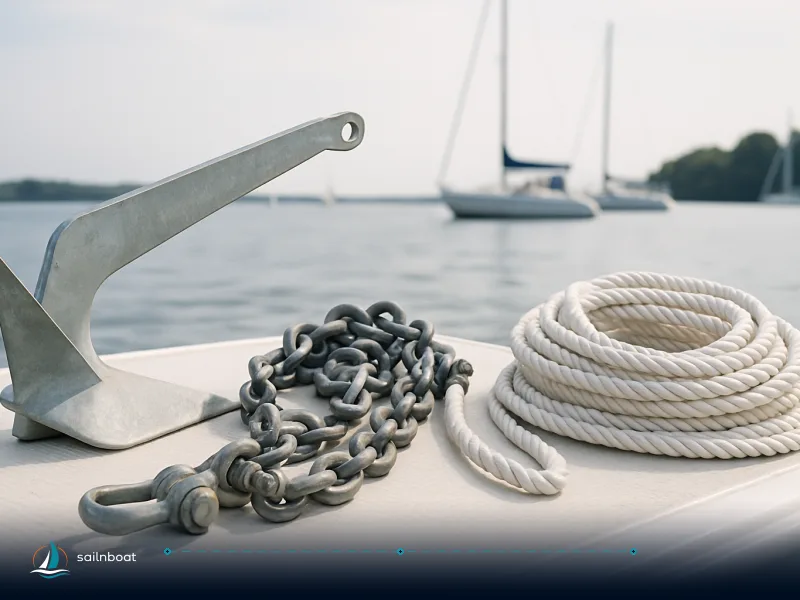
Trip Line: When, How, and Why to Rig for Safe Anchor Recovery
A trip line is a simple, inexpensive insurance policy for a fouled anchor: rig it to the anchor crown, float or stow the buoy appropriately, and you can haul the anchor out backwards instead of cutting loose.

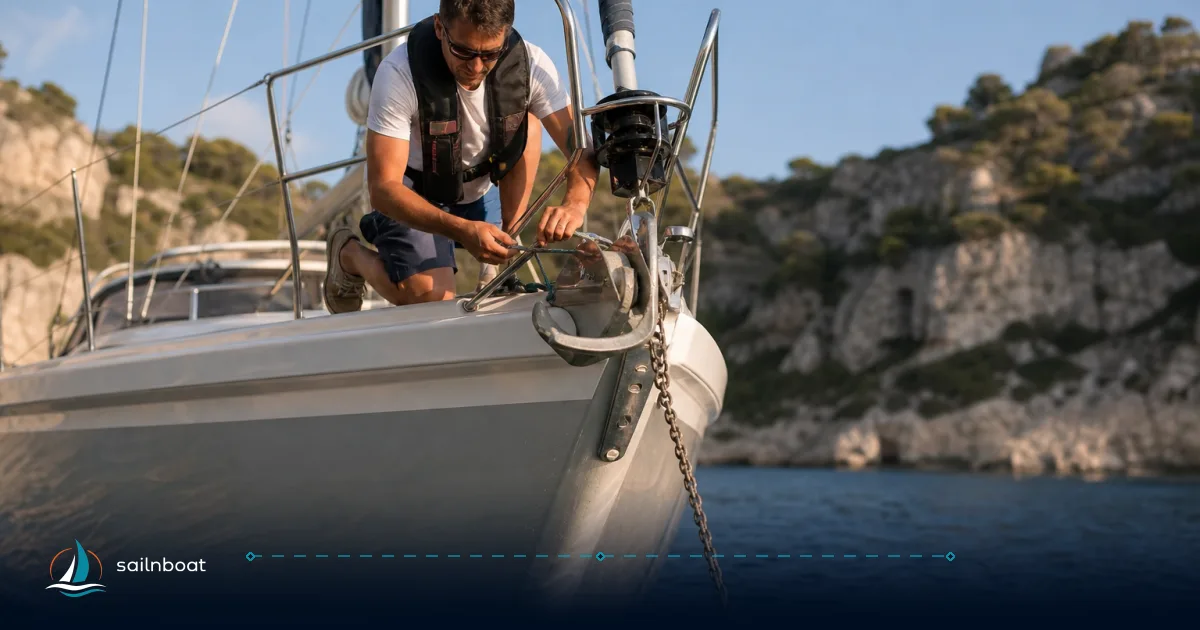
Rig a trip line when you expect the anchor might jam, catch on debris or another vessel’s ground tackle — it lets you haul the anchor out by the crown (backwards) instead of fighting it from the shank or abandoning the rode. A correctly rigged trip line, of the right material and length and with sensible precautions, turns a potentially expensive, time-consuming recovery into a short, safe procedure.
Understanding Trip Lines: Definition and Purpose
What is a Trip Line?
A trip line is a separate line secured to the anchor’s crown, tripping ring or a dedicated tripping hole and led to a surface float or to a stowed/sub‑surface buoy; its purpose is to change the angle of pull so the anchor can be recovered crown‑first if it becomes fouled or jammed.
Why that matters: most anchors set by burying the flukes; pulling on the rode lifts the shank and pries the flukes out. A trip line pulls from the rear, flipping the anchor the other way and allowing it to come out rather than digging in deeper — especially useful where the anchor has snagged under rock, in wreckage or beneath another anchor.
When to Rig a Trip Line
Situations Warranting a Trip Line
Rig a trip line when one or more of the following apply:
- Bottom likely contains old moorings, wreckage, rock ledges or kelp where fouling is a real risk.
- You’re anchoring in a crowded bay where other boats’ anchors or chains might cross yours.
- The anchorage has limited sea room and you cannot easily manoeuvre to re‑pull the anchor at different angles.
- You plan to leave the boat quickly in an emergency and want the option to recover the anchor without diving. Practical skippers consider a trip line “cheap insurance” in these settings.
When not to rig a surface trip line: in very deep water, heavy current, or when the surface float would lie in other boats’ swing areas. In those cases use a submerged trip line, a self‑retracting buoy, or accept that recovering the anchor may require other methods.
How to Properly Rig a Trip Line
Step-by-Step Instructions
-
Choose the attachment point: attach the trip line to the crown/tripping ring or a purpose-built hole near the anchor’s heel; many anchors have a factory tripping point. If none exists, lead the line around the crown area so it pulls the anchor rearwards.
-
Select the line and buoy: for a standard surface trip line use buoyant braided polypropylene about 1/4"–3/8" (6–10 mm); braid handles easier than three‑strand and resists kinking. For dedicated retrieval systems, or where line must resist abrasion and chafe, use a high‑modulus fibre (Dyneema/technical) for the short, strong section near the anchor and a buoyant poly line for the float run.
-
Length the line: allow at least the depth at high water plus an allowance for tide, the distance between the boat and the anchor when you return, and a small deck working length. Practically, many cruisers use 15–40 ft (5–12 m) of extra beyond low‑tide depth for a local cove; if you need a full trip line to the surface tally the maximum depth you expect at the anchorage before you deploy.
-
Hardware and connections: terminate the trip line with a secure connection through the tripping eye; consult your anchor or rigging manufacturer for recommended attachment methods. At the buoy end use a swivel or a small soft shackle to reduce torsion and make the buoy easier to retrieve. Protect the line at the anchor with chafe sleeves if it will run on rock or chain.
-
Stow excess and mark it: coil or secure excess trip line beneath the buoy so it is not loose in the swing circle; tie a short loop or clew below the float so the buoy can’t ride away with slack trailing across other boats’ propellers. Mark the buoy clearly (bright colour and “ANCHOR” or your boat’s name) so other skippers don’t mistake it for a mooring.
-
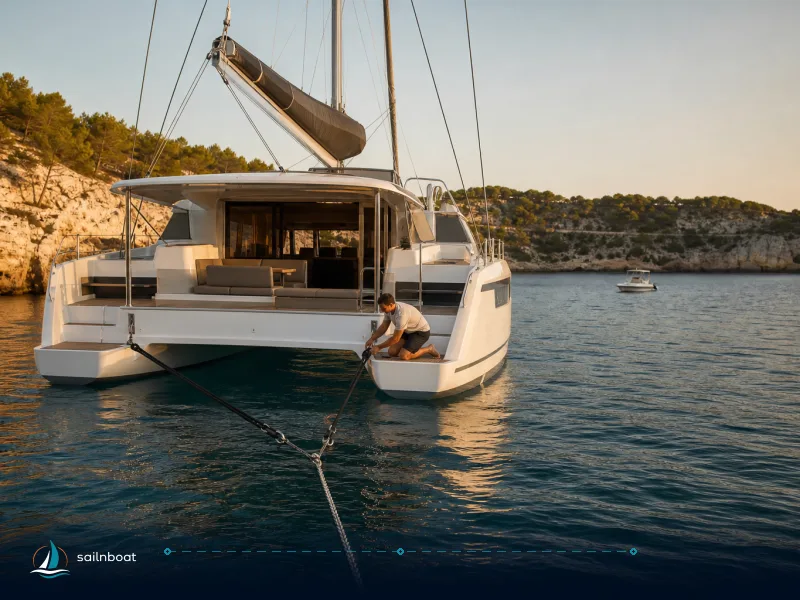
Retrieve technique: motor bow‑first to the float, snatch the buoy with a boat hook, haul the trip line hand‑over‑hand, and apply steady power or use a winch/halyard if needed — pulling from the crown should break the anchor free crown‑first. If the anchor remains stubborn, use the trip line to keep tension while trying small boat maneuvers to change angle. The USCG and common seamanship guides describe the same basic sequence.
Practical tip: keep a boat hook and a spare shackled extension line on the foredeck so you can quickly reach and haul the trip line without letting the rode foul the prop.
Safety Considerations for Using a Trip Line
Avoiding Foul and Collision Risks
- Prop/keel entanglement is the main hazard. Do not let long lengths of buoyant line drift across the vessel’s swing circle; secure excess line tightly and keep the buoy relatively close.
- Use a “fuse” or weak link between the float and the trip line to reduce damage if the float is snagged by another boat’s prop. Practical Sailor recommends a small length of light fishing line or similar that will part under severe load but stay intact under normal retrieval loads. This is a mitigation, not a guarantee.
- Choose buoy colour and shape that won’t be used as a mooring (avoid local mooring buoy colours/markings). Label the buoy clearly with “ANCHOR” or your vessel name to deter other boaters from tying up to it.
- In crowded anchorages or heavy traffic, prefer a submerged trip line or a self‑retrieving anchor buoy (retracting systems) to keep anything from the surface that could snag props. Sub‑surface setups hide the line while keeping the ability to attach an extension for retrieval.
Regulatory note: local rules vary — some fisheries management rules and protected‑habitat regulations explicitly favour crown‑retrieval systems to avoid dragging across sensitive seabeds; others may restrict placing floats in navigation channels. Treat legal requirements as jurisdictional and check local notices when relevant.
Choosing Materials for Your Trip Line
Recommended Materials and Equipment
- Line: for general purpose use, braided polypropylene 1/4"–3/8" (6–10 mm) is common because it floats, is inexpensive and easy to handle. For high‑tension connections at the anchor or for a messenger/extension, use a short splice of high‑modulus line (Dyneema) or a strong polyester that resists stretch and abrasion.
- Buoys/floats: small net buoy or fender for minimal buoyancy, or purpose-built anchor buoys (self‑retrieving models may extend usable depth, but actual limits vary by manufacturer and should be confirmed for your specific model). Pick a bright, non‑mooring colour and adequate buoyancy for the length of line you may need to support.
- Hardware: stainless thimbles, light shackles or soft shackles and swivels at connections; protect the line at the anchor with a chafe sleeve or pieces of old hose. When splicing is practical, a splice and thimble is cleaner and stronger than a knotted raw end.
Durability checklist:
- Replace or re‑splice trip lines that show UV degradation, softened braid, or chafe.
- Inspect buoy attachment hardware annually and after any heavy retrieval.
- Keep a dedicated retrieval extension and boat hook on the foredeck, not lashed below where they’ll be slow to reach.
Alternative Methods for Anchor Retrieval
Understanding Submerged Trip Lines
A submerged trip line runs to a buoy that rides a few metres below the surface or uses a tiny net float so the marker is not visible to passing boats. Advantages:
- Greatly reduces the chance of other vessels snagging the float or fouling their propellers.
- Keeps the swing circle clear in crowded anchorages.
Drawbacks and limits:
- Retrieval requires a snorkel/diver to clip an extension or a clear water swim to the sub‑surface float, so it’s only suitable where water clarity, temperature and crew skills permit. Practical Sailor warns that even a small current will drag a bare polypropylene line toward the bottom; a small float with controlled buoyancy is often needed.
Other alternatives:
- Self‑retrieving or self‑adjusting anchor buoys (commercial units) can hold a trip line at a controlled depth and retract or keep a belt taut; these systems extend practical depth for a trip line but add complexity and cost.
- If no trip line is fitted and the anchor fouls, common techniques include changing angle of pull by motoring a wide circle, shortening rode to go almost vertical then hauling, sending a diver to attach a line, or cutting the rode as last resort. These are standard emergency responses; a pre‑rigged trip line avoids many of them.
Table — quick comparison of trip line options
| Type | Best used when | Pros | Cons | Typical line/buoy |
|---|---|---|---|---|
| Surface trip line (float at surface) | Shallow to moderate depth, isolated anchorage | Fast visual marker; easy to grab with boat hook | Can snag other boats/props in crowded areas | 1/4"–3/8" braided polypropylene + small buoy. |
| Submerged trip line (float subsurface) | Busy anchorages, heavy traffic | Low profile; less risk to other boats | Needs dive/snorkel to attach extension; current can pull line down | Floating poly with small net float/marker; Dyneema splice optional. |
| Self‑retrieving / retracting buoy | Regular use, deeper water | Keeps buoy position stable; extends usable depth | Cost, moving parts, service/repair needs | Manufacturer specs vary; many rated for moderate depths; confirm usable depth with your specific model. |
(Each option has trade‑offs — choose the one that fits depth, traffic and crew skills.)
Final practical checklist before you drop the hook
- Inspect trip line and buoy hardware; replace frayed or UV‑damaged line.
- Stow spare extension line, boat hook and a small cutting tool forward and ready.
- If you deploy a surface buoy, coil and secure excess line beneath the float and mark it clearly.
- Brief the crew: who grabs the boat hook, who tends the engine, and how you’ll proceed if the anchor won’t break free.
Consider rigging a trip line on your next anchoring outing when the bottom is uncertain or other boats are nearby — it’s a low‑cost measure that reduces risk, crew work and the chance you’ll cut away expensive ground tackle.
Frequently Asked Questions
A trip line is a separate line attached to the crown or tripping eye of the anchor with its far end on a float or stowed for later use; it allows you to pull the anchor out crown-first if it fouls, avoiding time-consuming dives or cutting away the rode.
Rig a trip line when the bottom is rocky, full of old moorings/lines, in crowded anchorages, or whenever you expect the anchor may snag — it’s prudent insurance in marginal ground.
Attach a 1/4"–3/8" buoyant line to the anchor crown or tripping ring, run it to a small brightly coloured buoy or sub-surface float, coil and secure excess below the buoy, and mark the float; keep a boat hook ready to snag it and motor slowly bow-first when retrieving.
Keep excess trip line clear of the swing circle, use a breakaway fuse between float and recovery line or a sub-surface setup, pick a buoy colour that won’t be used as a mooring, and keep the buoy close to your boat so it’s visible but not in other boats’ paths.
Braided polypropylene (buoyant) in 1/4"–3/8" is common for surface trip lines; for a dedicated or submerged retriever use high-modulus line (Dyneema/technical fibre) and stainless hardware or properly spliced thimbles at connection points.
A submerged trip line keeps the float below the surface (or uses a weakly buoyant net float), reducing risk of other boats snagging it; use it in busy anchorages, where the float would be a hazard, or where surface visibility/traffic make a surface buoy unsafe.
Written by
Sailnboat Editorial
The Sailnboat editorial desk covers yacht and boat chartering worldwide — routes, bases, seasons, boat types, paperwork and the practical costs that decide a trip. We are a charter marketplace, not a boat owner or a local agency: what we sell is judgement and support, so our guides are written to help you make a decision, not to sell you a specific boat. Every guide is checked against live operator and marina data before it goes out.
Fact-checked against live operator and marina data, and published under our editorial standards. Last reviewed: .