Anchoring a Catamaran: Bridles, Scope, and Practical Set‑Up
A practical, step‑by‑step guide to rigging a bridle, choosing scope (typical 5:1–7:1 ranges), handling swing and stern‑lift, and testing/monitoring your anchor overnight.

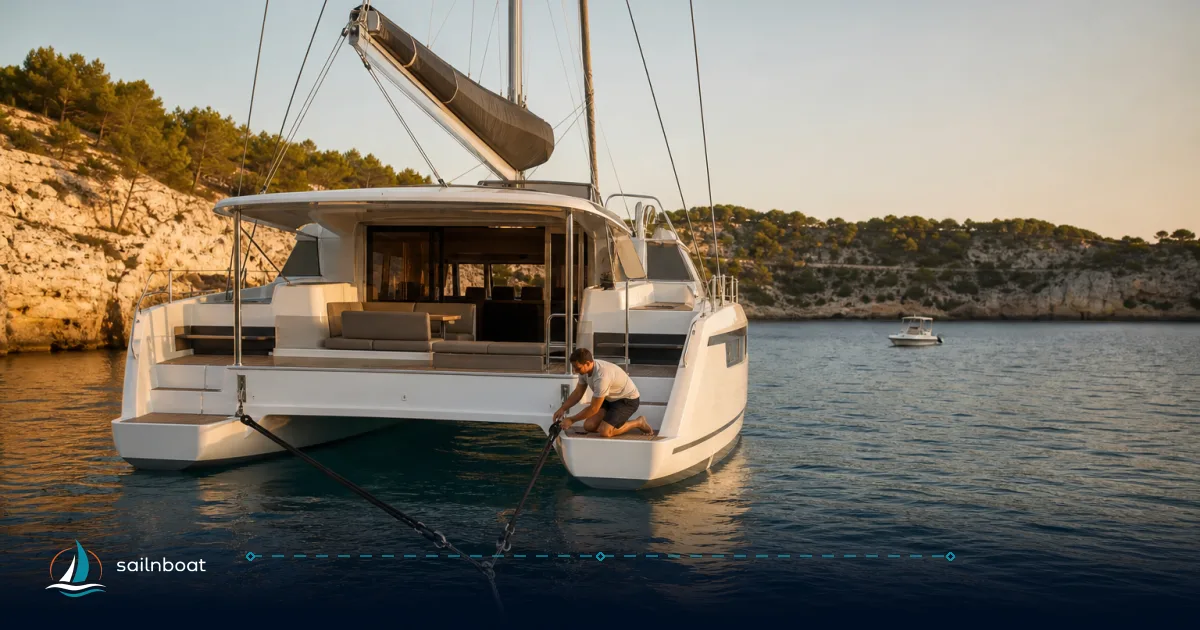
For a stable night at anchor rig a proper bow bridle, pay out at least 5:1–7:1 scope for a single anchor (use more in tidal or unsettled conditions), and add a second anchor or a Bahamian moor if you need to reduce swing or deal with reversing current. Anchoring catamaran requires different thinking than a monohull: higher windage, low underwater lateral area and twin bows mean you must spread load, manage yaw and test the set with power and GPS before you sleep.
Bridle Rigging Techniques for Catamarans
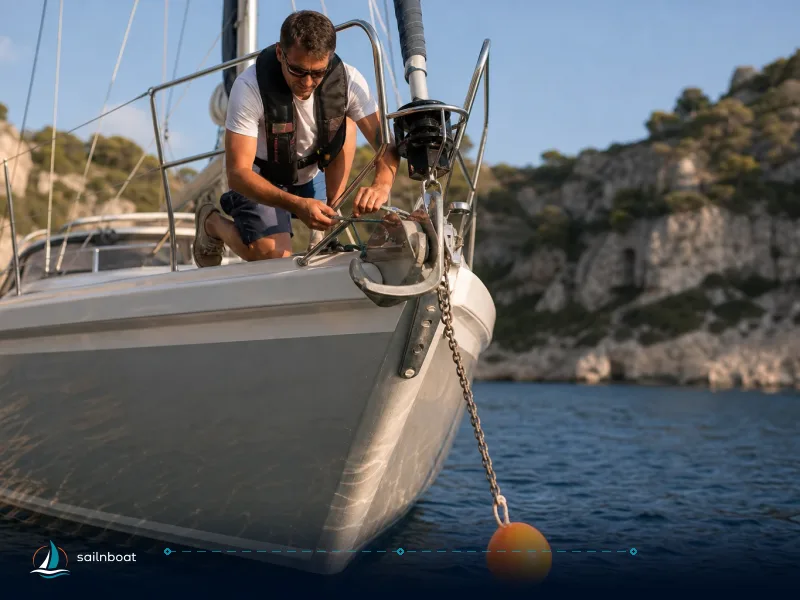
A bridle turns two bow attachment points into a single, wider, shock‑absorbing anchor lead: it reduces yaw, shares the load off the windlass and keeps the bows aligned into the force (wind/current) more predictably. For most cruising cats a dedicated bridle is the preferred option over a single snubber.
Step‑by‑step bridle rigging
- Prepare equipment: two identical legs of polyester or three‑strand rope (length and diameter sized to your boat; catamarans often use heavier legs than comparable monohulls), two thimbles, two shackles, chafe guards and a central shackle or soft‑loop for the chain/rode connection. If you keep a snubber as well, fit it where it best absorbs shock loads—many crews use a snubber in addition to the bridle, but placement may vary.
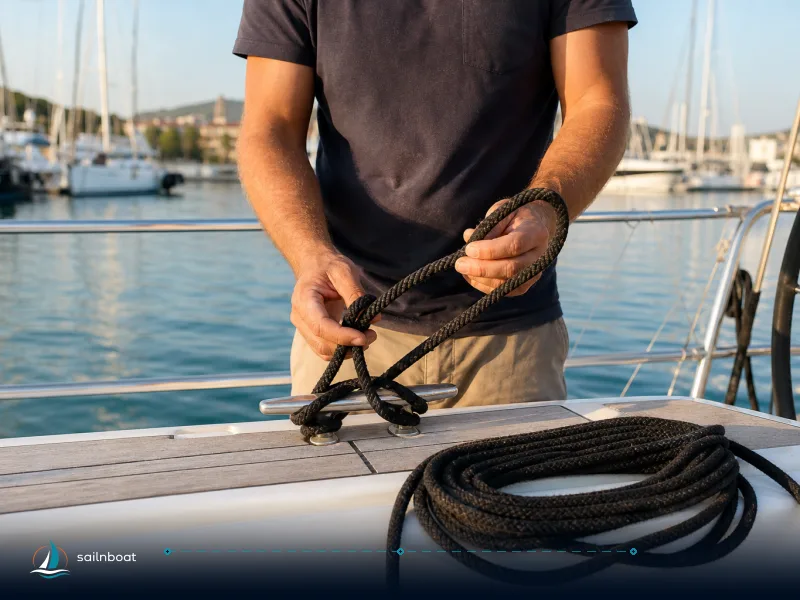
- Secure legs to the hull: attach each leg to rated bow padeyes, strong cleats or dedicated bridle fittings on each hull. Use the strongest structure available—if in doubt choose a padeye or toerail backing plate over a small cleat.
- Make the central connection: splice or shackle the two legs to a common point and attach that point to the anchor rode (chain or rope/chain splice). Allow the junction to sit low enough so it won’t ride up and jam on the bow roller when swinging.
- Adjust symmetry and chafe: draw the boat up onto the rode until the bridle legs take equal tension—mark the legs so you can replicate the length. Fit chafe protection at the bow roller and where lines cross chocks.
- Test under power (short test below) and when satisfied, snub the rode through the bridle to steady the boat for overnight. Keep the windlass as a last resort for holding, not the bridle’s primary purpose.
Practical sizing note: Snubberhead’s catamaran guidance suggests many catamarans use bridle legs of greater diameter than some monohulls (e.g., 5/8" instead of 1/2"), but always confirm sizing with your boat’s displacement and a manufacturer or rigger’s guidance. Use your boat’s displacement and a manufacturer or rigger’s guidance for final sizing.
Optimal Scope Ratios for Two‑Anchor Setups
Scope is the ratio of rode out to vertical distance from bow roller to seabed (include bow height above the waterline and tidal range). Use that vertical figure; otherwise your scope calculation will be optimistic.
- Typical single‑anchor practice: 5:1–7:1 is common for modern combination rodes (chain+rope) — 7:1 is a good target in tidal or unsettled anchorages. Expect to increase scope when holding is marginal.
- Two‑anchor / Bahamian moor: each anchor normally runs to its own scope, and many practical guides recommend setting each at roughly the same scope you would for a single anchor (often 6:1–10:1 each in tidal areas), with additional paid‑out rode during deployment to allow the second anchor to bite. The Bahamian moor typically uses anchors set roughly opposite (near 180°), which greatly reduces swing radius but complicates deployment and retrieval.
Table — quick comparison
| Setup | Typical scope per anchor | Swing radius | Pros | Cons |
|---|---|---|---|---|
| Single bow anchor | 5:1–7:1 (more if tidal/uncertain) | Large (radius ≈ rode + boat length) | Simple; quick set/haul | Large swing, higher yaw on cats |
| Two bow anchors (angled) | 6:1–10:1 per anchor | Reduced compared with single | Limits reset on tide reversal; spread load | Complex to deploy, risk of twisted rodes |
| Bahamian moor (bow‑bow ≈180°) | 6:1–10:1 per anchor | Very small (boat pivots between anchors) | Minimal swing, stable in reversing current | Hard to deploy in crowded anchorages; retrieval tricky |
| Bow‑and‑stern (Mediterranean moor) | Bow: normal; Stern: similar scope for stern rode | Very limited swing, stern faces wind/swell | Comfortable stern‑to; compact | Stern gear risk; more tidal strain; prop fouling risk |
(Calibrate scope choices to your chain/rope composition and the site’s tidal range and seabed: sand, weed, silt and rock behave differently.)
Swing Behavior and Its Impact on Anchoring
Catamarans swing and yaw more readily than monohulls because of two effects: higher windage above the waterline and relatively less underwater lateral area resisting turning moments. When the boat yaws the rode sees variable loads and the anchor may be unloaded or over‑loaded in the cycle, reducing effective holding. That is why bridles, heavy chain and second anchors are common cat‑specific solutions.
Analysing swing radius and collision risk
- Draw a circle whose radius is roughly the length of rode paid out plus the boat’s length; that is the approximate swing band your cat will occupy. Account for both neighbors—cats and monohulls swing differently; leave extra room between you and others.
- If tide reverses or wind shifts are expected, plan to either use two anchors (Bahamian moor) or increase scope and fit bridles/riding sails to limit abrupt resets. Two anchors reduce swing but increase complexity and risk of rope crossing; decide using local conditions and traffic.
Common Anchoring Problems for Catamarans
Addressing stern lifting
Signs: transoms lifting, the boat adopts a beam or quartering angle to wind, or you feel large yaw cycles and slamming. Causes include excessive windage aft, insufficient lateral underwater resistance and too‑short scope. Countermeasures: reduce deck windage (lashing dinghy, dousing bimini or sails), rig a bridle to stabilise the bow, fit a small riding sail or drogue aft to move the center of effort aft, or add a stern anchor/line if the situation requires an immediate fix. Many multihull resources list bridle and riding sail as remedies.
Managing windage
Windage multiplies the force on ground tackle. Practical steps: lashed dinghy down, remove or secure loose canvas, furl headsails, and consider a riding sail (reefed) to steady the boat. If you anticipate strong gusts, increase scope and use heavier chain where possible—the added catenary helps dampen shock loading.
Trade‑offs
- More scope reduces stress on the anchor but increases swing radius.
- Two anchors reduce swing but complicate deployment/haul and can foul propellers or tangle lines if not handled correctly.
- Bridles spread load and reduce windward yaw, but require strong attachment points and careful chafe management. State the trade‑off when choosing a solution for the expected conditions.
Checklists for Anchoring Procedures
Pre‑anchoring checklist (brief)
- Confirm expected depth + tidal range and calculate vertical depth from bow roller to seabed.
- Inspect chain, rope, shackles, bridle legs and chafe protection for wear; note splice condition.
- Pick a spot clear of traffic and with adequate swing room; check bottom type (charts, local boats).
- Ready crew with roles (helm, bow, lines, radio) and agree signals.
- Prepare anchor alarm device(s) and spare power (phone/plotter).
Post‑anchoring checklist (brief)
- Power‑test set: back down gently and stepwise (idle → +200 rpm increments) until rode is taut and set feels solid (see Testing section).
- Fit bridle/snubber and belay rode; mark rode length for later checks.
- Set anchor alarm radius to at least the radius of expected movement plus a safety margin; leave a reliable GPS device on board.
- Log time, GPS position, wind, current and expected changes (weather/tides) in the ship’s log.
- Brief watch rotation and what to do if alarm sounds (wake skipper, check position, start engines ready to weigh).
Monitoring and Testing Anchor Set and Drag Overnight
How to test anchor set
- After you’ve paid the intended scope, back down slowly into the rode’s direction (helm ahead of wind/current so you load the anchor as it will be loaded in a gust).
- Apply increasing reverse thrust in modest steps—idle, then small rpm increases—watch the bow bearing to fixed shore features and the GPS position. If you hold position with steady tension and no creeping, the set is acceptable; if the anchor slides you will see progressive change in bearing or position. Limit testing power to what the engines and hull attachment points can safely deliver.
Overnight monitoring: layers of safety
- Primary: chartplotter anchor alarm (many modern plotters have anchor alarms with NMEA GPS).
- Secondary: dedicated anchor‑alarm apps or devices—Anchor Alarm Pro provides NMEA integration and server/notification options; phone/tablet apps (Anchor Pro, Anchor Watch variants) are low‑cost backups but rely on device GPS and battery management. Use two independent systems if possible (plotter + phone).
- Tertiary: scheduled visual checks or a crew anchor watch rotation if conditions are marginal. A human on deck remains the most reliable last‑line defence in crowded anchorages or expected storms.
Practical app tips: suppress battery optimisation on phones used for anchor watch; set alarm radii with some delay or GPS‑quality filters to reduce false positives; test notifications before you leave the boat. Many app reviews recommend keeping one always‑on device fixed on board as the primary watch and a second device carried with you for remote alerts.
Practical failures and remedies (real cases)
- If you see progressive drag: immediately motor to reduce the load and attempt to reset the anchor (recover, move a few lengths and reset) or add scope and a second anchor if the seabed is suspect.
- If the bridle jams on the bow roller in a swing: ease ahead carefully to free it and re‑position the bridle junction lower or further aft so it cannot catch. Inspect padeyes and change the arrangement if the bow geometry causes repeated jamming.
- If stern lifts and yaw continues despite bridle: reduce windage and consider a stern line or temporary riding sail to re‑balance the centre of effort; if the situation is unsafe, weigh anchor and relocate.
Final operational checklist (before lights out)
- Bridle fitted and evenly tensioned.
- Rode out to your planned scope and marked.
- Anchor alarm(s) active and tested.
- Crew briefed and watch plan logged.
- Engines ready and key accessible for immediate powering if needed.
Implement these anchoring techniques for a stable night at anchor — rig your bridle correctly, set sufficient scope, test the set with power and GPS, and use layered anchor alarms to sleep with confidence.
Implement these anchoring techniques for a stable night at anchor.
Frequently Asked Questions
Use two matched legs from strong bow padeyes or cleats to a central splice or shackle, with chafe protection and a soft snubber if needed; size the legs to the boat's displacement (catamarans typically use heavier lines than similar-length monohulls) and adjust the bridle so tension is shared evenly between legs.
Typical practical ranges are 5:1–7:1 for a single bow anchor; when deploying two anchors (Bahamian moor or off‑bow pair) plan to give each anchor a similar scope and often increase total rode so each runs to roughly 6:1–10:1 depending on tide and expected wind.
A catamaran's wide beam and higher windage increase swing radius and yaw; that can load the rode unevenly, reduce holding and promote stern lift—use bridles, extra scope or a second anchor to stabilise and reduce the risk of dragging.
Stern lifting and excessive yaw are common—reduce windage, rig a bridle, set a riding sail, use additional anchors (Bahamian moor or bow‑and‑stern), and ensure you have enough chain and correct scope for the conditions.
Power‑test the anchor by backing down in increasing reverse power while watching a fixed bearing and GPS; set an anchor alarm (chartplotter, dedicated app or Anchor Alarm Pro), leave a device with a reliable GPS on board and cross‑check visually/with periodic GPS fixes through the night.
Written by
Sailnboat Editorial
The Sailnboat editorial desk covers yacht and boat chartering worldwide — routes, bases, seasons, boat types, paperwork and the practical costs that decide a trip. We are a charter marketplace, not a boat owner or a local agency: what we sell is judgement and support, so our guides are written to help you make a decision, not to sell you a specific boat. Every guide is checked against live operator and marina data before it goes out.
Fact-checked against live operator and marina data, and published under our editorial standards. Last reviewed: .