Essential Anchoring Techniques for Safe and Secure Mooring
Practical anchoring techniques for charter skippers: pick the right anchor for the seabed, use the correct scope (5:1–10:1), set and test the rode, and avoid the common mistakes that lead to dragging.

Anchoring is one of the skills that separates a restful night from a stressful one on charter. If your anchor holds, your crew sleeps well. If not, you might face a long night, avoidable damage, or a costly lesson. The specifics—anchor type, scope, setting method, and local regulations—matter more than most realize. This guide focuses on practical steps, region-specific details, troubleshooting, and habits that help you anchor securely in real charter conditions.
Choosing the Right Anchor for Different Bottom Conditions
No anchor is perfect everywhere, and the seabed rarely matches the marketing photos. The right choice depends on what’s under your keel.
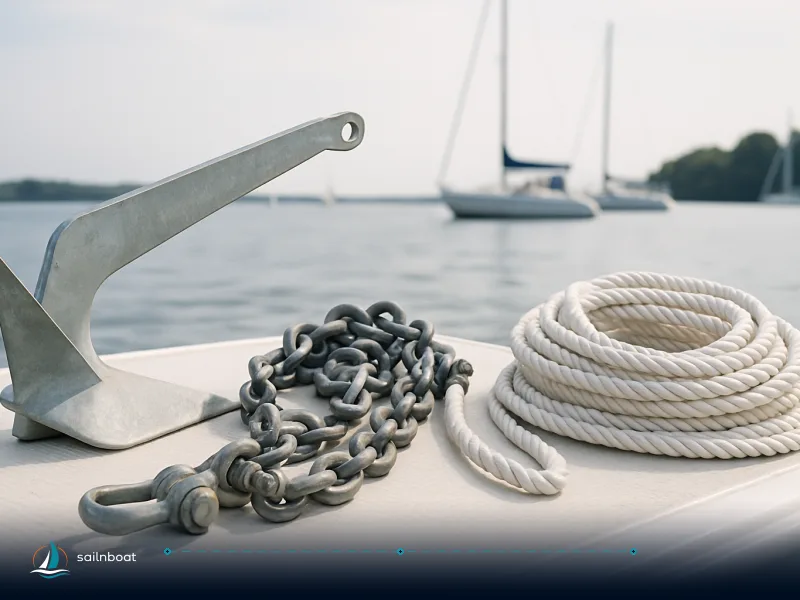
Types of Anchors
- Fluke / Danforth: High holding power per kilo in sand and soft mud. Light, easy to stow. Poor in weed or very hard-packed sand.
- Plow / Scoop (CQR, Delta, Rocna, Manson): Designed to penetrate and reset across a range of bottoms. Good all-rounders for mixed conditions, grass, and clay. Heavier than flukes but more forgiving if wind shifts.
- Mushroom: Best for permanent moorings in very soft mud. Not suitable as your main anchor for short-term stops or mixed seabeds.
- Grapnel / Fisherman: Useful for rocky seabeds or grabbing onto structure. Not reliable as a primary anchor for cruising.
| Anchor type | Best for | Weakness |
|---|---|---|
| Fluke (Danforth) | Sand, soft mud | Poor in weed/hard sand; resets poorly on swing |
| Plow / Scoop (Delta/Rocna) | Mixed, grass, clay | Heavier; needs correct setting angle |
| Mushroom | Permanent soft mud moorings | Not for short-term or mixed bottoms |
| Grapnel | Rocky seabeds, structure | Snags easily; not a general-purpose solution |
Practical tip: Many experienced skippers carry two anchor styles—typically a fluke and a plow/scoop. This adds weight and takes up space, but gives you options when the bottom is unpredictable.
Bottom Composition Considerations
- Identify the seabed before anchoring. Consult charts, ask the marina, and observe water color or use a lead line. Don’t rely on guesswork.
- Holding power varies by substrate. An anchor that holds at a 10:1 scope in soft mud may drag in weed or compacted sand. Local advice, especially from charter base staff or nearby skippers, is often the quickest way to understand what works in a particular bay.
Calculating and Implementing Proper Scope for Secure Anchoring
Scope—the length of rode paid out compared to the vertical distance from bow to seabed—directly affects your anchor’s holding power.
Understanding Scope Ratios
- Standard guidance: 5:1 in calm conditions, 7:1 for overnight or moderate wind, and 10:1 for heavy weather or exposed anchorages. These ratios mean 5, 7, or 10 meters of rode for every meter from the bow roller to the seabed.
- Rode type matters: All-chain rodes can hold at shorter scopes (often 5:1), while rope/chain mixes or all-rope arrangements require more scope (7:1 or even 10:1) to maintain a low pull angle.
Practical Calculation Steps
- Measure vertical distance: Add water depth at your anchoring point (at lowest expected tide) to the height of the bow above water.
- Multiply by scope ratio: For example, 6 m depth + 1 m bow height = 7 m vertical distance. At 7:1 scope, pay out 49 m of rode.
- Add margin: If you expect tidal changes, or the wind is forecast to increase, increase your scope accordingly.
| Vertical distance (m) | 5:1 rode (m) | 7:1 rode (m) | 10:1 rode (m) |
|---|---|---|---|
| 4.0 | 20 | 28 | 40 |
| 6.0 | 30 | 42 | 60 |
| 8.0 | 40 | 56 | 80 |
Crowded anchorages: Sometimes you’ll need to reduce scope to fit. If so, be honest about the risk, stay onboard, and be ready to reset or lengthen the rode if the wind picks up.
Step-by-Step Guide to Setting and Testing Your Anchor
A disciplined, step-by-step routine takes the guesswork and stress out of anchoring.
Setting Your Anchor
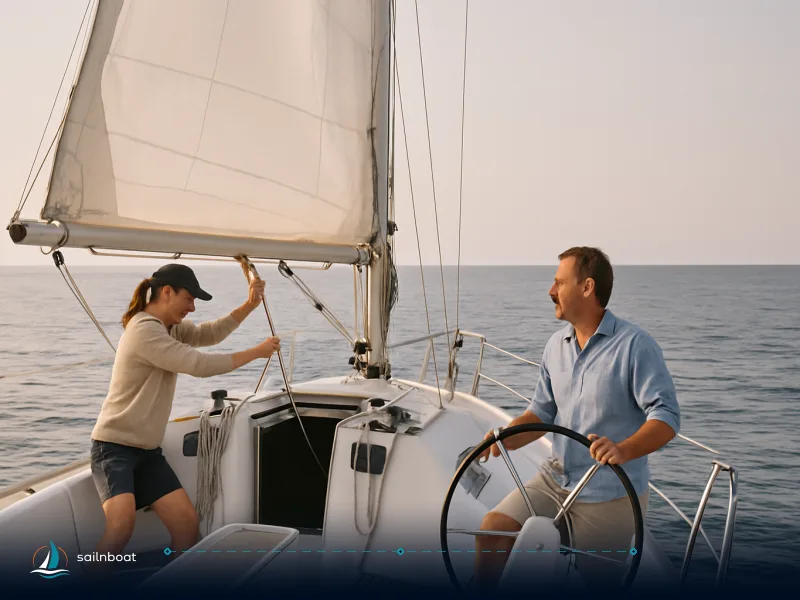
- Approach slowly into the wind or current to your chosen spot. Use a fixed transit or GPS waypoint to hold position.
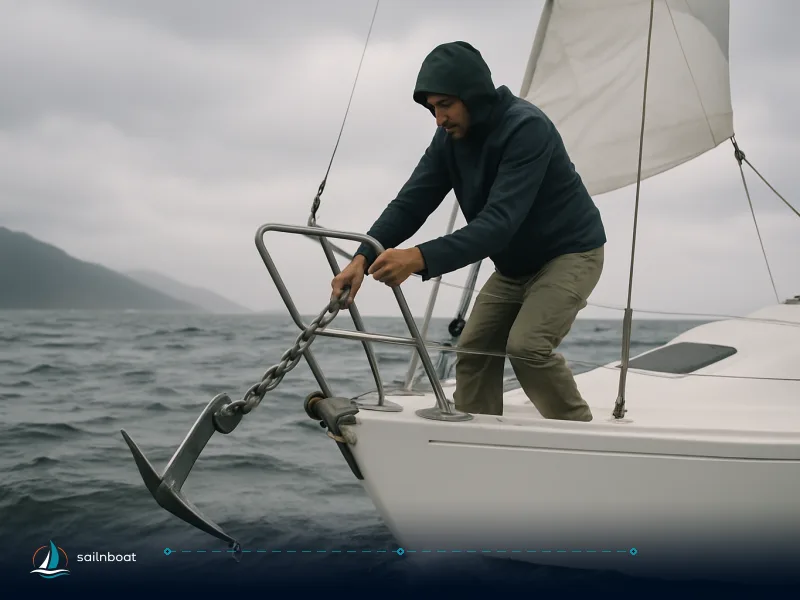
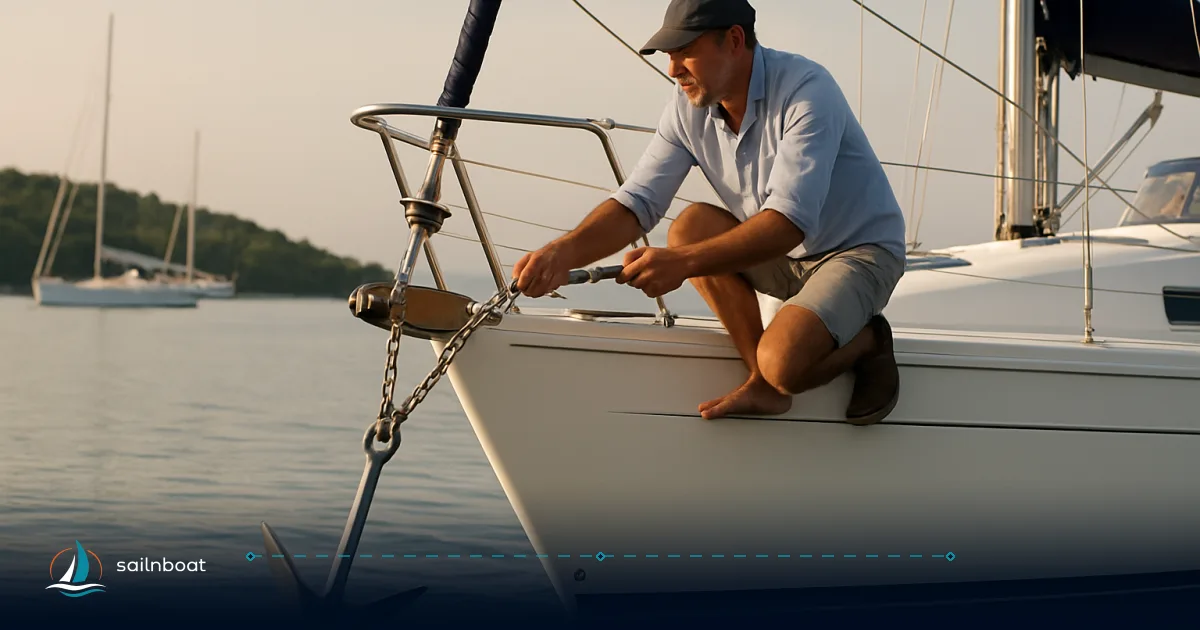
- Lower the anchor—don’t throw it. Let it reach the seabed while the boat drifts back gently. Pay out the rode gradually as the boat moves astern.
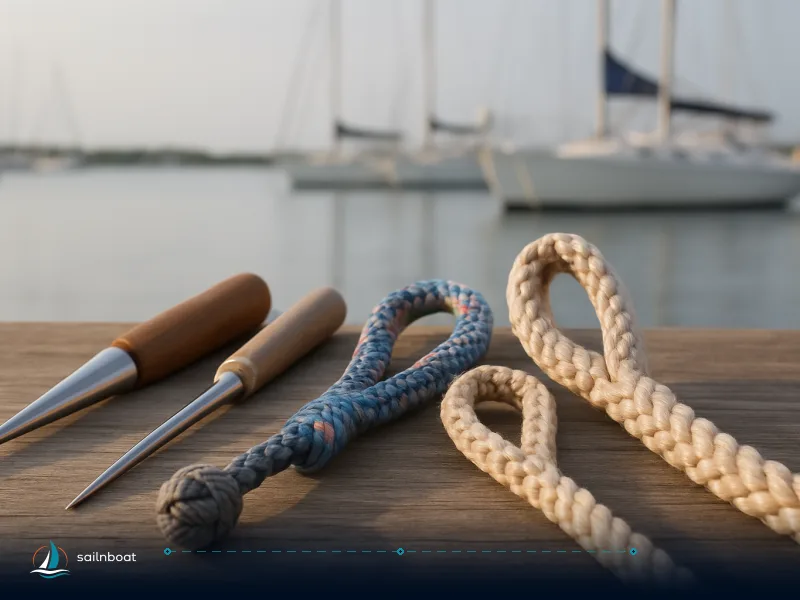
- Once you reach your calculated scope, pay out a little extra, secure the rode, and let the boat settle back. Attach a snubber or bridle to absorb shock and reduce windlass strain.
Testing Anchor Hold
- Reverse test: Apply slow, steady astern power while monitoring your position via fixed transits or GPS. The key is controlled, gradual load—most charter companies look for the anchor to hold under moderate reverse power, but there is no universal throttle setting.
- Monitor direction: After a major wind or current shift, check the set again. Some anchors, especially fluke types, may not reset automatically.
Checklist before leaving the anchor:
- Confirm rode length matches your scope calculation.
- Snubber fitted, rode properly cleated, and a backup line ready.
- Mark the chain or rode (colored markers or numbered links).
- Assign anchor watch if staying overnight.
Troubleshooting: What to Do When Things Go Wrong
Even with good technique, problems happen. Here’s how to handle the most common issues:
Anchor Won’t Set
- Check for fouling: Mud, weed, or debris on the anchor flukes reduces holding power. Raise, clean, and reset.
- Try a different spot: Sometimes moving just a few meters finds better holding.
- Increase scope: If you have room, let out more rode.
- Switch anchors: If you have a second type, try it—some bottoms resist certain anchor designs.
Anchor Drags Repeatedly
- Reassess the bottom: Are you over weed, rock, or hard sand? Plows and scoops often work better here than flukes.
- Double check scope and rode type: In marginal conditions, more scope or adding weight to the rode (a kellet or sentinel) can help.
- Set a second anchor: If the wind is expected to remain steady, try a tandem (anchors in line) for extra holding power. If wind or current is expected to reverse, use a Bahamian moor (anchors off bow in opposite directions) for extra security.
Anchor Fouled or Stuck
- Trip line: If you rigged one, use it to pull the anchor out backward.
- Shorten the rode and drive over the anchor: This can break it free.
- If irretrievable: Mark and buoy the rode, note the GPS position, and return at slack tide. If still stuck, contact local divers or salvage services—many harbors offer this for a fee.
Major Wind Shift (180° or More)
- Plow and scoop anchors: Often reset themselves, but always check.
- Fluke/Danforth: May need to be manually reset; some drag before biting again.
- Bahamian moor: This two-anchor system is designed for strong reversing tides or wind shifts. Consider setting this up in rivers or tidal harbors.
Anchoring in Adverse Weather
- Increase scope: Allow for the highest expected wind and tide.
- Prepare for rapid retrieval: Keep the deck clear, windlass ready, and a knife accessible in case you need to cut free.
- Monitor anchor watch and weather: Assign shifts and use anchor alarms, but do not rely on electronics alone.
Advanced Anchoring Techniques
Sometimes a single anchor isn’t enough, especially in tight or exposed anchorages.
Bahamian Moor
- Set two anchors off the bow, 180° apart. This holds you in place through wind or current reversals and minimizes swinging room—ideal for rivers or crowded harbors.
Tandem Anchoring
- Set two anchors in line with each other and your bow. The second anchor backs up the first, increasing holding power in soft or marginal bottoms.
Med-Mooring
- Common in the Mediterranean. Drop your anchor well off the quay, reverse in, and secure stern lines ashore. This maximizes space in busy harbors. See our Med Mooring Guide for a full walkthrough.
Regional Examples: Anchoring Fees and Permit Requirements
Rules and fees change year to year and even bay to bay. Here are examples from popular charter regions as of 2024, but always confirm current rates and rules with your charter base or local authorities.
| Region | Typical Fees (EUR/night) | Permit/Rule Highlights |
|---|---|---|
| Croatia | €40–90 for a 45-foot yacht in high season (marina); anchoring in most bays is free, but national parks (e.g. Kornati: €30–95/day per vessel; Mljet: ~€25/adult Jun–Sep) | Permits required for national parks; no anchoring in marked seagrass zones; check for local fees at buoys |
| Greece | Most anchorages free; organized mooring (quays, town harbors) charge €10–40/night for 40–50 ft yachts | Anchoring not allowed in some harbors; environmental rules protect seagrass—look for local signs and avoid restricted areas |
| Italy | Marina berths €60–200/night in high season; anchoring in many bays is free but prohibited in marine reserves | No anchoring in marine protected areas or near underwater cables; fines can be significant |
| French Riviera | Marina berths €80–300/night in peak season; anchoring in designated bays is often free, but restrictions apply in protected zones | Strict rules on anchoring in Posidonia seagrass zones; fines for damage or non-compliance |
| Turkey | Marina berths €40–120/night; anchoring in bays is usually free, but some popular coves charge fees for mooring buoys | Anchorage restrictions in national parks and some resort areas; verify local requirements |
| Caribbean | Most anchorages free; some marine parks (e.g. Tobago Cays, BVIs) charge $10–30/night (USD) | Mooring buoys often preferred or required in marine parks; check local regulations and signage |
Always check the latest Notices to Mariners, ask at your charter base, and read local signage. Fines for breaking anchoring rules can be steep and are enforced in many busy regions.
Anchor Sizing and Rode Standards
Choosing the correct anchor and rode size is essential for safety. Manufacturer charts and most charter operators typically recommend:
- Anchor weight: For a 40–45 ft monohull, a plow or scoop anchor of around 15–18 kg is commonly recommended. Catamarans often use slightly heavier anchors due to increased windage.
- Chain: For yachts up to 45 ft, chain diameter is typically 8–10 mm, with 50–70 m of chain or mixed rode carried. These are typical figures—always check with your charter operator’s current standards.
- Rope: If using rope, 14–16 mm diameter nylon is typical for yachts in the 40–50 ft range.
- Scope: As above, 5:1 for all-chain, 7:1 for mixed, 10:1 for all-rope or heavy weather.
| Yacht Length (ft) | Anchor Weight (kg, typical) | Chain Diameter (mm, typical) | Rode Length (m, typical) |
|---|---|---|---|
| 30–35 | 10–14 | 8 | 40–50 |
| 36–45 | 15–18 | 8–10 | 50–70 |
| 46–55 | 20–27 | 10–12 | 70–100 |
Manufacturer charts and your charter company’s recommendations should always be your starting point—over-sizing is rarely a mistake, but under-sizing can be costly.
Anchoring Etiquette and Environmental Best Practices
Good seamanship means considering other boats and the environment.
Etiquette
- Distance from other boats: Allow for each boat’s swinging circle (rode length + boat length). In crowded bays, communicate with nearby skippers if unsure.
- Noise: Avoid running the generator or loud music late at night or early morning.
- Lights: Display an all-around white anchor light from dusk to dawn, even if not required locally.
- Arrival: If you arrive late, keep noise and deck lighting to a minimum.
Environmental Best Practices
- Avoid seagrass and coral: These habitats are protected in many regions. Drop anchor only in sand or mud where possible.
- Eco-friendly anchors: Modern designs with roll-bars or rounded edges reduce seabed damage.
- Retrieve trash: Never throw waste overboard, and pick up any debris encountered.
- Use mooring buoys where available: Especially in marine parks—this protects sensitive seabeds.
Safety Precautions and Legal Considerations When Anchoring
Anchoring combines seamanship and regulation. Knowing both keeps you out of trouble.
Navigational Channels and Swinging Room
- Never anchor in main shipping lanes, dredged channels, or any area where you could impede commercial traffic. Most countries prohibit this except in emergencies.
- Calculate your swinging circle: maximum rode length plus boat length is your minimum safe radius. If you can’t swing safely, move or use a second anchor to restrict movement.
Local Regulations and Environmental Rules
- Many harbors ban anchoring in seagrass or coral to protect sensitive habitats. Fines can be substantial.
- Fees may apply for overnight anchoring, especially in marine reserves or national parks. Confirm with harbor authorities or your charter base.
- Some areas require maintaining a minimum distance from navigation aids, underwater cables, or the shoreline.
Equipment and Habits That Reduce Risk
- Chain at the bow: Even a short length of chain minimizes vertical lift, improving holding.
- Snubber: Protects the windlass and absorbs shock.
- Anchor knife: Quickly cuts a fouled rode in emergencies.
- Trip line: Helps recover a stuck anchor.
- Secondary anchor: For challenging conditions or redundancy.
- Mark rode or chain: Use colored markers or numbered links for quick scope checks.
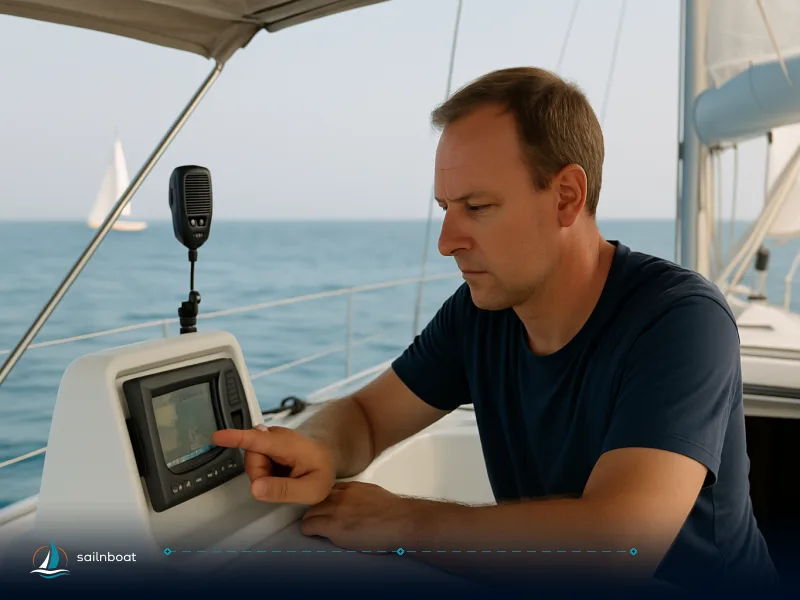
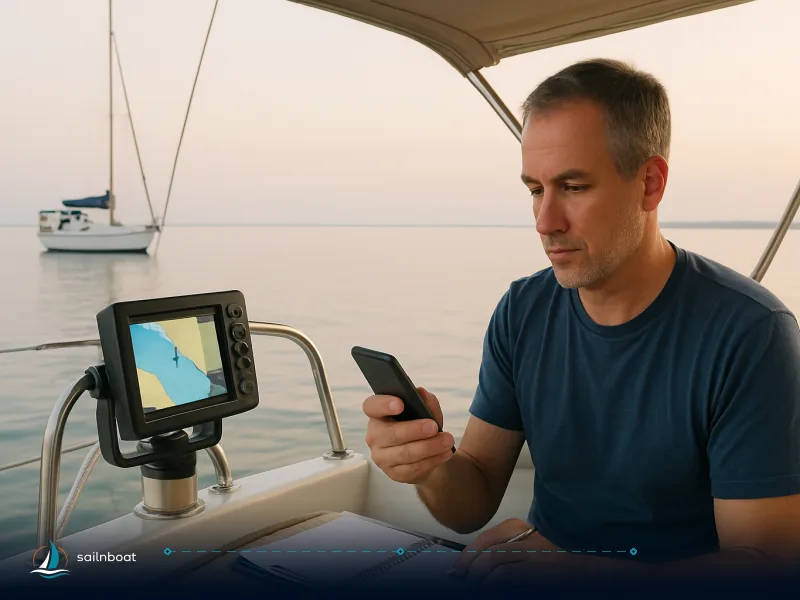
- Anchor alarm: Useful, but never a substitute for visual checks and fixed transits.
Quick Reference: Pre-Anchor and Anchor-Watch Checklist
| Step/Check | When/Why |
|---|---|
| Confirm seabed type | Before dropping anchor |
| Calculate scope (add margin) | Before anchoring |
| Lower (not throw) anchor | As you reach chosen spot |
| Pay out rode gradually | As boat drifts back |
| Fit snubber/bridle | After full scope is out |
| Reverse test (steady astern) | After setting anchor |
| Mark rode/chain | Before leaving anchor unattended |
| Assign anchor watch | Overnight or in changing conditions |
| Re-check after shift | Any time direction changes >45° |
| Prepare backup/knife/trip | Before nightfall or in tricky areas |
Frequently Asked Anchoring Questions
What should I do if my anchor drags at night?
If you notice the boat moving or your anchor alarm sounds, start the engine immediately and assign roles to the crew. Re-anchor with more scope or try a different spot. If conditions worsen, consider moving to a marina or using a second anchor.
How do I anchor safely in a crowded bay?
Arrive early to secure space. Calculate your swinging circle and communicate with neighboring boats. Use minimal scope if space is tight, but stay onboard and be ready to reset if wind increases. In some Mediterranean bays, Med-mooring is the norm—follow local practice.
Can I anchor anywhere?
No. Many areas restrict anchoring to protect seagrass, coral, or navigation. Check charts, local signage, and ask at the base. Fines for illegal anchoring can be steep and are enforced.
How can I minimize damage to the seabed?
Anchor only in sand or mud, use eco-friendly anchor designs, avoid dragging, and use mooring buoys where provided.
What if my anchor won’t come up?
Try driving over the anchor to break it free, or pull from a different angle. If fouled, use a trip line if available. If it’s irretrievable, mark and buoy the position and contact local help.
Do I need a special qualification to anchor?
No specific qualification is required for anchoring, but most charter companies expect you to understand basic anchoring technique and local rules. In some countries, a formal license is required to skipper a yacht.
Key Takeaways and Next Steps
Anchoring well is a mix of preparation, local awareness, and habit. Know your anchor and rode, check the bottom, calculate scope, and stay alert for changes in wind or current. Always confirm local rules and fees with your base, and don’t hesitate to ask for advice—most skippers are happy to help. For more on local anchorages and safety, see our Best Anchorages in the Med and Yacht Charter Safety Checklist.
For tailored advice on your charter region, or help choosing the right boat and equipment, you can always talk to us at Sailnboat.
Frequently Asked Questions
Fluke (Danforth)-style anchors excel in sand and soft mud; plow/scoop anchors (CQR, Delta, Rocna-type designs) are best for mixed bottoms and grass; mushroom anchors work for permanent soft-mud moorings; grapnel anchors are useful for rocky spots or retrieving on structure but are not primary anchors for most cruising yachts.
Measure vertical distance from bow roller to seabed (include anticipated low water), then multiply by the scope ratio: typically 5:1 in calm conditions, 7:1 for routine/overnight, and 10:1 for heavy weather or vulnerable situations; add length for tidal range and clearance for swinging.
Lower the anchor under control while moving slowly into the wind/current, pay out rode as you drift back to the planned scope, snub or take a turn, then back down under power (reverse test) at increasing throttle to confirm the anchor is dug in and holding.
The common mistakes are: too little scope, wrong anchor for the seabed or undersized anchor, failing to perform a reverse test, not accounting for tidal swing or nearby traffic, and not fitting a snubber or chain to manage shock loads.
Avoid main navigation channels and restricted anchorage areas, ensure you have sufficient swinging room and avoid protected seabeds (seagrass/coral), brief crew on anchor watch, carry adequate ground tackle, and check local authorities or harbour masters for area-specific rules or fees.
Written by
Sailnboat Editorial
The Sailnboat editorial desk covers yacht and boat chartering worldwide — routes, bases, seasons, boat types, paperwork and the practical costs that decide a trip. We are a charter marketplace, not a boat owner or a local agency: what we sell is judgement and support, so our guides are written to help you make a decision, not to sell you a specific boat. Every guide is checked against live operator and marina data before it goes out.
Fact-checked against live operator and marina data, and published under our editorial standards. Last reviewed: .