Effective Mooring Techniques for Busy Marinas
Practical, step-by-step mooring techniques you can use the next time you approach a crowded marina—gear, crew roles, and specific tactics for wind and current.

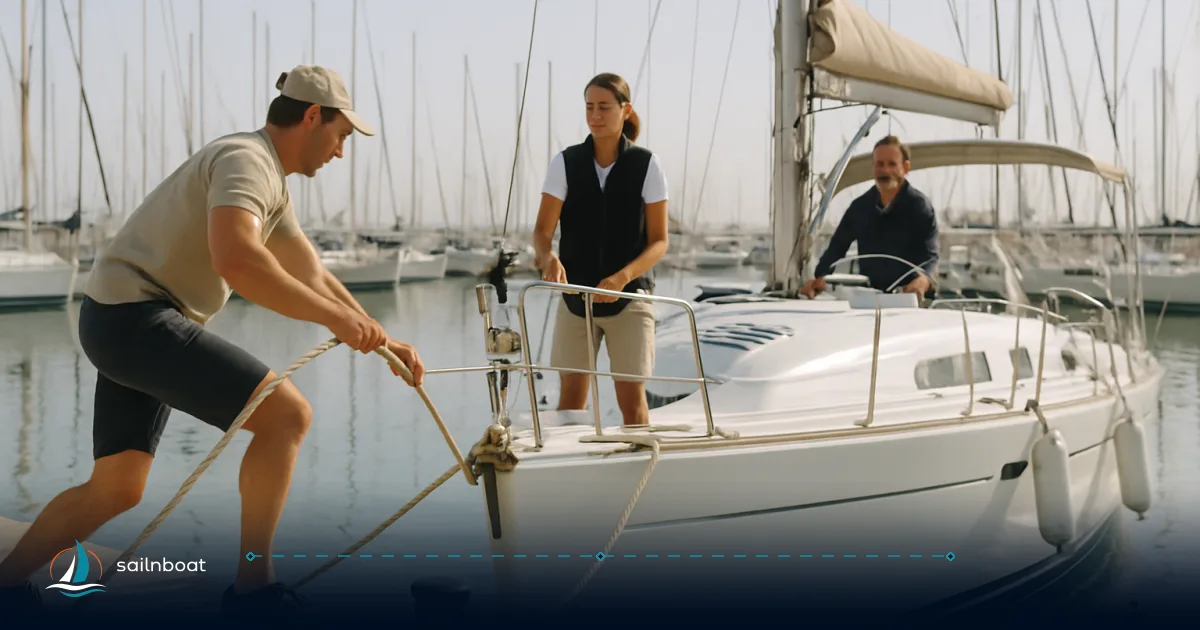
Mooring techniques work best when the plan is set before you reach the fairway: stage fenders and lines, assign roles, and aim to approach slowly so you can control the final few metres.
Step-by-Step Mooring Procedures
This section gives an operational sequence you and your crew can execute under pressure. Read it aloud to your crew before you enter the marina.
Preparation Before Docking
- Recon the berth as you enter the harbour: note the berth type (finger, alongside, stern-to), nearest cleats or bollards, depth at the berth if visible, and whether neighbouring boats are rafted. If the marina issues a berth assignment, listen for any local instructions on VHF or from the dockmaster.
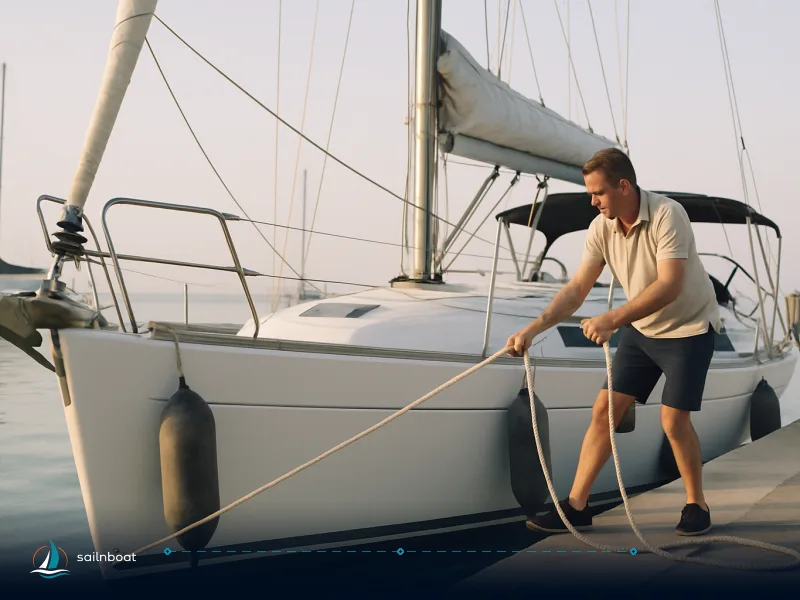
- Stage fenders and lines early—before you reach the entrance to the marina. Place fenders at the expected contact zone (midships for alongside, amidships and stern for stern-in) and pre-run the bow and stern lines to the cockpit or a deck cleat so they’re ready to pass.
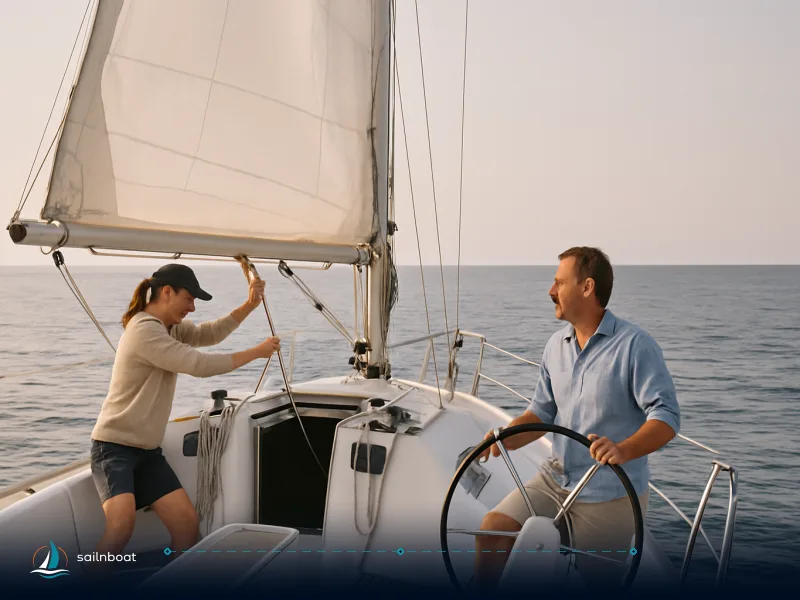
- Assign crew roles aloud: Helm (you), communicator to repeat commands, bow handler, stern handler, and a floater to fetch extra gear if needed. Give each handler a single, short task (e.g., “bow line on cleat, hold until I call slack”) to avoid confusion.
- Equipment check (quick): boat hook within reach, two good midship spring lines ready, gloves, and one or two spare short lines (10–15 m) in case you need to take a shore cleat quickly.
Cite: staging fenders/lines and role assignment are standard best practice and common recommendation.
Executing the Approach
- Reduce speed well before the slip: a slow, controlled approach preserves steerage and reaction time (see next section on target speeds). Keep your approach track shallow; for finger piers come in a few degrees off parallel so you can correct sideways movement without large rudder angles.
- Helm calls and hand signals: one voice only gives the helm instructions; bow and stern repeat the call before acting. If visibility from the cockpit is poor, use hand signals pre-agreed in the briefing.
- Use short bursts of throttle and neutral to shape the boat; avoid full astern into the dock. If you have twin engines, use differential thrust deliberately—short, measured bursts—rather than long full-power corrections.
- If you anticipate needing to step onto the dock, stop with the bow or stern adjacent to the cleat and hold position with an easily attachable line or spring rather than attempting a final hard correction.
Critical approach-speed guidance: aim to be slow enough to stop and hold without high shock loads—practical guidance is to approach at a slow, controlled speed, minimizing momentum at contact to reduce berthing energy.
Securing the Vessel
- First line to land: depending on layout, get a stern or bow line handled first to arrest forward motion—many experienced handlers prefer the stern line first because it gives immediate control of the stern swing.
- Fit springs early: rig a bow or stern spring (a line running fore-and-aft to the dock) immediately to stop surging; springs let you use engine thrust to lever the boat in rather than wrestling with throttle and rudder alone. Use a midships spring if the berth is short or adjacent boats restrict swing.
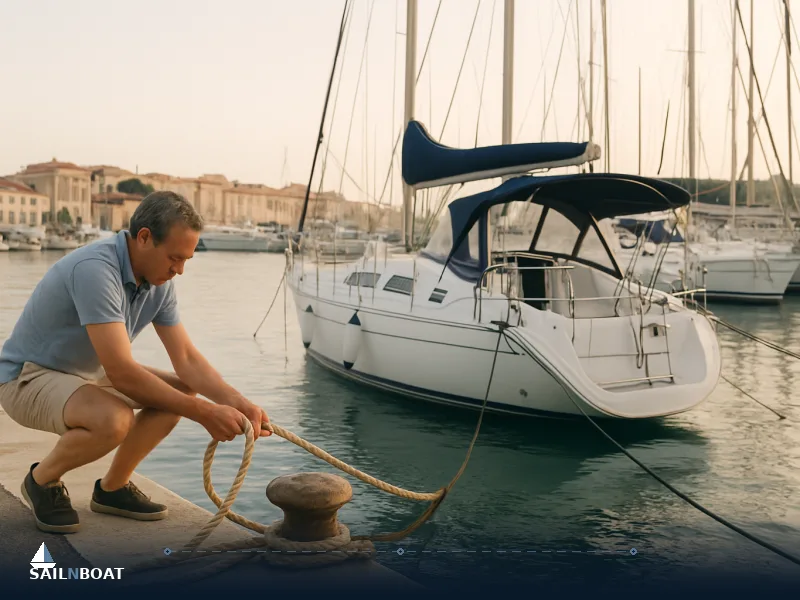
- Final snugging: once springs are set, snug the bow and stern lines to the desired length and cleat hitch. Leave a little slack for tidal movement, then re-check after 10–20 minutes when the boat has settled.
- Chafe and geometry: aim for 2–3 secure leads to distribute load (bow, stern, one or two springs). Lead lines so they run clear of winches and gangways; chafe protection where lines contact pilings or rubbing strips.
Common Challenges in Crowded Marinas
Dealing with Limited Space
- Time your approach: pick a quiet window—often the top of the hour or when the ferry has left—if traffic patterns are predictable. If the fairway is congested, drop back into a safe station and wait for space rather than forcing a cramped approach.
- Micro-manoeuvres: in tight spots, brief engine pulses (1–3 seconds) with immediate neutral are more effective than continuous throttle. Use rudder or differential engines to translate small changes into lateral movement.
- If forced to raft, rig fenders between boats and use additional spring lines to keep both boats aligned. When rafting, assign one crew to monitor the neighbour’s lines and fenders.
Handling Other Vessels
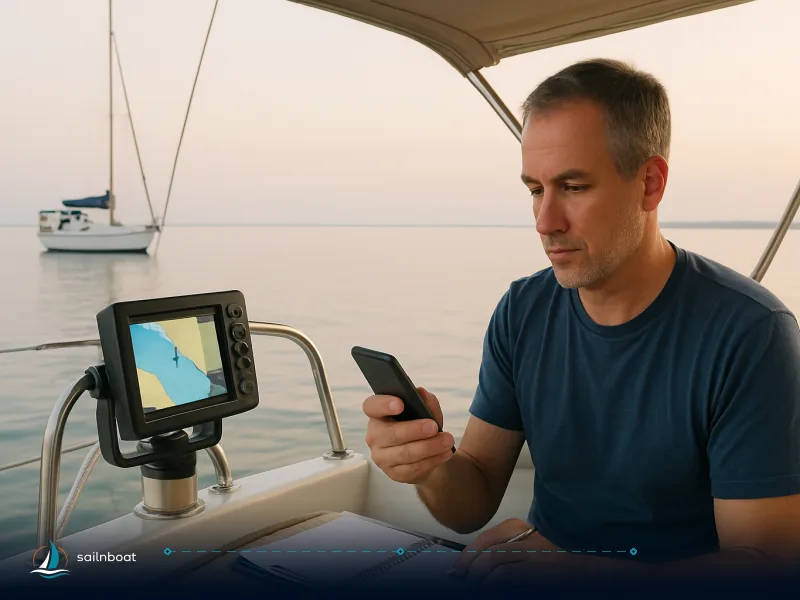
- Maintain situational awareness: look both visually and on AIS/VHF where fitted. Expect recreational boats to react unpredictably; assume you may need to stop or reverse unexpectedly.
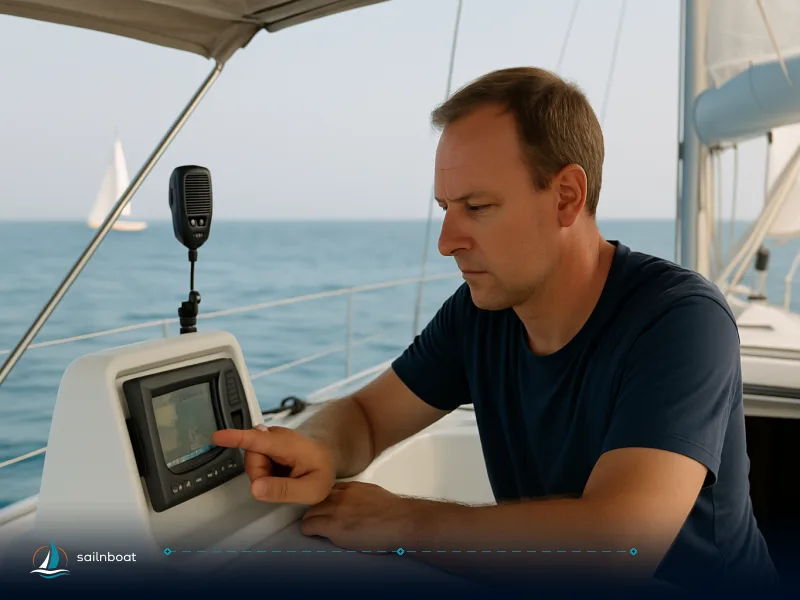
- Use clear communication: hail nearby boats on the relevant VHF channel (if local practice permits) and repeat intent—“approaching slip 12, filling stern-to” is both concise and informative. Short, repeated calls prevent misunderstandings.
- If a neighbouring boat moves the moment you start your approach, abort and reposition; trying to salvage the original plan often causes collisions or squeezed lines.
Essential Equipment for Efficient Mooring
Mooring Lines and Fenders
- Line material: three‑strand or double‑braid nylon are the common choices—nylon gives the stretch that helps absorb shock from wakes and gusts.
- Sizing rule-of-thumb: size dock lines by boat length—common charts place 3/8"–1/2" for boats up to about 30–36 ft, 5/8" for 36–45 ft and 3/4" or larger for 45+ ft. Step up one size for heavy-displacement boats or exposed, wake-prone marinas.
- Fender sizing: a practical rule used by many operators is roughly 1 inch of cylindrical fender diameter per 4–5 feet of boat length; size up for exposed berths or if you will raft. Position fenders to match the contact patch—one forward, one midships, one aft for typical alongside berths.
Table — Typical Dock Line & Fender Guidance (quick reference)
| LOA (ft) | Dock line diameter (in) | Typical fender config |
|---|---|---|
| Up to 27 | 3/8" | 2 fenders per side, smaller diameter |
| 28–36 | 1/2" | 2–3 fenders per side, mid-sized |
| 37–45 | 5/8" | 3 fenders per side, larger diameter |
| 46+ | 3/4" or more | 3–4 fenders per side, large/long fenders |
(Use this table as a baseline; increase sizes in high-wake, tidal or exposed marinas.)
Docking Aids
- Bow/stern thrusters: they help sideways control but are typically less effective with forward motion—thrusters are best for low-speed, close-range corrections, not for stopping high lateral momentum. Learn how your thruster responds under partial forward/astern thrust before relying on it in a crowded berth.
- Cameras and sensors: useful when sightlines are poor, but never substitute for a bow handler on the dock; they augment situational awareness.
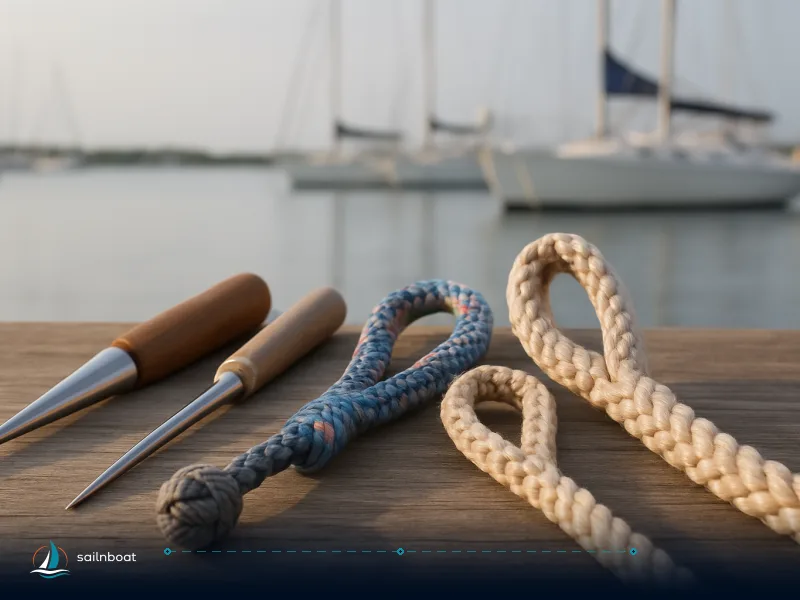
- Hand tools: boat hook, spring-line tails (endless loop or pre-spliced eye), PFDs accessible, deck gloves, and a sharp knife in a known location. Keep a small “dock kit” near the cockpit in predictable weather.
Safety Protocols During Docking
Crew Responsibilities
- Use a single-voice command structure: one person (helm) gives commands, one person confirms them. The communicator relays helm instructions and confirms actions to avoid cross-talk.
- Personal safety: many operators require or expect crew to wear lifejackets in rough conditions or when transferring crew ashore; have PFDs ready and insist everyone uses gloves for line handling. The U.S. Coast Guard and related agencies strongly encourage wearing lifejackets whenever the vessel is underway and during higher-risk evolutions.
- Stow hazards: coil excess line neatly, keep deck clear of loose fenders and halyards, and secure any gear that could trip a crew member during the approach.
Emergency Procedures
- Engine failure plan: brief the crew on what you will do if the engine quits—typically, put the boat in neutral, call for help on VHF, and use spring lines or a spare crew member to hold the boat while you restart if safe to do so.
- Man-overboard: assign someone to shout and point, drop a floatation device, and execute your MOB recovery procedure; a person overboard during docking rapidly changes the priority to rescue rather than securing the vessel.
- If a line parts under load, move people clear of bights and never stand over a taut line that could snap back.
Handling Adverse Conditions
Crosswinds
- Approach angle: come in slightly bow-first into a crosswind so the wind helps you close the gap instead of pushing you away; once alongside, use short reverse pulses to drag the stern in if needed.
- Use spring lines to control swing: a stern-to spring taken early lets you use forward thrust to pull the stern toward the dock without fighting the wind.
- Increase fender coverage and have crew ready with chafe protection; leave longer tails on lines so you can pay out and adjust if the wind gusts.
Currents
- Read the set well before you commit: identify flow direction in the fairway and use it to assist your approach (bow-into-current gives better steerage).
- If the current is strong (many mariners treat >1 knot as materially significant), plan to come in at an angle and use springs combined with short engine bursts to counteract drift.
- In narrow, tidal marinas, consider arriving at a slack or more favourable tide if your schedule allows; otherwise stage extra crew and lines. Practical guidance often recommends planning around currents over ~1 knot as they materially affect control.
Mistakes to Avoid When Mooring
Rushing the Process
- Don’t give the crew last-minute tasks; stage and brief beforehand. Rushing increases the chance of missed chafe points, dropped fenders, and mis-throws.
Ignoring Communication
- Failing to use clear calls or allowing multiple people to shout contradicting orders is the most common root cause of collisions in busy marinas. Agree on the words you’ll use (e.g., “hold”, “slack”, “take”, “secure”) and keep them short.
Other common errors to avoid:
- Undersized lines or fenders for exposure.
- Trying to correct large errors with thrusters alone.
- Leaving fenders too low or too high—position to match the dock edge you will contact.
- Standing with limbs over the cleat or bight when tightening a live line.
Final checklist (read this out loud before you enter the fairway)
- Fenders: placed and tied at correct height (cover planned contact area).
- Lines: bow, stern and two springs staged; spare short lines accessible.
- Crew: roles assigned, gloves on, lifejacket plan briefed.
- Helm: approach speed set (slow), plan B agreed (abort/hold), communicator ready.
- Equipment: boat hook and knife in hand, thruster readiness checked (if used).
Practice these techniques in quiet marinas before you need them in crowded, exposed ones. Small rehearsals—one day of staged approaches—pay dividends: you’ll recognise timing, throttle feel and how your boat hands in wind and tide, and your crew will learn exactly what to do when it counts.
Practice these techniques to enhance your mooring skills and confidence.
Frequently Asked Questions
Prepare the berth (fenders, lines, crew roles), approach slowly and aligned with the dock, use short engine bursts and spring lines to control position, then secure bow, stern and spring lines in that order.
Assign clear roles (bow, stern, midship, communicator), rehearse the calls and hitches before leaving the fairway, stage fenders/lines ready to hand, and insist on gloves and lifejackets when conditions demand.
Good nylon dock lines sized for your LOA, fenders placed to cover the contact zone, a boat hook, crew gloves, a sharp knife accessible, and—when available—bow/stern thrusters or a spring line rig.
Approach at an angle into the wind/current, use powered reversals against a spring line to swing the stern or bow, leave extra line and fenders, and slow to a crawl (aim for under 1 knot at contact).
Rushing the approach, not staging gear in advance, poor communication, undersized lines/fenders, and relying solely on thrusters instead of proper spring-line technique.
Written by
Sailnboat Editorial
The Sailnboat editorial desk covers yacht and boat chartering worldwide — routes, bases, seasons, boat types, paperwork and the practical costs that decide a trip. We are a charter marketplace, not a boat owner or a local agency: what we sell is judgement and support, so our guides are written to help you make a decision, not to sell you a specific boat. Every guide is checked against live operator and marina data before it goes out.
Fact-checked against live operator and marina data, and published under our editorial standards. Last reviewed: .