Mastering Man Overboard Recovery: Essential Drills for Your Crew
A practical, step-by-step guide that gives charter skippers and family crews the repeated drills and safe deck techniques they need to recover a person overboard reliably.

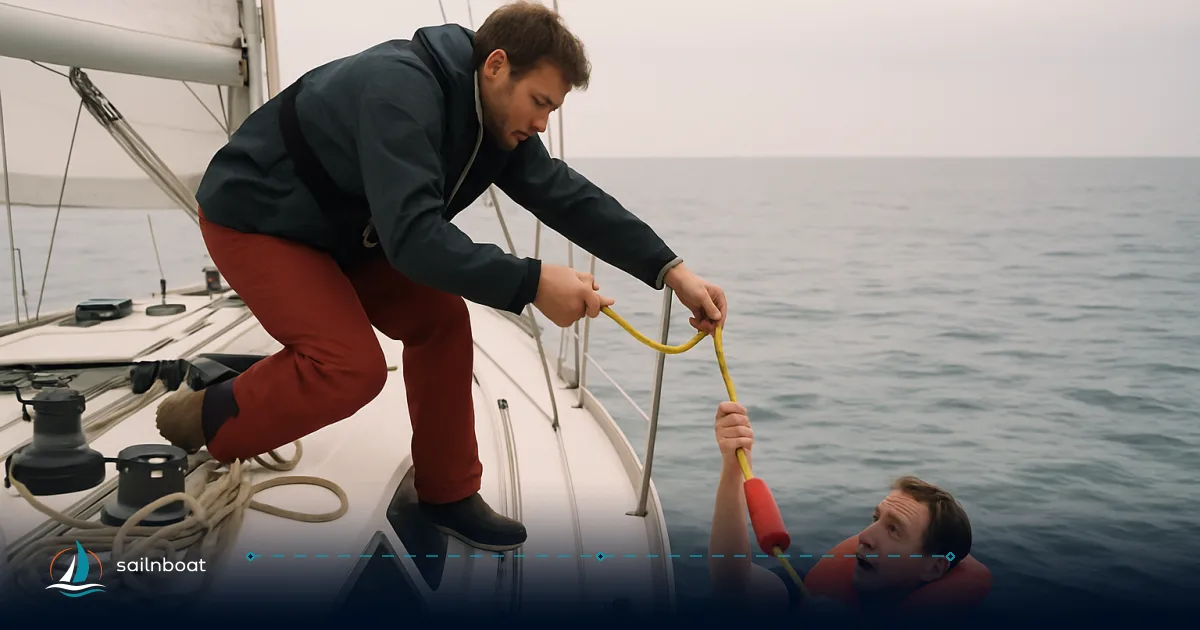
A fast, disciplined first response — shout "Man overboard!", throw a lifebuoy, point and keep eyes on the casualty while someone presses the MOB button on the plotter — is the single action set that most improves survival in a man overboard recovery. Read this and you’ll be able to assign roles, pick the right return pattern, and practise it until it becomes second nature.
Immediate Actions for Man Overboard Situations
Start with the five things you must get right in the first 10–30 seconds. These are procedural — not negotiable.
- Shout the alarm: a loud, clear "MAN OVERBOARD!" (twice if needed) while pointing at the casualty with an outstretched arm. Use the phrase; it’s universally recognised and used in formal guidance.
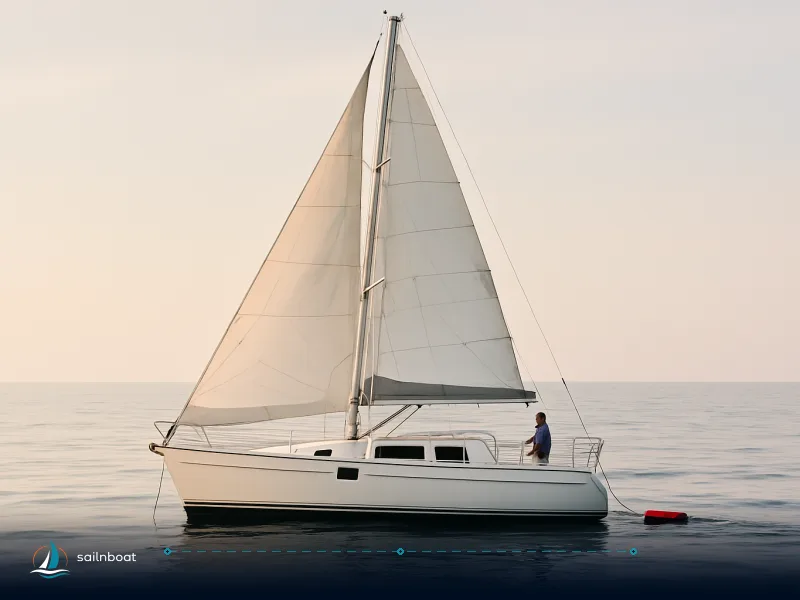
- Throw flotation immediately: a lifebuoy, Lifesling or any buoyant object thrown downwind near the person creates a visible, floatable target and buys time. Aim to throw a line that will stay visible even if the person drifts.
- Designate a spotter: assign one person to keep continuous visual contact and to point at the casualty — they must not be diverted. Pointing prevents the classic "lost sight" problem when the crew focuses on machinery or sail handling.
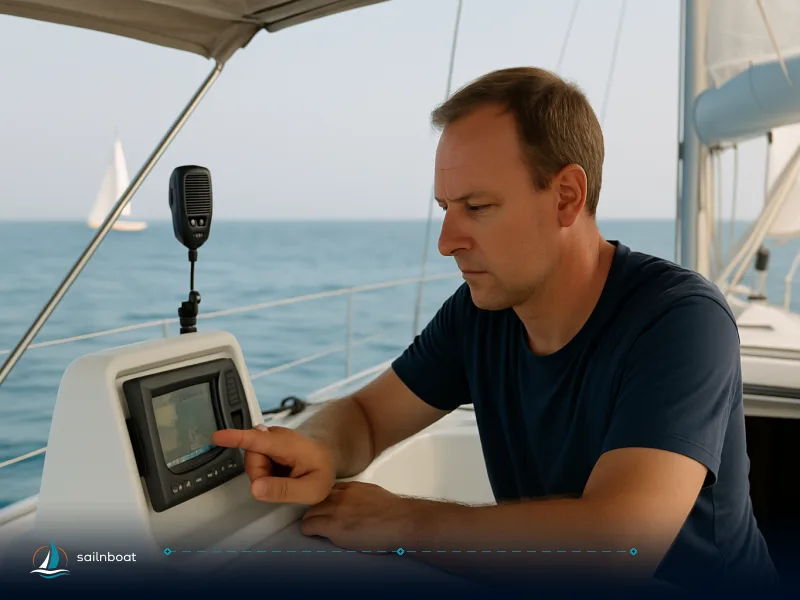
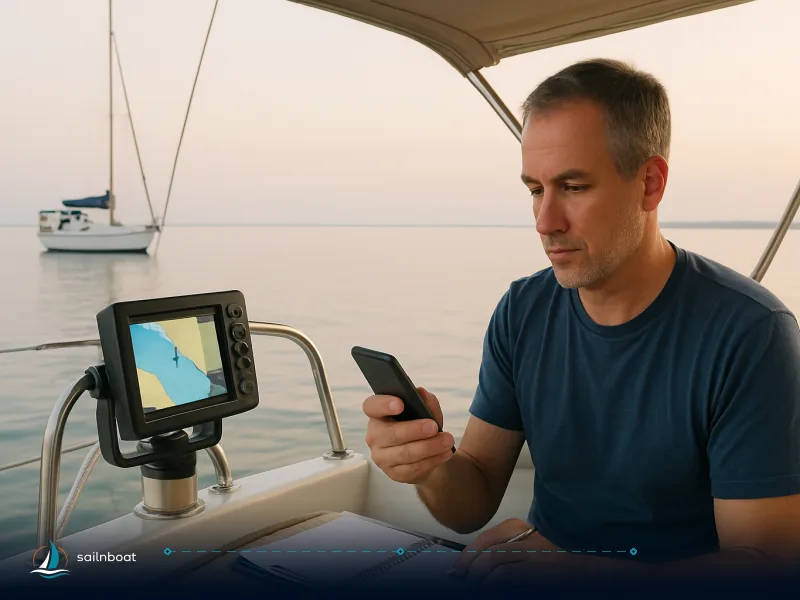
- Mark the position: press the MOB button on your chartplotter/GPS to mark an exact waypoint; most units start routing back to that point or record coordinates for DSC/MAYDAY. Do this while someone else watches the casualty.
- Control propulsion and helm: slow or stop the boat as your chosen recovery manoeuvre requires (under power, stop the engine when safe to avoid propeller hazard; under sail, back the jib or ease sheets to reduce speed while maintaining steerage). On powerboats, be prepared to back down to hold station clear of the person and the prop.
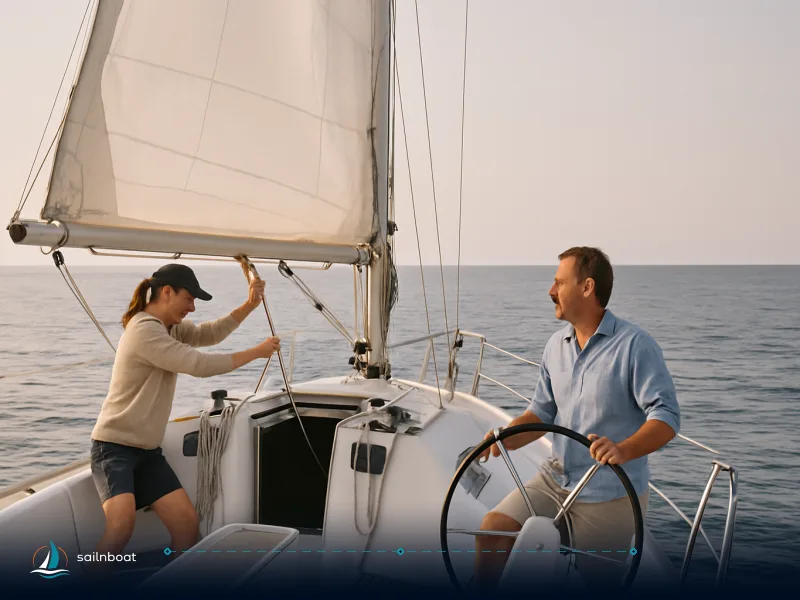
Keep instructions short. One person: spotter. One person: MOB mark and radio/plotter. One person: rescue gear (lifebuoy, heaving line, Lifesling). Helm: execute the selected return manoeuvre.
Three Primary Recovery Maneuvers
Choose the return pattern that suits your conditions: visibility, sea state, wind and crew experience determine which is safest and fastest.
Quick Stop Maneuver
When to use: short distance to casualty, you have immediate visual contact and need the fastest possible return on a sailing yacht.
Step‑by‑step (sail):
- Helm rounds up immediately and crash‑tack so the boat turns through the wind (the jib should be backed to help stop speed).
- As soon as forward motion is lost, level the boat onto a close reach or stop so the casualty is on the lee quarter and in clear sight.
- Keep the spotter pointing; ready a heaving line/Lifesling and deploy the swim ladder or transom boarding plan.
- Final approach: maintain steerage, slow with your sheets or engine, and stop with the person alongside or slightly to leeward for a lee side approach.
Notes: Quick Stop is typically the fastest recovery under sail but can involve an unplanned jibe or busy sail handling — only attempt if crew can control the jibe/backsheets reliably.
Williamson Turn
When to use: larger displacement boats or power‑driven vessels, or when you have lost precise bearing and want to return along your own track.
Concept and steps (power or sail adaptation):
- Turn the vessel hard away from the casualty side (rudder hard over) and hold until the heading has changed approximately 60° from original.
- Put the rudder hard over to the opposite side and continue until you are on the reciprocal course (you will retrace your wake).
- Reduce speed and approach the recorded MOB waypoint; continue to hold the spotter to maintain sight while you close the final distance.
- Stop engines when safe and approach slowly to recover.
Notes: The Williamson Turn is designed to bring your vessel back along the original track; it works well in strong winds and sea when you need to avoid drifting further from the last known position. It takes longer to execute than a Quick Stop but is more forgiving when the person’s position is uncertain.
Figure‑of‑Eight (Reach–Return) Maneuver
When to use: crowded waters, if you need a controlled approach with good steerage and time to prepare crew and gear.
Procedure:
- Fall off and head down onto a beam reach, putting distance between you and the casualty while keeping them in sight.
- Turn back on a broad reach and then round up onto a close reach so that the final approach is controlled and slow — this draws a figure‑of‑eight on the water.
- Use the extra time to prepare lines, a halyard hoist or to position a boarding ladder. Approach into wind or to leeward depending on the casualty’s condition and your planned recovery method.
Notes: The Figure‑of‑Eight trades speed for control and gives inexperienced crews time to prepare. It’s commonly taught as the racing/sailing yacht standard for recoveries where you want to finish with the boat stopped and steady.
Quick comparison table
| Manoeuvre | Best for | Pros | Cons | Crew/skill |
|---|---|---|---|---|
| Quick Stop | Close, visible casualty on sail | Fastest return; keeps casualty in sight | Can require rapid sail handling; possible accidental jibe | Small crews with confident sail handling |
| Williamson Turn | Uncertain position, heavy weather, powerboats | Returns along original track; stable in adverse conditions | Slower to execute; needs distance | Good for larger vessels, trained helmsman |
| Figure‑of‑Eight | Crowded waters, time to prepare | Controlled final approach; time to ready gear | Slower than Quick Stop; requires space to loop | Useful for mixed‑experience crews |
(Choose the manoeuvre by matching conditions above; practise all three so you can pick the right one without thinking.)
Safe Deck Handling Techniques
Recovering a person from the water is a separate skill from getting your boat back within reach. Plan for the lift before you reach them.
Using Swim Ladders
- Deploy early: have the ladder in the water before you make the final approach so the casualty can find it and climb if able.
- Approach to leeward: stop the boat with the person alongside on the lee side so the boat is relatively still and the ladder is sheltered.
- Assist from the cockpit: assign one crew on the ladder to steady and one at the stern to support the casualty’s head/shoulders as they climb. Monitor for cold shock and fatigue; don't rely on a single weak swimmer to climb unaided.
Halyard Hoist Recovery
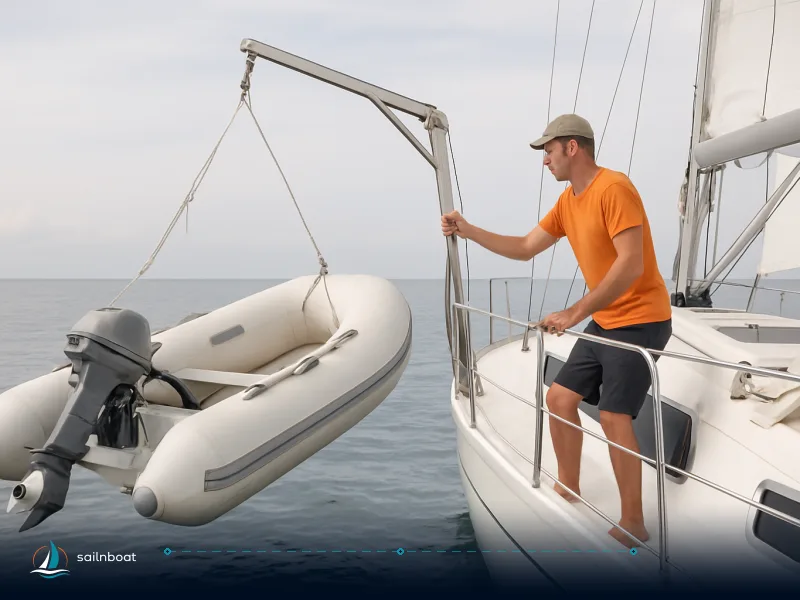
- Use rated lifting points: attach a sling to a rated lifting point such as a dedicated strop or the lifejacket lifting loop if specified by the manufacturer, and lead the halyard over a purpose‑rated block. Always confirm the correct attachment point for your specific equipment.
- Rig before approach: have the block and halyard ready on deck, and a winch operator briefed to take up gently.
- Hoist slowly and steadily: avoid jerks; stabilise the casualty horizontally if possible and bring them to the lowest safe boarding point (swim step, transom gate).
- Safety note: do not hoist directly on thin tether clips, crotch straps or unsecured harness hardware unless you have equipment rated and trained for that load — use a purpose‑built rescue strop or the jacket’s lifting loop only if it is rated for lifting by the manufacturer.
Boarding Over the Transom
- Final approach: stop with the stern into the wind or slightly to leeward, depending on sea state, and keep engine off when people are near the stern.
- Use fenders and a stern line: snub a stern line to keep the boat close to the casualty and steady the platform. Lower a boarding ladder or step for them to grab.
- Two‑person lift: position one person at the transom to guide the casualty, one ready to take a bowline or loop, and a third to manage the deck – keep communications short and controlled.
Onboard Drill Plan for Non‑Swimmers and Family Crews
A drill should be short, repeatable and role‑specific so everyone remembers their job. Run this plan in calm conditions first; you can increase realism later.
Drill structure (20–30 minutes total):
- Brief (3–5 minutes): explain roles — Helm, Spotter, Thrower, MOB‑Button operator, Deck Recovery team. State the recovery method you will practice (Quick Stop, Figure‑of‑Eight, or halyard hoist).
- Dry run (5 minutes): at anchor or alongside, practise shouting the alarm, pointing, and pressing the MOB button on the plotter so everyone knows where it is on your unit. Confirm how to throw your lifebuoy/Lifesling.
- Live prop drill (10–15 minutes): one crew acting or a fender as the casualty is deployed astern on a long line. Execute the immediate actions, then run one recovery manoeuvre to final approach. Recover the dummy using the intended deck method (ladder or halyard). Keep the engine in neutral during final pickup if possible.
- Debrief (5 minutes): what went well, what was late, who had trouble — repeat the drill with role rotation so everyone experiences spotter, helm and deck recovery roles.
Special rules for non‑swimmers and families:
- Give flotation immediately. Non‑swimmers should be handed a buoyant aid; don’t ask them to swim to the boat.
- Use simple language and short commands for children and inexperienced crew: "Point — Throw — MOB — Helm". Repeat once.
- Practice the safe hoist and ladder recovery ashore or at a marina once while under supervision if you plan to use a halyard hoist in real incidents — it requires coordination and an understanding of lifting points.
Drill frequency: many training organisations recommend regular drills; for charter crews, confirm with your operator or training body for specific guidance. Regular short refreshers and at least one full recovery drill per season or crew change are often suggested to keep skills sharp.
Final checks, kit and common mistakes
- Kit checklist (store within reach): lifebuoy with light, Lifesling or heaving line, throwable cushion with line, long boarding ladder, rescue strop and a spare strong line for hauling. Keep these items in one labelled, accessible locker near the cockpit.
- Common mistakes: not assigning a continuous spotter; trusting one person to both helm and spot; waiting to press MOB until you’re back on track; approaching too fast and creating propeller risk. Drill to remove these failure modes.
Schedule regular MOB recovery drills to enhance your crew’s preparedness and confidence — the procedure is simple, but the timing and discipline must be practised. For a charter crew, run the short "first‑10‑seconds" sequence on day one, then a full recovery drill before you leave the marina. If you plan to rely on halyard hoists or davits, practise them once in calm conditions so everyone knows their role and the correct lifting points.
Schedule regular MOB recovery drills to enhance your crew's preparedness.
Frequently Asked Questions
Shout 'Man overboard!', point, throw a lifebuoy or flotation and assign a dedicated spotter; press your chartplotter/GPS MOB button to mark the position and slow or stop the boat as appropriate.
Back the jib (crash tack) to slow and round up quickly so the boat stops with the casualty in the water on the lee side; keep the victim in sight and prepare the recovery lines before approach.
The Williamson Turn reverses your track to return to the incident point; use it when the casualty’s position is uncertain or in heavy weather when you need to recover along the original track.
Attach a sling or the lifejacket lifting loop, lead the halyard over a suitable block, take up slack with the winch and hoist slowly while someone stabilises the casualty; avoid direct hoisting on unsecured harness clips unless trained.
Run short, role‑based drills (shout/spot/throw/MOB button) followed by one full recovery method per session, use flotation dummies or fenders, rotate roles and debrief after each run.
Written by
Sailnboat Editorial
The Sailnboat editorial desk covers yacht and boat chartering worldwide — routes, bases, seasons, boat types, paperwork and the practical costs that decide a trip. We are a charter marketplace, not a boat owner or a local agency: what we sell is judgement and support, so our guides are written to help you make a decision, not to sell you a specific boat. Every guide is checked against live operator and marina data before it goes out.
Fact-checked against live operator and marina data, and published under our editorial standards. Last reviewed: .