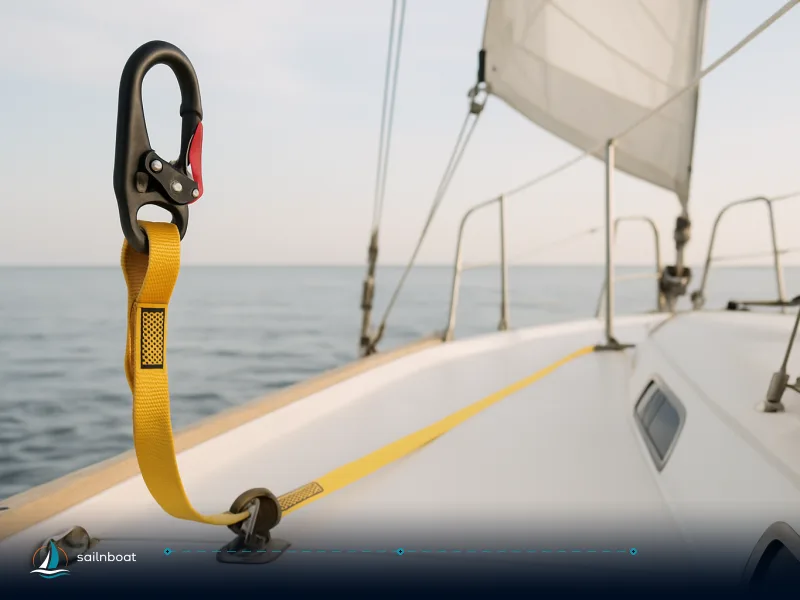
Dinghy Recovery: A Step-by-Step Guide for Charter Skippers
Practical, safety-first instructions for recovering a tender alongside, with davit/crane operation, on‑deck securing and a short Day‑One drill your crew can run.

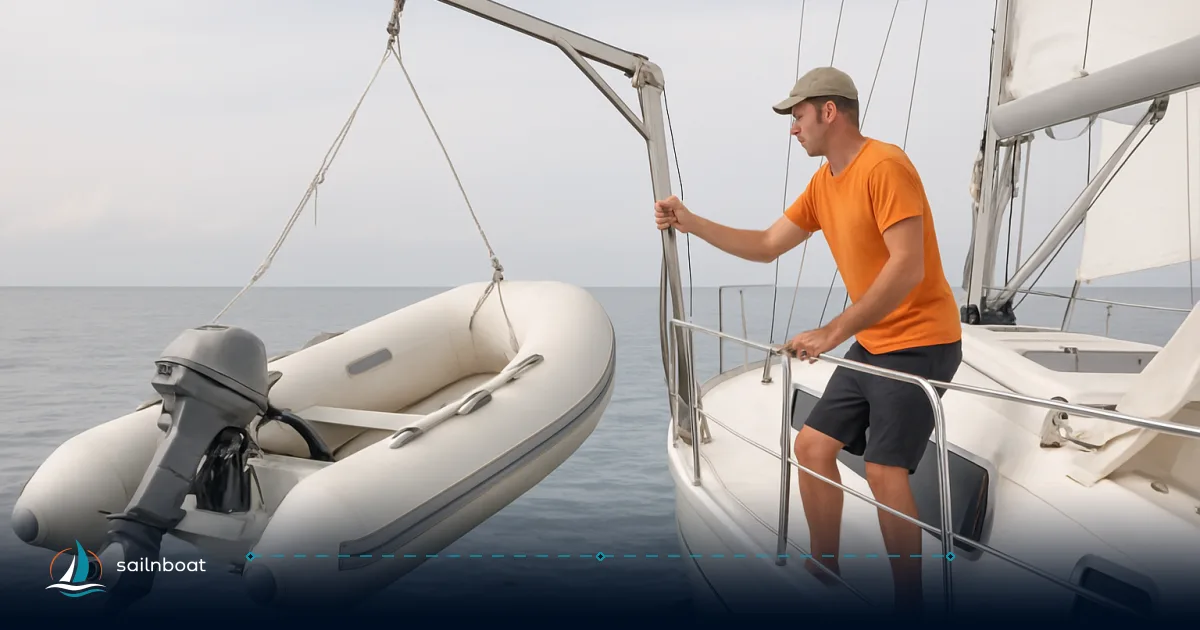
Dinghy recovery must be routine, controlled and rehearsed: recover the tender alongside or with a davit/crane using assigned roles, clear communications and kit rated for the tender’s fully loaded weight.
Safe Boarding Techniques for Tender Recovery
A safe boarding routine starts before you manoeuvre: brief the crew, check wind and current, and confirm where the tender will be brought alongside or hoisted.
Approaching the Tender
- Assess conditions first: look at wind strength/direction and set of the current — these dictate which side of the yacht is safest to use and how much scope you need on tag lines.
- Position the yacht parallel to the tender if recovering alongside; this minimises relative motion and shortens the handover distance. Use engine or sail to hold that position with minimal thrust and avoid abrupt corrections.
- Deploy fenders at the anticipated contact point; choose size so the gap between hulls is controlled (for many yachts, a medium to large cylindrical fender is often suitable, but the optimal size depends on hull shape, freeboard, and expected berthing forces). Calibrate fender choice to hull shape: round fenders for hard chine, long socks for curved topsides.
- Keep the tender on a short tag line from the yacht so a deckhand can dampen movement and make the tender’s attitude predictable as you come alongside. (Operational guidance on recovering alongside and stopping the engine before contact is standard in powerboating guidance.)
Boarding Procedures
- Assign one person to step across at a time. The transferring crewmember should carry nothing in their hands; hand over slim items (clip key, phone) only once stable on deck.
- Use a stable, predetermined stepping point (swim platform, low transom step or boarding ladder). A handhold on both sides—tender and yacht—must be identified and tested before transfer.
- Keep the tender engine stopped before the moment of contact; props are a serious hazard and the usual procedure is to stop propulsion prior to boarding/contact. If the tender helm must keep steerage, have them maintain positioning using oars or by brief, controlled engine bursts under deck command, but normal practice for contact is engine off.
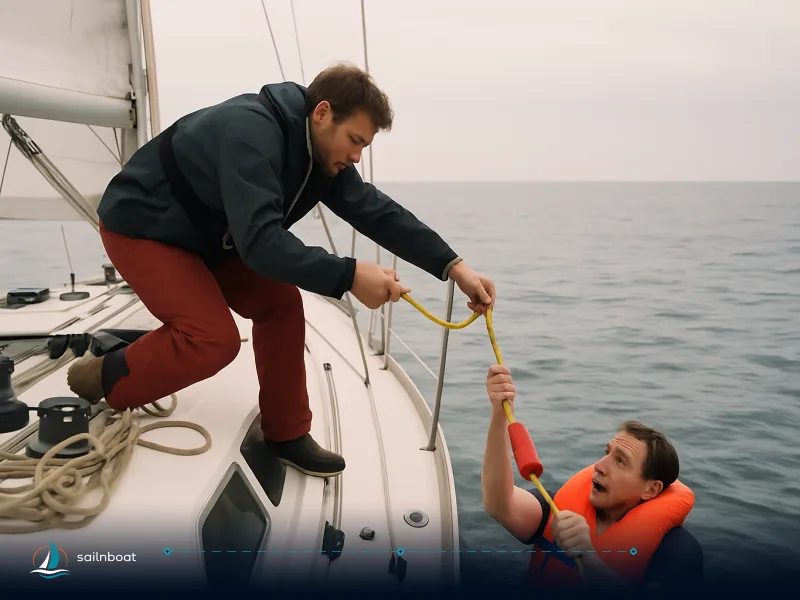
- If recovering a person from the water, prioritise a lifting method or boarding ladder suitable for an exhausted or unconscious casualty rather than a standard step‑across. Test ladders and the route from water level to deck in calm conditions so you know the vertical transition works.
Utilizing Davits and Cranes for Tender Launch and Retrieval
Davit and crane systems vary widely—from small manual transom davits on a 12 m yacht to knuckle‑boom hydraulic cranes on megayachts. Match the gear to the tender’s fully loaded weight (tender dry weight + outboard + fuel + tools + possible water in the boat).
Types of Davits
- Fixed (transom) davits: simple, cost‑effective and common on smaller yachts; typically used for light tenders and deployed from the stern or swim platform. They are mechanically simple but offer less placement flexibility.
- Swinging/pivot davits: pivot outboard to lower the tender clear of the hull; common on larger motor yachts where side stowage is impractical. These are often electric or hydraulic and transfer loads into secondary structure.
- Articulated (knuckle‑boom) davits: multi‑joint hydraulic arms used on larger yachts for precise positioning and higher capacities; well suited to bulky tenders and garage operations. These systems can handle heavier tenders but are more complex and require regular maintenance.
Table — Davit/crane comparison at a glance
| Type | Typical capacity band (typical, varies by build) | Pros | Cons | Practical note |
|---|---|---|---|---|
| Small fixed/transom davit | a few hundred kg (small tenders) | Simple, robust, low cost | Limited reach/placement | Match to tender fully loaded weight and SWL plate. |
| Swing/pivot davit | several hundred kg to 1,500+ kg | Good reach, easier clear‑of‑hull placement | Mechanically more complex | Common on modern motor yachts. |
| Knuckle‑boom / articulated | 1,000 kg to multiple tonnes (superyacht band) | Precise placement, high capacity | Expensive, needs planned maintenance | Used where a garage/stowage bay or beach club is present. |
| Pedestal crane | 500 kg to several tonnes | Versatile; can lift from slings or cradles | Requires good deck reinforcement | Often used for heavy tenders and toys. |
(Confidence: these bands reflect common industry installations — always read the yacht’s rating plate and manuals; actual SWL and safe practice are ship‑specific.)
Cranes and Their Operation
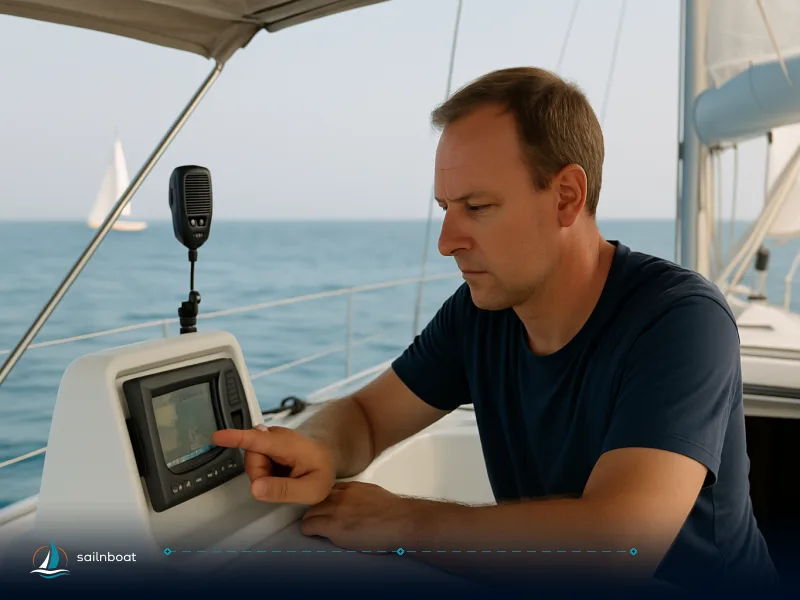
- Pre‑use checks: inspect the crane/davit for fluid leaks, frayed slings, working brakes and a clear SWL plate. Verify controls (deadman switch, emergency stop) work and the area beneath the lift is clear. If the system is hydraulic, check that hydraulic interlocks and limit switches are functioning.
- Lifting rig: never attach lifting hardware to soft tubes or non‑structural points on an inflatable. Use approved lifting slings or a purpose‑made recovery cradle/chocks and follow the tender manufacturer’s lift points. For small tenders, spread the load across multiple lifting points rather than a single point where possible.
- Communication and safety: use clear hand signals or a dedicated VHF channel between davit operator, deck leader and helm; ensure nobody stands under the suspended tender and secure tag lines to prevent swing. Test a short dry lift (a few centimetres) to check balance before hoisting clear.
Engine-Off Approaches for Tender Recovery Alongside
When recovering a tender alongside, reducing propulsion risk is critical: stop engines before physical contact and manage momentum with fenders and tag lines.
Positioning the Yacht
- Approach slowly into the wind or tide if possible; come to the parallel position with minimal steering corrections and keep a stern or bow quarter clear for flow if you need to back off. Use the yacht’s thrusters or minimal engine power to hold position when available.
- Deploy fenders and get the tag line ready on deck before the yacht reaches the intended alongside position. The goal is stable, predictable geometry between yachts with as little relative motion as possible.
- If conditions are such that keeping complete engine control is necessary (confined water or a strong current), maintain steerage until the tender is secured; nevertheless plan to stop propulsion prior to transferring personnel or making contact to prevent propeller injuries. Evidence from powerboat practice underlines stopping the engine before contact as standard procedure.
Recovery Process
- Stop engines before contact: announce “engines off” on your comms and confirm the tender helm is ready to secure the painter/tag line. A single, decisive stop removes prop hazard risk.
- Use a deckhand to take the tag line and ease the tender into the fendered gap; keep the tender’s bow slightly forward so crew can step up without climbing. If the tender or person is being lifted rather than stepped across, attach the recovery sling or bridle first, then signal the davit operator.
- Once the tender is physically connected with a webbing or bow line, keep a safety snubber (light line) until stronger lashings are made; do not restart engines until all persons are safely aboard and the tender is secure.
- For powered tenders with heavy outboards, consider leaving the engine tilted up and clipped to a crane tackle when hoisting rather than attempting to lift an engine by hand—outboards add significant weight and awkward leverage. Practical advice on handling heavy outboards emphasises using tackles or the boom as an assist.
On-Deck Securing Methods for Tenders Post-Recovery
Once the tender is on deck or in chocks, your goal is to render it immobile and prevent damage to the yacht and tender during sea passages.
Securing Techniques
- Use fitted chocks/cradles where provided; these prevent lateral movement. If the yacht lacks chocks, stow the tender on non‑slip matting and install temporary wooden wedges or purpose‑made cradles.
- Lashings: apply at least two independent lashings—one fore/aft and one athwartships (cross strap). For small tenders a single well‑rated webbing strap each side plus a safety bow/stern painter is common practice; for heavier tenders use two redundant webbing straps with a secondary safety line. Tighten with a winch or ratchet but avoid over‑tensioning that would deform the tender.
- Chafe and vibration: protect contact points with chafe gear (rubber sleeves, padding) and secure any loose components (fuel tanks, batteries, oars) separately. If the tender carries an outboard, ensure its mounting bolts are secure and, if required by the yacht’s SOP, secure or remove the fuel supply.
Safety Checks
- After securing, walk around and physically test each strap, look for movement and re‑check after the first 30–60 minutes underway; lashings relax and may require retensioning. Inspect for chafe and re‑route if necessary.
- Note weight distribution: a heavy tender forward or aft can change trim; check your yacht’s load plan and, if needed, shift ballast or stores to rebalance. For larger tenders that are stowed on a transom platform, confirm that the platform’s rated SWL is not exceeded and that the yacht’s trim and speed limits with the tender in place are observed.
A Recommended Drill to Practice Tender Recovery on Day One
Don’t leave this to the moment you need it. A short, structured drill on day one builds muscle memory and uncovers equipment quirks.
Setting Up the Drill
- Choose a calm, sheltered area (anchorage or quiet marina) and schedule 15–30 minutes. Announce the drill to guests and assign clear roles: Helm, Deck Leader, Davit/Crane Operator, Tender Helm, Fender/Lines handler.
- Brief the scenario: either alongside recovery or davit hoist. Confirm communications (hand signals and VHF channel), and that safety kit (PFDs, knife, gloves) is worn for anyone boarding the tender. Have the yacht’s manual to hand for reference to SWL and permitted procedures.
Executing the Drill
- Run the full sequence once at normal speed: approach, fenders out, tag line, stop engines before contact, transfer one person in both directions (tender → yacht and back if useful), attach davit slings and hoist clear (if practicing davit), then stow and lash. Emphasise stopping propulsion prior to contact.
- Time each segment and note slow points: is the davit hook awkward to reach? Do crew hesitate with hand signals? Is the tender balance off when a short lift is taken? Identify two immediate corrective actions.
- Debrief for 5–10 minutes: run through what went well, what surprised you, and update your charter safety notes. Agree who retensions lashings once underway and when the equipment will be inspected.
Final operational checklist (printable)
- Confirm tender fully loaded weight (dry + outboard + fuel + gear) and compare with davit/crane SWL.
- Pre‑use davit/crane inspection: slings, brakes, hydraulics, controls.
- Fenders and tag lines ready before approach.
- Engines off before contact / personnel transfer.
- Two independent lashings + chocks on deck; check again after 30–60 minutes underway.
Practice reduces risk. Run the Day‑One drill, log any equipment notes in the yacht file and brief new crew or guests the first time you carry a tender. These routines make dinghy recovery predictable, safe and fast — and they keep the charter running to schedule.
Review these techniques and run the short drill with your crew on day one of the charter to make tender recovery reliable and safe.
Frequently Asked Questions
Assess wind, tide and heel; approach to the tender with the yacht parallel and fenders set; transfer one person at a time using a stable step, handholds and a tag line; keep the tender engine stopped before contact.
Davits range from small fixed transom davits for light tenders to articulated (knuckle‑boom) hydraulic systems and pedestal cranes for larger tenders; choose the system rated for the tender’s fully loaded weight and follow the yacht’s manual and SWL plate.
Approach under control, stop engines before making contact to eliminate propeller risk, keep fenders and a tag line in place, then transfer personnel or attach recovery lines while maintaining good lookout and steerage if needed.
Remove fuel/batteries if required by the yacht’s SOP, position in chocks or on cradles, fit at least two independent strong lashings (cross straps plus bow/stern safety line), protect chafe and check lashings after any sea passage.
A 15–30 minute drill with assigned roles (helm, deck leader, davit operator, fender/lines and tender helm) practicing approach, engine‑off contact, hoist or alongside lash, stow and debrief builds confidence and reveals equipment idiosyncrasies.
Written by
Sailnboat Editorial
The Sailnboat editorial desk covers yacht and boat chartering worldwide — routes, bases, seasons, boat types, paperwork and the practical costs that decide a trip. We are a charter marketplace, not a boat owner or a local agency: what we sell is judgement and support, so our guides are written to help you make a decision, not to sell you a specific boat. Every guide is checked against live operator and marina data before it goes out.
Fact-checked against live operator and marina data, and published under our editorial standards. Last reviewed: .