Anchoring Safely in Strong Winds: Techniques and Tips
Practical, step-by-step techniques for anchoring in strong winds: anchor choice, scope, a controlled set procedure, monitoring methods and maintenance to keep your ground tackle reliable.

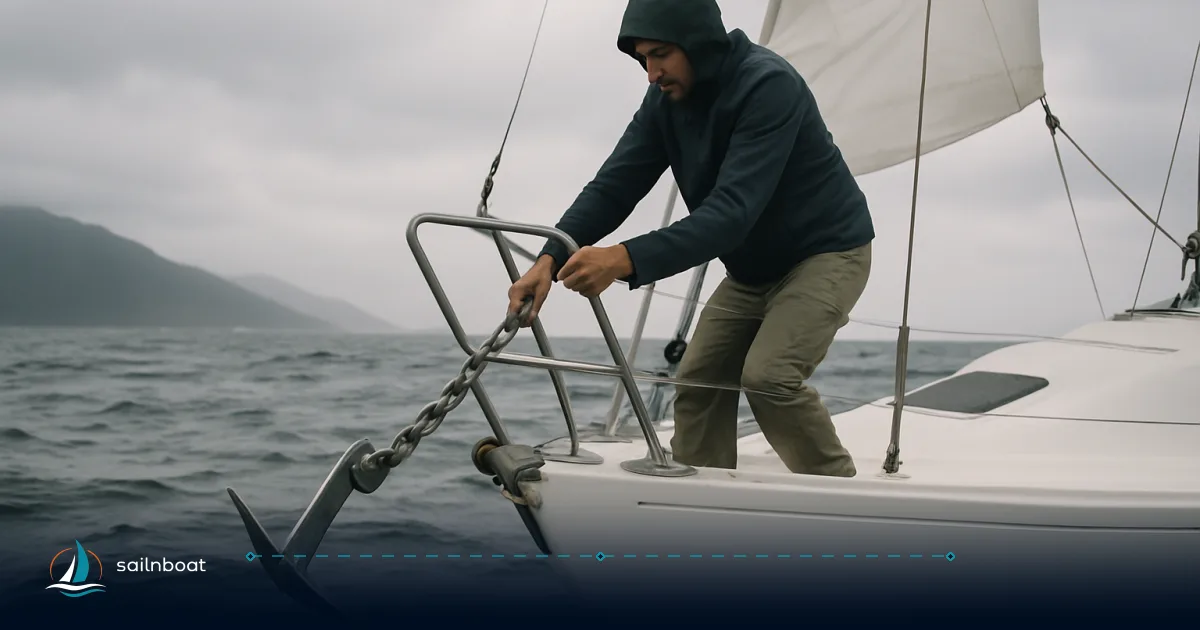
Anchoring in strong winds demands three practical actions: the right anchor and rode, more scope (typically ~7:1 or more), and a controlled set confirmed by a power-try and redundant watches. Do those three well and you dramatically reduce the chance of dragging; miss any one and a short night can become a problem.
Selecting the Right Anchor for Strong Winds
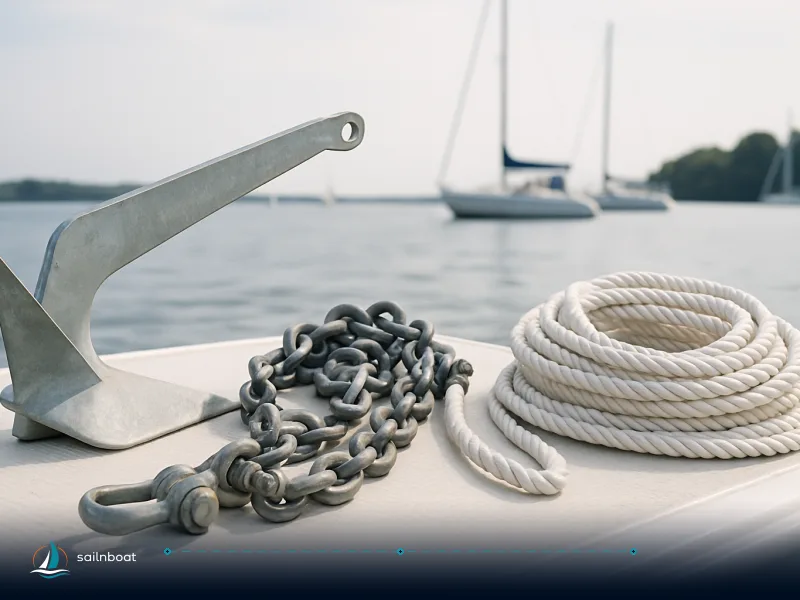
Which anchor you carry makes a real difference in a blow. Modern “scoop”/roll-bar anchors (Rocna, Spade, Manson) and plow-style anchors (Delta, CQR) are the most dependable all-rounders; they set fast, bury deeply and reset after wind shifts. Fluke (Danforth/Fortress) anchors give excellent holding-per-weight in soft sand and mud but are less reliable on weed, rock or mixed ground. Bruce/claw anchors are simple and often predictable, but by modern testing they usually need to be oversized to match the holding of newer scoop designs. If you anchor in a variety of bottoms, favour a modern scoop or a well-sized plow as your primary.
Recommended anchor types (quick comparison)
| Anchor type | Strengths in strong winds | Typical best bottom | Trade-offs |
|---|---|---|---|
| Modern scoop (Rocna/Spade/Manson) | Fast set, high holding per kg, re-sets well | Sand, mud, mixed | Heavier; costlier |
| Plow (Delta/CQR) | Versatile, predictable set | Sand, mud, weed | Performance varies by model |
| Fluke (Danforth/Fortress) | Excellent weight-to-hold in soft sand/mud | Soft sand/mud | Poor in weed/rock; can break out under surge |
| Claw/Bruce | Self-righting, good in many conditions | Mixed, rocky bottoms | Lower holding per weight vs modern scoops |
If you charter, check the base inventory. Many charter fleets now fit modern scoops or plows; where only a fluke or Bruce is fitted, compensate with extra chain and conservative anchoring technique.
Determining the Correct Scope Ratio
Scope — the ratio of rode paid out to the vertical distance from bow roller to seabed — is the single most important variable you control. Common, operational practice is:
- Minimum ~5:1 for short, calm stops.
- Standard overnight/strong-wind starting point ~7:1.
- Storm or very exposed anchorages: increase toward 10:1 or more if you have room.
Those ratios are widely taught in seamanship courses and used by BoatUS, the USCG auxiliary training materials and major anchoring guides; they reflect how a longer rode flattens the pull on the anchor, improving penetration and reducing upward lift that causes break-out. Always calculate scope using water depth at high tide plus your bow roller/freeboard — failing to include bow height is a common mistake and yields a smaller actual scope than you think.
Practical scope example
- Water depth at high tide = 4 m, bow roller 1.0 m above water → vertical = 5.0 m.
- At 7:1 scope you need ~35 m of rode; at 10:1 you need 50 m. If you carry a mix of chain+rope, plan how much chain you can realistically put in the water and whether you have room to swing.
If space is tight (crowded bay, shallow shoals), you must trade off scope for location: pick better holding ground, a more sheltered lee, or consider med-mooring/shore-lines rather than compromising scope.
Step-by-Step Anchoring Procedures
A disciplined, repeatable routine reduces errors when wind is building.
- Plan and brief. Decide swing radius, mark two visual transits ashore, assign roles (windlass operator, bow crew, helm). If conditions are rough, put lifejackets on the crew and keep a tether on deck.
- Approach into the wind or current (whichever is stronger). Come in slowly and aim to pass the intended anchor point by roughly one-third of your final scope distance — that gives room to pay out as you drift/back down.
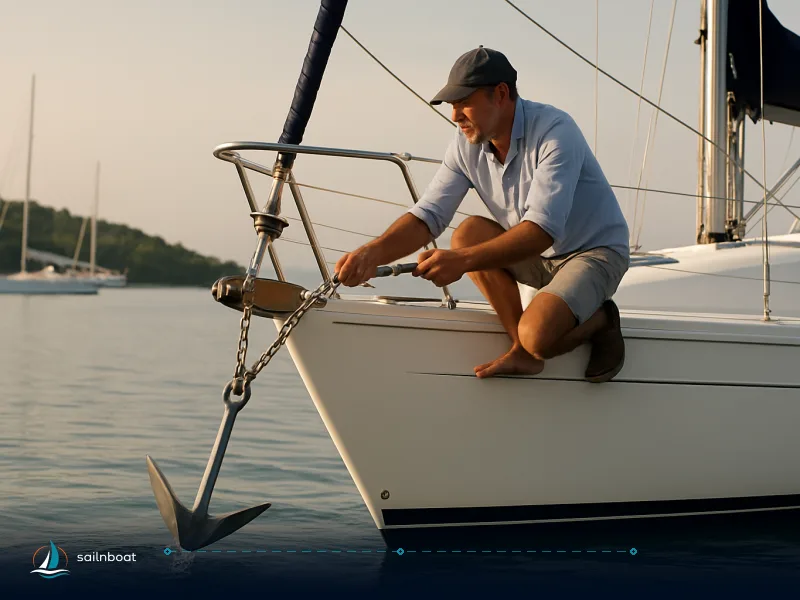
- Lower, don’t throw. Ease the anchor over the bow so it contacts the bottom without the rode piling up on top of it. Let it fall until you feel the bottom, then pay rode slowly.
- Deploy chain progressively and back down to set. Put the engine in reverse and back down slowly while paying out rode until you reach your intended scope. Laying the rode on the bottom avoids snatching and improves the anchor’s angle of pull. Once at two‑thirds to full scope, perform a controlled power-try: apply steady astern power (idle to moderate rpm, not full blast) for 20–60 seconds to load the anchor and confirm it holds. If the boat moves, retrieve and re-anchor in a new spot or increase scope.
- Transfer load off the windlass. After a successful power-try, rig a snubber or chain stopper and cleat the rode so the windlass is not taking shock loads. Leave a short length of chain between the snubber and anchor so the snubber can absorb stretch without fouling the bow roller.
When to use extra tactics
- Tandem (two anchors in line) or a Bahamian moor (two anchors set ~180°) reduces swing and adds holding; reserve these for exposed anchorages, reversing currents or if a storm is likely and you have room and crew. Deploy the second anchor as you would the first and set each with a power-try.
Monitoring Techniques to Prevent Anchor Dragging
Layered, redundant monitoring is the standard: electronic alarm + visual bearings + routine checks.
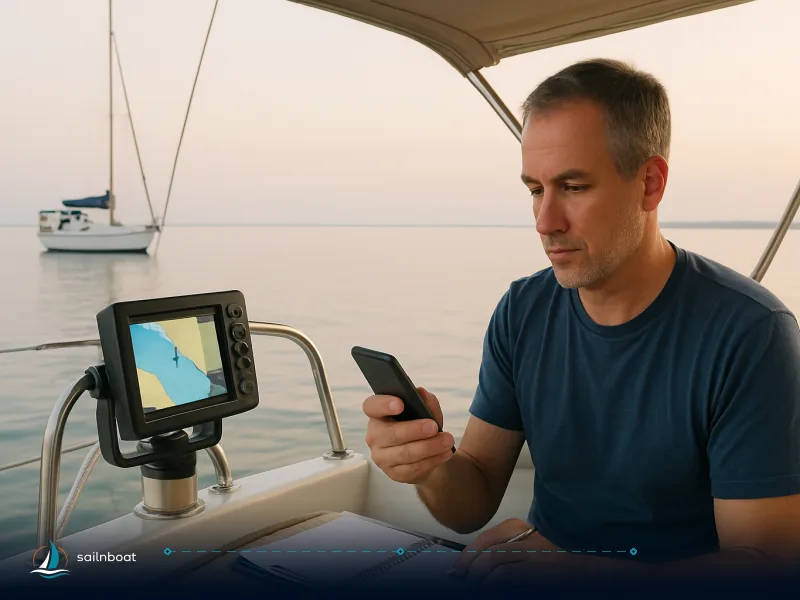
- GPS/plotter anchor alarm: set a conservative radius based on your boat’s windage and likely swing (small boats need a tighter radius; high‑windage vessels should use a larger but still careful radius). Note that GPS spikes can cause false alarms; cross-check before assuming you are dragging.
- Visual transits: pick two fixed objects ashore that line up with your bow when you first set; record their bearing or simply watch them — if they move relative to each other you’re dragging. Transits are cheap, reliable and independent of electronics.
- Depth trend and position log: log a GPS fix, depth, wind and time when you set; re-check every 10–30 minutes after a fresh set and more often if conditions worsen. A steady change in position or depth is an early sign.
- Active anchor watch: for strong winds or confined anchorages, keep a human watch on the helm with alarms and a plan to start the engine and re-anchor. Electronic anchor-watch apps and chartplotter alarms are useful backups but should not replace a basic watch routine.
Quick checklist for the first 30 minutes after setting
- Confirm visual transits unchanged.
- Verify GPS anchor alarm idle for desired radius.
- Depth stable (no clear trend toward grounding).
- Snubber/chain stopper loaded, windlass clutch secured. If any item shows movement, take immediate action: alert crew, start engine, and shorten scope to regain control or weigh and re-anchor.
Maintenance and Inspection of Anchoring Equipment
Reliability starts ashore and continues aboard. Make these checks part of pre-charter or pre-cruise routine.
What to inspect and how often
- Anchor fluke/point and shank: check for bends, cracks or worn paint that hide damage; the tip must be sharp and straight for good penetration.
- Chain: inspect every link for stretch, elongated links, corrosion, pitting or cracked welds. Measure chain wear if you can; replace links showing heavy corrosion or deformation.
- Shackles and swivels: use high‑quality, galvanised or stainless shackles sized correctly; replace if threads are rounded or pins show corrosion. Avoid non‑rated hardware.
- Windlass: rinse after salt exposure, keep covers on when not in use, follow the manufacturer’s service schedule (annual strip/grease for many models) and use a chain stopper or snubber so the windlass isn’t the main load bearer.
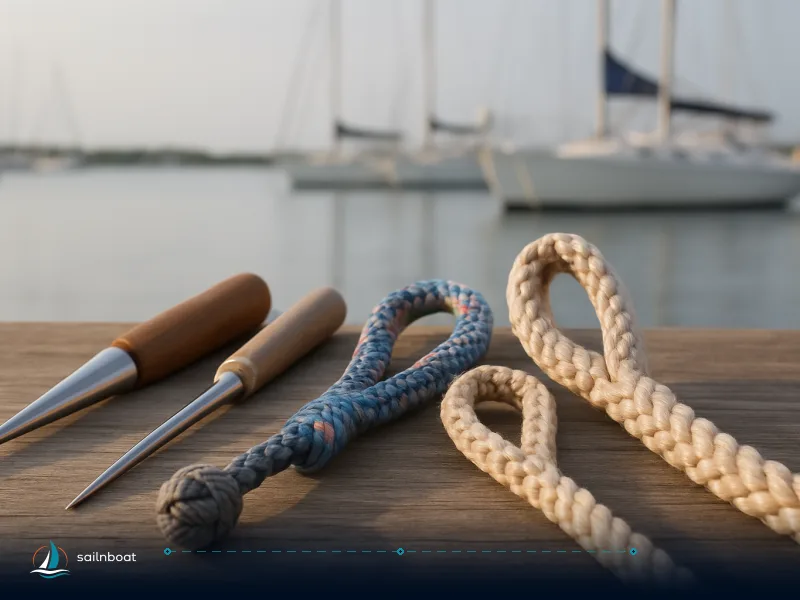
- Ropes and splices: check the rope tail and splice where rope meets chain for chafe and UV degradation; replace if stiffness, discoloration or broken fibres appear.
Snubber and chain-management best practice
- Fit a snubber (nylon rope bridle 20–40 ft depending on boat) and transfer load to it after setting; this reduces shock load and spooling on the windlass. Always leave an accessible quick‑release point for the snubber. Use a chain stopper or devil’s claw when available, not the windlass clutch alone.
After each cruise
- Rinse anchor, chain and shackles with fresh water and allow to dry in the locker; salt left on gear accelerates corrosion. Periodically strip and lubricate the windlass gearbox to displace salt and grit. Keep a small inventory of spare shackles, a length of replacement chain, and a tested snubber on board.
Safety Measures While Anchoring in Strong Winds
Prepare for failure modes and keep contingency simple and executable.
- Always have a backup plan: a second anchor rigged for quick deployment, a stern kedge or plan to med‑moor ashore if the bay allows. If the forecast includes a gale, plan to put out as much rode and as much chain as you can safely manage.
- Brief the crew: assign who will handle the windlass, who will tend the stern line/secondary anchor, who will start the engine; practise the 'engine on, out of gear, reverse' routine so nobody fumbles in a real drag event.
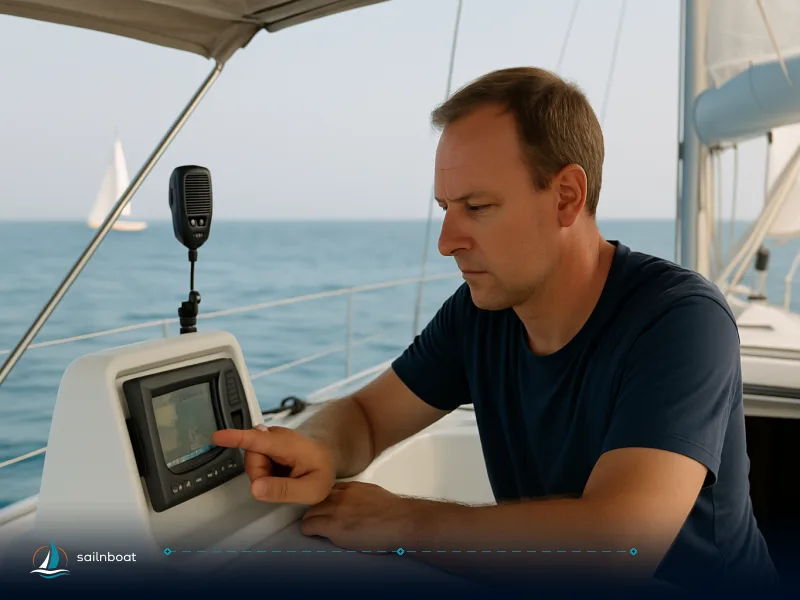
- Communications and visibility: keep VHF on and monitored, rig an anchor light at night, and have charged handheld backup devices and MOB procedures ready if a crew member is on deck.
- When to move: re-anchor early rather than later. If holding is marginal during increasing wind, it’s usually faster and safer to weigh and move to a better spot before conditions peak. The most dangerous moment is a late-night drag toward a lee shore — plan to sleep only if you’re confident in the set, swing room and watch routine.
Putting it together: a short decision flow for strong-wind anchoring
- Forecast check: is gale forecast within 24 hours? If yes, choose sheltered harbour/piers rather than anchoring.
- If anchoring, pick best holding ground (soft sand/mud preferred), enough swing room and room for 7:1–10:1 scope.
- Set primary anchor with disciplined procedure; confirm with power-try.
- Rig snubber and chain stopper; set GPS alarm and transits.
- If holding is marginal, deploy a second anchor (stern kedge or Bahamian/tandem) and increase scope.
- Maintain an active anchor watch while winds are high or conditions uncertain.
Final note on charter boats: many charter bases fit competent ground tackle but not necessarily the largest or newest anchor models. If you go into known exposed anchorages or late-season weather, ask the base what grapple/anchor model and chain size are fitted and consider taking a spare snubber and a small secondary anchor in the dinghy if you expect heavy conditions.
Review your anchoring kit (anchor type, chain length and size, snubber, spare shackles) and run a daylight practice set and retrieval with your crew before you first overnight in any new cruising area.
Frequently Asked Questions
Modern plow-style anchors (Delta/CQR) and modern 'scoop' anchors (Rocna/Spade/Manson-style) are the most versatile; fluke (Danforth) excels in sand/mud, while Bruce/claw anchors are simple and reliable but usually need to be oversized compared with modern scoops.
Use scope as rode length ÷ (water depth + bow freeboard): 5:1 is a fair-weather minimum, 7:1 a standard overnight/strong-wind starting point, and ~10:1 when you expect a storm or poor holding ground; always account for tide and bow height.
Approach heading into the wind or current, lower the anchor (do not throw), pay out chain progressively, back down under power to load the rode and confirm the set with visual transits and a power-try.
Layer methods: set a tight GPS/plotter anchor alarm, take visual transits (two shore objects in line), log periodic fixes and depth readings, and keep an active anchor watch or crew rotation during severe conditions.
Rinse chain/anchor after use, inspect links and shackles for wear or corrosion, service the windlass per the manufacturer, replace suspect hardware, and keep a tested snubber, chain stopper and spare rode available.
Written by
Sailnboat Editorial
The Sailnboat editorial desk covers yacht and boat chartering worldwide — routes, bases, seasons, boat types, paperwork and the practical costs that decide a trip. We are a charter marketplace, not a boat owner or a local agency: what we sell is judgement and support, so our guides are written to help you make a decision, not to sell you a specific boat. Every guide is checked against live operator and marina data before it goes out.
Fact-checked against live operator and marina data, and published under our editorial standards. Last reviewed: .