How to Free a Fouled Anchor: Step-by-Step Recovery Guide
A practical, safety-first guide for charter skippers on recovering a fouled anchor: decision rules, step-by-step methods (winch, kedge, reverse, cut), essential kit and prevention.

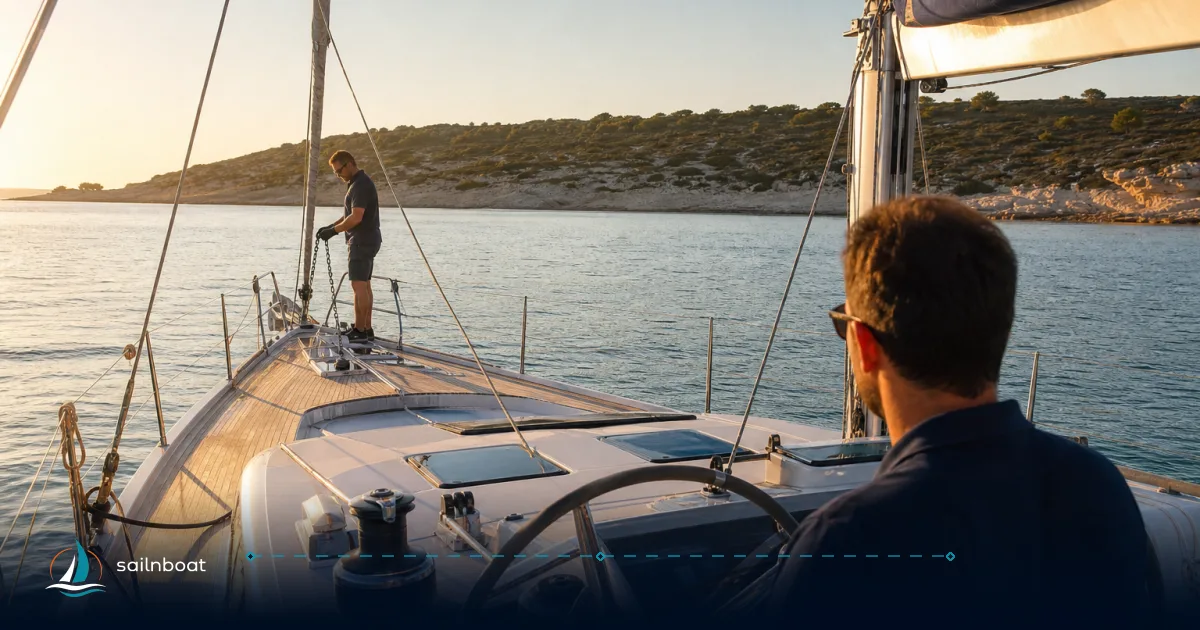
When your fouled anchor won’t come up, the quickest way to reduce risk is simple: stop, assess wind/current and nearby hazards, then use a stepped approach—controlled pulls, changing the angle, kedging from a dinghy, and only then cutting the rode as a last resort.
Understanding a Fouled Anchor
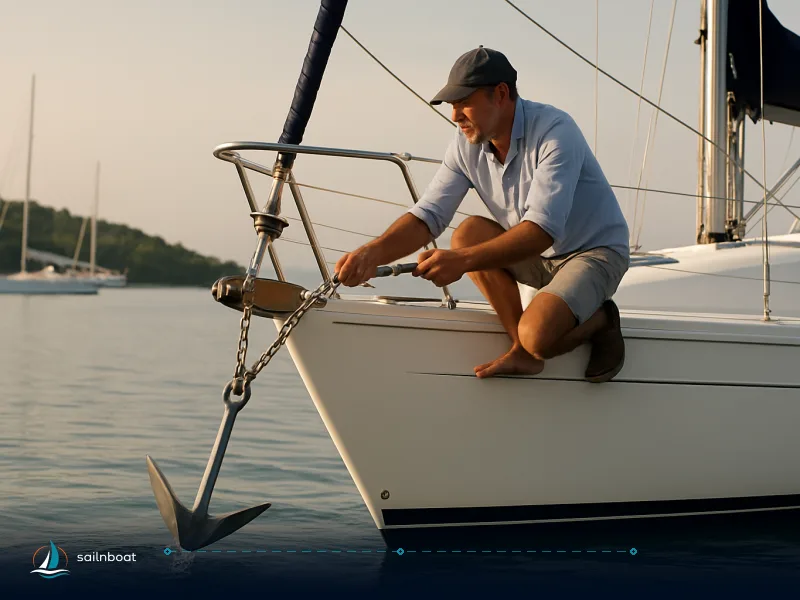
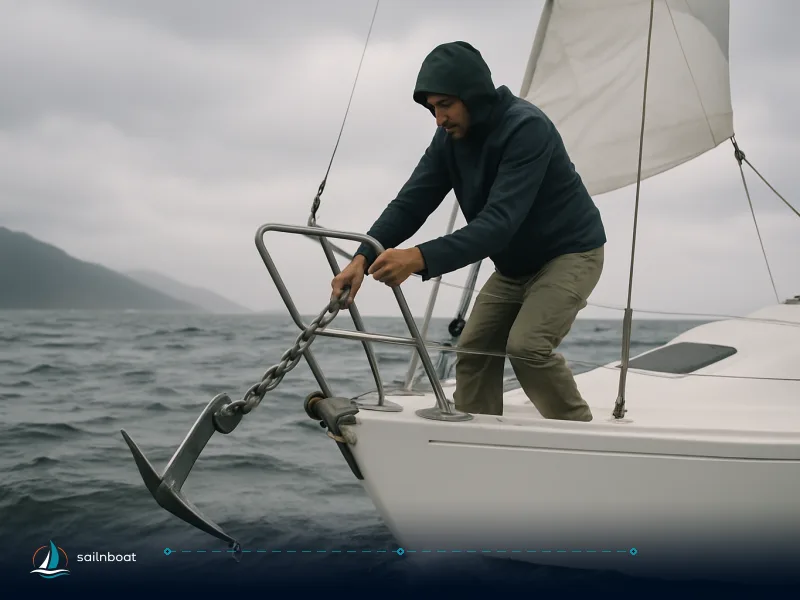
A "fouled anchor" means the anchor or its rode is snagged on something on the seabed (rock, wreck, cable, another vessel’s rode, kelp or debris) so it won’t come free when you haul. Fouling happens quickly in mixed bottoms and crowded anchorages; a properly set anchor can still snag when the boat swings or the direction of pull changes. Practical handling differs depending on what is snagged (anchor crown, fluke, shank or chain) and whether you have chain, rope or a combination on the rode.
Common causes of fouling
- Debris, wrecks, old moorings and buried cables — these catch anchors and chain.
- Poor set or short scope that pulls the anchor at a sharp angle, making it more likely to drag into obstacles.
- Strong or shifting currents and wind that swing the boat across hidden obstructions.
Implication for a charter skipper: a fouled anchor is an equipment failure that quickly becomes a safety decision. You must weigh the chances of recovery against exposure to hazards and the liability/charter consequences of losing ground tackle.
Decision-Making: Stay with the Boat vs. Heaving Off
Your first decision is whether to stay and attempt recovery or heave off and accept losing the anchor. That decision follows three checks.
Assessing your situation
- Wind and current: If the boat is pinned and wind/current are forcing you toward rocks, shoal, shipping or a lee shore, you must prioritize moving clear even if it means abandoning the anchor.
- Crew safety and skills: Do you have a calm, competent dinghy crew to rig a kedge and work aloft? If not, don’t endanger people — call for help.
- Proximity of hazards and traffic: If you can hold position with the engine and avoid immediate danger, attempt recovery; if you’re within a short distance of hazard, heave off.
Practical rule of thumb: if you can reasonably expect to free the anchor within a short, controlled operation (10–30 minutes depending on complexity) and conditions remain stable, attempt recovery. If wind/current are increasing, visibility or control are failing, or the boat is being pushed toward danger, heave off and live to sort the equipment later.
Step-by-Step Techniques to Free Your Anchor
Work in sequence: controlled tension → change the angle → mechanical advantage (kedging) → dive or lifting devices if shallow and safe → cutting the rode as last resort. Below are the commonly used, ordered techniques and how to execute each safely. Key sources show these methods are the standard progression in the marine community.
Using a Winch (windlass and cockpit winches)
- Reduce shock: ease the rode so the windlass isn’t stalling or tripping breakers. Take small, steady pulls rather than a single hard yank.
- Change the angle of pull: motor slightly ahead or astern, or use the helm, to place the bow directly over the anchor — a vertical pull usually helps. If you can bring the bow directly above the anchor and then apply upward pull, the anchor may break free.
- Use a deck or mast winch if the windlass lacks strength: lead a messenger or the rode to a stronger winch and take incremental loads. Avoid using the windlass to tow the boat — windlasses are typically not designed for dragging a vessel and can be overloaded.
When this works: good for chain-on-chain fouls and shallow snags; quickest when you can get bow over the hook.
Reversing the Boat
- With a clear view astern and no entanglement risk with the prop, gently back the boat away to change the anchor’s angle. Keep engine RPM low and steady.
- Coordinate helmsman and deck: apply small bursts, listen for load changes and stop if rode snatches or the windlass overheats. Reversing often slides an anchor clear where a straight haul cannot.
When this works: effective when the anchor is hooked in weed or when the shank is caught and a reverse angle frees it.
Kedging Off (use the dinghy or a spare anchor)
- Rig a kedge in the dinghy: attach a short chain leader and a long warp (the warp length depends on the basin; carry 50–100 m for open-water needs). In races and offshore situations crews commonly carry very long warps (100 m or more); for typical coastal use, row several boat‑lengths beyond the fouling point or to deeper/cleaner ground.
- Row or engine the dinghy to a point beyond the obstruction in the direction you want the yacht to move, drop the kedge and signal the deck. Haul carefully on the kedge using a winch or the windlass to pull the yacht free. Repeat and reposition the kedge as needed.
When this works: especially useful if the anchor is jammed against a rock or if the hull shape needs a different pivot to lever the hook free.
Cutting the Anchor Line (last resort)
You cut the rode only when the anchor threatens safety (dragging toward rocks, shoal or heavy traffic) and all other recovery attempts have failed or would place people at risk. Before cutting: secure the boat, alert crew, note GPS position and mark the location with a buoy if possible so the anchor can be recovered later by divers or a salvage service. Cutting means you accept the anchor loss and will incur replacement costs and a charter report.
Table — Compare recovery methods at a glance
| Method | When to try | Equipment needed | Trade-offs |
|---|---|---|---|
| Controlled winch pull / changing angle | First response if no immediate hazard | Windlass, messenger, helm coordination | Fast if windlass strong; risk of overloading motor |
| Reversing the boat | If angle change may free hook | Engine, good helmsman | Low-tech; avoid prop entanglement |
| Kedging (dinghy) | If anchor is lodged or angle change fails | Kedge anchor, long warp (several boat lengths), dinghy, winch | Time-consuming; needs dinghy crew and calm seas |
| Lift/weighted ring retrieval | If crown or shank can be lifted | Retrieval ring/weighted claw, buoy | Good for some fouls; may not work on big snags |
| Cut rode | Only to protect vessel/people | Knife, safety lanyards | You lose anchor; may incur charter costs |
(Comparative advice synthesized from Practical Boat Owner, Anchoring.com and Boating sources.)
Essential Equipment for Anchor Recovery
Carrying the right kit reduces time and lost ground tackle. The following items are compact, affordable and highly effective.
Trip lines and retrieval rings
- Trip line: a line attached to the anchor’s crown or shank and buoyed so you can pull on the crown rather than the rode; this can flip a buried anchor and release it, or allow you to haul the anchor from a different orientation. Many anchors include a tripping ring or hole for this purpose; fitting and using a trip line is recommended.
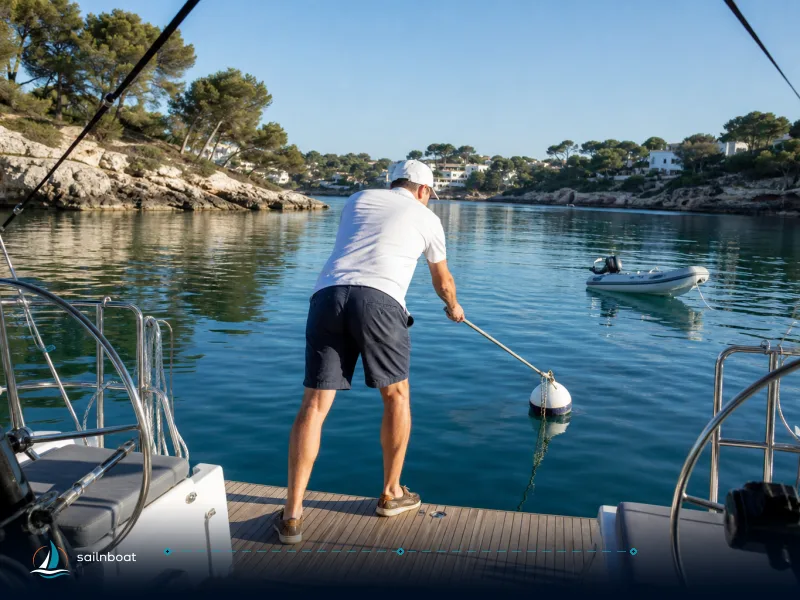
- Retrieval ring / weighted claw: these run down the rode and over the anchor shank, acting as a pulley/lift to lever the anchor free and buoy it. They work well on many modern anchors but are not a guaranteed recovery method against heavy snags.
Buoys and markers
- A small, high-visibility buoy on the trip line both marks the anchor position (reducing risk others drop on it) and provides a recovery point. Keep a soft-float buoy and a small float with a reflective patch or light for low visibility.
Other useful kit
- Spare kedge or Fortress-style lightweight anchor and at least one long warp (50–100 m depending on cruising area).
- Sturdy boat-hook, stout knife or line cutters (for the prop if safely accessible), shackles and an extra length of chain or heavy rope to extend your range.
Pre-Departure Checklist to Minimize Risks
Prevention is cheaper and safer than recovery. Use this checklist before every charter departure.
Planning your anchoring spot
- Check local charts and pilot notes for wrecks, cables and obstructions; avoid unknown seabeds where possible. Mark likely anchor locations in your plan.
- Consider depth and bottom composition; sand and mud generally give the best holding, rock and kelp the worst. Plan your required scope accordingly.
Proper anchoring techniques
- Scope: use adequate scope. A common recommendation is 5:1 minimum in calm sheltered conditions and 7:1 for routine/overnight anchoring; extend scope when conditions worsen. Bear in mind bow height above water affects the calculation.
- Set properly: once dropped, back down gently to set the hook and confirm no sudden swing into obstructions; use an anchor alarm and visual bearings or GPS to confirm holding.
- Fit trip lines and buoys to anchors you expect to use in congested anchorages; they are fast to rig and often prevent complex recovery later.
Crew brief and drill
- Brief the crew on roles for anchor pick-up, kedge deployment and any rescue plan before you leave the dock. A practiced crew acts faster and safer when a snag happens.
Logistics and insurance
- Check your charter contract for the operator’s policy on lost anchors and equipment; many charters charge for replacements and administrative handling. Keep the operator informed if you suspect damage or loss rather than trying covert fixes. (Charter practice varies widely.)
Short checklist you can copy onboard
- Trip line + buoy fitted to primary anchor.
- Small retrieval ring or weighted claw stored forward.
- Spare kedge / small anchor + 50–100 m warp in dinghy locker.
- Stout boat-hook and line-cutting tool.
- Anchor alarm or GPS waypoint saved for each overnight anchorage.
- Crew roles reviewed before anchoring.
Final decision guide: when to cut and when to stay
- Stay and attempt recovery when: conditions stable, hazards distant, crew trained and you can work methodically.
- Cut the rode and leave when: vessel is being pushed into immediate danger, recovery would require people in the water or unacceptable risk, or when conditions are deteriorating rapidly. Record the position, photograph the situation, notify your charter operator and mark the lost tackle for possible later salvage.
Reviewing the trade-offs: every recovery attempt consumes time, risks crew exposure and may damage gear. Your judgement as skipper should favour crew and vessel safety over the cost of a lost anchor.
Review your anchoring techniques and equip your yacht with essential recovery tools before every charter. A trip line, a small retrieval ring and a spare kedge save more time and money than improvisation after the hook is stuck.
Frequently Asked Questions
Work progressively: reduce loads and assess; try steady tension via windlass or a cockpit winch, motor the boat to change the angle of pull, use a kedge (row a small anchor out and pull), and only cut the rode if safety demands it.
Plan the spot from charts, use adequate scope (commonly 5:1–7:1), set a trip line or buoy, and avoid anchoring close to wrecks, kelp beds and known cable areas.
Trip line and small buoy, retrieval ring or weighted claw, a throwable kedge or spare anchor with at least one long warp, fenders, a decent boat-hook and a stout knife for last-resort cutting.
Cut only when the fouled anchor threatens safety (dragging toward rocks, shoal or heavy traffic) and other recovery attempts have failed or would put people at risk; expect to lose the anchor and report the incident to your charter operator.
Stay with the boat unless remaining places the boat or crew at clear risk; assess wind/current, depth, nearby hazards and whether you can free the anchor safely—if risk to vessel or people grows, prioritize safety and move away.
Written by
Sailnboat Editorial
The Sailnboat editorial desk covers yacht and boat chartering worldwide — routes, bases, seasons, boat types, paperwork and the practical costs that decide a trip. We are a charter marketplace, not a boat owner or a local agency: what we sell is judgement and support, so our guides are written to help you make a decision, not to sell you a specific boat. Every guide is checked against live operator and marina data before it goes out.
Fact-checked against live operator and marina data, and published under our editorial standards. Last reviewed: .