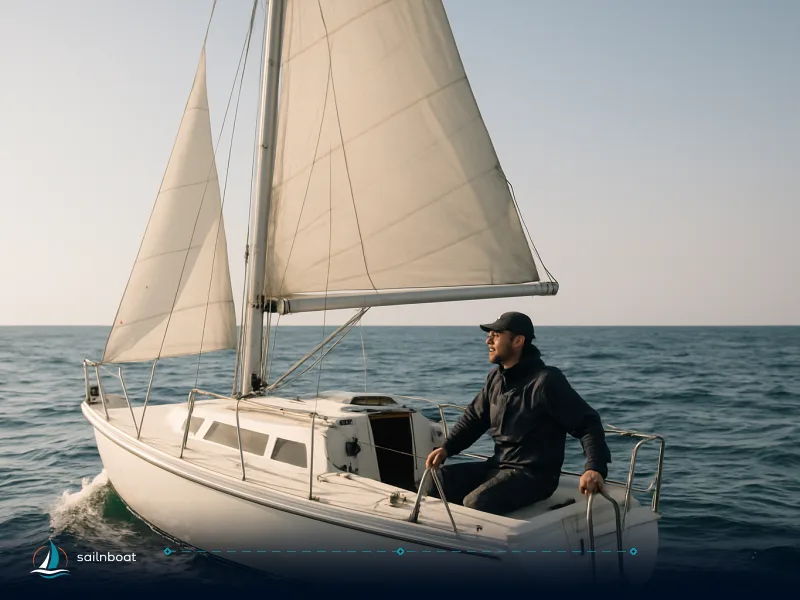
Single-Handed Sailing on Charter Yachts: A Practical Guide
Practical routines and sail‑handling techniques that let an experienced skipper safely single‑hand a charter yacht — plus the charter-specific checks and insurance points you must do before you go.

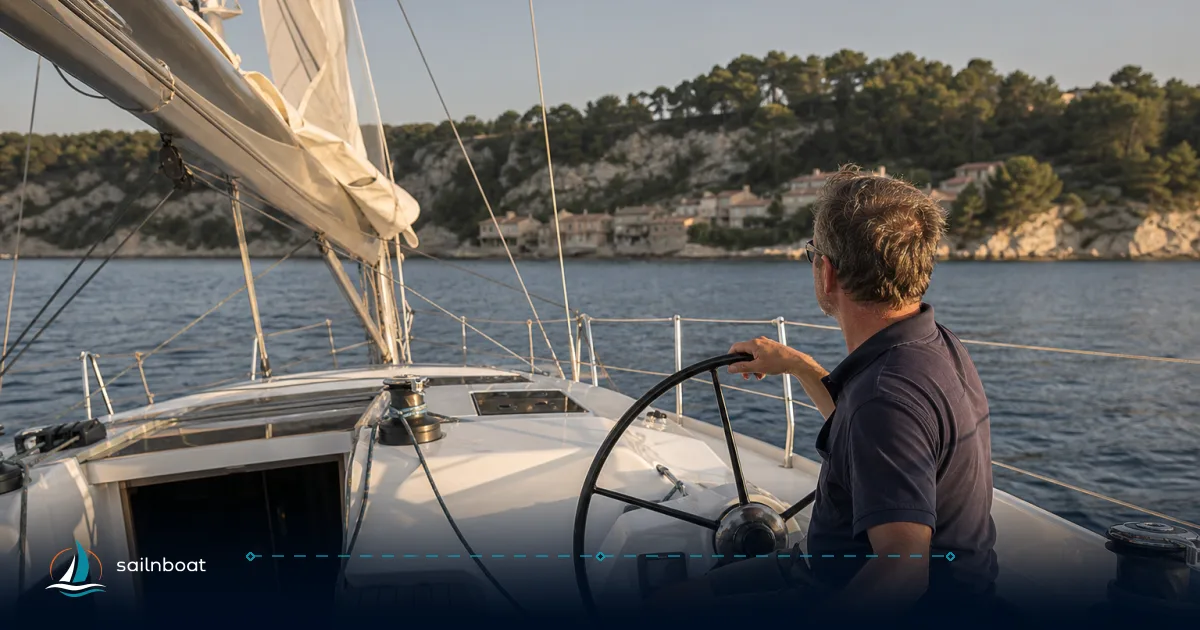
You can single handed sail a charter yacht safely if you set the boat up for cockpit control, use reliable self‑steering, and manage fatigue and lookout with procedures and alarms.
Adapting to Unfamiliar Charter Yachts
Start from the assumption the boat is competent but unfamiliar — your job at handover is to make it predictable.
Familiarization techniques
- Do a fast walk‑round with a printed checklist the base provides (or make your own): safety gear, fuel/water, bilge pumps (auto/manual), engine controls, horn, nav lights, windlass, plotter/MOB functions, VHF DSC and where spares live. Then run the systems afloat.
- Practise: start and stop the engine, switch autopilot modes, press the MOB button and cancel it, deploy and retrieve the anchor, furl and unfurl the headsail, and reef the main once before you leave the base.
- Map the boat mentally: where to clip on (D‑rings, jackline anchors), where to stow the tether, where winch handles and spare shackles live. Tape or mark anything you’ll want to reach at night.
(Quick-checks at the marina: rigging under tension, snubber or chain condition, windlass electrical feed, battery charge state and amp readings.)
Essential modifications and what to ask for
Use the table below to identify charter features that materially reduce workload and risk when you’re alone.
| Feature | Why it helps for single‑handed sailing | Typical retrofit / how easy to confirm |
|---|---|---|
| Reliable self‑steering (wheel autopilot or windvane) | Holds course while you reef, nap, anchor or sort lines; reduces hand‑steer fatigue. | Ask the base to demonstrate on a sea‑trial; test in calm conditions. |
| Cockpit‑led lines (halyards, reefing, Cunningham, sheets led aft) | You can trim and reef without leaving the cockpit. | Visual check at handover; pull lines through entire travel. |
| Electric windlass with clear chain locker access | Safer single‑handed anchor deployment/retrieval; less deck work. | Test windlass under load at the dock. |
| Jacklines and dedicated tether points | Let you move on deck clipped on; reduce MOB risk during deck work. | Confirm shackles/D‑rings are through‑bolted and rated. |
| Cockpit‑accessible MOB recovery gear (Lifesling, boarding ladder, AIS/PLB) | Quicker recovery sequence; AIS/PLB broadcasts the casualty to you and others. | Ask to see the Lifesling and where the MOB light/beacon/PLB is kept. |
Trade‑off: charter yachts vary; not every base will supply a windvane or factory‑retrofit jacklines. If single‑handing is your plan, choose a base and model known for cockpit control and self‑steering, or request a skippered handover day.
Sail Handling and Reefing Techniques
Single‑handed sail handling is about reducing movement on deck and keeping the helm steady while you work the rig.
Roller‑furling headsails and furling mains
- Roller‑furling headsails are the single most useful sail arrangement for solo work: you can reef or quickly reduce sail from the cockpit by easing the sheet slightly and rolling in. Practice furling slowly and always ease the sail first to avoid jamming the luff under load.
- Furling mains (in‑boom or in‑mast) simplify reefing but have limits: in‑mast furling mains can be harder to reef cleanly under load and some charter yachts lack proper jammers or stoppers on the reefing line. If fitted, practice a full furl/unfurl cycle in harbour.
Single‑line reefing and cockpit layouts
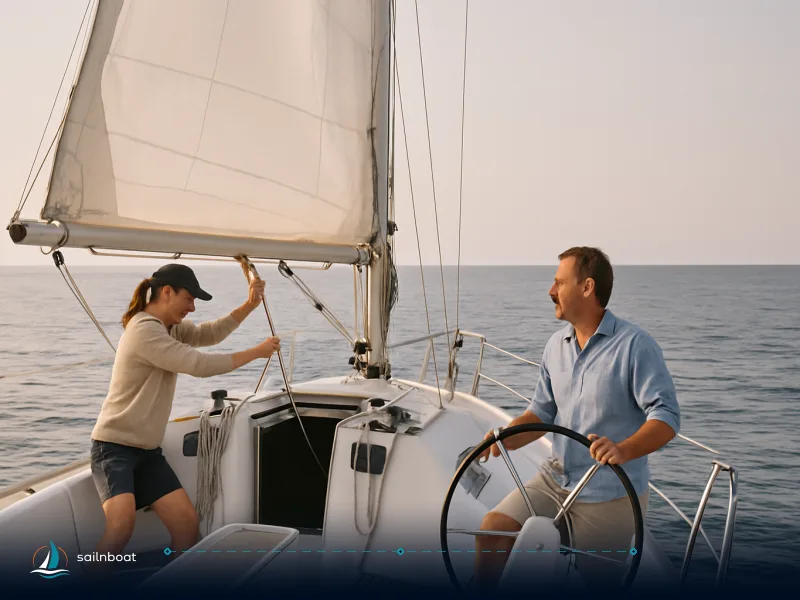
- Single‑line reefing or slab reefing with lines led aft lets you drop and reef the main from the cockpit: set the autopilot or secure the tiller/steering while you pull the reef line in controlled stages and tension the reef cringle on a winch. Keep the process slow — quick snatches embed chafe and twist.
- Use self‑tailing winches or a rope clutch arrangement to lock sheets so you can release and trim with one hand.
Practical routine (practice ashore/near base first)
- Put autopilot or wheel lashing on to hold course.
- Ease the headsail leech slightly before furling to reduce load.
- Take reef in small increments; cleat or lock each stage and check balance of helm.
- Secure loose tails and tidy a single line back to the cockpit.
Anchoring and Mooring Routines
Single‑handed anchoring is a drill: plan, approach slowly, and keep the process repeatable.
Step‑by‑step anchoring process
- Choose an anchorage with good holding (sand/mud) and room to swing. Check depth and allow for tide and forecasted wind.
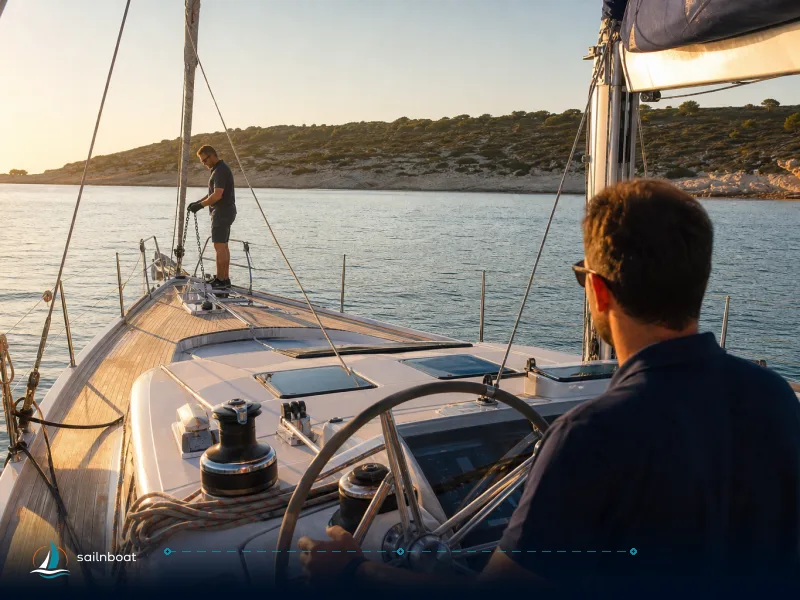
- Approach head to wind or into the current at slow speed and stop the boat over the chosen spot. Lower the anchor until it hits bottom and take a working turn on the cleat. Motor back slowly while paying out scope. Aim for 5:1–7:1 scope as a practical range (longer scope for rope/chain combinations or rough conditions).
- Set the snubber and make a stern or bow check; note two bearings and a GPS waypoint to monitor swing. Test the anchor by backing gently on the engine.
- For retrieval, motor forward slowly to come up over the anchor, use the windlass, and if the anchor hangs, deploy a trip line (if rigged) or perform a short reverse and pull manoeuvre to break the set. Practice this in the marina so you know how the windlass feels and what “stuck” sounds like.
Table: Quick anchoring checklist (single‑handed)
| Item | Action |
|---|---|
| Scope | Set 5:1–7:1 depending on rode & conditions. |
| Snubber | Fit a snubber as soon as set to reduce windlass load. |
| Bearings | Take two shore bearings and save a waypoint. |
| Engine check | Ensure you can reverse forward at low rpm for set checks. |
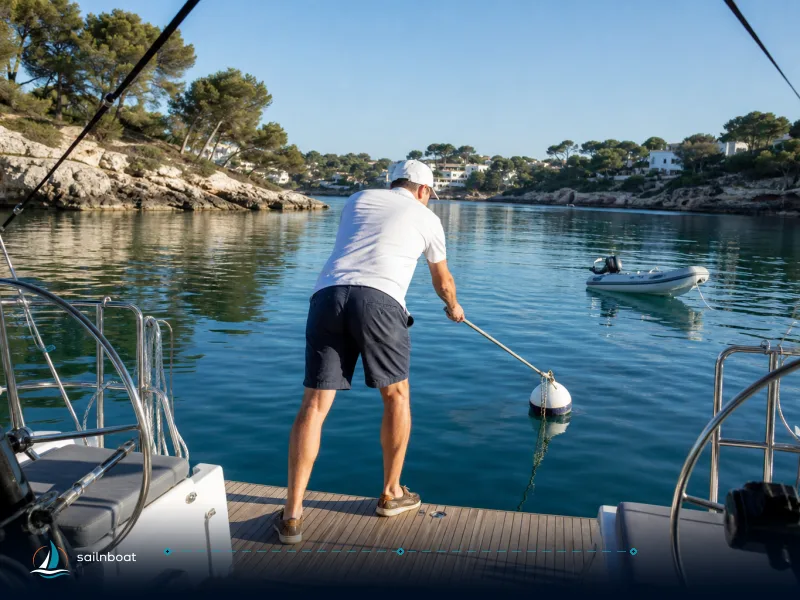
Mooring and docking solo
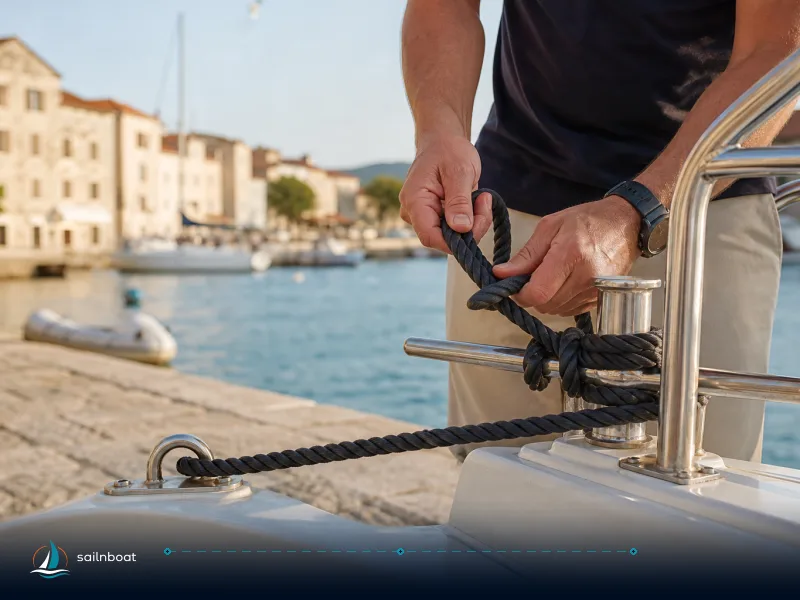
- Use plenty of fenders and prepare mid‑ships lines in advance. Approach at a shallow angle and use spring lines to control fore/aft movement. If the base has a dockhand option, use it; otherwise do slow, practiced approaches in daylight until you’re confident. Courses and drills on manoeuvring under power are valuable for learning repeatable single‑handed techniques.
Managing Lookout and Fatigue
Fatigue is the single largest risk on solo passages. Treat rest as an operational parameter, not a luxury.
Implementing safety measures for lookout
- Use multiple layers: an AIS/PLB on your PFD, an electronic guard zone on your chartplotter/radar for targets, and an autopilot or windvane to keep course while you look at instruments. AIS MOB and PLB devices broadcast the casualty to nearby vessels and/or satellites and are particularly useful at night or in busy waters.
- Set guard zones and audible alarms on your plotter for close AIS targets and radar returns; these give you an electronic “second pair of eyes” when you nap or are below for short tasks.
Fatigue management strategies
- Polyphasic sleep works for many solo sailors: short naps (10–30 minutes) combined with a longer consolidated sleep window keeps you functional on passages. This method is used by round‑the‑world solo racers and has supporting field research — but it must be practised and adapted to your physiology.
- Plan passages to limit high‑traffic watches: avoid shipping lanes, busy choke points and harbour entrances during the hours you expect to sleep. Use AIS/radar guard zones and alarm thresholds for CPA (closest point of approach).
- Electronic watch nets: configure AIS alarms, radar guard zones, and an audible autopilot‑disengage alarm so that if a target approaches or a course change occurs you are woken reliably.
Safety Measures for Single‑Handed Sailing
When you are the only human on the boat, prevention and simple recovery equipment matter.
Preventing overboard incidents
- Wear a lifejacket with an integrated light and an AIS/PLB when on deck at night or in rough weather. Keep the tether clipped while moving on deck and keep the tether short enough to prevent you from reaching the water if you slip. Use jacklines fore‑aft and practise clipping and un‑clipping in motion.
- Know that recovery time in cold water is limited: investigations show crews often have under 11 minutes to recover someone in cold water before incapacitation becomes likely, so prevention and immediate detection are critical.
Emergency procedures and MOB for a single hander
- Prepare a single‑handed MOB plan and practise it: press the MOB button, throw a lifebuoy or danbuoy, start the autopilot track back to the saved MOB waypoint and then approach under engine to recover. Many modern MOB devices integrate with chartplotters and will mark the casualty on your screen. Practise the whole sequence in daylight.
- Carry a Lifesling or dedicated recovery sling and practise lifting an unconscious person from the water onto the swim platform or ladder in calm conditions with an instructor.
Charter‑Specific Considerations
A charter contract and the operator’s insurance often dictate what you can and cannot do.
Understanding rental insurance and damage‑waiver terms
- Collision Damage Waiver (CDW) / Yacht Damage Waiver and security deposit rules vary and sometimes explicitly exclude single‑handed operation or certain acts (for example, unattended long passages or sailing single‑handed). That exclusion can affect whether a waiver applies after damage. Read the booking conditions and the waiver wording carefully and ask the base to annotate anything that could invalidate coverage.
- Ask the base: “Does the Yacht Damage Waiver or CDW exclude single‑handed operation or unattended passages?” Get the answer in writing or an annotated contract note.
Limitations of charter yachts
- Charter yachts are maintained for turnover and short holiday use — some are fitted with charter‑friendly gear but others are not. Common limitations you might face: no windvane, slab reef lines not led aft, no jacklines, or a windlass that requires two people to work safely. If you plan to single‑hand, pick a base and model with cockpit‑led controls, a reliable autopilot/windvane and obvious single‑handing aids.
Step‑by‑Step Drills to Build Confidence
Practice builds the habits that save you in difficult conditions. Run these drills in sheltered water and good weather, ideally with someone on the dock watching.
- Systems and handover drill (often 45–90 minutes, but actual time varies): engine start/stop, battery switching, windlass under load, autopilot engage/disengage, plotter MOB button and cancel.
- Sail‑handling drill (typically 30–60 minutes, depending on boat and crew): tack, reef the main single‑handed from the cockpit, furl the headsail; repeat until you can do each without leaving the cockpit more than twice.
- Anchoring drill: set, back to set, fit snubber, pick up the anchor and reset; practise freeing a fouled anchor with the engine.
- MOB drill (commonly around 45 minutes, but duration may vary): throw a lifebuoy, press MOB on the plotter, set autopilot track back to MOB, approach and recover using the Lifesling or ladder. Repeat until smooth.
- Night watch and nap routine (on an overnight test): run your planned nap schedule with alarms and AIS/radar guard zones active. Note how often alarms wake you and adjust alarm thresholds.
Do these drills in increasing complexity: sheltered water → exposed bay → overnight coastal passage. Stop and reassess if any manoeuvre regularly fails or feels unsafe.
When to Change Your Plan
Always have conservative abort criteria: weather exceeding your forecast window, autopilot faults you cannot fix, visible hull or rigging defects, or an insurance/waiver ambiguity unresolved in writing. If any of these occur, postpone a solo departure or hire a local skipper until you can confirm safety and coverage.
Practical thresholds many skippers use:
- Wind sustained above the boat’s safe solo reefing capability or gusts that would require repeated deck work.
- Autopilot failure on passages where you must leave helm to reef or rig.
- Unresolved exclusion in the damage‑waiver for single‑handed operation.
Plan your margin: single‑handed sailing isn’t about pushing limits — it’s about reducing them so the boat behaves predictably.
Final checklist before you depart (single‑page)
- Demonstrate autopilot and MOB on the plotter.
- Confirm jacklines and tether points; fit tether.
- Ensure sail controls are cockpit‑led or practise the few moves needed on deck.
- Check windlass operation and reserve a plan for hand retrieval.
- Read the CDW/waiver wording for any single‑handed exclusions and get clarification in writing.
Plan your next single‑handed charter route with these checks front of mind: choose a base where the handover includes a sea trial, insist on a brief supervised departure if offered, and practise the drills above. When the boat, the kit and your routines line up, single handed sailing becomes a controlled, enjoyable way to cruise — provided you manage fatigue and use modern electronic safety nets.
Plan your next single‑handed sailing charter with confidence.
Frequently Asked Questions
Use jacklines and a short tether, keep one hand for the boat when moving on deck, wear a lifejacket with a light and an AIS/PLB device at night, and rig guard rails and secure attachment points so you can clip on quickly. Regularly practice clipping and unclipping while moving so it becomes second nature.
Insist on cockpit‑led control lines (halyards, reefing and sheets), a reliable self‑steering system (autopilot or windvane), a powered or easy‑to‑use windlass, clear deck runnings, jacklines, and accessible safety kit before you take the boat.
Use a polyphasic schedule of short naps (ultra‑short naps plus a longer rest), run electronic watch‑alarms (AIS/radar guard zones), plan passages to avoid overnight traffic, and don’t attempt long solo passages without prior single‑handed experience and tested sleep routines.
Do a checklist‑led handover: practise raising/lowering sails, reefing, windlass operation, engine stops/starts, autopilot steering, and man‑overboard drills in sheltered water before leaving the base.
Charter damage‑waiver or insurance terms often exclude single‑handed operation or specific acts (for example, unattended long passages); check the booking conditions and collision‑damage waiver wording before you accept the yacht.
Run step‑by‑step drills in daylight and calm conditions: sail and reef under autopilot, anchor and retrieve alone, dock stern‑to and alongside single‑handed, and conduct a full MOB recovery drill using the boat’s equipment.
Written by
Sailnboat Editorial
The Sailnboat editorial desk covers yacht and boat chartering worldwide — routes, bases, seasons, boat types, paperwork and the practical costs that decide a trip. We are a charter marketplace, not a boat owner or a local agency: what we sell is judgement and support, so our guides are written to help you make a decision, not to sell you a specific boat. Every guide is checked against live operator and marina data before it goes out.
Fact-checked against live operator and marina data, and published under our editorial standards. Last reviewed: .