How to Prepare for Your Yacht Charter: A Comprehensive Checklist
A step-by-step checklist to get your documents, packing, safety briefing and budget in order so you arrive at check‑in ready to sail.


Plan to arrive at check‑in with passports, skipper qualifications and a clear budget so the handover is a formality, not a scramble — that is the core of good yacht charter preparation. Use it as your pre‑departure timeline: booking stage → pre‑charter checks → 48‑hour confirmations → day‑of handover.
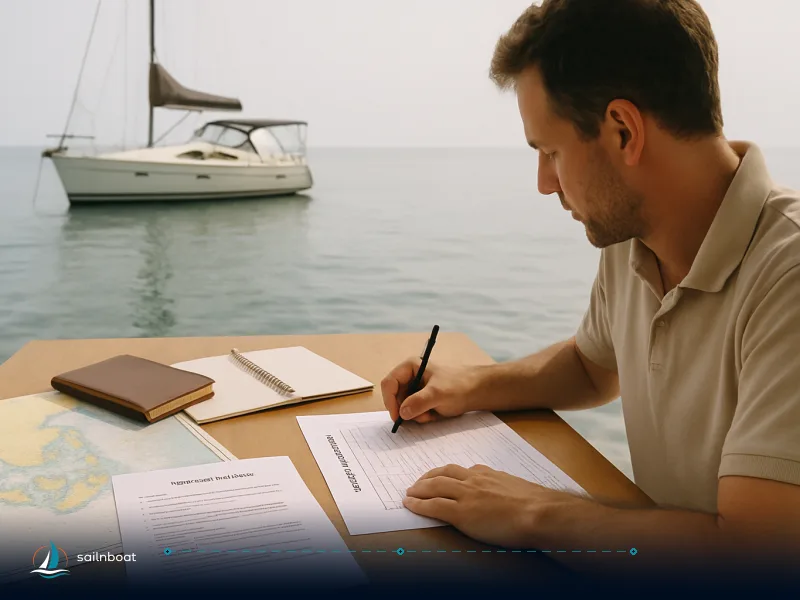
Essential Documentation and Certifications
Required Documents
- Passports or national ID for every person on board; originals are usually required at check‑in and for any border crossings. Many bases will ask to copy them when you arrive.
- Skipper/sailing certification: bring your original certificate(s) the operator requested (examples: ASA, US Sailing, RYA certificates or equivalent). Operators commonly require proof of competence for bareboat or skippered bookings.
- International Certificate of Competence (ICC) or equivalent: the ICC is widely accepted in many European/Mediterranean charter destinations and often requested by charter companies — check whether your destination or operator lists it as required.
- VHF radio licence/certificate: some countries and charter companies request a VHF operator certificate (SRC or national equivalent); treat it as a separate document from your skipper licence.
- Completed crew list: most bases will send a crew list form to complete before arrival (names, passport numbers, birth dates, nationalities); have it returned in advance if asked.
Practical checks at booking
- Ask the base exactly which documents they will require at check‑in and whether scanned copies may be sent ahead to speed handover. Many operators give a “check‑in pack” by email; return forms and licence scans before you travel.
Comprehensive Packing List for a Yacht Charter
Packing Essentials
- Sun protection: reef‑friendly, water‑resistant sunscreen (dermatology guidance supports SPF 30+ and recommends SPF 50+ for sustained water sports exposure); bring lip SPF and a UPF 50+ long‑sleeve or rash guard for full‑day protection. Pack more than you think — bottles run out quickly.
- Sunglasses with a retainer strap and polarized lenses to cut glare — standard safety on any day at sea.
- Non‑marking deck shoes (sneaker‑type or sailing shoes) and one pair of closed‑toe shoes for marina visits; avoid heavy soles that scuff teak.
- Light waterproof/windproof jacket and one warmer layer — evenings and sea spray cool quickly, even in summer.
- Swimwear, quick‑dry towels, and a small dry bag for valuables and electronics.
- Personal medicines in original packaging plus a short written summary of medications and dosages; bring spares for delays.
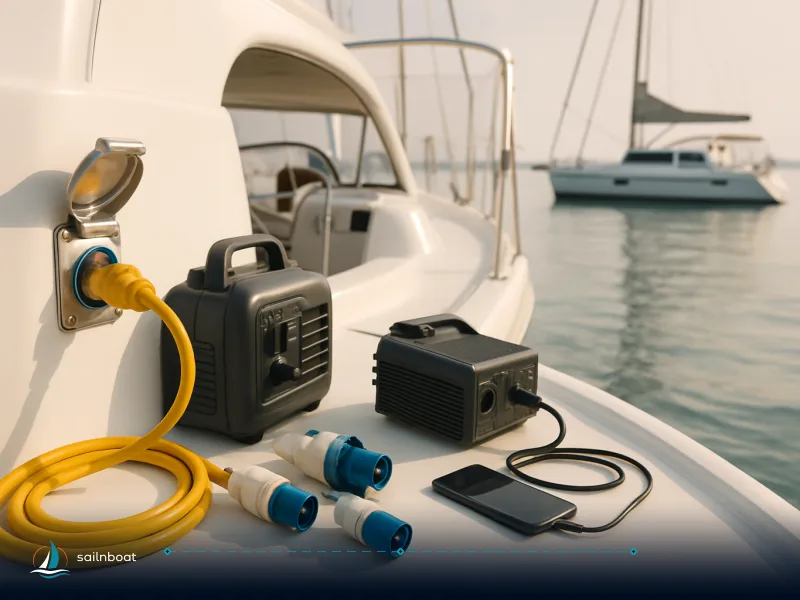
- Chargers, power bank (water‑resistant preferred), and any international plug adaptors. Bring copies of important documents and leave one set with someone ashore.
Packing for space and motion
- Pack soft, compressible luggage (no hard suitcases) that fits into lockers and under bunks. Keep overnight bag and essentials with you — you may not have easy access to stored luggage underway.
Safety Protocols and Emergency Procedures
Onboard Safety Measures
- Conduct a formal safety briefing at handover. Cover: location and fit of lifejackets and harnesses, man‑overboard (MOB) procedure, how to use the VHF (including mayday format), fire extinguisher locations, and the ditch/abandon ship bag. A short, loud, hands‑on briefing is standard practice.
- Verify essential safety equipment: at minimum check that lifejackets (correct sizes), throwable ring, functioning VHF, working navigation lights, serviceable handheld flares and a first‑aid kit are aboard; for offshore or commercial‑grade trips also confirm liferaft and EPIRB/PLB service dates. Regulations and equipment lists vary by country and vessel class, so follow the base inventory and the skipper’s briefing.
- Assign roles and conduct a short drill: decide who handles MOB, who mans the helm, and who retrieves the ditch bag/first‑aid kit. Practice recovering a dummy over the side if time allows — real familiarity shaves minutes in an emergency.
Maintenance checks you should watch during handover
- Walk a quick checklist with the captain: fuel level, engine oil and coolant, battery condition, bilge pump operation, and navigation electronics. Note any pre‑existing damage on the check‑out inventory to avoid disputes at redelivery.
Budgeting and Additional Costs to Consider
Budget Considerations
- Base charter fee: the advertised weekly or day rate for the boat and crew. This is the starting point but rarely the whole cost.
- Advance Provisioning Allowance (APA): a prepaid float for fuel, food, berths and incidental running costs. For Mediterranean crewed charters the common planning range is roughly 25–35% of the base fee; luxury yachts and longer itineraries can push that percentage higher. The captain accounts for APA with receipts and returns unspent funds.
- VAT and local taxes: these are normally stated in the contract; rates vary by destination and can materially change the total cost. Check whether VAT is included in the listed price or added at invoicing.
- Crew gratuity: customary but discretionary — typical ranges on crewed yachts span roughly 5–15% (sometimes higher in exceptional service scenarios). Pay at the end of the charter unless the contract states otherwise.
- Security deposit / refundable damage deposit: required on most bareboat and catamaran charters; amounts scale with boat size (examples frequently range from ~€1,000 to €6,000 depending on type and operator). Some operators offer deposit‑reduction insurance for a fee.
Quick comparison table (planning ranges)
| Cost item | Typical range / note |
|---|---|
| APA (Advance Provisioning Allowance) | 25–35% of base fee (Mediterranean crewed), higher for larger/luxury yachts. |
| Crew gratuity | 5–15% discretionary on crewed charters. |
| VAT / taxes | Varies by country; check contract for whether included. |
| Security deposit | Typical €1,000–€6,000 depending on boat type and size. |
| Planning rule (all‑in) | Many brokers/operators recommend planning ~+45% above base for APA, VAT and gratuity as a conservative planning rule. |
Money management tips
- Ask for an APA estimate in writing and a sample reconciliation. Keep receipts or request electronic access to the captain’s expense log if you want transparency. Expect mid‑charter top‑ups only on long passages or heavy provisioning; crews will tell you well before asking for additional funds.
Understanding Charter Agreements and Policies
Charter Agreement Insights
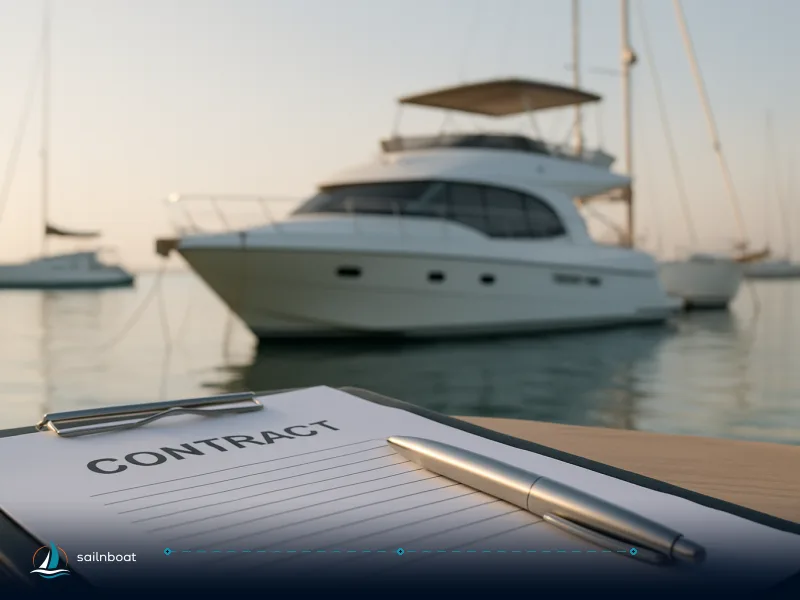
- Read these clauses carefully: payment schedule and deposit terms; cancellation and refund tiers (they vary widely); APA mechanics and reconciliation; security deposit and insurance (what damage is chargeable); cruising area limits and redelivery time; and dispute resolution / governing law. If a clause is unclear, ask the broker to amend or clarify in writing.
- Contract templates: MYBA is a common template for international crewed charters (Mediterranean/Caribbean); regional templates (CYBA, IYBA) are used in other markets — the template affects VAT handling and liability allocation. Don’t assume identical protections across templates.
- Insurance and liability: check what the charter’s insurance covers and whether the security deposit is fully refundable. Missing or inadequate qualifications can affect how a damage claim is assessed; that is a practical, not always legal, consequence. If you want extra certainty, an independent travel‑maritime insurance policy that covers cancellation and personal medical evacuation can be worth the premium.
Checklist: what to confirm with the operator before you pay final balance
- Exact APA percentage and what it covers.
- Whether VAT is included in the advertised price or added.
- The security deposit amount and options for insurance to reduce it.
- Handover/check‑in time and required arrival window; late arrivals can delay boarding and shorten your cruise.
Practical Timeline — step by step
- At booking (6–12 months for high season): confirm boat specs, skipper/pricing template (MYBA/CYBA), APA %, security deposit and cancellation tiers; request the operator’s check‑in pack.
- 4–6 weeks before: return crew list, send copies of requested licences/passports, agree provisioning preferences (if operator provides provisioning services) and confirm any dietary/allergy requirements.
- 48–72 hours before: confirm exact berth, local transport from airport, your arrival window and the handover time. Ask whether you should transfer APA and how to present proof of payment.
- Day of check‑in: arrive with originals and printed copies of the contract, passports and licences; attend the skipper’s chart briefing and the safety briefing; complete the on‑board inventory and sign the check‑out form. Walk the boat with the captain and record any pre‑existing damage on the inventory.
Final practical points
- Communication: if your flight delay puts you in after base hours, call the base — many will arrange a late check‑in but it may incur a fee.
- Customs and border crossings: for international routes, allow time for customs/immigration; some check‑ins can take several hours where official procedures are required. Bring local currency for small marina or provisioning expenses; credit cards are accepted widely but not universally.
Closing advice
Your three priorities at check‑in are: (1) paperwork complete and originals shown, (2) a short but thorough safety briefing with assigned responsibilities, and (3) a clear written APA estimate and security deposit arrangement. If any of those items feels uncertain, pause the handover until you have the answers in writing — once you sign you have limited leverage.
Frequently Asked Questions
Bring original passports or national ID for everyone, your skipper/sailing certification (ASA/US Sailing/ICC or equivalent as requested), any VHF radio licence if the operator asks for it, and the completed crew list the base sends you.
Pack reef‑safe, water‑resistant sunscreen (SPF 30–50+), sunglasses with a retainer, non‑marking deck shoes, a light waterproof jacket, swimsuits, prescriptions, a phone charger and a small dry bag for valuables.
At handover, run a short safety briefing: location and condition of lifejackets and harnesses, MOB procedure, fire suppression, the VHF mayday procedure and where the ditch bag is stowed.
Budget the APA (typical 25–35% for Mediterranean crewed charters), VAT as stated in the contract, marina fees, fuel and a discretionary crew gratuity (commonly 5–15% on crewed yachts); as a planning rule expect roughly +45% above the base fee.
Focus on payment schedule, cancellation tiers, APA mechanics, security deposit/insurance, cruising area limits and redelivery time; ask your broker to explain any MYBA/CYBA/IYBA clauses you don’t understand.
Written by
Sailnboat Editorial
The Sailnboat editorial desk covers yacht and boat chartering worldwide — routes, bases, seasons, boat types, paperwork and the practical costs that decide a trip. We are a charter marketplace, not a boat owner or a local agency: what we sell is judgement and support, so our guides are written to help you make a decision, not to sell you a specific boat. Every guide is checked against live operator and marina data before it goes out.
Fact-checked against live operator and marina data, and published under our editorial standards. Last reviewed: .