Essential Guide to Long-Term Yacht Charters: Planning & Budgeting
A practical, step-by-step guide for organising a long-term yacht charter: visas and entry rules, provisioning costs and strategies, maintenance windows, and a complete budgeting template with a printable timeline.

Visa and Immigration Requirements for Long-Term Yacht Charters
How you clear immigration depends on your cruising grounds and the yacht’s flag. Treat immigration as an operational item, not a formality—delays or errors can ground your itinerary.
Visa Requirements in the Mediterranean
- Schengen 90/180 rule: Most Schengen states collectively allow non‑EU visitors up to 90 days in any rolling 180‑day window. As of 2024, Greece, Spain, Italy, and Croatia all use this rule. If you plan to spend more than 90 days in these waters, you’ll need a national/residence visa or must route part of your itinerary outside Schengen (e.g., Turkey, Montenegro, Albania).
- Country differences: Croatia joined the Schengen Area in 2023. Any time spent in Croatia now counts towards your Schengen limit. Plan carefully if your route toggles between Schengen and non-Schengen countries—border officials check cumulative stays.
- Charter practice vs law: Charter companies usually ask for skipper qualifications, passport scans, and emergency contacts at handover. Some will refuse handover if documentation is incomplete, regardless of local law. Treat the broker or owner’s documentation requirements as contract conditions—they control whether your crew sails.
Visa Requirements in the Caribbean
- Entry stamps and durations: Most Caribbean countries grant tourist entries of 30–90 days for common passports. For example, The Bahamas allows up to 90 days visa-free for many visitors, while the BVI issues an entry form and typically stamps visitors for 30 days, with extensions possible for a fee. Always confirm the current policy for your nationality before booking.
- Practical steps for yacht crews: When cruising between islands, carry original passports, proof of onward travel or a linked itinerary, crew lists, and a letter confirming charter dates and base. Expect ports to request these. National park and mooring permits are separate—fees are usually payable in local cash or card at protected anchorages.
Provisioning Strategies and Cost Estimates
Long-term charters shift provisioning from a simple shopping list to a logistical program. Quantity planning, storage, and resupply windows become central.
Cost Estimates Per Person Per Week (as of 2024)
- Mediterranean: A realistic provisioning budget for a private multi‑week charter is typically €200–€700 per person per week. Cooking aboard and shopping at local markets brings costs to the lower end. Using a chef or sourcing premium imported goods pushes costs higher. For example, a week provisioning for 8 guests in Palma, Majorca, using a standard provisioning service, often totals €1,800–€4,500 for food and drink only.
- Caribbean: Provisioning costs can be similar or slightly lower if the charter is all‑inclusive. Where provisioning is funded via APA, expect €180–€600 per person per week depending on the yacht, itinerary, and guest preferences. Island supermarket prices are higher due to supply chains—expect to pay more for fresh produce, dairy, and imported alcohol.
- Key cost drivers: Number of guests, preference for fresh vs frozen, frequency of dining ashore, alcohol choices (spirits and champagne raise costs), and the local price level. In remote anchorages, expect to pay a premium or face limited choice.
Effective Provisioning Strategies
- Menu planning: Build a 7‑day rotating menu for the galley and scale up. Start with core breakfasts, lunches, and dinners, then layer in seafood, snacks, and drinks to match guest preferences.
- Bulk provisioning services: Most major bases (e.g., Athens, Palma, Nassau) accept provisioning lists 48–72 hours ahead and deliver to the yacht at embarkation for a handling fee (often €50–€150 per delivery).
- Staggered deliveries: For trips longer than two weeks, plan a major restock at a provisioning port and smaller top-ups at local markets. Refrigeration and galley storage often limit how much fresh food you can carry—weekly resupply is standard for perishables.
- Remote anchorage challenges: In the Grenadines, Cyclades, or Exumas, supermarket access is limited. Stock up on dry goods and non-perishables at major ports. For fresh produce and specialty items, pre-order with a provisioning service or arrange for a local market run with the crew.
Maintenance Planning for Long-Term Charters
On a long cruise, the yacht must stay serviceable without grounding your itinerary. Preventative scheduling and clear maintenance windows are essential.
Typical Annual Maintenance Costs
- Rule of thumb: Industry guides reference a 10%‑of‑yacht-value rule for annual operating and maintenance costs. For a €1.5M yacht, this implies ~€150,000 per year, but actual maintenance (excluding crew, fuel, insurance) may be a smaller share. For a 45-foot monohull, annual maintenance alone often ranges €8,000–€15,000 depending on age and use. Confirm expected costs with your operator or management company.
- Common items to budget: Bottom paint, engine servicing, batteries, electronics updates, safety gear (EPIRB, lifejackets), rigging or shaft/prop maintenance, and a modest refit reserve.
Scheduling Maintenance During Charters
- Plan windows, not days: Arrange maintenance for predictable weather windows, typically the low‑season (late autumn in the Med, late spring/early autumn in the Caribbean). This minimizes impact on your itinerary and can lower yard rates.
- Short-notice repairs: Ensure the charter contract provides a direct contact at the owner or management firm. Most operators have preferred yards and can schedule urgent repairs or parts shipping. Keep a contingency line in the budget for on-trip unscheduled maintenance.
- Handover/inspection checklist: At embarkation, the owner or manager will usually run through a maintenance log and defects list. Record any open items and agree on remedial windows in writing to avoid disputes about damage versus pre-existing issues.
Insurance, Damage Waiver, and Medical Coverage
Insurance is a non-negotiable aspect of long-term charters, but what’s covered and excluded varies by charter type.
Bareboat vs Crewed Charter Insurance
- Bareboat: You are responsible for the yacht. Most operators require a refundable security deposit (often €2,000–€6,000 for a 40–50ft yacht) or a non-refundable damage waiver (CDW), typically €200–€500 per week. The deposit covers physical damage to the yacht, but not personal liability, injury, or lost charter days due to breakdown.
- Crewed: The owner’s insurance covers the vessel and crew operations. Guests are generally not liable for operational damage unless caused by gross negligence. You’re still responsible for personal injury, medical evacuation, and cancellation coverage.
- What’s excluded: Most charter insurance excludes personal belongings, pre-existing medical conditions, and some types of sporting equipment (drones, e-bikes, water toys not originally supplied). Acts of gross negligence (running aground, ignoring weather warnings) can void coverage. Always review the policy and clarify exclusions before departure.
Medical and Evacuation Insurance
- Coverage: For long-term charters, comprehensive travel medical and evacuation insurance is essential. Providers like Allianz, Global Rescue, or Pantaenius offer yacht-specific medical evacuation products. Check that your plan covers all countries on your itinerary and includes airlift from remote anchorages.
- Documentation: Bring printed and digital proof of insurance, and ensure the captain and broker have copies. Medical evacuation from a remote Caribbean cay can easily exceed €15,000 without cover.
Fuel Cost Calculations: Sailboat vs Motor Yacht
Fuel costs vary widely by yacht type and itinerary. Here’s a worked example:
| Yacht Type | Typical Consumption | Example Route (NM) | Fuel Price (€/L) | Estimated Cost (as of 2024) |
|---|---|---|---|---|
| 40ft Sailboat | 3–5 L/hr (engine) | 300 NM (2 weeks) | €1.80 | €270–€450 |
| 60ft Motor Yacht | 150–250 L/hr | 300 NM (2 weeks) | €1.80 | €8,100–€13,500 |
- Sailboats: Under sail, fuel use is limited to motoring in/out of port and calms. For a 40-footer, two weeks typically uses 150–250L, or €270–€450 as of spring 2024.
- Motor yachts: Consumption is much higher—150–250L/hr is typical at cruise speed. For 300 NM, a 60ft motor yacht may burn 4,500–7,500L, costing €8,100–€13,500. Confirm with your operator, as newer models may be more efficient.
Marina and Mooring Fees: Concrete 2024 Examples
Marina and mooring fees are highly variable. Here are 2024 examples from key ports:
| Port/Region | 45ft Monohull (High Season) | 60ft Motor Yacht (High Season) | Notes |
|---|---|---|---|
| Palma (Mallorca) | €120–€220/night | €220–€400/night | Includes water/electric; book early |
| Monaco | €250–€450/night | €500–€1,200/night | Premium rates during events |
| Nassau (Bahamas) | $3–$6/ft/night | $5–$12/ft/night | $135–$270 for 45ft; $300–$720 for 60ft |
| Greek Islands | €40–€80/night (municipal) | €80–€200/night (private) | Add water, power; Aegean islands vary |
- Anchoring: Many anchorages are free, but in the Med, expect to pay for mooring balls in national parks or popular bays (€20–€60/night for a 45-footer).
- Caribbean: Mooring fields in the BVI or Grenadines often charge $30–$40/night for a standard ball.
Comprehensive Budgeting for Multi-Week Charters
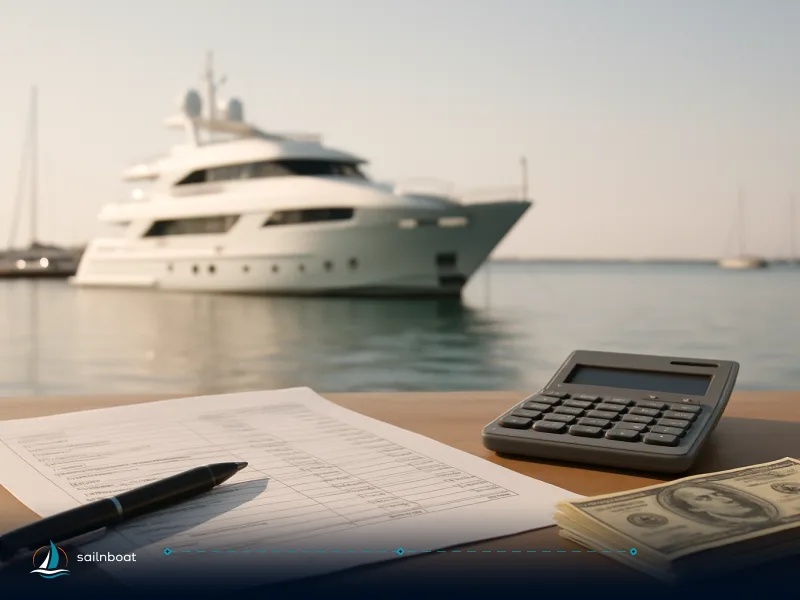
A multi‑week trip involves many moving parts. Here’s a budgeting table with typical 2024 ranges:
| Budget Item | Typical Value / Range (2024 guidance) | Notes |
|---|---|---|
| Advance Provisioning Allowance (APA) | 20–35% of base charter (most cases) | Funds fuel, food, port fees, incidentals; reconciled at end |
| Crew gratuity | 10–20% of base charter (region dependent) | Med: ~10–15%; Caribbean: 15–20%; plan as cash unless stated |
| Provisioning (food & drink) | €200–€700 / person / week (Med); €180–€600 (Carib) | Market shopping is cheapest; chef or premium items cost more |
| Fuel | See fuel table above | Sailboats modest, motor yachts high; confirm with operator |
| Marina / mooring fees | €40–€450+ per night, region & size dependent | See port examples above |
| Taxes & permits | Varies by country (VAT, cruising permits) | EU VAT, Caribbean local taxes, park fees |
| Insurance / damage waiver | Security deposit €2,000–€6,000 or CDW €200–€500/wk | Refundable (bareboat); clarify for crewed charters |
| Medical/evacuation ins. | €60–€200/person/week (plan level) | Yacht-specific plans available |
| Contingency line | 10–20% of trip total | For weather, repairs, medevac, changes |
Sample Budget Calculation: 2-Week Charter for 8 Guests (Mediterranean, 50ft Crewed Yacht)
| Item | Unit Cost | Quantity | Subtotal |
|---|---|---|---|
| Base charter rate | €18,000/week | 2 weeks | €36,000 |
| APA (30%) | €10,800 | - | €10,800 |
| Crew gratuity (12%) | €4,320 | - | €4,320 |
| Provisioning | €350/person/week | 8 × 2 | €5,600 |
| Marina/mooring (avg) | €150/night | 14 nights | €2,100 |
| Fuel (sail, estimate) | €400/week | 2 weeks | €800 |
| Insurance/CDW | €400/week | 2 weeks | €800 |
| Medical/evac insurance | €120/person/week | 8 × 2 | €1,920 |
| Contingency (12%) | ~€7,800 | - | €7,800 |
| Total trip budget | €70,140 |
All figures as of early 2024; confirm with your broker and operator for your specific yacht and route.
Communications and Connectivity on Long-Term Charters
Staying connected is not automatic on a multi-week voyage.
- Wi-Fi: Many charter yachts now offer Wi-Fi routers for onboard use, but speeds and data limits vary. In the Med, expect mobile-based Wi-Fi with capped data (often 20–100 GB/week included). In the Caribbean, Wi-Fi may be limited to marina zones unless the yacht has a satellite system.
- SIM cards and local data: For longer trips, purchasing a local SIM or eSIM is often the most reliable solution. In the Med, pan-European SIMs work across most countries. In the Caribbean, coverage can be patchy between islands—check which providers cover your route.
- Satellite: For remote anchorages (Exumas, Grenadines), a yacht with Starlink or Iridium GO! provides coverage where mobile signals fail. Confirm data speeds and costs—satellite connectivity is improving but still comes at a premium.
- Practical tip: Download charts, weather apps, and key documents for offline use before departure. Ensure the captain has an updated contact list and backup comms plan.
Printable Planning Timeline for Long-Term Charters
Below is a compact, printable timeline. Adjust lead times if you’re targeting peak season—book earlier.
| When | What to Do |
|---|---|
| 12+ months out | Decide region and dates; consult broker; shortlist yachts (peak weeks book early). |
| 6–9 months out | Confirm yacht, sign charter agreement, pay deposit; start visa research/applications. |
| 3 months out | Pay balance as per contract; finalise insurance and medical cover; submit provisioning lists. |
| 4–6 weeks out | Book flights/transfers; arrange pet transport if needed; check maintenance schedule with owner. |
| 2 weeks out | Confirm passenger lists, passport scans, visas; captain issues itinerary and provisioning check. |
| 72–48 hours out | Complete online entry forms (e.g., BVI ED Card); final provisioning delivery; recon with captain. |
| Embarkation day | Run handover checklist; note pre-existing damage; verify safety briefing; confirm APA/deposit. |
Practical Tips for the Timeline
- Document bundle: Create a single PDF of passports, visas, and crew certificates. Email copies to your broker and captain.
- Maintenance slotting: Ask for the yacht’s yard/refit calendar before booking to avoid haul‑out windows during your charter.
- Connectivity: Pre-load all navigation and weather apps on your devices and verify SIM or Wi-Fi options for your route.
Final Operational Checklist (Ready at Handover)
- Signed charter contract and invoice with payment schedule.
- Proof of medical/evacuation insurance for each guest.
- Passport copies and any visas or entry authorisations for each country.
- Confirmed APA amount and payment method; understand the reconciliation process.
- Provisioning list and dietary/special supplier notes.
- Captain’s local contacts and yacht manager’s emergency number.
- Contingency funds and a plan for mid‑charter resupply points.
- Communications plan (Wi-Fi/SIMs, key contacts, backup comms).
You can give this checklist to your broker and captain at booking to ensure nothing is missed.
Next Steps: Key Actions Before You Commit
- Clarify insurance and liability: Know what is covered, what is excluded, and how claims are handled.
- Confirm provisioning and resupply logistics: Especially for remote anchorages or multi-country routes.
- Review the full budget—line by line: Use the sample calculation as a starting point and adjust for your yacht, region, and preferences.
- Secure medical and evacuation coverage: Do not rely on home country health insurance for offshore emergencies.
- Lock in connectivity: Decide on Wi-Fi, SIM, or satellite options before departure.
A well-planned long-term charter is a major commitment, but with the right preparation and realistic budgeting, you can keep your crew safe, well-fed, and focused on the voyage. If you need a second opinion or want a tailored planning call, Sailnboat’s charter consultants are available to walk you through the details.
Frequently Asked Questions
Visa and entry rules depend on the cruising region and your nationality: the Schengen Area limits short‑stay visitors to 90 days in any 180‑day period; many Caribbean territories grant 30–90 day tourist entries with extensions possible—always check the local immigration site for your passport.
Provisioning is cheapest when you cook aboard and use local markets; expect roughly €150–€600 per person per week in the Mediterranean and a wide but typically lower-to-mid range in the Caribbean depending on whether your charter is all‑inclusive or APA‑funded.
A commonly used ownership rule is to budget around 10% of a yacht’s value per year for operating and maintenance costs, but actual annual spend varies widely by size, age, usage and mooring location (many yachts run lower or substantially higher).
Start with the base charter fee, add APA (typically 20–35% of the base), fuel and transfer estimates, marina/mooring fees, provisioning, taxes and a crew gratuity of 10–20%; include a contingency line (10–20% of total trip costs).
For peak windows, start 6–12 months ahead; confirm the yacht and deposit 3–9 months out; sort visas, medical and insurance 2–3 months out; final provisioning and flight plans 2–4 weeks before embarkation; ED/online entry cards within 72 hours where required.
Written by
Sailnboat Editorial
The Sailnboat editorial desk covers yacht and boat chartering worldwide — routes, bases, seasons, boat types, paperwork and the practical costs that decide a trip. We are a charter marketplace, not a boat owner or a local agency: what we sell is judgement and support, so our guides are written to help you make a decision, not to sell you a specific boat. Every guide is checked against live operator and marina data before it goes out.
Fact-checked against live operator and marina data, and published under our editorial standards. Last reviewed: .