Essential Safety Measures for Yacht Chartering: A Practical Checklist
A compact, decision-ready checklist that covers the checks, kit and drills you need for a safe yacht charter, with clear steps you can run through before casting off.

A working safety system on a charter yacht starts with three things you can check fast: one serviceable lifejacket for every person, a working EPIRB/PLB registered to the vessel, and a liferaft sized for everyone aboard. Yacht charter safety is built from repeatable checks, the right kit and short, effective drills — do those and you remove most avoidable emergencies before they start.
Pre-Departure Safety Checks
Do these checks every handover and again immediately before casting off. If you skip one, write it on the chartbook — complacency is how avoidable incidents begin.
Key Safety Checks
- Weather and passage plan: review forecasts for your entire planned time afloat and expected alternates; note tidal gates and likely wind windows for departure and arrival. Use at least two independent sources (official coastal forecast + model/GRIB) when planning an offshore leg.
- Fuel and water margins: confirm usable fuel and water against your passage plan and engine burn estimates; add a conservative reserve for delays and motoring into a headwind.
- Bilge and pumps: run automatic and manual bilge pumps, check float switches, and locate the manual bilge handle and spares. Test the alarm if fitted.
- Seacocks, hoses and through‑hull fittings: physically operate accessible seacocks, inspect visible hose‑clamps for corrosion, and ensure the emergency wrench is reachable. On older or unfamiliar boats, ask for the maintenance log.
- Engines and steering: warm engines, check oil and coolant levels, run the gearbox through forward/neutral/reverse, and back‑up the steering test with a slow astern check where possible. Verify propeller controls and the emergency tiller location.
- Navigation lights, battery voltage and charging: test all lights and instrument power; confirm alternator charging under engine RPM and the position of battery switches; carry spare bulbs/fuses.
- Hatches, locks and deck stowage: secure all loose items, check cockpit lockers and sail ties, and make sure dodgers/solar panels aren’t loose. In rough conditions, anything that can move on deck becomes a hazard.
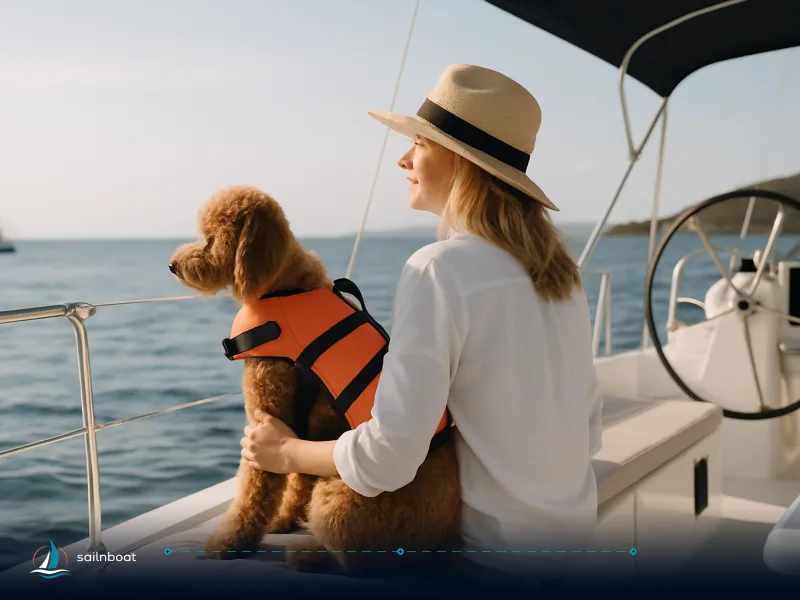
- Lifejackets and emergency comms: confirm one lifejacket per person (including correct sizes for children), check servicing dates or inflation indicators on inflatable jackets, and demonstrate how to operate the EPIRB/PLB and DSC/VHF DSC distress call. Register hand‑held PLBs/EPIRBs if required in your region.
Run the checklist out loud with the senior crew. If the base/operator will not show you the liferaft or EPIRB, insist on a demonstration — these are not optional showpieces.
Mandatory Safety Equipment Onboard
Legal carriage lists vary by country, flag and whether the yacht is flagged as a commercial/passenger vessel, but there is a pragmatic baseline every charter should meet. The table below gives the operational essentials and their practical notes.
| Equipment | Why it matters | Typical location | Practical note |
|---|---|---|---|
| Lifejackets — one per person (child sizes included) | Primary personal flotation; reduces drowning and cold‑water risk | Under berths or labelled locker | Inflatable jackets need recent service; many charters add 10% spares for inflatables. |
| Lifebuoy(s) with light and line | Immediate visual reference and flotation for MOB at night | Stern rail or dedicated bracket | SOLAS/LSA standards require lights/smokeworks on many commercial vessels; always know where the lifebuoy and throw line are. |
| Liferaft sized for full complement | Last refuge if abandoning ship; must carry survival pack | Deck canister or cradle | Many commercial/charter operations use liferafts with hydrostatic releases (float‑free); liferaft equipment lists follow SOLAS/LSA codes. |
| EPIRB (406 MHz) and/or PLBs | Rapid global distress alerting to SAR; EPIRBs transmit position to satellites | Fixed bracket or grab bag | Register the beacon with the national database (e.g., NOAA in the U.S.) and keep MMSI/call sign details handy. EPIRBs typically transmit for ~48 hours once activated. |
| DSC‑capable VHF and MMSI programmed | Immediate short‑range distress calling and position transfer | Navigation station | DSC shortens SAR response times; ensure the MMSI is set and crew know how to send a DSC or VHF distress. |
| Flares / electronic distress signals | Visual/IR signalling for local rescues | Grab bag and liferaft pack | Pyrotechnics have expiry dates and handling risks; electronic strobes are increasingly common. |
| Harnesses and jacklines (jackstays) | Keep crew attached on deck in rough conditions | Deck jacklines; personal harnesses stored in cockpit locker | Rig jacklines to strong, through‑bolted anchor points and brief crew on tether use and quick‑release systems. |
| Fire extinguishers and fire blanket | Rapid initial fire control; different classes for fuels/galley | Engine room, galley entrance, companionway | Follow national carriage ratings (e.g., USCG UL 5‑B:C, 10‑B:C or 20‑B:C guidance); extinguishers must be accessible and serviced. |
| First‑aid kit and grab bag (ditch bag) | Immediate medical care and essentials for survival | First aid in saloon/locker; grab bag near companionway | Grab bag contents typically include water, torch, thermal protective aids, survival signalling, documentation and medication; update annually. |
| Boarding ladder / recovery equipment | Physical recovery of person from water | Stern rail or dedicated locker | Know the ladder deployment method and ensure the stern platform is clear for recovery. |
Regulatory note: SOLAS/LSA apply to merchant/passenger ships and impose detailed equipment and servicing rules; many charter operators follow SOLAS or national equivalents even when not strictly required by law. For small craft, national authorities and charter companies supply the effective checklist you must meet.
Emergency Procedures and Drills
A safety kit is useless unless every crewmember knows when and how to use it. Run simple, scripted drills and never assume competence.
Key Emergency Protocols
- Man‑overboard (MOB): immediate steps are the same every time — shout and point, call MOB and assign a spotter, throw the nearest buoy with light and line, press MOB on the plotter or mark GPS coordinates, reduce speed and execute a pre‑rehearsed recovery maneuver (quick stop or Williamson/figure‑of‑eight where appropriate), approach from downwind/into the swell if possible and recover with ladder or lifting tackle. Practice this with a dummy at least once before an overnight passage.
- Fire: raise the alarm, muster crew, close ventilation and fuel supply if you can do so safely, fight the fire with the correct extinguisher (class B for fuel/engine, F for cooking oil — use a fire blanket for small galley fires), and prepare to abandon if the fire spreads or if toxic smoke overwhelms the accommodation. Log the location of fixed cut‑offs and portable extinguishers during the briefing.
- Abandon ship: identify trigger points for abandonment (uncontrollable fire, sinking, loss of stability), secure the ditch bag and liferaft, stop engines if safe, launch the liferaft using the assigned release method and keep survivors together in the raft. Assign and rehearse duties for the person responsible for the EPIRB/PLB and the person who stays with the chartplotter to broadcast position.
Drill cadence: run a full MOB drill and a fire drill before you leave port, and repeat one drill every 48–72 hours on longer charters or after crew changes. Short, role‑specific rehearsals (how to work the EPIRB, how to throw a lifebuoy) should be done each embarkation.
Weather Assessment and Planning
Weather is a primary constraint on safety and comfort — make it the driver of your plan, not a later excuse.
- Build a passage plan that integrates forecast wind, wave height, tidal gates, and known local hazards. Include at least two alternates and firm cut‑off times for turning back or making for shelter. Treat forecasts beyond 48 hours as less certain and adjust your margins accordingly.
- Use multiple forecast services: official national forecasts (e.g., coastal warnings), a GRIB/model provider for wind trends and a buoy/coastal observation source for real‑time confirmation. Cross‑checking reduces surprises from local effects such as sea‑breezes or channeling.
- Plan fuel and battery budgets against worst‑case conditions: motoring against wind and tide uses significantly more fuel and may shorten a planned route or force additional stops. Build a fuel reserve for at least the expected transit plus an extended margin for weather diversion.
- Communicate weather risk to the whole crew during the briefing and set expectations: who stands a night watch, what parts of the boat are out of bounds in rough weather and when harnesses must be clipped on.
If the forecast shows force‑6 or stronger winds for planned offshore legs, re‑assess the timing or route — many authorities and charter companies treat such conditions as a go/no‑go threshold for inexperienced crews.
Crew Responsibilities and Safety Briefings
A short, exact briefing is the single best preventive action you can take.
- Who and where: start with a roll call and assign the deck/helm/watch rota, who carries the EPIRB, who is in charge of the grab bag and who is responsible for MOB recovery. Give authority to the skipper’s deputy for each watch period.
- Kit locations and quick demos: show lifejackets (how to don/activate lights), demonstrate the EPIRB and PLB activation, show the DSC distress button on the VHF, point to fire extinguishers and the engine‑room cut‑offs, and explain liferaft launch and boarding procedures. A quick hand‑held tour beats a long list every time.
- Behaviour rules: when to tether on, no‑go zones in heavy weather, cockpit discipline at night, and alcohol policy — specific rules reduce ambiguity during an emergency.
- Written checklists and laminated quick cards: pin short procedure cards in the cockpit for MOB, fire and abandon ship; these help reduce stress and ensure consistent actions under pressure.
Train at handover: insist on the base running through the liferaft canister, showing the EPIRB mounting, and confirming extinguisher service tags. If the base can’t demonstrate, demand clarification in writing or consider another boat — you will not have time to learn the kit in a real emergency.
Legal Requirements for Safety Equipment
Legal carriage requirements differ by flag, vessel type and trading category. Here’s how to think about obligations.
- SOLAS / LSA Code: these international instruments set mandatory equipment and testing regimes for many commercial vessels; they define liferaft equipment lists and hydrostatic release characteristics (for example hydrostatic releases that activate at shallow depth as specified in the LSA Code). Many passenger or commercial charter yachts will be SOLAS‑oriented.
- National authorities and the USCG: individual countries set carriage requirements for recreational and commercial craft — for example, the U.S. Coast Guard publishes a Boater’s Guide and fire extinguisher carriage/ratings that apply to U.S.‑registered recreational vessels. Charter operators should supply the exact list that pertains to their vessel.
- Charter practice vs legal minimums: operators commonly carry additional kit (liferaft, EPIRB, SOLAS lifejackets) above the strict legal minimum because it reduces commercial risk and improves SAR outcomes — expect the operator’s inventory list at check‑in and note any deviations.
If you need a definitive legal list for your trip, ask the charter company for the vessel’s compliance certificate and the maintenance/service records for liferaft, lifejackets and EPIRB. That paper trail is the quickest route to certainty.
Final practical checklist (quick print)
- Roll call and one lifejacket per person confirmed.
- EPIRB/PLB registered and accessible; MMSI noted.
- Liferaft present, canister intact, hydrostatic release if fitted.
- Engine, steering, bilges and pumps tested.
- Fire extinguishers accessible, service tags current; fire blanket in galley.
- MOB procedures explained; MOB drill scheduled before first night passage.
- Passage plan filed/communicated ashore with alternates and ETA windows.
Takeaway: a short, repeatable routine — test the kit, brief the people, rehearse the three emergencies — will prevent most problems. Review your yacht's safety measures now and prepare your crew for a secure charter experience.
Frequently Asked Questions
Check weather and passage plan, confirm fuel and water margins, test engines and steering, verify bilge and pumps, inspect seacocks and hoses, test navigation lights, secure hatches and deck stowage and confirm lifejackets and comms (EPIRB/DSC/VHF) are accessible and operational.
Requirements vary by country and flag state, but typically you must carry one lifejacket per person, lifebuoy(s) with light(s), appropriate fire extinguishers, a first‑aid kit, means of distress alerting (EPIRB/PLB/DSC VHF) and for many charters a liferaft sized for all aboard.
Immediate actions: shout 'Man overboard', assign a spotter, throw a buoy with light, press MOB on GPS/plotter, slow and execute a planned recovery maneuver, recover with ladder or lifting tackle and call for assistance if needed.
Sound the alarm and muster the crew, isolate the fire by closing vents and seacocks if safe, fight with the appropriate extinguisher, monitor for re-ignition, and prepare to abandon ship if the fire cannot be controlled; send a Mayday if life is at risk.
Adverse weather changes safe passage times, increases sea state and engine/fuel consumption, can close harbours, and raises the chance of emergency recovery actions; always have alternate ports and flexible timing in your passage plan.
Cover locations of lifejackets and harnesses, how to don and inflate lifejackets, location of EPIRB/PLB and how to operate DSC/VHF, fire extinguishers, MOB and abandon‑ship procedures, watch rotations and who has authority in an emergency.
Run and record regular drills (MOB, fire, abandon ship), ensure all safety kit is serviced to manufacturer schedules, register EPIRB/PLBs with the appropriate agency and carry brief, role‑allocated checklists for emergency tasks.
Legal requirements depend on flag, trading category and region: SOLAS/LSA Code applies to certain commercial vessels; many national authorities (for example USCG or national maritime agencies) set carriage rules for recreational and commercial craft—so check the charter operator’s paperwork and local authority guidance for the exact list.
Written by
Sailnboat Editorial
The Sailnboat editorial desk covers yacht and boat chartering worldwide — routes, bases, seasons, boat types, paperwork and the practical costs that decide a trip. We are a charter marketplace, not a boat owner or a local agency: what we sell is judgement and support, so our guides are written to help you make a decision, not to sell you a specific boat. Every guide is checked against live operator and marina data before it goes out.
Fact-checked against live operator and marina data, and published under our editorial standards. Last reviewed: .