Understanding Yacht Charter Costs: A Detailed Breakdown
A practical, line‑by‑line breakdown of yacht charter costs — base rate, APA, fuel, marinas, provisioning, taxes, deposits and gratuities — with realistic ranges and budgeting tips.

A realistic short answer: the headline "base" charter rate covers the boat, basic safety kit, crew salaries on crewed boats and routine insurance — but it rarely covers fuel, berthing, food and local taxes. For planning, expect an Advance Provisioning Allowance (APA) of roughly 20–35% of the base rate plus fuel, marina and tip lines that together commonly add 30–60% or more to the invoice depending on yacht type and destination. Below is a decision‑ready breakdown so you can budget confidently.
Understanding the Base Charter Rate and What It Includes
The base charter rate is the number quoted first — and it deliberately understates what you will pay.
Inclusions and Exclusions
- Typical inclusions: the hire of the vessel for the agreed period, onboard basic safety equipment (lifejackets, first aid, flares), standard vessel insurance, usual inventory (galley kit, bedding) and the dinghy + outboard in many listings. These are the line items that make the boat usable.
- Common exclusions: fuel for the main engines and tenders, generator fuel or hotel loads, provisioning (food, alcohol), marina and port fees, tourist/cruising taxes, crew gratuity, and any special services (private chef, transfers, helicopter, paid activities). Operators list these under “extras” or “APA” on the booking sheet. (Industry practice and contract specimen language reflect this separation of base fee and operating extras.)
If you need the boat plus everything prepaid (rare except on high‑end “all‑inclusive” superyacht packages), ask for an “all‑inclusive” quote labeled clearly — otherwise assume the base fee is hull‑only.
Identifying and Estimating Additional Expenses
These are the lines that make the invoice jump. Address them category‑by‑category and you can produce a reliable trip total.
Fuel Consumption and Costs
Fuel is the single largest variable on motor yachts and a significant line on catamarans or sailing yachts when motoring is required.
Typical cruise burn bands:
- Small sailing monohull (40 ft) under engine: fuel consumption varies depending on engine, speed, and usage; confirm with your operator or yacht specifications for typical hourly burn and weekly cost.
- Large catamaran (40–50 ft): fuel consumption at cruising speeds varies widely; confirm expected litres per hour and weekly cost with the charter operator or yacht specifications.
- Displacement motor yachts and superyachts: cruise burn can range from ~40–400+ L/h depending on size and hull type; weekly consumption on larger yachts is measured in thousands of litres and is a major APA line. Use the yacht's published consumption curve or the captain's estimate for route planning.
How to budget: ask the broker or captain for an estimated litres/hour at your planned cruising speed and the expected engine hours for the itinerary. Multiply by the local diesel price (which varies by port) to get a fuel estimate to add to APA.
Marina and Mooring Fees
Marina and port fees vary by country, marina quality and season. Two useful planning bands:
- Greece: many town quays or municipal berths are low or free; full‑service marinas for a 12–13 m (≈40 ft) boat commonly run €20–€70/night in many places, higher in Cyclades premium spots.
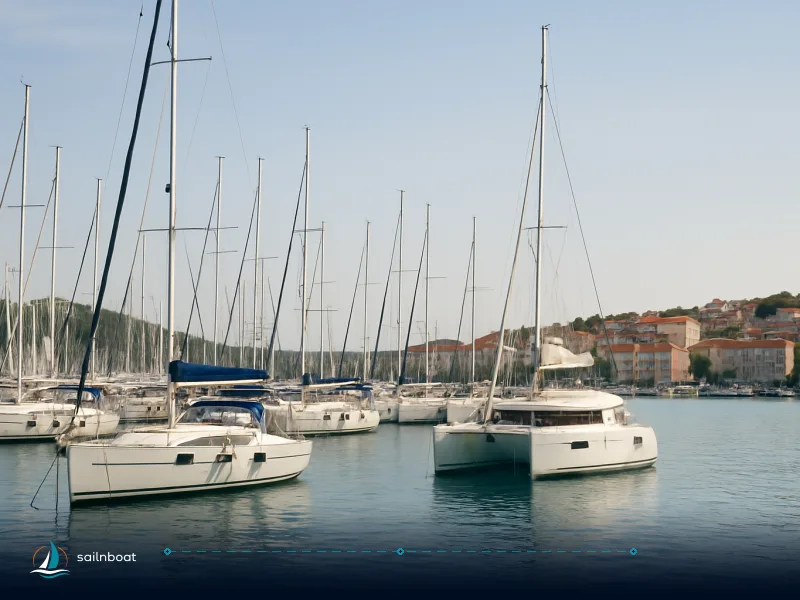
- Croatia: marina berths are typically more expensive; for a 12–13 m yacht expect €40–€150/night in high season at ACI and private marinas. Premium berths in sought islands push higher.
Operational notes:
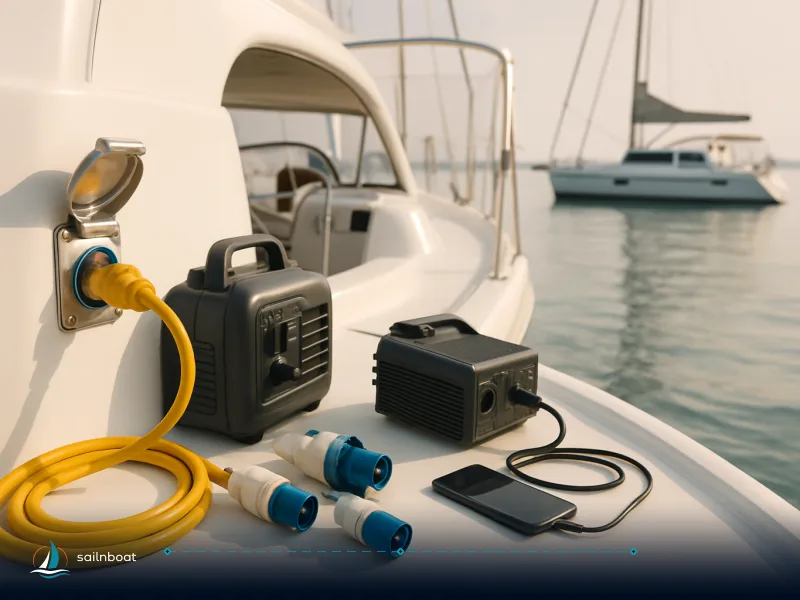
- Marinas frequently charge electricity per kWh and water per fill separately; these add €3–€15 per utility call. Some marinas require prepayment or have booking/site fees.
Provisioning Costs
Provisioning depends on cuisine, crew service level and group habits:
- Self‑catering on a 7‑day charter for six people in Mediterranean markets can vary widely depending on preferences and provisioning choices; confirm typical costs with your charter operator or provisioning service.
- Using a provisioning service (pre‑shopping and delivery) adds a convenience fee — plan for a 10–20% service surcharge plus the grocery bill; high‑end wine lists or private‑chef menus materially increase the line.
If you want to control cost: prepare a clear menu, order staples locally once you’re ashore, and let the crew shop for fresh local produce (cheaper and better in many Mediterranean markets).
Exploring Hidden Costs: Taxes, Gratuities, and Insurance
These are the items that frequently surprise first‑time charterers.
Taxes and Gratuities
- VAT and tourist taxes: VAT treatment depends on where the charter embarks and the yacht’s flag/registration; examples commonly encountered are Croatia applying ~13% VAT on many charters, Italy often applying its standard rate (around the national VAT level), and Greece operating under more complex, variable treatments depending on charter particulars. VAT rules are complex and quoted on each charter confirmation; take the exact VAT line from your contract when you budget.
- Tourist/town taxes (per person per night) are commonly charged in Croatia and parts of the Med; they are modest — often €1–€2/person/night for many Croatian destinations — but add them into the APA or local fees line.
- Crew gratuity: customary, discretionary and usually paid in cash at the end of the charter. Industry convention commonly places the tip at about 10–15% of the base charter fee on crewed charters (with a broader range of 5–20% depending on service level and the market). Plan this as a separate line item — it is not drawn from APA.
Insurance Options (Security deposit, CDW, third‑party excess cover)
- Security deposit: most bareboat bookings and many skippered charters require a refundable deposit held on credit card, typically in the €1,000–€5,000 range for standard yachts and higher for larger or newer boats. The deposit equals the insurer’s excess in case of damage.
- Charter Damage Waiver (CDW) or deposit reduction: operators may offer a non‑refundable reduction that lowers your excess to a small amount or zero; pricing varies by operator and yacht, so confirm the cost when booking. Buying CDW is often cost‑effective for peace of mind.
- Third‑party deposit insurance: independent products exist that cover the deposit excess for a smaller fee; pricing varies, so confirm current rates and policy terms with your provider or operator.
Strategies for Budgeting and Cost Management in Yacht Charters
Creating a Budget
- Start with the base charter fee.
- Add an APA estimate: use 20–35% of the base fee (lower for sailing yachts, higher for motor yachts).
- Estimate fuel: get litres/hour × expected engine hours × local fuel price.
- Add marina nights × local marina rate.
- Provisioning: use €10–€40/person/day depending on catering level.
- Add local taxes and a gratuity line (10–15% of base fee for crewed charters).
- Include security deposit or CDW cost.
Keep the numbers in a spreadsheet and ask your broker for a conservative APA estimate — captains will give a reasonable weekly spend breakdown.
Cost‑Saving Tips
- Sail in shoulder season (May/June or September/October) for 20–40% savings on the base rate and lower marina fees.
- Alternate nights at anchor with town quay use to cut marina nights in half.
- Provision locally and let the skipper/hostess shop; avoid expensive imported items.
- Choose a sailing monohull over a catamaran or motor yacht if fuel and marina lines must be kept small — catamarans cost more for hire and fuel, motor yachts far more. (See the comparison table below.)
Comparing Costs Across Different Yacht Types and Destinations
Below is a compact comparison to help decide vessel type by cost sensitivity.
| Yacht type | Typical weekly base (2026 bands) | Typical APA (%) | Fuel burn (cruise) | Cost drivers |
|---|---|---|---|---|
| 38–42 ft monohull (bareboat) | €2,000–5,000 | 20–25% | ~3–6 L/h | Lowest fuel demand; cheapest base rates; marina fees similar to others |
| 40–50 ft catamaran | €3,500–8,000 | 25–30% | 15–40 L/h | Higher base rate (40–80% premium vs mono), more space, higher marina berth fee |
| 15–30 m crewed motor yacht | €15,000–75,000+ | 25–35% | 40–400+ L/h | Fuel and APA dominate; crew and provisioning significantly higher |
| Superyacht (30m+) | €100,000+ | 30–40%+ | 200–1,000+ L/h | Very high fuel, premium marinas, professional crew and large gratuity pools |
Destination considerations:
- Mediterranean (Greece, Croatia, Italy, France): more variability in marina cost and VAT treatment; scheduling and berthing must be planned in high season.
- Caribbean: fewer VAT complexities for many islands and a different marina/anchorage economy; fuel pricing and availability vary by island.
Practical checklist before you sign
- Request a full sample invoice showing base fee + APA estimate + VAT + marina estimate + security deposit amount.
- Ask for the yacht’s specific fuel consumption curve and a captain’s estimate for your planned itinerary.
- Confirm which extras are “obligatory” (starter pack, transit log) and their exact euro amounts.
- Decide upfront on CDW vs refundable deposit and document the process for APA reconciliation at handover.
If you want a single planning number: for a modest 7‑day charter on a 40 ft monohull in the Mediterranean, a reasonable all‑in planning range (base + APA + fuel + marinas + provisioning + tips) is approximately 1.4–1.8× the advertised base fee, while motor yachts and crewed catamarans will push that multiplier higher. These multipliers vary with itinerary choices (anchoring vs marinas), provisioning tastes and how much you move the boat each day.
Start planning your yacht charter budget effectively today: ask your broker for an itemised sample invoice tied to a proposed itinerary and the exact yacht; that single document turns every unknown into a number.
Frequently Asked Questions
The base rate covers the yacht hire itself, basic safety equipment, standard insurance and often bedding/galley basics; it commonly excludes fuel, provisioning, marina fees, local taxes, APA-supplied expenses and crew gratuity.
APA is quoted as a percentage of the base charter fee (typically ~20–35%) that you pay in advance; the captain uses it to pay fuel, food & drink, dockage, marina permits and any extras — unspent funds are returned after the charter.
Typical cruise burn bands: small sailing monohull engines ~3–6 L/h; catamarans ~15–40 L/h at cruising speeds; displacement motor yachts and superyachts range widely (e.g., 50–400+ L/h) — check the specific yacht's consumption curve for accurate planning.
Marina fees vary strongly by country and season: a 12–13 m yacht may cost €20–€70/night in many Greek marinas, €40–€150/night in Croatia, and considerably more in premium Italian/French marinas; municipal quays or anchorages are often much cheaper or free.
Operators usually hold hull insurance with an excess covered by your security deposit; you can buy a damage‑waiver or CDW from the operator (€100–€350) or third‑party excess insurance (€50–€150) to reduce or eliminate your liability.
Written by
Sailnboat Editorial
The Sailnboat editorial desk covers yacht and boat chartering worldwide — routes, bases, seasons, boat types, paperwork and the practical costs that decide a trip. We are a charter marketplace, not a boat owner or a local agency: what we sell is judgement and support, so our guides are written to help you make a decision, not to sell you a specific boat. Every guide is checked against live operator and marina data before it goes out.
Fact-checked against live operator and marina data, and published under our editorial standards. Last reviewed: .