Best Catamarans for Large Group Charters: A Comprehensive Comparison
A side-by-side look at the top 46–50ft catamarans and a few larger models that work best for 8–12+ people, with cabin layouts, communal space, crew needs and realistic charter costs.

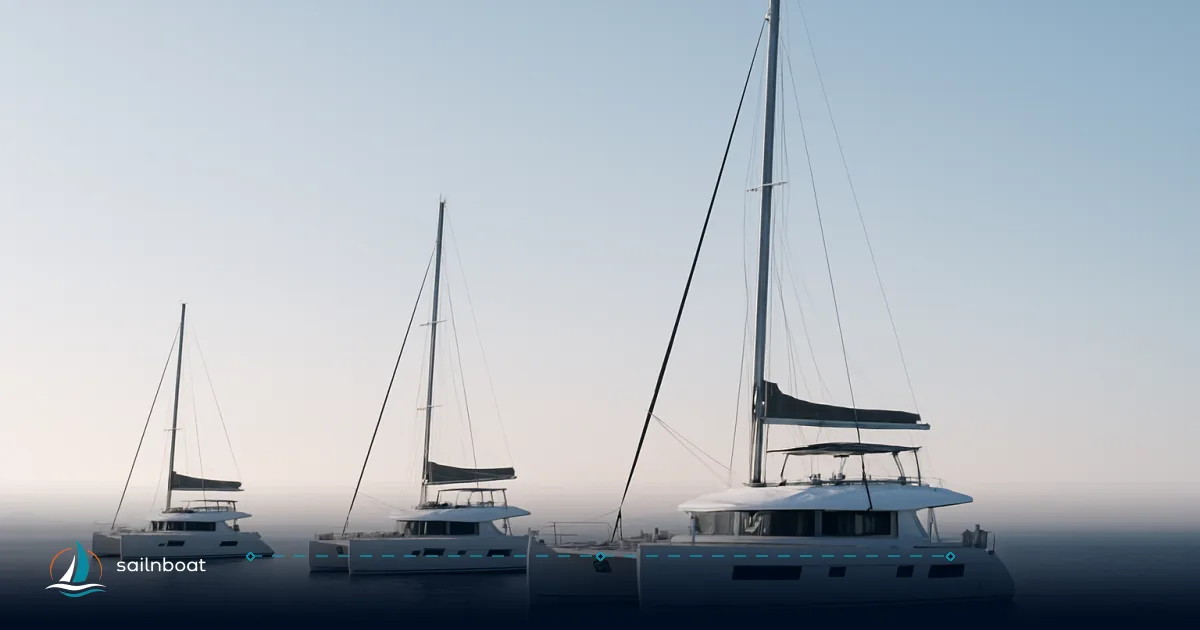
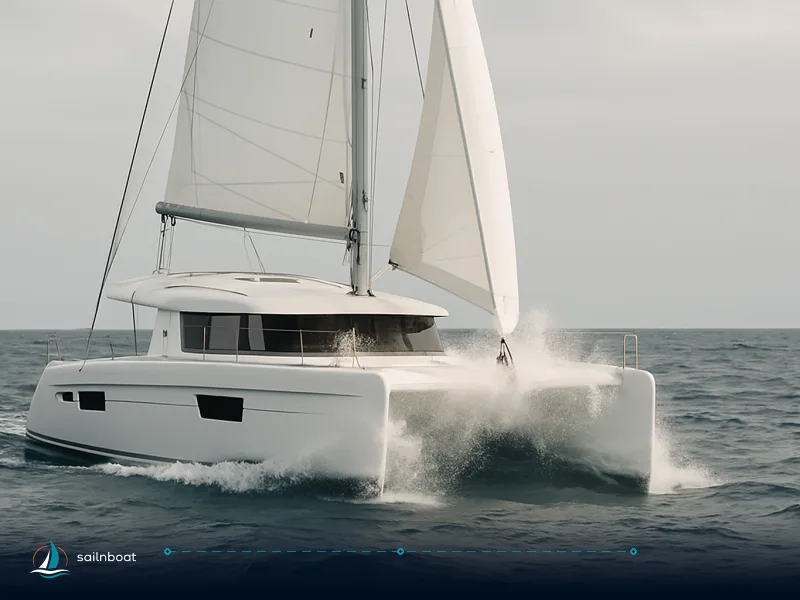
If you’re planning a charter for 8–12 or more people, you need a catamaran with at least four double cabins and real communal space: a large cockpit, a saloon that doesn’t feel cramped, and enough deck space for everyone to relax or share meals. The best catamarans for large group charters aren’t just the longest—they’re the ones that balance berth count with liveable square footage, smart layouts, and practical features. Here’s how the leading models stack up for group comfort, real-world handling, and cost.
Top Catamarans for Large Group Charters
Lagoon 46
- Layouts: 4- or 5-cabin charter versions; sleeps 8–12 depending on layout and use of convertible saloon berths.
- Specs: LOA 13.99 m (46 ft), beam 7.96 m, draft 1.35 m.
- Performance: Typical cruise speed under sail ~7–9 knots, under power ~8 knots at moderate RPM. Published fuel consumption figures vary by load and sea state; expect moderate fuel use with twin 57 HP engines at cruising speed.
- Features: Saloon-to-cockpit flow is excellent; optional flybridge helm is popular for groups with mixed experience levels.
Bali 4.6
- Layouts: 4–6 cabins; charter versions sleep 8–12. The rigid forward cockpit and sliding doors create a true open-plan living/dining space.
- Specs: LOA 14.33 m (47 ft), beam 7.66 m, draft 1.22 m.
- Performance: Under sail, typically 7–8 knots in moderate conditions; under power ~8–9 knots.
- Features: Large fridge/freezer capacity, foredeck lounge, and high-volume water tanks suit bigger groups.
Fountaine Pajot Astréa 42
- Best for: Groups of up to 8 needing a balance of space and privacy.
- Specs: LOA 12.58 m, beam 7.20 m, draft 1.25 m.
- Performance: Cruises ~7 knots under sail; engines (2x30 HP) use ~5–6 L/hr combined at cruising speed.
- Features: Efficient galley, large sunbeds, and a cockpit that seats 8.
Leopard 45
- Layouts: 4-cabin (4 head) typical; sleeps up to 8.
- Specs: LOA 13.72 m (45 ft), beam 7.35 m, draft 1.5 m.
- Performance: Cruises 8–9 knots under sail, 8–9 knots under power; fuel burn typically moderate for this class.
- Features: Well-separated hull cabins, performance rig, and foredeck lounge.
Nautitech 46 Open
- Layouts: 3–5 cabins (6–10 berths).
- Specs: LOA 13.79 m (45.2 ft), beam 7.54 m, draft 1.45 m.
- Features: Single-level cockpit-saloon blends indoor/outdoor space for sociable groups.
Excess 15
- Layouts: 3–6 cabins; sleeps 6–12.
- Specs: LOA 14.84 m (48.7 ft), beam 8.03 m, draft 1.4 m.
- Performance: Noted for sportier handling; cruise speed under sail 8–10 knots in good wind.
- Features: Large cockpit benching, modern styling.
Fountaine Pajot Tanna 47
- Layouts: 3–5 cabins; often used for crewed charters.
- Specs: LOA 13.94–14.32 m, beam 7.7 m, draft 1.2 m.
- Features: Larger flybridge, sport-bridge option, and expanded saloon.
Lagoon 50
- Layouts: 5–6 cabin versions; up to 14 berths for charter configurations.
- Specs: LOA 14.75 m (48.4 ft), beam 8.1 m, draft 1.4 m.
- Performance: Cruises 7–8 knots under sail, 8–9 knots under power. Fuel consumption for twin 80 HP engines varies by load and RPM; actual usage should be confirmed with your charter operator.
- Features: Very large cockpit, broad decks, increased storage and galley space.
Best Catamarans for Large Groups: Space and Amenities Comparison
Here’s a side-by-side table to help you compare real sleeping capacity, communal areas, and layout flexibility.
| Model | LOA (m/ft) | Beam (m) | Max Cabins | Max Berths | Notable Communal Feature |
|---|---|---|---|---|---|
| Lagoon 46 | 13.99 / 46' | 7.96 | 4–5 | 8–12 | Flybridge; large cockpit/saloon flow |
| Bali 4.6 | 14.33 / 47' | 7.66 | 4–6 | 8–12 | Open-plan, rigid forward cockpit |
| Astréa 42 | 12.58 / 42' | 7.20 | 4 | 8 | Big sunbeds, efficient galley |
| Leopard 45 | 13.72 / 45' | 7.35 | 4 | 8 | Performance rig, foredeck lounge |
| Nautitech 46 Open | 13.79 / 45.2' | 7.54 | 3–5 | 6–10 | Single-level open cockpit-saloon |
| Excess 15 | 14.84 / 48.7' | 8.03 | 3–6 | 6–12 | Sporty handling, large cockpit |
| Tanna 47 | 13.94–14.32 / 47' | 7.7 | 3–5 | 6–10+ | Flybridge, larger saloon |
| Lagoon 50 | 14.75 / 48.4' | 8.1 | 5–6 | 8–14 | Broad cockpit, big galley/saloon |
Cabin Configurations
- Essentials: Prioritise layouts with ensuite heads for each cabin or at least a 2:1 guest-to-head ratio. This avoids queues in the morning.
- Examples: Lagoon 46, Lagoon 50, and Tanna 47 regularly offer 4 or 5 cabin + crew layouts. Bali 4.6 and Excess 15 can be configured for up to 6 cabins, but this may reduce storage and private space.
- Tip: Always verify the actual inventory and layout of your booked yacht, not just the brochure version.
Communal Areas
- Cockpit vs Saloon: Bali and Nautitech Open maximize single-level space, ideal for groups who want everyone together. Lagoon and Fountaine Pajot split saloon and cockpit more traditionally, which helps with indoor dining and air-conditioning.
- Seating: Tables on most 46–50ft cats seat 8–10, but for 12+ you’ll need to check for extension options or consider flybridge seating.
Onboard Amenities
- Galley: Most production cats have full-size fridges and freezers, but the exact volume varies. Bali 4.6 is notable for its large fridge/freezer capacity. Confirm galley equipment and pantry space for self-catering groups.
- Entertainment: Standard features include Bluetooth stereo, cockpit/saloon speakers, and TV in the saloon or master. Reliable Wi-Fi is location-dependent and often an extra.
- Water Toys: Dinghy with outboard, paddleboards, and snorkelling gear are common. Seabobs, wakeboards, and towables are usually optional extras.
Onboard Activities and Features
Water Sports Equipment
- Standard inclusions: Dinghy + outboard, snorkel sets, SUPs on many charters. Check the listing for specifics.
- Premium toys: Seabobs, wakeboards, and jetskis are add-ons, often requiring extra insurance and a waiver. Motorised toys may need a qualified operator on board in some regions.
- Safety: Briefings are standard; for high-powered toys, local helmet or safety rules can apply.
Entertainment Options
- Audio/Visual: Most cats have integrated Bluetooth sound systems and saloon/cockpit speakers. Movie nights require checking for HDMI and streaming capability—don’t assume every boat has a smart TV.
- Group activities: Bring your own board games, power banks, or small PA if you want to organise group activities—these are rarely provided.
Dining Experiences
- Self-catered: You handle shopping, cooking, and cleanup. Confirm refrigeration and storage capacity.
- Crewed: Meals are prepared by the hostess/chef. In Mediterranean and Caribbean programs, food and many running costs are bundled into the quoted rate on “Easy Crewed” or similar packages.
- Outdoor dining: Lagoon 50 and Bali 4.6 have the largest outdoor dining spaces among production cats.
Operational Considerations for Large Groups
Crew Requirements
- Bareboat: Many companies allow you to skipper a 46–50ft catamaran bareboat if you provide a sailing CV and a recognised certificate (ICC or RYA Day Skipper, commonly). Some require a second experienced crew member for safety. Requirements vary by operator and country.
- Crewed: For larger groups or those who prefer not to handle the boat, a professional skipper and hostess are standard. Larger charters may add a chef or deckhand.
- Crew cabins: Most 46ft+ cats have one or two small forward crew cabins in the bows. Check whether crew will use a guest cabin or these dedicated spaces.
- Provisioning: In the Mediterranean, you’ll usually need to provision for the crew if booking bareboat. In the Caribbean, many crewed charters include provisioning as part of the package.
Sailing Performance
- Trade-offs: Heavier, comfort-focused cats (Lagoon 50, Bali 4.6) are slower in light wind—expect 7–8 knots under sail in moderate conditions. Performance-oriented cats (Leopard 45, Nautitech 46 Open, Excess 15) can reach 9–10 knots and point higher upwind, useful if you plan longer daily passages.
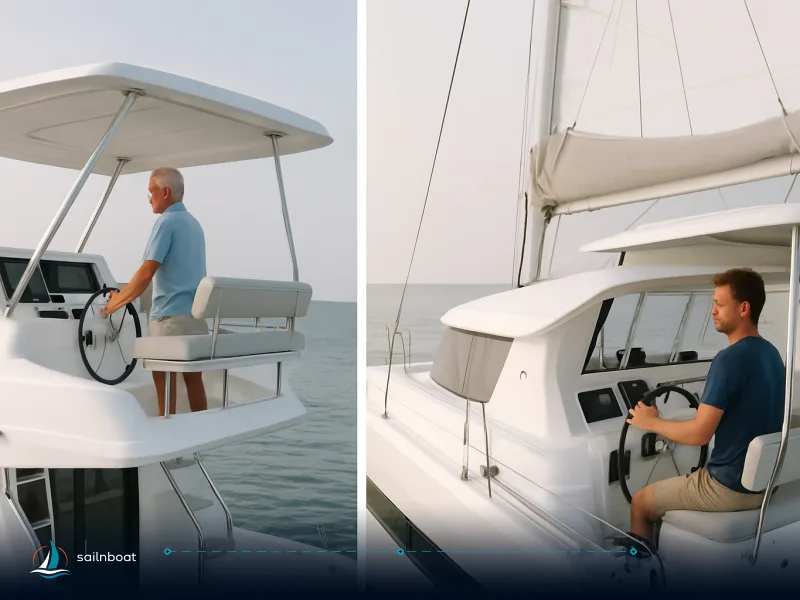
- Handling: Flybridges and twin helms are common, making docking and close-quarters handling easier. Always confirm minimum experience requirements with your charter company.
Booking Timelines and High-Season Constraints
- Lead time: For large group charters (especially 5–6 cabin cats), book 8–12 months ahead for high season (June–August in the Med, December–April in the Caribbean). Last-minute availability is rare for these models in peak times.
- Shoulder season: More flexibility and better rates, but weather and local services may be less predictable.
Privacy, Group Size, and Layouts
- If your group is 11 or doesn’t fit standard cabins, you’ll need to decide whether to use convertible saloon berths or have some guests share a larger cabin. For more privacy, consider a model with more heads or book a slightly larger cat and leave one cabin unoccupied for storage or crew.
Charter Costs and Value Analysis
Base Charter Rates
- Range: In the Mediterranean, a Lagoon 46 typically runs €4,000–13,250 per week bareboat (low to high season). A Lagoon 50 or Bali 4.6 in high season can reach €14,000–18,000 per week, depending on age and layout.
- Caribbean: Rates are similar but often include more bundled extras (e.g., water toys, local taxes).
Additional Fees
| Fee Type | Typical Range (EUR) | Notes |
|---|---|---|
| APA (crewed) | 20–35% of base rate | Covers food, fuel, mooring, incidentals |
| Security deposit | €3,000–6,000 (refundable) | Or non-refundable damage waiver (often €400–800) |
| End cleaning | €200–400 | Sometimes included, sometimes extra |
| Water toys | €100–500+ per week | For seabobs, wakeboards, etc. |
| Marina fees | See table below | Varies by region and vessel size |
Cost Breakdown Example (Mid-Season, Lagoon 46)
| Item | Amount (EUR) | Comment |
|---|---|---|
| Base charter | 9,300 | Mid-season, 2024, Greece example |
| APA (25%) | 2,325 | Provisioning, fuel, port fees |
| Security deposit | 3,500 | Refundable; or damage waiver as an option |
| Cleaning | 300 | Typical, varies by company |
| Extras (water toys, Wi-Fi, etc.) | 400 | Varies by group needs |
| Total outlay | 15,825 | Before per-person split, tips, shore costs |
- Per-person cost: For 10 guests, this is €1,582.50/week before tips and shore meals.
- Tip: Crew gratuity is customary for crewed charters (typically 5–15% of the charter fee, at your discretion).
Value for Large Groups
- Filling all berths lowers per-person costs, but reduces private storage and ensuite space.
- Compare cost-per-person for each model based on your group’s true cabin needs—not just the maximum listed.
Mooring and Port Fees by Region
| Region | Typical Fee for 45–50ft Cat (EUR/night) | Notes |
|---|---|---|
| Mediterranean | €40–90 (low season) to €100–200 (high) | Most marinas charge by length + beam; catamarans pay a 1.5–2x multiplier over monohulls. Popular islands and high season see the upper end. |
| Caribbean | €20–50 (moorings) to €70–120 (marinas) | Many overnight in anchorages/mooring fields, which are cheaper. Marinas are less common and often need advance reservation. |
| Croatia | €80–180 (high season) | Marina fees can be significant; national park moorings extra. |
| Greece | €30–70 (municipal quay) | Lower than Italy/Croatia, but services are basic; water/power extra. |
| Italy/France | €100–200+ (prime marinas, high season) | Premium ports charge more; anchoring is free but limited in some areas. |
- Catamaran surcharge: Always check if a marina charges extra for multihulls—this is standard in the Med.
- Advance booking: For groups, reserve berths well ahead, especially in July–August.
Insurance and Security Deposit Practices
- Insurance: All charter yachts are insured by the operator, but you’re responsible for the deductible (security deposit) unless you purchase a damage waiver. Damage waivers are non-refundable but cap your liability.
- Security deposit: Expect €3,000–6,000 blocked on a credit card or a non-refundable waiver (~€400–800) plus a smaller deposit for incidentals. Some operators in the Caribbean may offer different arrangements; always check the booking contract.
- Personal travel insurance: Strongly recommended for all guests, especially for medical/emergency. Some operators require proof of travel insurance for group bookings.
- Third-party liability: Included in the yacht’s insurance, but always clarify the coverage limits and exclusions—especially for water toys or when operating the dinghy.
- Regional differences: In the Caribbean, some packages include more insurance items in the base rate, while in the Med, expect more à la carte extras.
Accessibility and Family Safety for Large Groups
| Feature | Lagoon 50 | Bali 4.6 | Leopard 45 | Notes |
|---|---|---|---|---|
| Wide transom steps | Yes | Yes | Yes | Easier boarding for all ages |
| Guardrails/lifelines | Yes | Yes | Yes | Standard, but check height for toddlers |
| Child netting option | On request | On request | On request | Most operators can fit on demand |
| Entry threshold | Low | Low | Low | Flat, single-level decks are safer for less mobile guests |
| Cabin access | Steps | Steps | Steps | No lifts; cabins require stairs down from saloon |
| Shaded cockpit | Yes | Yes | Yes | Essential for young children and elderly |
| Swim ladders | Yes | Yes | Yes | All models equipped |
- Accessibility: Most modern catamarans have wide, flat decks and low thresholds, but cabins are always accessed by stairs. Wheelchair access is rare.
- Child safety: Request safety netting for toddlers, and check if the charter operator provides child life jackets. Supervise children around open railings and aft platforms.
How to Choose — a Short Checklist
- Berths: Confirm actual sleeping berths versus advertised maximum. Optional berths often reduce storage.
- Crewed or bareboat: For large groups, a skipper + hostess/chef is common. If bareboat, ensure your nominated skipper holds the required licence for your region.
- Galley capacity: Ask for fridge/freezer and pantry volume if you plan to self-cater. Large groups need more storage than you think.
- Water toys: Confirm inventory and any extra waivers or insurance needed for powered toys.
- Mooring fees: Factor in the catamaran surcharge and book marinas early in high season.
- Insurance and deposit: Understand your liability, the deposit required, and the cost/coverage of any damage waiver.
- Booking window: For peak season, start the process 8–12 months ahead for best selection.
Explore our curated fleet of catamarans to compare layouts, check real-time availability, and run the per-person cost breakdown. When you’ve narrowed it to 2–3 yachts, reach out for help confirming cabin plans, cost inclusions, and local quirks—so you pick the best boat for your group’s priorities.
Explore our fleet of catamarans and book your large group charter today.
Frequently Asked Questions
Top choices include the Lagoon 46 and Lagoon 50, Bali 4.6, Fountaine Pajot Tanna 47 and Astréa 42, Leopard 45, Nautitech 46 Open and the sportier Excess 15—each balances cabins and communal space differently.
Compare LOA, beam and maximum cabin layouts alongside cockpit and saloon plans; some models prioritise an open social deck (Bali 4.6, Nautitech Open), others separate galley and saloon for cleaner workflows (Lagoon, Fountaine Pajot).
Commonly provided: dinghy with outboard, SUPs, snorkel kits, basic towables; higher-end or crewed charters can include seabobs, towables and water-skiing—confirm toy lists before booking.
Decide between bareboat and crewed: larger groups often benefit from a skipper plus hostess/chef; performance and bridge-deck clearance affect passage comfort and speed.
Base weekly rates depend on model, year and destination; add APA (commonly 20–35%), fuel and marina fees—divide total by actual confirmed sleeping berths for cost-per-person.
Written by
Sailnboat Editorial
The Sailnboat editorial desk covers yacht and boat chartering worldwide — routes, bases, seasons, boat types, paperwork and the practical costs that decide a trip. We are a charter marketplace, not a boat owner or a local agency: what we sell is judgement and support, so our guides are written to help you make a decision, not to sell you a specific boat. Every guide is checked against live operator and marina data before it goes out.
Fact-checked against live operator and marina data, and published under our editorial standards. Last reviewed: .