Catamaran vs Trimaran: Performance Insights for Charterers
Trimarans generally win on speed and upwind ability; catamarans win on at-anchor stability, shallow-water access and interior space—pick by itinerary and crew priorities.

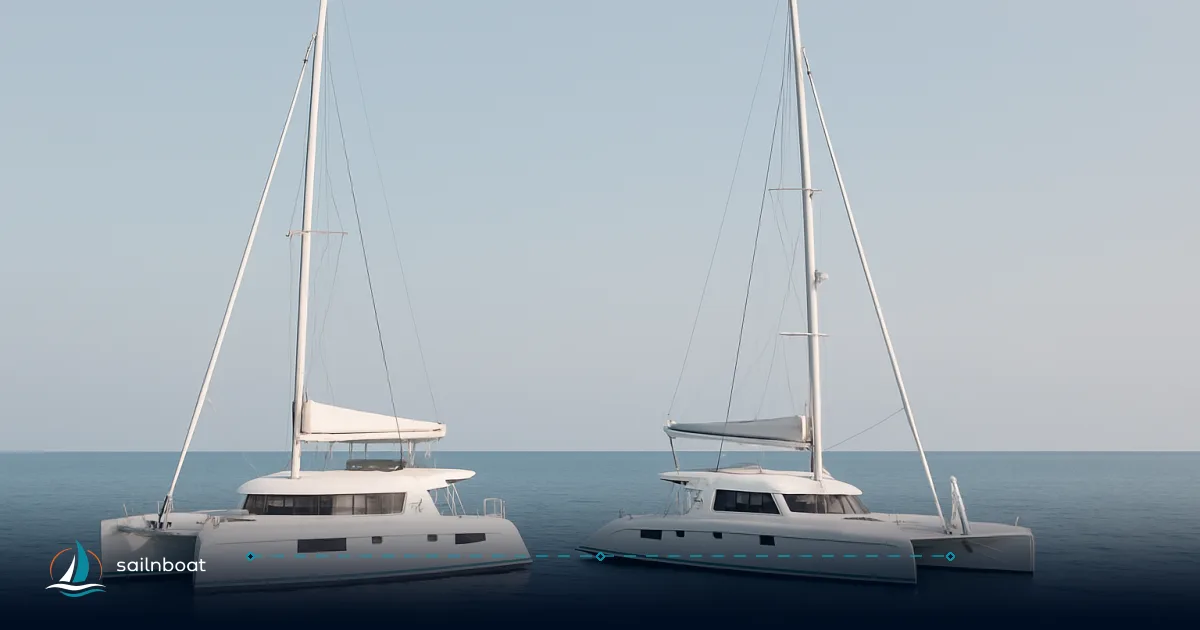
Trimarans usually outperform catamarans on pure sailing speed and upwind capability, while catamarans win on shallow-water access, at-anchor steadiness and interior volume—so the “better” choice for a charter depends on your itinerary, crew and priorities. This article compares hull form, speed, stability, manoeuvring and running costs in practical terms so you can choose the right boat for coastal island-hopping, performance passages or family comfort on charter.
Design Differences Between Catamarans and Trimarans
Hull Configuration
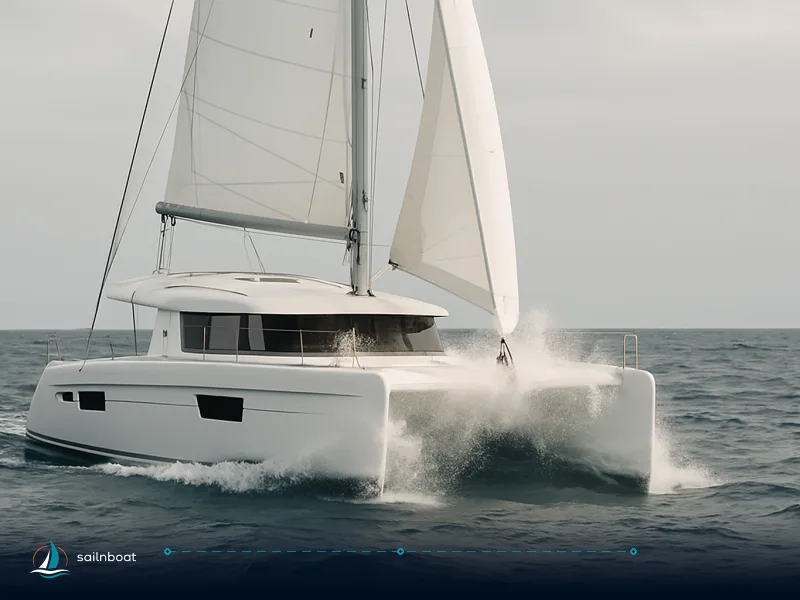
- Catamaran: two parallel hulls (pontoons) joined by a bridgedeck. That layout creates wide transverse stability, lots of deck and saloon volume, and a largely level interior when sailing. Many production cruising cats are designed with twin inboard engines sited one per hull for redundancy and tight low-speed control.
- Trimaran: one central main hull with two smaller outer hulls (amas). The narrow central hull and slender amas reduce wetted surface for a given length, allowing higher speeds and a stiff, efficient platform—many performance-oriented cruising trimarans deliberately concentrate weight in the centre hull and use a single central engine.
Trade-off: the catamaran’s wide beam buys interior space and anchor stability; the trimaran’s slender main hull buys speed and less drag.
Draft and Accessibility
- Typical cruising catamaran draft (board up / fixed daggerboards aside) is often in the 1.0–1.5 m range, but this varies by model—confirm the specific draft with the manufacturer or charter operator to ensure access to shallow anchorages and coves.
- Trimaran draft varies by design but the central hull and rudder can be deeper than a catamaran’s hulls; some cruising trimarans keep shallow draft comparable to cats, while others (especially performance designs with deeper centreboards or foils) draw more and therefore limit very shallow anchoring. Describe the trimaran draft as design-dependent and check the specific model’s figures for precise planning.
Operational note: if your charter plan includes tidal flats, sandbars or beaching near islands, the catamaran’s generally shallower draft is a consistent operational advantage.
Sailing Speed and Performance
Speed Characteristics
- Trimarans frequently beat catamarans in straight-line and upwind performance: their narrow central hull reduces resistance, and some cruising trimarans sustain higher average daily miles. Builders and owners commonly report cruising in the neighbourhood of ~9–11 knots for many performance cruising trimarans, with sport designs capable of much higher speeds.
- Catamarans typically cruise in the ~6–10 knot band depending on displacement, sail area and loading; modern lightweight production cats often sit at the upper end of that range under favourable conditions. Expect wide variation between heavy charter cats and high-performance production cats.
Why it matters for charterers: an extra 1–3 knots sustained over a day changes how far you can reasonably schedule in a single passage and therefore how many destinations you can visit on a 7–10 day charter.
Performance Metrics
- Boat-to-boat differences dominate: hull length, displacement, sailplan, and whether the yacht uses foils or daggerboards matter more than “cat vs tri” in isolation. Use manufacturer cruise speeds and realistic logbook averages for itinerary timing rather than advertised top speeds.
- On windward legs, many trimarans point closer to the wind and maintain speed better through tacks; catamarans often lose speed and make wider tacks when pushed hard upwind, though newer high-aspect rigs and daggerboard systems narrow that gap.
Practical rule: plan passages using conservative cruise speeds (charter cats: 6–8 kt; cruising trimarans: 8–10 kt is a useful working assumption unless the boat’s spec says otherwise).
Stability and Comfort Levels
At Anchor Stability
- Catamarans give unusually low roll at anchor and very level saloon and berths; this is why many families and charter guests prefer cats for live-aboard comfort and relaxed anchor days. The wide waterplane and twin hulls resist transverse motion.
- Trimarans can show a little movement at rest because the amas are narrower than a full catamaran hull, but many experienced owners report a smoother underway motion and less pitching through waves at speed. The trimaran’s central hull and amas distribute buoyancy so dynamic motion often feels controlled while sailed briskly.
Decision point: if your charter prioritises lazy anchor-days, swimming and kids sleeping below without motion, a catamaran commonly offers a more level platform.
Comfort During Sailing
- Trimarans reduce pitching and carry speed through confused sea states better than many cats; when the itinerary prioritises passages or reaching distant islands in a shorter time, the trimaran’s motion can be less fatiguing underway.
- Catamarans sail “flat” with minimal heel; people who get seasick from heel sometimes fare better on a cat, but cats can slam into waves in certain sea states unless their hull and bridgedeck are designed to pierce or shed slamming. Modern production catamarans attempt to mitigate this with hull shape and bridgedeck clearance.
Maneuverability and Docking Considerations
Docking Ease
- Catamarans’ twin engines are a practical advantage in marinas: by using differential throttle and reverse on one side you can pivot and control the boat precisely at low speed. This makes tight stern-to berths and close-quarter handling simpler for short-handed crews.
- Many cruising trimarans rely on a single central engine; with prudent planning and often a bow thruster, they remain manageable, but they typically demand a little more skippering skill in tight berths than a twin-screw cat.
Operational tip: if you expect to use small harbours or need to take alongside berths frequently, ask the charter base what berthing arrangements they provide for wide multihulls and whether crew assistance or a harbourmaster is available.
Mooring Fees
- Marinas often price berths by length and also by occupied area or apply a multihull surcharge. Across many Mediterranean and Caribbean marinas the practical result is a 50–100% uplift for catamarans compared with monohulls of the same length. That surcharge can materially affect the charter budget when your itinerary includes multiple marina nights.
- Trimarans are narrower than equivalent catamarans in overall beam in many designs and may therefore avoid the same scale of surcharge; however, policies vary strongly between ports, so expect local differences.
Budgeting note: add a line for marina/multihull surcharges when comparing itinerary costs—over a week of stops this can be a few hundred euros on a charter.
Maintenance and Operational Costs
Engine and Maintenance Needs
- Catamarans commonly come with twin inboard engines (one per hull). That gives redundancy and makes low-speed handling easier, but it doubles engine-service intervals and parts exposure compared with a single-engine layout. Many operators alternate engines to balance hours and fuel consumption.
- Many cruising trimarans use a single central engine; that reduces the number of engine services and parts but concentrates the propulsive dependency on one unit and may require additional thruster or handling systems to match a twin-screw cat’s manoeuvrability.
Fuel and consumables: fuel burn per hour depends on engine size, displacement and speed; don’t compare by hull form alone—ask the charter operator for their typical fuel consumption figures for the specific model you’re booking.
Long-term Considerations
- Catamarans’ wider footprint increases haul-out and storage costs (larger travelift, wider support frames) and often raises antifouling and haul fees. Marinas and yards commonly charge more for multihull handling.
- Trimaran structural maintenance can be more complex in the bridgedeck/beam join areas on some designs, and a performance trimaran’s higher loads and foils can increase specialized maintenance costs. Evaluate the specific builder and fleet maintenance record when comparing long-term charter rates.
Financial trade-off: a charter operator’s daily rate already reflects many of these costs; your job as a charterer is to understand which additional line items (berthing, fuel on passages, optional skipper, provisioning) will be larger because of hull form.
Quick Comparison Table (decision-ready)
| Feature | Typical Catamaran | Typical Trimaran | What it means for charterers |
|---|---|---|---|
| Typical cruising speed (working) | 6–10 kt (depends on model & load). | 8–11+ kt for cruising tris; sport tris are much faster. | Trimarans usually shorten passages; cats are steady and predictable. |
| Draft (typical) | Often 1.0–1.5 m (shallow), but varies by model. | Variable — some ~1.1 m, others deeper if centreboards/foils present. | Cats usually give easier access to shallow anchorages; always check the model’s draft when planning landings. |
| Beam / berth impact | Wide beam; many marinas add a 50–100% surcharge. | Generally narrower than production cats; less likely to trigger the largest multihull surcharge. | Catamarans may cost more in marinas and be harder to find a berth in high-season. |
| Engines / manoeuvring | Twin engines common — excellent low-speed control, redundant systems. | Often a single central engine plus bow thruster; can be less intuitive in close quarters. | Twins are easier for inexperienced skippers in marinas; single engines reduce engine maintenance lines. |
| At-anchor comfort | Very level, minimal roll — good for families and long anchor stays. | Slightly more motion at rest on some designs, but smoother underway at speed. | Choose cats for quiet anchoring; tris for lively passages. |
Which should you choose for a charter?
- Pick a catamaran if: shallow coves, frequent anchoring, family comfort, easy marina handling and a level interior are the priority. Catamarans are the default for many charter fleets for these exact reasons.
- Pick a trimaran if: you value higher average passage speed, sporty performance, and you plan longer passages where extra miles per day matter—or if you want a more dynamic sailing experience and are happy with a slightly smaller interior footprint.
- Hybrid answer for most charterers: if your itinerary is short-hop island-hopping with lots of anchorages and marina stops, a catamaran will usually give a more relaxed holiday with simpler logistics and better guest comfort. If your week contains a long open-water leg where knocking out miles matters, a trimaran will often be more satisfying.
Practical checklist to use before you book
- Ask the charter company the model’s realistic cruising speed and fuel burn (not just “top speed”). Use conservative cruise numbers when planning daily legs.
- Confirm draft and whether daggerboards or lifting foils are fitted—this determines which anchorages are safe.
- Check marina policies on multihull surcharges and berth availability for your dates; add the likely surcharge to your budget.
- Ask about engine layout and any bow thruster; twin engines simplify close-quarters handling if your crew is inexperienced.
- If you care about motion at anchor vs motion underway, request the operator’s logbook feedback from previous charters on that model—real user reports are more telling than marketing lines.
Final trade-off in one sentence: trimarans deliver the clearest raw-performance advantage (speed and upwind ability), while catamarans deliver the clearest comfort-and-logistics advantage for typical holiday charterers—choose by whether you want to cover miles or maximise shallow-water anchoring and onboard comfort.
Evaluate your itinerary (how many daily miles, how many marina nights, how many anchor-days) and use the checklist above to match that plan to the boat type before you confirm a charter.
Frequently Asked Questions
Catamarans have two parallel hulls joined by a bridgedeck and generally a wide beam; trimarans use a central main hull with two smaller outer hulls (amas), giving a slender central waterline and different load distribution.
Trimarans usually have less wetted surface at speed and a higher sail-area-to-displacement ratio, so they accelerate and sustain higher speeds—especially upwind—while cruising trimarans often average higher daily miles than equivalent cats.
At anchor catamarans are usually more stable with minimal roll and very level cabins; underway, trimarans often reduce pitching and can feel smoother when moving fast—so comfort depends on whether you value anchored steadiness or lively passagemaking.
Catamarans’ greater beam can make marina berths harder to find and more expensive (many marinas apply a 50–100% surcharge); trimarans tend to fit more easily alongside and often avoid the wide-boat premium.
Catamarans commonly have twin engines and two drive systems to service, increasing parts and labour; trimarans often have a single central engine, lowering some engine costs but sometimes adding complexity in ama/structure maintenance.
Written by
Sailnboat Editorial
The Sailnboat editorial desk covers yacht and boat chartering worldwide — routes, bases, seasons, boat types, paperwork and the practical costs that decide a trip. We are a charter marketplace, not a boat owner or a local agency: what we sell is judgement and support, so our guides are written to help you make a decision, not to sell you a specific boat. Every guide is checked against live operator and marina data before it goes out.
Fact-checked against live operator and marina data, and published under our editorial standards. Last reviewed: .