Twin Engines vs Single: Key Considerations for Charterers
Twin-engine boats give you better low-speed control and engine redundancy but cost more to buy, run and maintain; this guide breaks down the trade-offs so you can choose the right charter.

Twin Engines vs Single: What Charterers Must Know About Maneuverability, Redundancy, and Costs
The decision between twin engines and a single engine is more than a technical spec—it's a practical call that shapes your charter’s cost, comfort, and contingency options. You’ll notice the difference in marina handling, in your fuel and maintenance bills, and in your options when something goes wrong offshore. Here’s what you need to know, with a focus on the real trade-offs—not just the brochure claims.
Understanding Maneuverability: Single vs Twin Engines
How your boat handles in tight quarters is not just about convenience; it can mean the difference between a smooth arrival and a stressful docking. The “twin engines vs single” question is most obvious at low speeds and in close maneuvers.
Docking and Handling
- Twin engines: You gain the ability to apply asymmetric thrust—forward on one, reverse on the other—making it possible to rotate the boat or move it laterally. This is especially helpful in tight marinas or when wind/current is a factor. Many newer models offer joystick or pod-drive systems (like Volvo IPS), translating your hand movements into complex engine and thruster commands.
- Single engine: You’ll work with prop-walk, rudder angle, and often a bow thruster. Docking takes more space and planning, especially when wind or current is involved. Bow thrusters help but don’t fully match the fine control of twins.
- Practical takeaway: If your charter involves daily marina stops with tight berths, twins—especially with joystick—reduce mooring stress. If you plan to anchor more often, or your marinas have wide slips, a single engine is usually sufficient.
Response to Wind and Current
- Twin advantage: Two engines spaced apart allow for more precise control against wind or current, especially at low speeds. Assisted-docking systems can further simplify this.
- Single limitations: Single-engine boats are more affected by yaw and need more active steering. In challenging conditions, a bow thruster helps, but the boat will not respond as quickly to fine adjustments.
The Importance of Redundancy in Engine Configuration
Redundancy isn’t just a theoretical safety margin—it can determine your options if you experience a failure underway.
Safety Advantages of Twin Engines
- Continued propulsion: With twins, you often retain propulsion even if one engine fails. This can mean proceeding to shelter or a marina under your own power, rather than waiting for a tow.
- Flexible recovery: A single running engine lets you keep steerage, power bilge pumps, and operate key systems while you arrange assistance.
Limitations of Redundancy
- Common-mode failures: Two engines don’t cover every scenario. Fuel contamination, electrical faults, or shared tank issues can disable both. Many real-world incidents trace back to these shared vulnerabilities.
- Non-propulsion failures: Transmission, shaft, or propeller issues can still leave you without drive, no matter how many engines you have.
- Fuel system layout: Some twin-engine boats use a single tank and feed, others have fully separated systems. Ask your charter company about the setup—separate tanks and feeds increase true redundancy.
Cost Analysis: Comparing Single and Twin Engines
The cost difference shows up in purchase price, charter rates, fuel use, and maintenance. While some numbers are widely cited, they often vary by region, model, and operator.
Initial Purchase Price
- What drives the difference: Two engines mean double the engines, duplicated controls, and a more complex build. The price premium for twins over a single engine varies widely by builder, model, and market conditions.
- Typical price difference: There is no single figure that applies globally. For new 40–50 ft powercats and motoryachts, the premium for twin engines can be substantial, but exact numbers are best confirmed with current builder or broker quotes. In practice, expect a higher base price for twin-engine configurations, but the delta varies significantly.
- Impact on charter rates: Higher purchase cost is usually reflected in higher charter rates for twin-engine boats, but the difference depends on the region, operator, and season. You’ll often see a premium for twins, but it is not a fixed amount—always check current listings for your dates and location.
Maintenance and Fuel Costs
- Routine maintenance: Two engines mean more oil, filters, impellers, and checks. Maintenance costs can be notably higher for twins, but the actual difference depends on engine size, hours run, and local labour rates. Some operators report annual maintenance costs for twins being “materially higher” than for singles, but concrete numbers should be requested from your charter provider.
- Fuel consumption: Twin-engine setups typically burn more fuel, especially at planing speeds. Published tests and operator feedback often cite a 20–30% higher fuel burn for twins compared to singles of similar output, but this varies with hull shape, load, and speed.
- Example: A 44 ft powercat with twin diesels may use 18–22 L/hr at 8 knots (combined), while a similar-size single-engine monohull might use 10–14 L/hr. These figures are illustrative; always request actual consumption logs or test data for your model.
- APA/fuel budgeting: For a week-long charter covering about 120 nautical miles at mixed speeds, you could expect to budget several hundred euros more in fuel for a twin-engine planing boat compared to a single-engine displacement cruiser, assuming Mediterranean fuel prices in the €1.70–€2.00 per litre range. Actual costs depend on your route, speed, and fuel prices at the time.
Quick Comparison Table
| Metric | Single-engine | Twin-engine |
|---|---|---|
| Low-speed manoeuvring | Adequate with bow thruster; needs skill | Excellent: differential thrust or joystick |
| Redundancy | No propulsion backup | Can continue on one engine after many failures |
| Purchase cost | Lower base price for most hulls | Higher: double engines and more complex systems |
| Maintenance | Lower engine service cost | Often higher, but varies by engine and usage |
| Fuel burn | Lower for efficient hulls | Typically 20–30% higher at planing speeds |
| Skill to handle | Higher; bow thruster often needed | Lower with joystick; otherwise, more complex |
Real-World Example: Charter Listings Compared
Scenario: 44ft Catamaran vs 43ft Monohull
| Model & Engine | Weekly Rate (High Season) | Typical Fuel Burn (L/hr) | Fuel Budget (7 days, 120nm) | APA Estimate (EUR) |
|---|---|---|---|---|
| Powercat 44ft (twin inboard diesels) | Varies; check listings | 18–22 (combined) | ~280–350 | Check with operator |
| Beneteau Swift Trawler 42 (single inboard) | Varies; check listings | 10–14 | ~160–200 | Check with operator |
- Rate difference: Twin-engine powercats often command a higher weekly rate, but the exact premium varies by region, season, and operator.
- Fuel/APA difference: Expect to budget more for fuel on a twin-engine boat, with the difference depending on your cruising speed and distance.
- Docking: The powercat with twins and joystick handles tight berths and crosswinds with less drama.
Types of Vessels: When to Choose Twin Engines
Some hulls and charter scenarios almost always call for twin engines.
Popular Twin-Engine Vessels
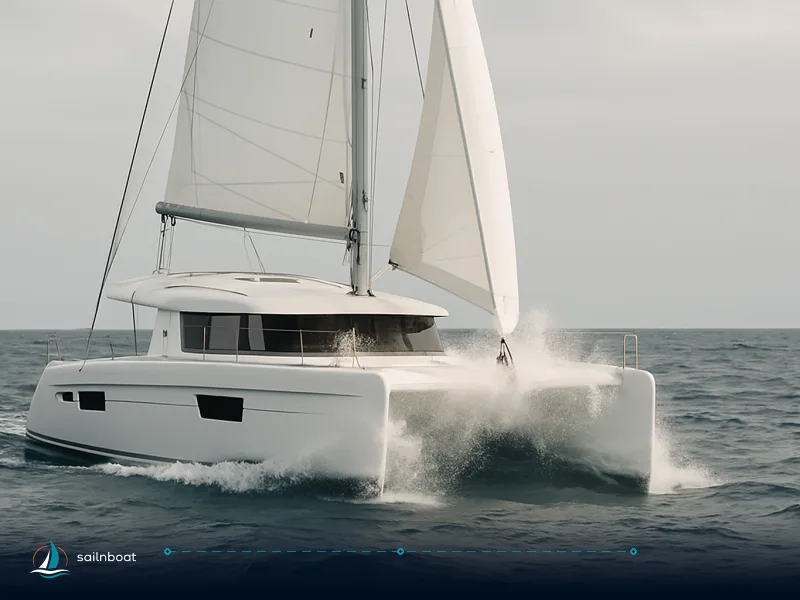
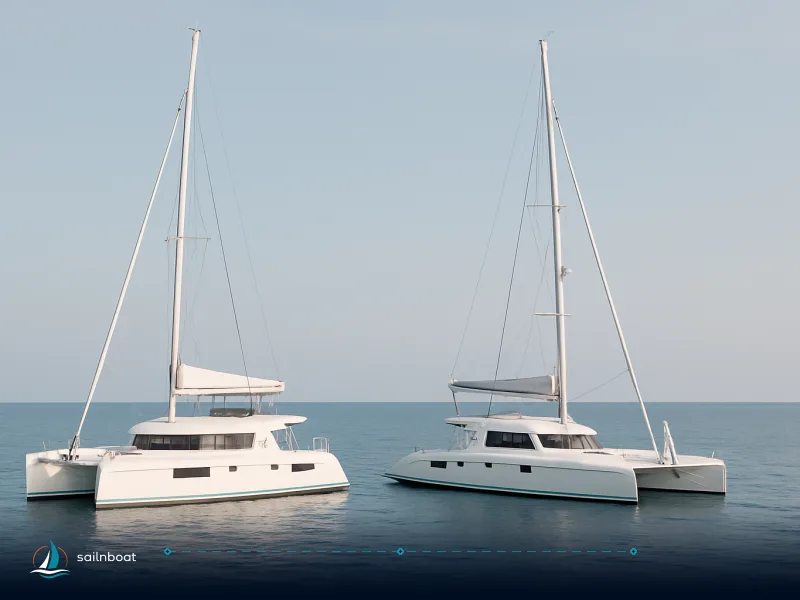
- Powercats: Most production catamarans (e.g., Leopard, Lagoon) are designed for twin inboards—one per hull. This layout improves control and redundancy.
- Motoryachts and large cruisers: Boats above ~40 ft often use twins for speed, handling, and safety. Pod-drive systems (like Volvo IPS) further enhance manoeuvrability.
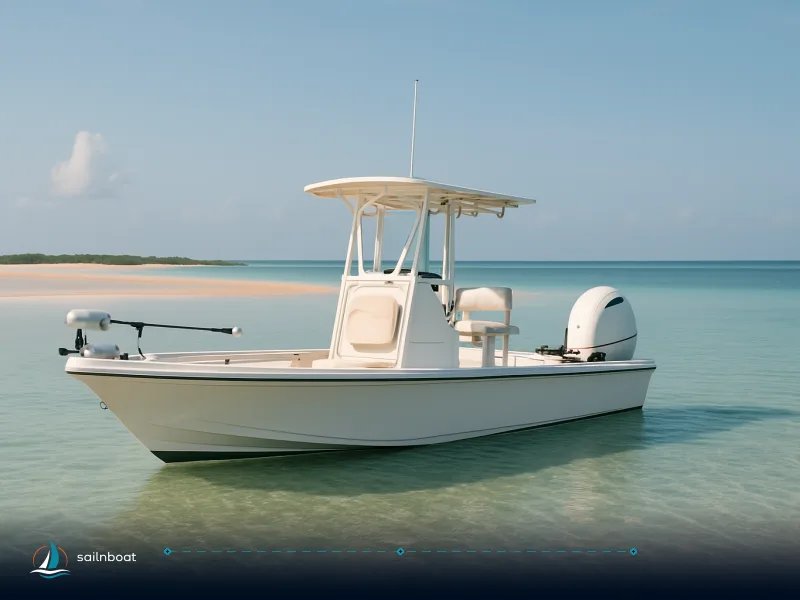
- Hybrids and outboards: Some modern hybrids use twin electric or outboard engines. Outboards are more common in smaller powercats and some planing monohulls.
Operational Benefits
- Large or heavy boats: A single engine powerful enough for a large hull is heavy, expensive, and offers no redundancy. Twins allow each engine to run at lower loads.
- Catamarans: Placing an engine in each hull gives unmatched control for docking and handling.
Skipper Requirements: Experience Levels for Each Configuration
Your skill—or that of your hired skipper—can tip the balance between single and twin engines.
Operating Single-Engine Vessels
- Skill needed: Docking with a single engine often requires planning, a good understanding of prop-walk, and effective use of bow thrusters. Most charter skippers are trained for this, but tight or windy marinas increase the challenge.
Operating Twin-Engine Vessels
- Without joystick: You need to know how to use differential thrust and coordinate throttles and rudder. This is a learnable skill, but practice is key.
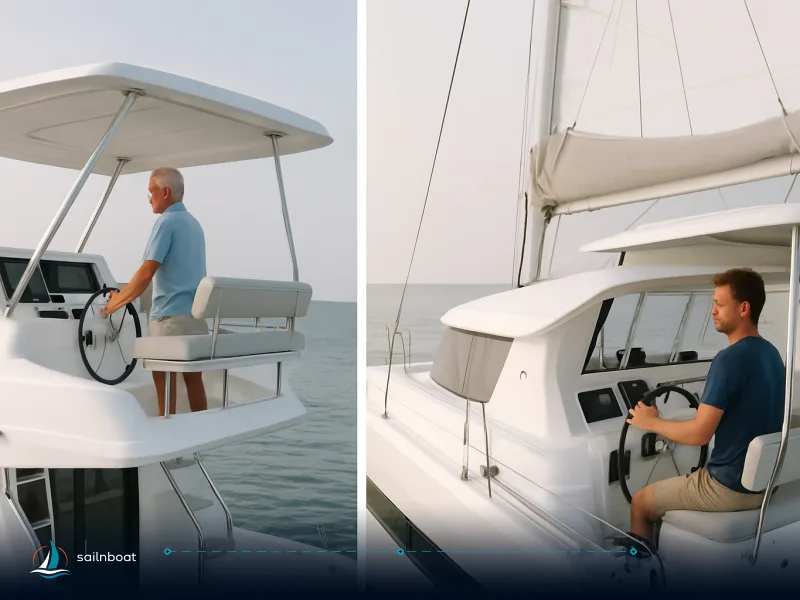
- With joystick: Joystick systems translate your hand movements into precise engine and thruster actions. They simplify docking for less experienced helms, but familiarity with the system is still important.
- Charter tip: Confirm if your skipper (or hired crew) has recent experience with the drive system on your chosen boat.
Insurance and Resale Value: What Charterers Should Consider
Insurance Premiums
- Premium differences: Insurers often charge higher premiums for twin-engine boats, reflecting increased hull value and complexity. The percentage difference varies widely by insurer, region, and boat type. Some operators include insurance in the base rate, while others list it separately. Always clarify what’s included and whether the engine configuration affects your premium.
Resale Value
- Resale trends: Twin-engine boats, particularly in the powercat and motoryacht market, tend to hold value better where redundancy and marina handling are valued. In some regions, buyers prioritize fuel economy and simplicity, making single-engine models more desirable.
- Fleet renewal: Charter operators often prefer twins for larger boats due to guest expectations and safety, supporting resale values for well-maintained twin-engine models.
Regulatory and Licensing Considerations
- Qualification requirements: In most Mediterranean countries, license requirements do not differ between single and twin engines for boats under 24m LOA. Requirements may change for vessels over 12m or with high horsepower—always check with your charter company.
- VHF/SRC: Many operators, especially in Croatia and Greece, require an SRC (VHF operator certificate), regardless of engine setup.
- Insurance implications: If you lack a required qualification, it can affect how an insurance claim is assessed after an incident. Confirm your documents meet both legal and charter company standards.
Practical Differences: Noise, Vibration, and Comfort
- Noise and vibration: Twin engines, especially diesels, can create more noise and vibration, especially at certain RPMs or if not well isolated. Some modern builds address this with better insulation. Outboard twins may be noisier at speed but quieter at low revs.
- Cabin comfort: The layout of engine rooms and soundproofing varies by builder. If noise is a concern, ask for a sea trial or operator feedback on your specific model.
Special Cases: Hybrid and Outboard Twin Setups
- Hybrids: Some newer models use twin hybrid or electric motors, offering silent running at low speed and redundancy. These setups are still rare in charter fleets but growing in number.
- Outboard twins: Increasingly common on smaller powercats and planing monohulls. Outboards are easier to service and replace, but can be noisier and may impact swim platform access.
Choosing for Your Charter: Practical Decision Rules
-
Choose twin engines if:
-
Your itinerary includes frequent marina stops, tight berths, or challenging wind/current.
-
You’re chartering larger powercats or motoryachts where redundancy meaningfully reduces risk.
-
You value the backup of an independent second engine and accept higher running costs.
-
Choose a single engine if:
-
You plan long-range, mostly displacement cruising where fuel economy matters.
-
You’re working to a tight budget and will anchor more than dock.
-
You prefer lower rates and simpler systems.
Booking Checklist for Charterers
- Ask whether the boat uses separate or shared fuel tanks and how transfers are handled.
- Request documented fuel consumption at typical cruise speeds—operator logs or published tests help.
- Confirm if joystick or assisted-docking is fitted, and whether your skipper has recent experience on that system.
- Clarify insurance arrangements and whether the premium reflects the engine configuration.
Summary Table: Twin Engines vs Single for Charterers
| Factor | Single Engine | Twin Engines |
|---|---|---|
| Manoeuvrability | Good with bow thruster | Excellent, especially with joystick |
| Redundancy | None | Can continue on one engine |
| Cost | Lower purchase and running costs | Higher across the board |
| Fuel Consumption | Lower, especially at slow speeds | Typically higher, varies by hull |
| Maintenance | Simpler, less to service | More parts, higher cost |
| Insurance Premium | Lower in many regions | Often higher, but check specifics |
| Licensing | Typically same for both under 24m | Typically same, but confirm locally |
| Comfort (Noise/Feel) | Varies by model | May be noisier, depends on build |
Choose the configuration that matches your real itinerary. Tight marinas and frequent stops favour twins (especially with joystick). Long, economical passages and a simpler budget favour a well-equipped single. Always match your choice to the trip you’ll actually do, not just the spec sheet or the marketing.
This article is designed to help you make a confident, informed choice—backed by real numbers, practical advice, and the experience of charterers who’ve handled both setups. If you have a specific boat or destination in mind, reach out to Sailnboat for model-by-model guidance and up-to-date pricing.
Frequently Asked Questions
Twin engines allow differential thrust — you can apply power to one side and reverse the other to pivot the boat, hold heading in wind or nudge sideways; single engines rely more on rudder, prop-walk and bow thrusters, so docking in tight marinas usually needs more space and skill.
A twin installation gives you a second independent propulsion source so you can usually limp to shelter on one engine after an isolated engine failure, but it doesn't protect you from failures that affect both engines (fuel contamination, shared electrical faults, or a fouled propeller).
Twin installations increase upfront cost (second engine, extra controls, mounts and systems) and raise routine engine service costs roughly proportionally; maintenance budgets for twin-engine motor yachts are commonly higher than for single-engine equivalents, and fuel burn is typically 20–50% higher depending on speed and hull type.
Power catamarans (for example Leopard powercats) and motoryachts commonly use twin inboard engines because twins spread thrust across hulls, improve manoeuvrability and give a redundancy margin important for charter operations and offshore passages.
Single-engine boats are simpler to learn for basic handling; twin-engine boats offer more control but require training in differential-thrust manoeuvres unless equipped with joystick/assisted-docking systems, which reduce the skill threshold significantly.
Written by
Sailnboat Editorial
The Sailnboat editorial desk covers yacht and boat chartering worldwide — routes, bases, seasons, boat types, paperwork and the practical costs that decide a trip. We are a charter marketplace, not a boat owner or a local agency: what we sell is judgement and support, so our guides are written to help you make a decision, not to sell you a specific boat. Every guide is checked against live operator and marina data before it goes out.
Fact-checked against live operator and marina data, and published under our editorial standards. Last reviewed: .