Motor Yacht vs Sailing Yacht: Which Is Right for Your Charter Needs?
Choose a motor yacht for speed, range and more living space; choose a sailing yacht to lower fuel costs and enjoy an authentic sail experience. This guide compares speeds, costs, maintenance, skills and environmental impact so you can decide for your charter week.

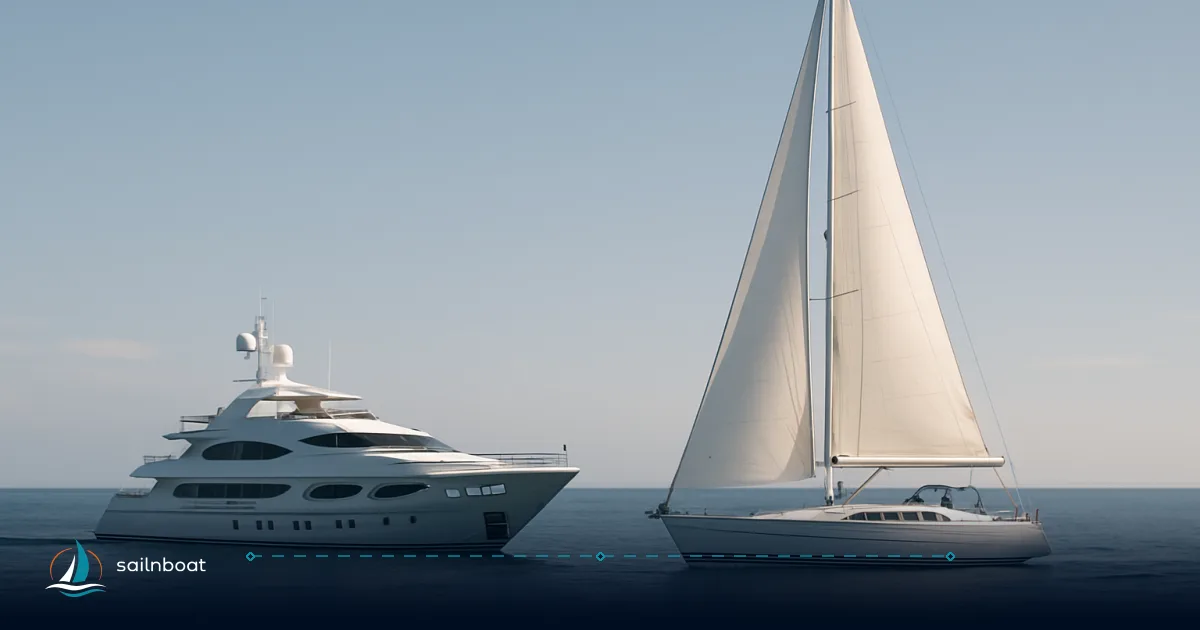
If you want speed and fast island-to-island hops, choose a motor yacht; if you want low fuel cost, a quieter wake and the sailing experience, choose a sailing yacht — motor yacht vs sailing yacht comes down to itinerary, comfort priorities and how much time you want underway versus at anchor. This guide lays out the concrete differences you need to plan a charter: cruising speeds and realistic daily ranges, fuel and charter-cost bands, maintenance trade-offs, the skills required, and how each option affects your carbon footprint.
Speed and Range Comparison
Cruising Speeds
Motor yachts give you time advantages: typical cruising speeds for modern motor yachts used in charters fall roughly in the 18–25 knot band (with planing types and sports cruisers often at the upper end). Sailing yachts cruising under sail typically average about 6–8 knots in ordinary conditions; plan your schedule around the sailing yacht’s lower average speed and the likelihood of motoring at times.
Practical implication: expect a motor yacht to cover two to five times the daily mileage of a sailing yacht on continuous cruising days — useful when you want multiple stopovers in a single day or a long reposition.
Distance Capabilities
A motor yacht cruising at 18–25 knots can routinely do 150–300+ nautical miles in a day if fuel and crew rotations allow; a sailing yacht cruising at 6–8 knots is commonly planned for 30–60 nm per day or less, depending on wind and crew. The motor yacht’s range is limited mostly by fuel capacity and provisioning; the sailing yacht’s practical range is shaped by weather windows and crew endurance rather than fuel alone. Use the motor yacht’s consumption curve and the sailing yacht’s target average speed to build realistic daily legs.
Table: Quick comparison for planning
| Feature | Motor Yacht | Sailing Yacht |
|---|---|---|
| Typical cruise speed | 18–25 knots. | 6–8 knots under sail (average). |
| Typical planned daily miles | 100–250+ nm (depends on fuel capacity) | 30–60 nm (wind-dependent) |
| Primary range limiter | Fuel capacity / genset usage | Wind, weather windows, crew endurance |
Comfort and Space Onboard
Interior Volume
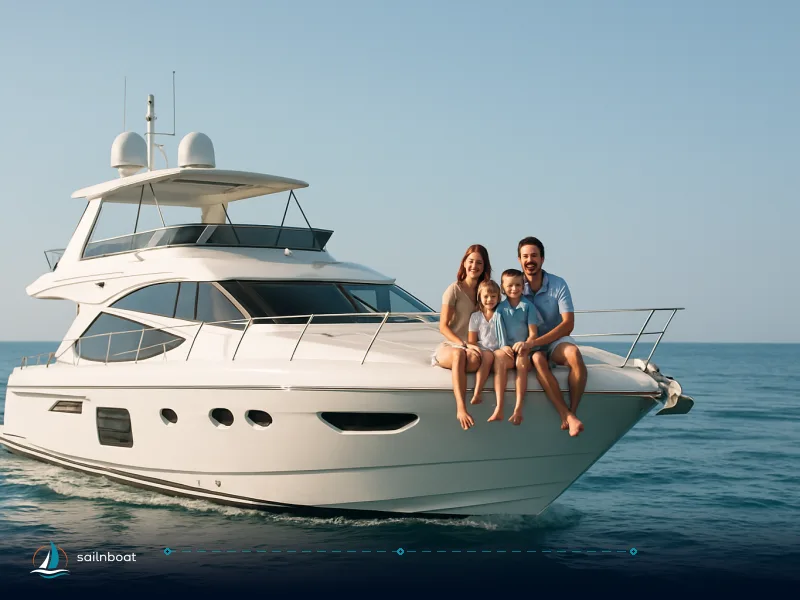
For the same overall length, motor yachts commonly have a wider beam and larger usable interior volume — more spacious saloons, larger cabins and often a dedicated engine room and proper swim platform. Expect a motor yacht to typically offer noticeably more interior volume than a comparable-length monohull sailing yacht, which often translates into bigger berths, more headroom and larger social spaces, though the exact difference varies by design. Sailboats, by contrast, tend to concentrate living space around the cockpit and companionway with a simpler saloon plan.
Trade-off: if you prize roomy cabins, consistent hotel-style systems (full AC running without generator concerns) and a big swim platform, a motor yacht will usually suit you better; if you prioritise an active cockpit and direct connection to sailing, a sailing yacht delivers that.
Amenities and Stability
Motor yachts typically offer higher baseline hotel comforts — larger generators, stronger HVAC, and more power for appliances and entertainment systems — because they run generators for long periods and are designed around that load. Many motor yachts also have stabilization systems optimised for underway comfort; that said, modern cruising sailing yachts frequently include performance- and comfort-enhancing features (separate cockpit enclosures, slightly softer motion at anchor on certain designs).
Practical note: air conditioning, watermakers and extensive galley equipment are commonly standard on crewed motor yachts and widely available on larger sailing charters, but running them increases generator and therefore fuel use on both types.
Cost Considerations for Chartering
Charter Costs
Headline weekly charter rates vary by size, region and whether the yacht is bareboat or crewed. Typical market ranges you will see for a 40 ft class are:
- 40 ft motor yacht: often advertised in a range that can be roughly €4,000–€12,000 per week depending on age, region and whether the boat is crewed.
- 40 ft sailing yacht: often advertised near €2,500–€5,000 per week for comparable bareboat or lightly-crewed options in popular Mediterranean bases. These ranges can vary substantially with season, insurer/flag VAT rules, and whether the quote includes skipper, fuel, or APA. Use those figures as a general starting point when comparing quotes.
Remember extras: marina fees, provisioning, mooring nights at popular ports and the Advance Provisioning Allowance (APA) on crewed charters are additional and commonly add 20–35% to the base charter fee for fully crewed yachts.
Operational Costs (fuel, berthing, fees)
Fuel is the single largest variable cost on motor yachts. Motor yachts commonly consume on the order of 20–80 litres of diesel per hour depending on size and speed; larger or higher-speed yachts can burn much more. Sailing yachts, when motoring, often use relatively little fuel per hour (some examples report 3–5 L/h in typical motoring conditions), so fuel for a sailing charter is often a modest line item unless you motor a lot. Expect the motor yacht’s fuel bill to be the dominant operational cost on top of the charter fee.
Budgeting rule of thumb: ask the broker or captain for the yacht’s litres-per-hour cruise figure, multiply by expected cruising hours and local diesel price, then add genset consumption for heavy-usage days (A/C, watermaker). Captains commonly include a fuel estimate in the APA.
Maintenance Requirements
Motor Yacht Maintenance
Motor yachts’ maintenance profile centres on propulsion systems and hotel services: engines and gearboxes, cooling systems, fuel filters, generators, hydraulics (thrusters, davits), and larger electronics. These systems require scheduled servicing by hours or calendar intervals and can produce higher single-ticket costs (major engine work, gearbox rebuilds). For charter planning, expect operators to keep tight service logs; the complexity of mechanical systems is the reason motor-yacht maintenance budgets tend to be higher and more engine-focused.
Sailing Yacht Maintenance
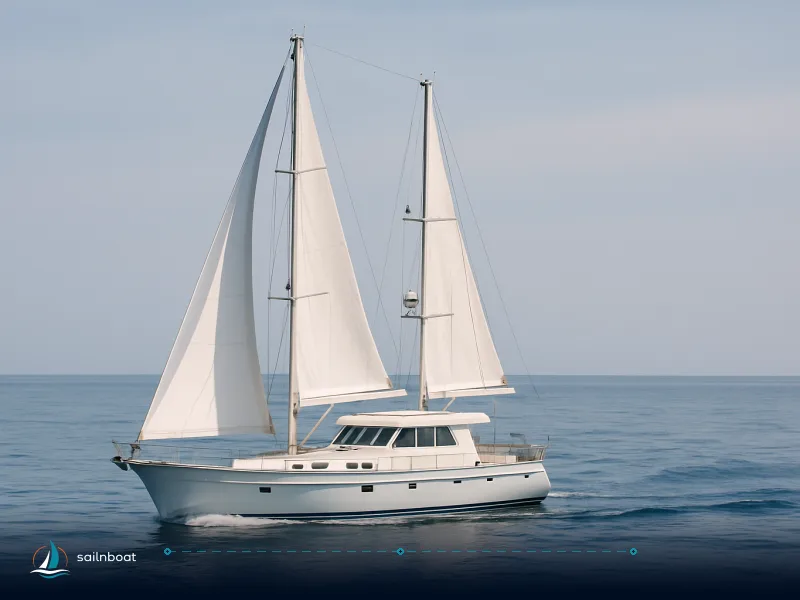
Sailing-yacht maintenance shifts attention to sails, standing and running rigging, winches and deck hardware, plus the engine and systems used for motoring. Sail replacement and rigging work are periodic but can be costly; winches and sail-handling systems require frequent attention in a commercial charter fleet. The key difference is that the primary wear items on a sailing yacht are sail- and rig-related rather than the large continuous-hour engine work typical of motor yachts.
Operational implication: talk to the base about their maintenance schedule and what they check at handover (engine hours, rig condition, sail age, service records). That tells you what kind of downtime and contingency the operator plans for.
Experience and Skill Requirements
Sailing Skills for Sailing Yachts
Bareboat sailing charters commonly require documented experience or an accepted qualification (many Mediterranean bases request an ICC or equivalent and a recent sailing CV); where you lack that, hire a skipper for the week. Sailing requires active sail handling, watch-keeping, an understanding of heel and weather effects, and more deliberate passage planning around wind windows. If you want to helm and trim sails, expect to be hands-on — that is part of the direct experience sailing yachts deliver.
Accessibility of Motor Yachts
Motor yachts are typically easier for novices to operate in the sense that propulsion is engine-driven and manoeuvres are familiar to any competent driver of powered craft; nevertheless, modern systems (twin engines, bow/stern thrusters, dynamic positioning on larger boats) still have a learning curve. If your group prefers minimal active watch-keeping, a motor yacht with a small professional crew or a hired skipper will give the most relaxed experience.
Decision trade-off: choose a sailing yacht if you want the authentic sail-handling and are willing to accept slower transit times; choose a motor yacht if you prioritise turnkey ease and speed.
Environmental Impact Considerations
Motor Yachts
Operationally, motor yachts generate significantly higher fuel consumption and therefore higher CO₂ and local pollutant emissions per hour underway than sailing yachts — particularly on larger or higher-speed motor yachts. In published comparisons and life-cycle considerations, operational energy use dominates the carbon footprint for motor yachts, and studies often show motor-driven yachts produce substantially higher operational emissions. For longer charters, fuel use and generator hours drive the majority of that footprint.
Sailing Yachts
Sailing yachts reduce operational emissions because wind provides primary propulsion; the engine is usually used for manoeuvring, auxiliary power and in calm conditions, so per-hour fuel consumption is much lower. That said, lifecycle factors (materials for masts, keels, hull construction) and the use of generators or fossil-fuel-based tenders can affect total impact — but for ordinary cruising use, sailing tends to be the lower-emissions choice.
Practical steps to reduce footprint on any charter:
- Minimise high-speed transits on motor yachts; plan sensible legs to reduce hours underway.
- Run generators sparingly: use battery capacity and shore power where practical.
- Choose yachts with energy-efficient systems (LEDs, efficient watermakers, solar panels) and discuss green provisioning with the charter company.
Making the Choice: a short checklist
- Itinerary urgency (multiple same-day hops, long repositioning legs)? Pick a motor yacht.
- Budget sensitivity on week cost and fuel? Lean to a sailing yacht.
- Group size and comfort expectations (private cabins, A/C, expansive saloon)? Motor yachts generally give more volume.
- Desire to actively sail and accept lower cruising speeds? Choose a sailing yacht.
- Concern about emissions? Sailing charters generally have a smaller operational carbon footprint.
If you’re still undecided, ask the broker these concrete questions for each quoted boat: current cruise speed and corresponding L/h fuel burn; typical daily hours underway on the suggested itinerary; age/condition of sails and rigging (for sailboats) or last major engine service (for motor yachts); and an APA fuel estimate. Those numbers give you the real cost and environmental picture for your actual trip.
Table: Decision quick-reference
| Decision factor | When to choose motor yacht | When to choose sailing yacht |
|---|---|---|
| Speed & range | You need fast transits and many miles in limited days. | You prefer relaxed legs and don’t mind slower passages. |
| Weekly charter cost | Accept higher base rate and larger fuel line item. | Lower base fee and small fuel costs for typical cruising. |
| Onboard comfort | Prefer larger cabins, hotel-style systems and A/C capacity. | Prefer active cockpit, sail handling and simpler interiors. |
| Skill required | Easier to operate with basic powered-boat skills. | Requires sailing skills or a hired skipper; more hands-on. |
| Environmental impact | Higher operational emissions per hour. | Lower operational emissions; sails provide primary propulsion. |
Final note The correct answer to motor yacht vs sailing yacht is not absolute — it’s a trade-off you make for speed, cost, space and the kind of week you want. Use the concrete numbers above when comparing quotes, insist on the yacht’s real cruise burn and speed figures, and if you lack recent sailing experience, budget for a skipper so you can enjoy the week without risk.
Assess your charter needs and choose the yacht that aligns with your preferences.
Frequently Asked Questions
Motor yachts typically cruise in the 18–25 knot band (planing and semi-displacement types may be faster), while cruising sailing yachts commonly average about 6–8 knots under sail; planning should use the lower end for passage time estimates.
Motor yachts commonly burn on the order of 20–80 litres of diesel per hour depending on size and speed; sailing yachts use only a few litres per hour when motoring (commonly 3–5 L/h during harbour manoeuvres or calm spells), so fuel for a sailing charter is usually a small line item.
A 40 ft motor yacht commonly charters for noticeably more than an equivalent-length sailboat; typical advertised weekly ranges for 40 ft examples are roughly €4,000–€12,000 for motor yachts and about €2,500–€5,000 for 40 ft sailing yachts, though region, season and inclusions (crew, APA, VAT) change the numbers.
Motor yachts require routine engine, gearbox and generator servicing plus systems upkeep (cooling, fuel, hydraulics); sailing yachts need regular sail, standing and running-rigging inspection and winch servicing — the costs are different in kind rather than identical in scale.
Bareboat sailing charters commonly expect a skipper qualification or demonstrated experience (many companies ask for an ICC or equivalent and recent logbook entries); hire a professional skipper if your crew lacks recent offshore or local-regulation experience.
Motor yachts typically offer greater interior volume for the same length (wider beam and dedicated engine spaces) and more hotel-like amenities; sailing yachts trade some interior volume for open deck and cockpit space and the active experience of sailing.
Operationally, sailing yachts have a lower emissions footprint because wind provides most propulsion; motor yachts burn far more fuel per hour and contribute higher CO₂ and local pollutants, though lifecycle impacts (materials, construction) also influence the total footprint.
Written by
Sailnboat Editorial
The Sailnboat editorial desk covers yacht and boat chartering worldwide — routes, bases, seasons, boat types, paperwork and the practical costs that decide a trip. We are a charter marketplace, not a boat owner or a local agency: what we sell is judgement and support, so our guides are written to help you make a decision, not to sell you a specific boat. Every guide is checked against live operator and marina data before it goes out.
Fact-checked against live operator and marina data, and published under our editorial standards. Last reviewed: .