Best Shallow Draft Boats for Charterers: Access Sandbars & Lagoons
A practical guide to choosing the best shallow draft boats for charterers — hull types, propulsion, ideal draft ranges, anchoring techniques and charter-ready models.

If you want to reach sandbars, lagoons and skinny harbors on charter, pick a boat whose running draft is smaller than the shallowest water you intend to enter and that gives you margin for tide and load; the best shallow draft boats for chartering are flats skiffs, purpose-built bay boats and a subset of shoal‑draft cats and monohulls — each trades absolute skinniness for comfort, range and redundancy.
Understanding Shallow Draft Boats
A shallow draft boat is any hull whose lowest underwater point (keel, hull, or drive) sits close to the waterline, allowing operation in limited depth. For charterers that means two practical measures: the static draft (how deep the keel or lower unit sits below the waterline when the boat is at rest and loaded) and the dynamic draft (which may increase when the boat is moving due to squat effects). For shallow‑water work you must plan for running draft — add passengers, fuel and provisions, and include tide range in your margin.
Why draft matters for charterers
- Clearance: A boat that draws 0.5 m cannot reliably run in a 0.4 m channel at any tide. Always compare charted depth, local tide tables and your boat’s loaded draft.
- Damage and recovery: grounding a lightweight skiff is normally benign; grounding a larger monohull or yacht risks hull damage and complex salvage.
- Access vs comfort trade‑off: the shallowest boats are typically open flats skiffs with minimal creature comforts; if you want berths and heads you’ll accept deeper drafts.
Practical note on numbers and margins
- When I state draft numbers below I use manufacturer specs and recent dealer listings where available; where manufacturers don’t publish a single figure I give an operational range based on typical loaded/unloaded states and industry listings. See model citations for exact source figures.
Comparison of Hull Types
The hull family you choose is the single biggest determinant of where you can go. The table below gives typical draft ranges, the operational strengths for charter use and primary trade‑offs.
| Hull type | Typical running draft (meters) | Strengths for charterers | Trade‑offs |
|---|---|---|---|
| Flats skiffs / poling skiffs | ~0.12–0.30 m (5–12 in). Manufacturer examples as low as 0.13–0.25 m. | Absolute shallow access, easiest to pole or push in inches of water, very light for trailering | Minimal shelter/overnight facilities; limited range and seakeeping |
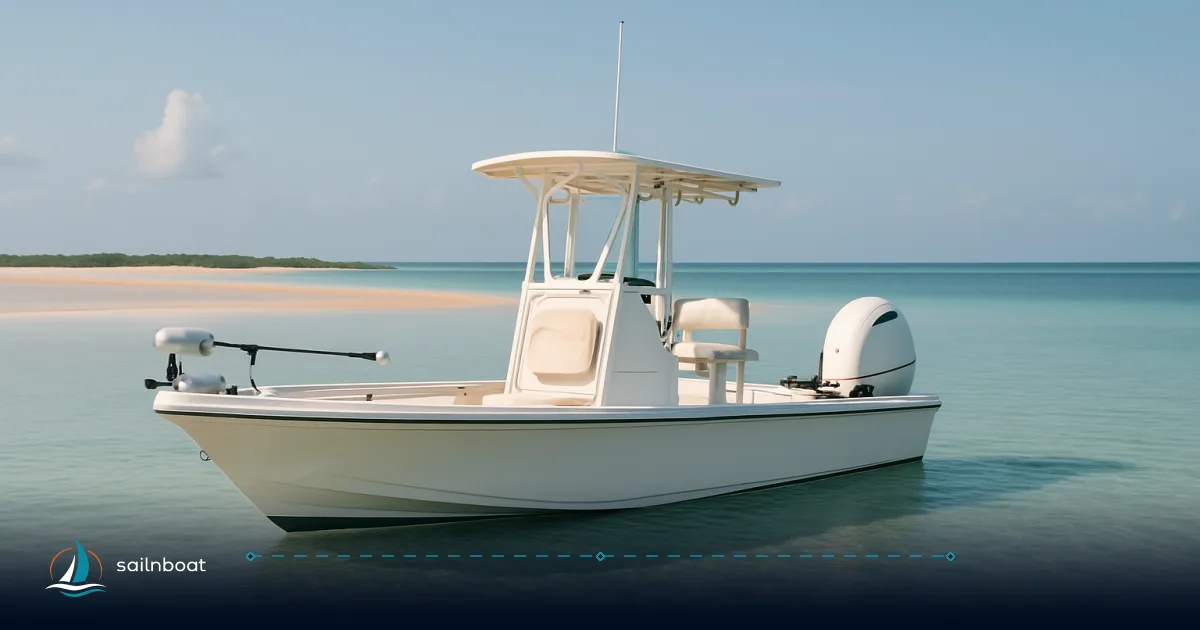
| Bay boats / shallow center consoles | ~0.28–0.45 m (11–18 in). Many bay models list min drafts in the 0.28–0.36 m band. | Best balance of deck space, comfort and shallow access; commonly available for charter | Slightly deeper than skiffs; can be wind‑sensitive when light |
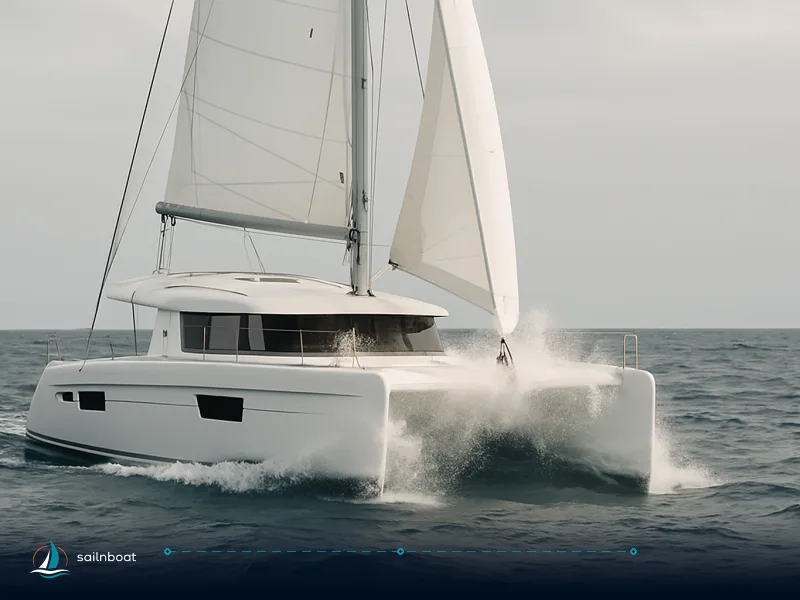
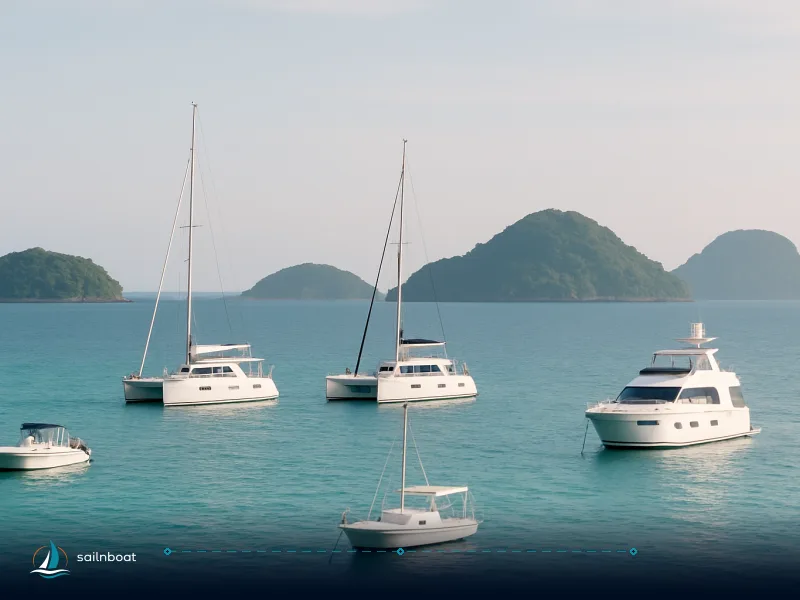
| Small catamarans (power & sailing) | ~0.5–1.3 m (0.5 m for small flat‑cat power designs; 1.0–1.3 m for cruising sailing cats). Example cruising cats ≈1.2–1.3 m. | Excellent stability at rest, can anchor very close to beaches; good charter accommodation on sailing cats | Wider beam (berthing limits), maneuvering in tight marinas, variable bridge clearance |
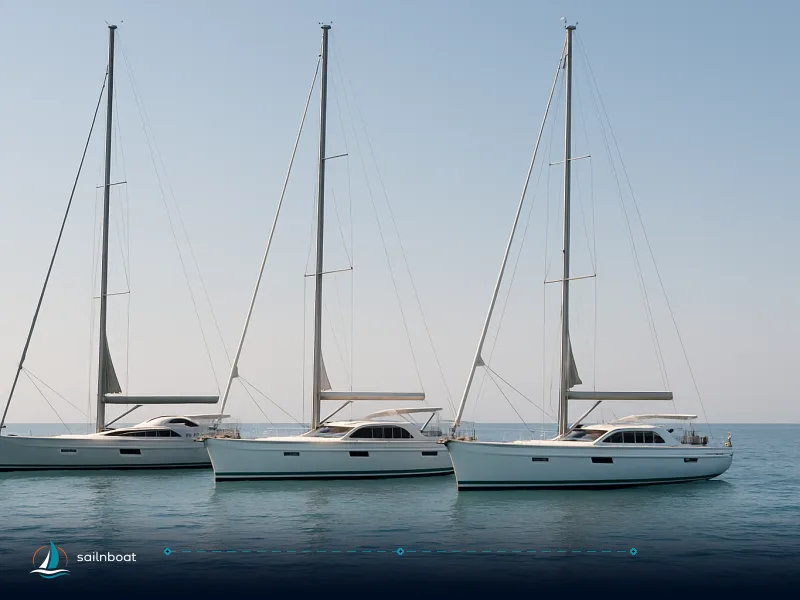
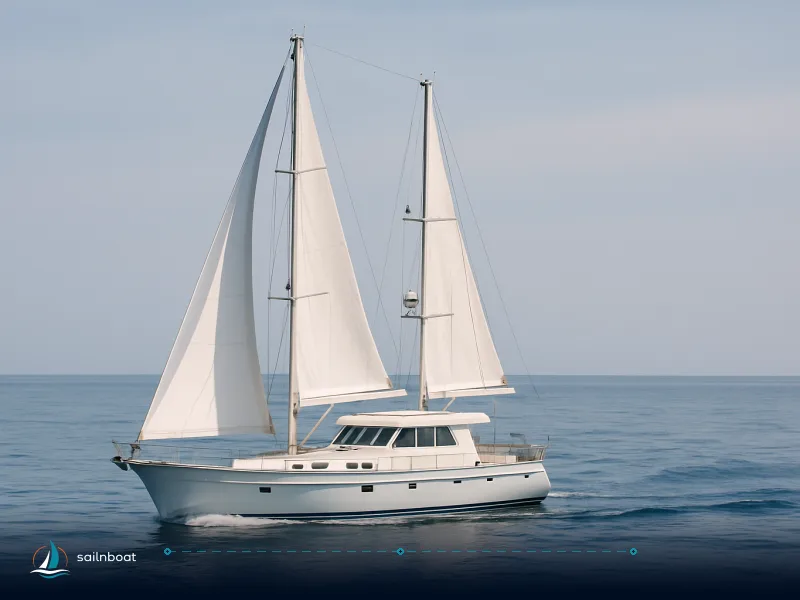
| Shoal‑keel monohulls | ~1.0–1.6 m (modern shoal keels commonly 1.2–1.6 m). Examples: shoal options around 1.2–1.6 m. | Full cruising comforts on yachts, predictable handling, common in flotilla/charter fleets | Deeper than flats/bays — won’t reach skinny lagoons or sandbars |
Key takeaways:
- If your primary mission is poling and walking onto bars, flats skiffs and Beavertail/Hewes style technical skiffs are unmatched.
- If you want a dayboat for family or multi‑person charters with reasonable skinny‑water access, a bay boat (Yellowfin, Xpress, Sportsman, Scout) is the practical sweet spot.
- For overnight charter with some shallow access (beach anchoring, protected lagoons), look at small power cats or sailing cats with shoal keels — but expect drafts above ~1 m on most cruiser cats.
Propulsion Systems for Shallow Waters
Propulsion determines how you negotiate thin water, how you recover from grounding and how repairable your drive is in remote anchorages.
Outboard motors
- Advantage: simplest shallow‑water operation. You can tilt, trim or run up on jackplates to reduce the lower unit exposure; many small outboards feature explicit "shallow water" operating guidance in their manuals. That makes outboard boats the default choice for charter in skinny grounds.
- Operational note: when you raise the lower unit, watch intake cooling and avoid overheating or ventilation — manufacturer manuals emphasise correct trim/tilt angles. Use a jackplate to change running height while underway.
- Typical running draft with an outboard (hull‑dependent): Flats skiffs and bay boats with an outboard often list min drafts in the 0.12–0.36 m band based on hull form and motor set height.
Inboards (shaft drive) and pod drives
- Inboards usually expose a propeller and shaft below the hull; as a result they need more depth. They are common on larger yachts and many charter monohulls and motor yachts — not ideal for sandbar access.
- SailDrive installations sit lower and typically increase draft requirements versus outboard alternatives.
Jet propulsion (waterjets)
- Advantage: no exposed propeller; the intake is flush and the jet is far less likely to foul or be damaged by shallow bottoms — good for surf, mud and debris‑prone runs. Wikipedia and industry material note jets’ shallow‑water strengths (used widely in commercial shallow‑draft craft and specialized tenders).
- Trade‑offs: reduced low‑speed efficiency compared with propellers, higher fuel burn in some regimes and higher maintenance cost; jet drivetrains can still require a minimum inflow depth depending on intake design.
- Practical rule: jets are excellent where you need to run shallow and fast, but check the maker’s recommended minimum intake depth for the installed model and fit skeg/protection as needed.
Electric pods and surface drives
- Emerging on some shallow‑water power cats and tenders; they lower draft in some installations but are manufacturer‑specific — check installation guidance.
Which to choose for charter
- For charter areas where sandbars and poling flats are the priority, choose outboards with jackplates or purpose‑built jet‑driven craft; for cruising where offshore hops and overnight comfort matter, accept an inboard/pod on a shoal‑keel yacht.
Selecting the Right Draft Depth
What draft will actually get you to a sandbar or skinny harbor? Use these operational targets and the reasoning behind them.
Practical draft bands (operational guidance)
- Ultra‑skinny poling and tailing: aim for a running draft under ~0.2–0.3 m (5–10 in) — flats skiffs like the Beavertail Vengeance and Hewes Redfisher occupy this band.
- Sandbar hopping, beaching at lunch: a running draft up to ~0.5 m will give you wide options in inshore sand and sheltered lagoons if you time tides correctly.
- Narrow harbors and marinas with shoal entries: many charter catamarans with draft ~1.0–1.3 m can access protected anchorages; shoal‑keel monohulls commonly need ~1.2–1.6 m.
Factors that alter your real draft
- Load: people, water, fuel and drop anchor gear increase draft; a 20–30% load increase on a small vessel notably raises running draft.
- Trim: heavy bow or stern weight changes how the hull sits — monitor on departure and after loading.
- Tides & water levels: always plan with lowest expected water (lowest astronomical tide or predicted low tide) and add a safety margin — tide range may swamp your theoretical clearance.
- Propeller and gear position: raising a tilted outboard reduces lower‑unit depth but may introduce ventilation if trimmed too high.
Rule of thumb: never run where charted depth minus predicted low tide is less than your expected loaded draft plus a safety margin for squat and uncharted shoals.
Anchoring Techniques and Grounding Mitigation
Anchoring in shallow areas is different from deep‑water anchoring: you have less scope, different holding ground and often changing tidal range.
Anchor types and selection
- Sand/mud: light fluke/Danforth‑style anchors or modern roll‑bar anchors (Spade, Rocna, Mantus) set quickly in sand and mud and are easy to retrieve; they are the practical choice for shallow sandbars.
- Mixed/weed/grass: plough and modern roll‑bar shaped anchors provide better consistent holding across weeds and mixed bottoms.
- Kedge or folding grapnel: useful as a secondary, lightweight anchor for short‑term holds and retrieval from skinny water (but grapnels have lower holding in very soft mud).
Rode and scope in shallow water
- Classical scope rules (5:1–7:1) are harder to follow in skinny anchors because you’ll run out of swing room. In shallow anchorages trade off scope for better holding ground and use a stern line to limit drift — tighten the rode and back it up with a kedge or shore tie if needed. The general anchoring literature recommends 5:1 as a fair‑weather minimum and 7:1 for overnight, but in crowded shallows adapt to local conditions.
Practical techniques to avoid and recover from a grounding
- Sounding and approach: use a forward‑looking depth alarm and slow approach off plane. Regularly check your sounder when you’re near sandbars.
- Use a pole or crew wading: on skiffs it’s common to pole or push the boat when depth drops below running draft.
- If you ground: stop the engine, assess hull damage visually, lighten the boat (move fuel/gear/people), and attempt to reverse off on a rising tide; deploy kedge to pull off if necessary. For larger craft, call local assistance if hull integrity is suspected compromised.
Equipment recommendations
- Low‑profile shallow anchor (fluke or modern roll‑bar) sized to boat weight.
- Chain‑toe short length (1–2 m) for abrasion resistance into the fluke and nylon rode for shock absorption.
- A secondary kedge (lightweight) and stern line for quick redundancy.
- Reliable depth sounder with shallow‑water sensitivity and a low‑water alarm.
Recommended Charter Models for Shallow Navigation
Below are charter‑useable models and the most relevant specs I could verify from manufacturer/dealer material. I give measured draft values where published; where a single exact number isn’t available I provide an operational range and note the source.
| Model | Type | Published / reported draft (meters) | Propulsion | Why charterers pick it |
|---|---|---|---|---|
| Hewes Redfisher 18 | Flats skiff | Draft ~0.25 m (10 in) per manufacturer spec. | Outboard | Ultra‑shallow poling, light weight and widely used for backcountry charters and guide boats. |
| Beavertail Vengeance (18) | Technical flats skiff | Draft reported ≈0.18 m (7 in) (manufacturer listings show 7" draft). | Outboard | Designed for the skinniest water and poling; very shallow running and low wake. |
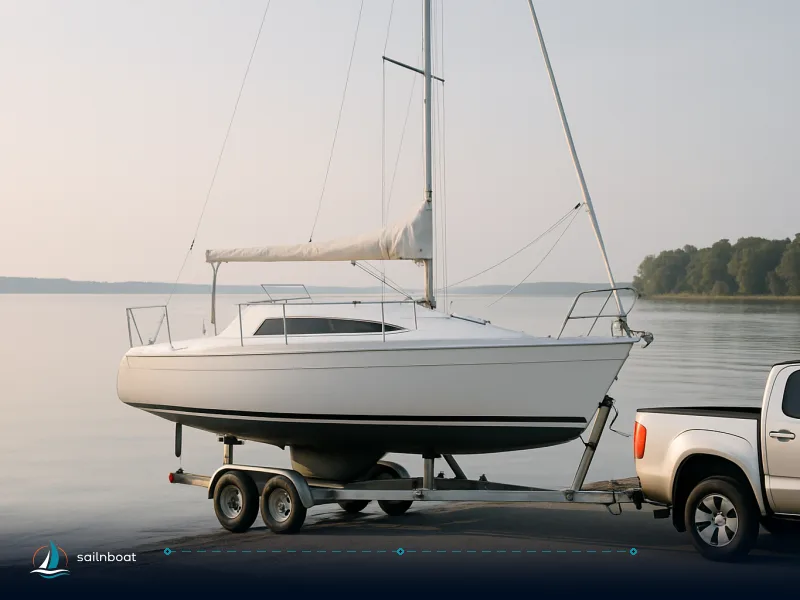
| Ranger RT188 | Aluminum bass/bay style | Published references list draft ≈0.30–0.31 m (1'0") in spec guides. | Outboard | Simple, lightweight and trailerable — a practical shallow‑water all‑rounder. |
| Xpress H22B Hyper‑Lift | Bay boat | Minimum draft listings ≈0.28 m (0'11") on spec listings. | Outboard | Hyper‑Lift hull designed to run very shallow while retaining a dry ride and deck space. |
| Yellowfin 24 Carbon Elite | Bay/performance | Draft reported ~0.36 m (14 in) in reviews/spec pages. | Outboard | Carbon construction for light weight, high speed and relatively shallow running. |
| Scout 231 XSS / 251 XSS | Bay center consoles | Scout listings show min drafts around 0.30–0.33 m (1.0–1.1 ft). | Outboard | Premium fit, comfortable for guests and capable in shallow inshore charters. |
| Sportsman Masters 247 / 267 series | Bay boats | Dealer spec pages list drafts commonly in the ~0.35–0.45 m band (247 noted at 14 in / 0.355 m). | Outboard | Charter‑friendly packages with reliable shallow performance and deck space. |
| Shoalwater 20' Cat | Small power cat | Manufacturer/dealer listings describe “shallow draft” cat hulls; specific draft varies by outfit — small cat design intent is shallow‑water flats capability (see dealer spec pages). | Outboard / single engine | Catamaran stability at rest with shallow sponsons for skinny‑water access. |
| War Eagle 754 series | Jon / hunting boat | Manufacturer and dealer descriptions advertise backwater performance; specific draft depends on configuration — reports and buyer guides reference very shallow running (single‑digit inches in some builds). | Outboard / mud motor compatible | Rugged, configurable and designed to get into marshes and shallow creeks. |
How to use this table for charter decisions
- Match the model’s published minimum running draft to the shallowest depth you must clear at lowest tides, then add a safety margin for load and squat.
- For family charters want comfort: a Scout or Sportsman 247/267 gives shallow access with decks and seating. For guide‑style skiff charters pick Hewes or Beavertail models.
Practical Checklist for Charterers Booking a Shallow‑Water Boat
Before you commit to a base or model, run this checklist with the charter operator:
- Ask the operator for the boat’s loaded running draft (with typical charter load) and whether the engine is on a jackplate or has a shallow‑water drive. If the operator won’t or can’t provide a realistic running draft, treat the listing with caution.
- Confirm the propulsion type and the operator’s recommended minimum operating depth for that installation.
- Check local tide tables and marina approach depths for your intended itinerary dates (charter bases will usually advise on tide windows).
- Check the anchor inventory and ask for a lightweight secondary kedge and a second rode or stern line for shallow anchoring.
- Choose a model with an easily‑repairable lower unit or clear local dealer support if your itinerary goes remote.
Final trade‑offs and what to book
- If you need absolute skinniest access and short outings from a base, a flats skiff or technical poling boat is the right call—book a day or half‑day charter and expect minimal creature comforts.
- If you want to combine sandbar stops with a comfortable day on the water, book a bay boat (Scout, Yellowfin, Sportsman) — they give the best operational mix.
- If you want overnight comfort plus reasonable shallow anchoring choices, a small power cat or shoal‑keel charter catamaran gets you close to beaches but not into the skinniest creeks — check draft against tide carefully.
Frequently Asked Questions
Flats skiffs are ultra‑shallow running (often 5–10 in / ~0.13–0.25 m) and optimised for poling and sight‑fishing; bay boats are larger, more versatile and usually draw a little more (commonly ~11–18 in / ~0.28–0.45 m) but give better range, deck space and load capacity.
Outboards are the most common shallow‑water propulsion—trim/tilt and jackplates let you raise the lower unit in skinny water, but you must watch intake cooling and avoid cavitation; manufacturers explicitly document shallow‑water operating procedures.
For routine sandbar hopping and lagoons, aim for a running draft under ~0.5 m (0.3–0.5 m gives the best margin); for poling onto skinny flats you want single‑digit inches (~0.1–0.2 m). Always factor tide, load and local seabed.
Use an anchor type matched to the bottom (fluke/Danforth for sand/mud; plough or modern roll‑bar anchors for mixed bottoms), carry a secondary kedge, and set with appropriate scope — in very shallow water keep scope conservative for swing room but back it up with a stern line or second anchor if winds or tidal range increase.
Top options include technical flats skiffs (Hewes Redfisher 18, Beavertail Vengeance), shallow bay boats (Xpress H22B, Yellowfin 24 CE, Sportsman Masters series), shallow catamarans (Shoalwater 20 Cat, small charter cats) and trailerable bay center consoles like Scout 231/251 XSS — pick by the draft you need and the propulsion fit for your region.
Written by
Sailnboat Editorial
The Sailnboat editorial desk covers yacht and boat chartering worldwide — routes, bases, seasons, boat types, paperwork and the practical costs that decide a trip. We are a charter marketplace, not a boat owner or a local agency: what we sell is judgement and support, so our guides are written to help you make a decision, not to sell you a specific boat. Every guide is checked against live operator and marina data before it goes out.
Fact-checked against live operator and marina data, and published under our editorial standards. Last reviewed: .