Best Boats for Island Hopping: Charter Types Explained
A practical comparison of the best boats for island hopping — which boat type gives you the most islands, where each shines, recommended models and the operational trade-offs you must plan for.

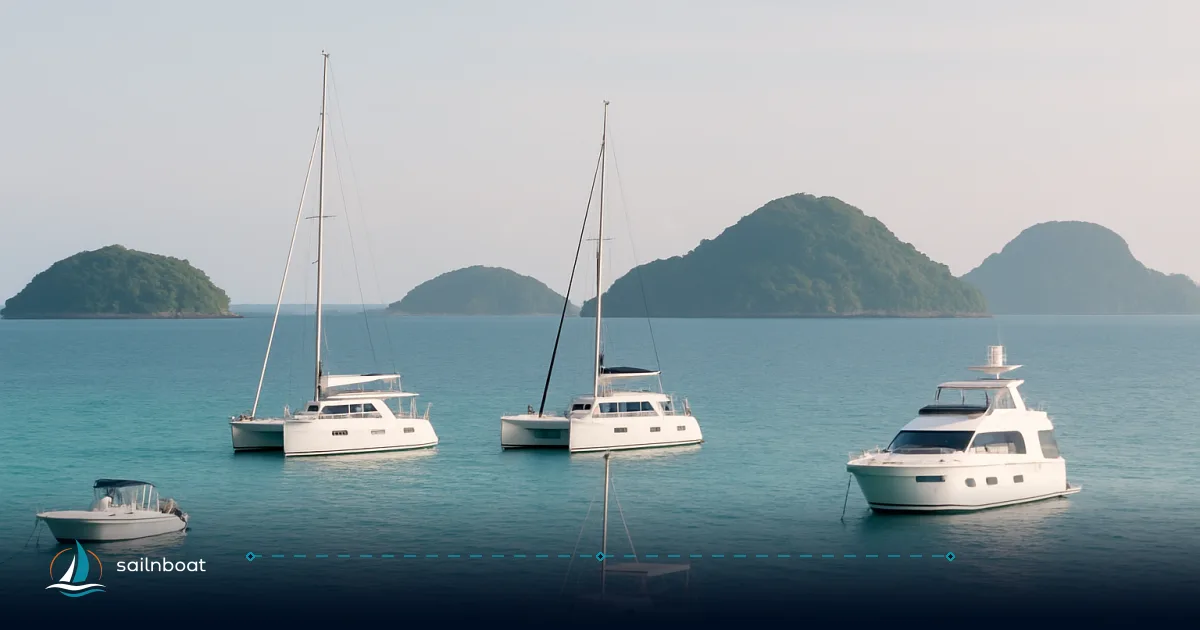
Island-hopping is about maximizing your access to anchorages, minimizing wasted transit time, and matching your boat’s capabilities to the realities of the archipelago. The best boats for island hopping are not just those with the most cabins or the sleekest lines—they’re the ones whose draft, speed, and interior layout suit the route you want to run and the crew you bring. If your group wants to slip into shallow sandbars and reach isolated coves, a catamaran or a shallow-draft monohull will open up more options. If you need to cover longer distances between islands, a small motor yacht or a power catamaran will let you keep to a schedule. Below, you’ll find a detailed comparison of the main charter types, recommended models with calibrated specs, and the practical trade-offs that matter for real-world island-hopping.
Understanding Island Hopping: Key Boat Types
Short legs, frequent anchorages, and a new harbour every night are the reality of most island-hopping itineraries. Three factors will shape your experience: draft (which controls where you can anchor), speed (how many islands you can visit in a day), and the interior layout (how well your crew can live together when you’re moving every 1–2 nights). Here’s how each type stacks up:
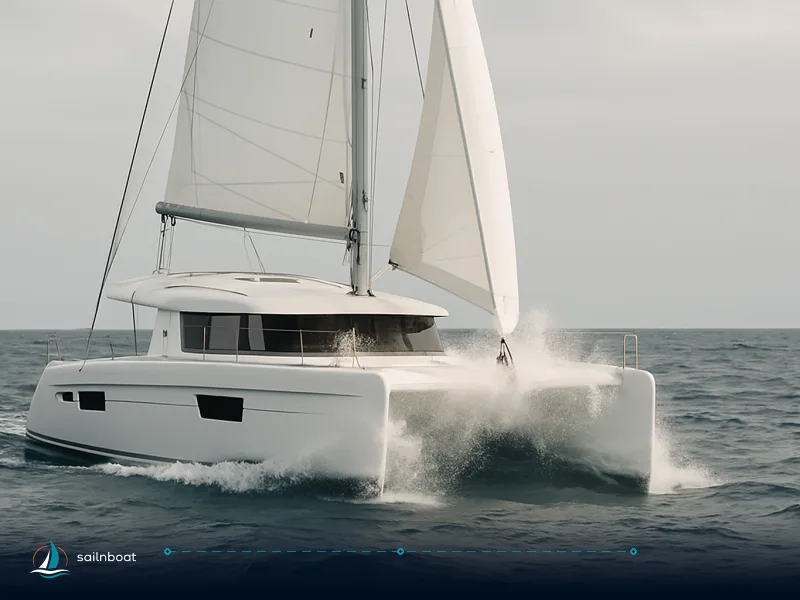
Catamarans
- Why island-hoppers pick them: Catamarans offer a broad beam, generous cockpit and saloon areas, and the shallowest draft among charter yachts. Most charter cats in the 38–45 ft range draw 1.1–1.4 m, regularly letting you anchor inside reefs and sandbanks that are off-limits to a 2.0 m monohull. This gives you more overnight options and safer havens in shifting weather.
- Sailing characteristics: Stable and level at anchor and under sail. In short, steep seas or exposed channels, bridgedeck slamming can be an issue, but most modern designs handle moderate conditions comfortably.
- Trade-offs: Higher charter rates for the same LOA, wider marina berths (with corresponding fees), and generally less upwind performance than a similarly-sized monohull.
Small Motor Yachts
- Why they work for island-hopping: Speed and direct routing—if you want to visit more islands in a limited time, a small motor yacht can cruise at 15–22 knots where a sailing yacht might manage 6–8. Their enclosed accommodations and robust onboard systems make longer hops and less predictable weather windows practical.
- Trade-offs: Higher fuel costs and a need for deeper berths. Not all marinas or town quays are set up for powerboats, so check access at each stop. Fuel consumption can quickly become a major budget item on itineraries with long transits.
Power Catamarans
- Why consider them: Power cats combine the shallow draft and volume of a sailing cat with the point-to-point speed of a motor yacht. Many models can cruise at 15–18 knots and draw under 1 m, making them ideal for archipelagos with thin water and longer legs.
- Trade-offs: Higher charter rates and, in some regions, limited availability compared to sailing cats. Fuel use is significant but often more efficient than monohull motor yachts of similar LOA.
Motorsailers
- Why consider them: Flexible propulsion lets you stick to a schedule under power or take advantage of wind when it’s favourable. Motorsailers (such as the Nauticat or Fisher series) offer internal volume and comfort for extended trips, and they’re often easier to handle short-handed than larger pure sailboats.
- Trade-offs: Heavier hulls and sometimes higher draft, especially on fixed-keel versions. Performance is always a compromise between sail and power.
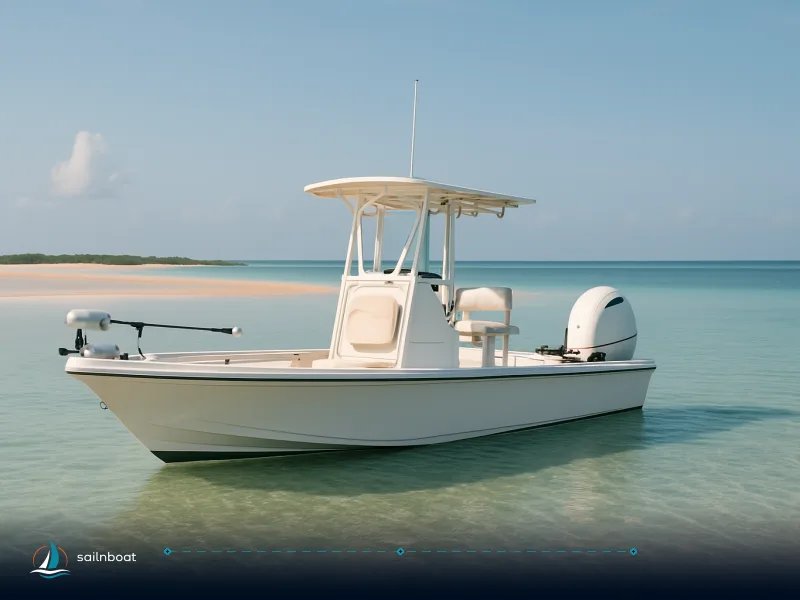
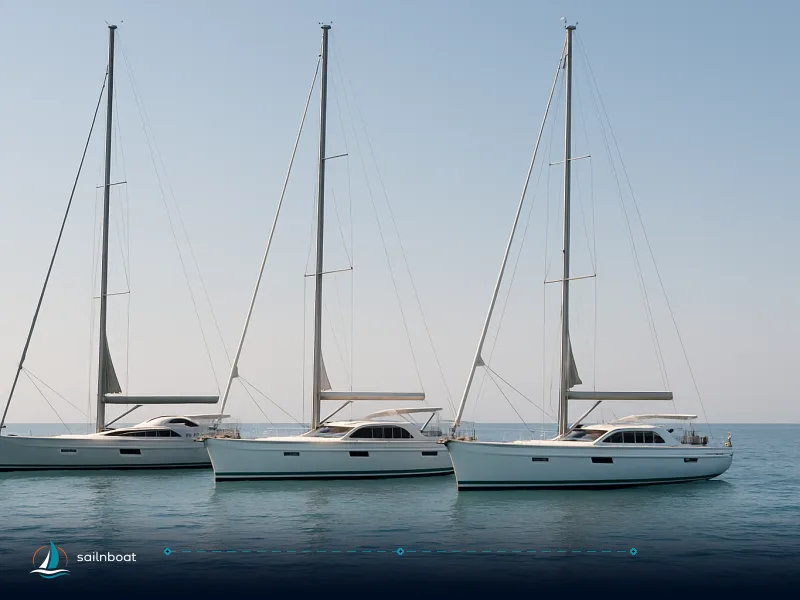
Shallow-Draft Monohulls
- Where they fit: Centreboard or shoal-keel monohulls (like the Beneteau 331 with its shoal-draft option) are the budget route to reach narrow coves and tidal flats, while keeping the handling many sailors prefer. Some models can reduce draft to around 1.0–1.1 m, opening up anchorages off-limits to most fixed-keel yachts.
- Trade-offs: Less interior volume and more heel at anchor than a catamaran. Provisioning and storage are tighter, and social space is limited compared to a beamy cat.
Recommended Boat Models for Island Hopping
These models are chosen for their fit with real-world island-hopping: shallow draft, sensible layouts, and widespread charter availability. All specs are calibrated based on recent technical sources and actual fleet listings. Where manufacturer or fleet data is not definitive, a range or indicative value is given.
| Type | Model | LOA (approx) | Draft (m) | Typical Cruise Speed (kn) | Why it fits island-hopping |
|---|---|---|---|---|---|
| Sailing cat | Lagoon 42 | ~12.8 m | 1.25–1.35 | 7–9 (under sail) | Shallow draft for bays, large cockpit/saloon, common in Med and Caribbean fleets. |
| Sailing cat | Leopard 44 | ~13.0 m | 1.27–1.35 | 7–9 | Spacious cabins, reliable, strong bridgedeck clearance. |
| Power cat | PDQ 36 Powercat | ~11.0 m | Under 1 m | 10–16 | Shallow draft among power cats, efficient, often used in Bahamas or Florida Keys. |
| Small mono | Beneteau Oceanis 331 | ~10.3 m | 1.01 (shoal)–1.60 | 6–7 | Shoal/lifting keel options, economical, widely available in Med. |
| Small mono | Bavaria Cruiser 32 | ~9.7–10.0 m | 1.5 | 6–7 | Balanced comfort, common in European charters. |
| Motorsailer | Nauticat 33 | ~10.1 m | 1.5 | 6–7 | True motorsailer with pilothouse, comfortable for extended trips and flexible propulsion. |
| Sailing cat | Fountaine Pajot Lucia 40 | ~11.7 m | ~1.2 | 7–9 | Strong charter presence, volume, and shallow access. |
Note: Model specs reflect typical charter configurations. Draft can vary by year and build; always confirm with your operator for the exact boat assigned.
Availability: Lagoon, Leopard, and Fountaine Pajot cats are staples in most Med and Caribbean fleets. PDQ 36 Powercats are especially popular for Bahamas and Florida Keys, but less so in the Med. The Beneteau Oceanis 331 and Bavaria Cruiser 32 are frequently found in Mediterranean bases; Jeanneau DS models are available in both Med and Atlantic charter fleets.
Cabin Layouts for Extended Exploration
The right cabin layout can make or break a multi-stop island-hopping trip. Here’s what works best:
Open Layouts
- Open-plan or saloon-forward designs maximize communal space for provisioning, drying gear, and downtime between hops.
- Catamarans usually offer a forward saloon and aft cabins, making them ideal for groups focused on social time.
Private Cabins
- Two- and three-cabin layouts provide privacy for longer itineraries. On catamarans, “owner’s versions” offer a larger galley and better storage.
- For charters with multiple couples or families, insist on true double cabins with separate heads—many small boats have “double” berths best suited for children.
Convertible Spaces
- Drop-leaf tables, convertible settees, and fold-away navigation desks let you adapt the boat’s use as your needs change.
- Convertible layouts are especially helpful if your crew size changes mid-charter or you alternate between anchoring out and marina stays.
Tip: Always request deck-plan photos of the actual boat you’ll receive. Charter fleets often substitute layouts even within the same model.
Weather Windows and Seasonal Route Planning
Island-hopping success depends as much on timing as on boat choice. Here’s how to plan around weather and seasonal constraints:
Mediterranean
- High season (June–September): Expect steady breezes, warm temperatures, and crowded anchorages. The Meltemi (Aegean) or Mistral (Western Med) can bring strong winds—plan short legs or shelter days accordingly.
- Shoulder seasons (May, October): Fewer crowds, lower marina fees, but more variable weather and shorter daylight. Many bases close or reduce services outside these months.
Caribbean
- Peak season (December–April): Consistent trade winds (15–20 knots), predictable weather, and busy marinas. Mooring buoys can fill by midday.
- Hurricane season (June–November): Charter fleets often reduce operations or close entirely. Insurance exclusions may apply—always check with your operator.
North America (Bahamas, Florida Keys)
- Winter to spring: Best for stable weather and mild seas. Summer brings thunderstorms and risk of hurricanes.
- Local knowledge is key: Many shallow anchorages are only accessible at certain tides—confirm local tidal ranges and weather windows.
Planning advice: Always check the latest marine forecasts and talk to your charter base about recent weather patterns. Build margin into your schedule for weather delays; don’t plan on moving every day in areas with changeable conditions.
Region-Specific Anchorage and Environmental Rules
Different regions have their own regulations and restrictions on anchoring, waste, and marine protection. Here’s a summary table and key points:
| Region | Common Restrictions | Environmental Rules/Notes |
|---|---|---|
| Mediterranean | Anchoring banned in some marine parks; Posidonia seagrass protection zones | No-discharge rules in park areas; fines for anchoring on seagrass beds (e.g., Balearics, French Med) |
| Croatia | Mooring buoys in national parks (Kornati, Mljet) are mandatory; paid per night | Waste discharge banned in most national parks; pump-out options limited |
| Caribbean | Some islands prohibit anchoring outside marked areas due to coral conservation | No-discharge zones near reefs; strict waste rules in BVIs, USVIs |
| Bahamas/Keys | Many anchorages are tidal; some areas are no-anchor to protect coral | Discharge restrictions in parks; pump-outs available in main marinas |
Always check local notices to mariners and ask your base for the latest on protected areas, anchoring bans, and environmental rules.
Sample 4-Day Island-Hopping Itinerary (Cyclades, Greece)
A practical route helps illustrate trade-offs. Here’s a typical 4-day itinerary with boat recommendations:
| Day | Route (nm) | Recommended Boat Types | Notes & Rationale |
|---|---|---|---|
| 1 | Paros → Naxos (12) | Catamaran, shallow mono | Shallow anchorages in Naxos’ SW coves. |
| 2 | Naxos → Koufonisia (16) | Catamaran, power cat, motor yacht | Exposed channel; faster boats win if Meltemi rises. |
| 3 | Koufonisia → Schinoussa (7) | Any, but shoal draft ideal | Tight coves, few moorings—shallow draft pays off. |
| 4 | Schinoussa → Paros (19) | Motorsailer, power cat, motor yacht | Longer leg, flexibility for wind or calm. |
Trade-off reality: Catamarans and power cats let you anchor closer and access more coves; motor yachts cover longer legs quickly but need to plan fuel stops. Shallow-draft monos are a budget choice, but you’ll need to watch for crosswinds and tight anchoring space.
Harbor Access and Mooring Considerations
Mooring Options
- Common choices: free town quays, paid marina berths, private docks, reserveable mooring buoys, or private anchorages.
- In high season, buoys and visitor berths fill quickly—reserve marinas in advance. Expect to anchor out more often if you want to visit lesser-known spots.
Docking Fees (Regional Ranges)
- Mediterranean: For a 12–14 m yacht, expect €30–€80/night in standard marinas, rising to €80–€250+ in premium ports during peak season.
- Adriatic/Croatia: €40–€120/night for a 12 m berth in high season. National park buoys (Kornati, Mljet) are charged per boat/day.
- Caribbean: Mooring buoys typically run US$25–$55/night. Marinas with shore power and full services can be higher, especially in St. Martin, BVI, and USVI.
- North America: Municipal docks may be US$20–$50 per night, but full-service marinas in Florida Keys or Bahamas can range from US$60–$200+ per night depending on size, season, and amenities.
Fee planning: Always budget for higher rates in peak season and add a buffer for premium locations or last-minute changes.
Access Conditions
- Draft limits: Shallow-draft cats and lifting-keel monos can anchor close to shore; deep-keel boats may need to anchor farther out.
- Beam charges: Multihulls are often charged a premium in marinas (sometimes 1.5–2x monohull rates) due to their width.
Tip: Always check local harbour charts and depth plates for the latest access info. Don’t assume every marina can accommodate your boat’s beam or draft.
Safety Regulations and Compliance for Charters
Required Certificates and Charter Practice
- ICC: The International Certificate for Operators of Pleasure Craft is widely recognized in Europe, but not universal. It’s often required by charter companies in the Med; recognition varies by country.
- VHF/SRC: Many bases, especially in Croatia and Greece, require a VHF radio operator certificate in addition to a skipper’s licence. If missing, handover is often refused. Booking a professional skipper sidesteps this.
- Local variations: Each country—and sometimes each charter base—sets its own minimum documentation. The operator’s contract spells out what’s needed at check-in. Non-English or older licences may require certified translations.
Safety Equipment
- Charter boats must meet flag state and regional safety rules (lifejackets, flares, VHF, fire extinguishers, etc.). Your base will brief you at handover; always check lifejacket sizes for your crew, and verify expiry dates on pyrotechnics.
- Check if an EPIRB or PLB is provided or recommended for your area.
Insurance and Liability
- Charter insurance: Most operators require a security deposit, often in the €2,000–€4,000 range for a 40–45 ft boat, held by card imprint. Some offer a damage waiver (CDW) for an extra fee, but the required deposit and CDW terms vary by operator and country.
- APA (Advance Provisioning Allowance): Some luxury charters operate on an APA system—typically about 20–30% of the charter fee—to cover fuel, food, and mooring fees.
- Cross-border charters: Insurance coverage can change if you cross national borders—always confirm permitted cruising areas with your operator. For example, a boat chartered from Greece may not be insured for Turkish waters unless you request and receive written approval before departure.
- Documentation and claims: Missing required paperwork (licences, certificates) can affect how an insurance claim is handled and may shift liability to the charterer. Always clarify what is needed before departure and keep digital/physical copies onboard.
Provisioning and Onboard Maintenance
Provisioning Tips
- Duration and remoteness: Plan your provisioning for the number of days between ports with shops. In the Med, you’ll find stores in most towns; in the Caribbean or Bahamas, some islands have limited options—pre-order or arrange delivery when possible.
- Storage: Catamarans and larger monohulls offer better refrigeration and dry storage. Tight on space? Prioritize non-perishables and compact, high-calorie items.
- Water: Know your tank capacity. Many cats and large monos have watermakers, but check if it’s operational. Otherwise, refill at marinas or plan for jerrycan runs.
Onboard Maintenance
- Daily checks: Monitor engine oil, coolant, and bilges, especially on motor yachts or power cats.
- Waste: Pump-out facilities vary by region. In the Med, many marinas lack pump-out; in the Caribbean, regulations on waste discharge are stricter—plan accordingly.
- Spare gear: Carry spare lines, fenders, and basic tools; ask your base what’s included. If you’re doing longer hops, a portable air pump and patch kit for the tender are invaluable.
Accessibility for Families and Suitability for Children
- Catamarans: Best for families with young children—level decks, wide cockpits, and easy access to water. Some models have netting or railings to increase safety.
- Monohulls: More challenging for toddlers due to heel and less deck space, but older children often adapt quickly.
- Safety gear: Ask for child-sized lifejackets and consider bringing your own for best fit. Netting for lifelines is an option on request with some operators.
- Cabin privacy: For multiple families, choose layouts with separate heads and true double cabins.
Making Your Choice: Factors to Consider
Travel Distance and Daily Plan
- Short passages (1–3 hours): Catamarans and shallow-draft monos maximize accessible anchorages and save time getting ashore.
- Long transits: Motor yachts and power cats let you cover more ground daily, but fuel stops and costs add up.
Crew Experience
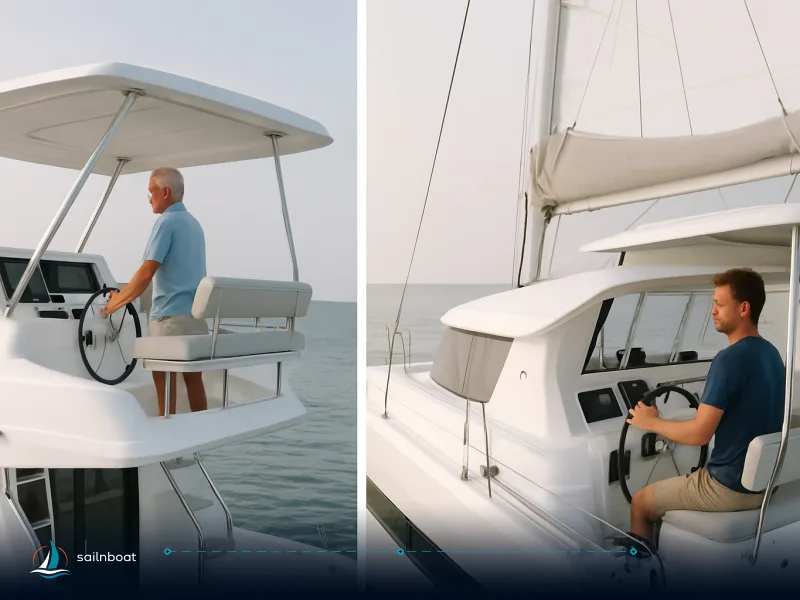
- Handling: Multihulls are stable but handle differently in close quarters. Motorsailers have more systems to learn. If crew is inexperienced or lacks required licences, hiring a local skipper is straightforward and affordable in most charter markets.
Budget Constraints
- Charter rates: Catamarans and power cats command a premium, especially in high season. Motor yachts add recurring fuel costs. Marina and mooring fees vary widely by region (see ranges above).
- Balance: Weigh up-front charter rates, fuel, and berth costs for your target region and season.
Decision Matrix
| Priority | If you want… | Best charter type |
|---|---|---|
| Maximum number of accessible anchorages | Reach shallow coves, sandbars, flats | Catamaran or shallow-draft monohull/centreboard |
| Fast island-to-island legs | Cover long distances quickly | Small motor yacht or fast power cat |
| Mixed wind/power reliability | Flexibility under sail and power | Motorsailer (e.g., Sun Odyssey 42 DS) |
| Lowest nightly marina cost | Avoid deep, expensive berths | Shallow-draft mono that can anchor out/town quays |
Practical Checklist Before You Book
- Confirm the exact draft (in metres) of your assigned hull and compare to worst-case harbour depths on your route.
- Ask for the boat’s tank capacities (fuel, water), generator/inverter details, and deck-plan photos.
- Clarify what licence, VHF certificate, and ID are needed at your base.
- Budget for high-season mooring/berth fees and allow for fuel if you’re considering a motor yacht.
- Request a written safety inventory and check expiry dates on flares and fire extinguishers at handover.
- Evaluate your route and crew skill honestly—the right boat for island-hopping is the one whose draft, range, and layout match your destinations and your crew’s expectations.
FAQs: Island-Hopping Charters
Can I island-hop without a skipper? Yes, if you and your crew meet the charter company’s requirements for licences and experience. In the Med, an ICC and VHF certificate are often needed. In the Caribbean, requirements may be less formal, but a sailing resume is usually requested. If in doubt, hiring a local skipper is easy and adds local knowledge.
What if my licence is not accepted at the base? If your licence is not in the accepted format or language, some bases may ask for an official translation or may not allow the handover. Always check documentation requirements well before departure and bring both digital and paper copies. Booking a skipper is a practical fallback if there’s any doubt.
How do I provision in remote areas? Plan your provisioning based on the number of days between reliable shops. In the Med, most towns have at least a minimarket. In the Bahamas or outlying Caribbean islands, options can be limited—arrange advance delivery or use the base’s provisioning service. Always carry a reserve of water and non-perishables.
Are there restrictions on where I can anchor? Yes, many regions have protected areas where anchoring is banned or restricted to mooring buoys (e.g., Posidonia zones in the Med, coral parks in the Caribbean). Fines for illegal anchoring can be steep. Your base will brief you, but always check local charts and notices.
How does cross-border chartering affect insurance and paperwork? Crossing into another country’s waters can change your insurance coverage and the legal requirements you need to meet. For example, a Greek-chartered boat may not be insured in Turkish waters without prior written approval. Always declare your intended cruising area and get confirmation in writing.
What’s included in the charter price—and what isn’t? Most charters include the boat, basic safety equipment, and standard linens. Not included: fuel, provisioning, marina/mooring fees, and sometimes outboard engines for tenders. Always ask for a detailed list of inclusions and extras.
Is island-hopping safe for children and families? Yes, with the right precautions. Catamarans are especially suitable due to level decks and wide spaces. Ask for child-sized lifejackets and consider requesting netting for safety. Cabin layout matters for privacy and comfort.
Ready to plan your island-hopping charter? If you want direct advice on which boat type fits your group, or need help confirming documentation and route details, contact Sailnboat for a tailored consultation. Our team can match you to the right fleet, clarify contract terms, and help you avoid the pitfalls that slow down a multi-island itinerary.
Frequently Asked Questions
Catamarans have a shallow draft (typically ~1.0–1.4 m), broad beam and level motion at anchor; monohulls usually draw deeper (~1.8–2.1 m), heel under sail and track better upwind—choose cats for anchorages and space, monos for upwind performance and lower initial charter cost.
Recommended models include Lagoon 42 and Leopard 44 (catamarans), PDQ 36 (shallow power cat), Beneteau 331 and Bavaria 32 (small monohulls), Jeanneau Sun Odyssey 42 DS and Manta 40 (motorsailer/bluewater hybrids), selected for draft, layout and charter availability.
A two‑cabin owner layout (cat or mono) for comfort and storage, or a three‑cabin with convertible saloon if you need flexible berths; on cats, aft-cabin owner versions free up saloon space and make provisioning easier.
Marina and mooring costs vary widely: in the Mediterranean expect visitor rates commonly €30–€150+ per night for a ~12–14 m yacht in high season; Caribbean visitor moorings and marinas commonly run lower per night but still vary by island and facility.
Carry basic SOLAS-like safety kit where applicable (lifejackets, flares, means of distress) and be prepared to present skipper competency (ICC or recognised national certificate) plus a VHF/SRC operator certificate in many Mediterranean bases.
Written by
Sailnboat Editorial
The Sailnboat editorial desk covers yacht and boat chartering worldwide — routes, bases, seasons, boat types, paperwork and the practical costs that decide a trip. We are a charter marketplace, not a boat owner or a local agency: what we sell is judgement and support, so our guides are written to help you make a decision, not to sell you a specific boat. Every guide is checked against live operator and marina data before it goes out.
Fact-checked against live operator and marina data, and published under our editorial standards. Last reviewed: .