Best Trailerable Yachts for Weekend Charters: A Practical Guide
Trailerable yachts cut charter costs and open new launch sites. This guide compares keel types, towing and berthing realities, and eight practical models for weekend rentals.

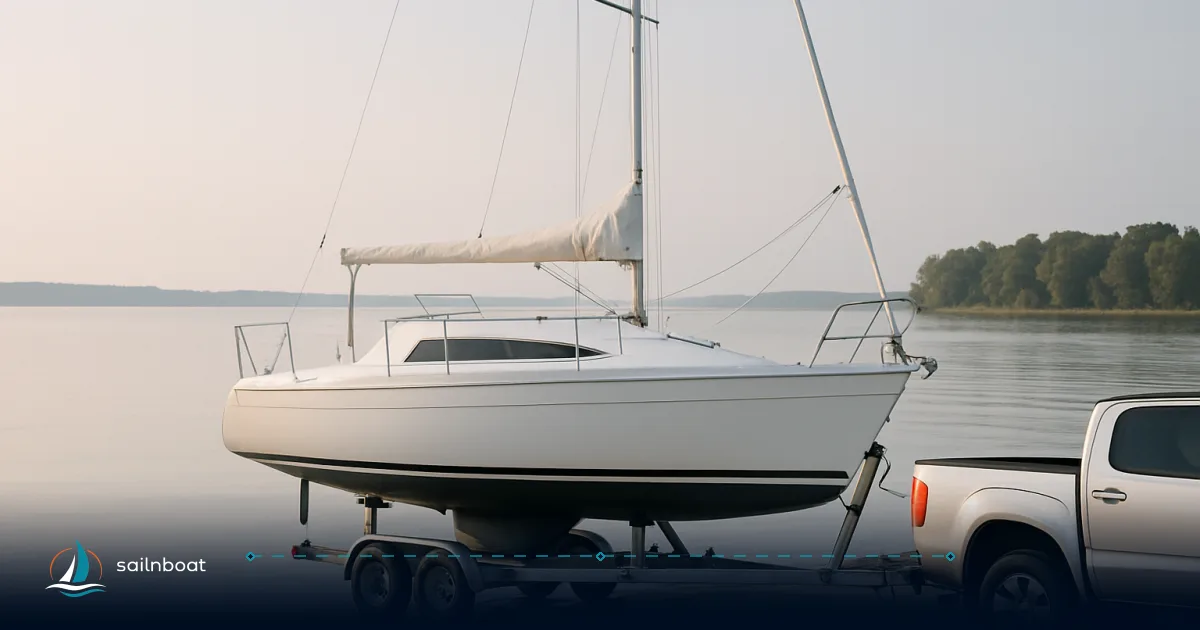
Trailerable yachts let you run weekend charters without marina slips and large launch costs — but the choice of boat largely determines what ramps you can use, what tow vehicle you need, and how many paying guests you can carry.
Understanding Keel Designs for Trailerable Yachts
The keel you pick decides where you can launch, how simple a ramp retrieval will be, and how stiff the boat feels under sail. For weekend charters that rely on quick turnarounds and shallow ramps, choosing the right keel type is the most practical design decision.
Types of Keels
-
Swing keels (pivoting centerboards): The keel pivots up into a trunk. Advantage: you can retrieve at shallow ramps and rest the hull on mudflats at low tide. Trade-off: moving parts and pivot bolts require inspection and occasional rebuild; performance upwind is reasonable but not equal to a well-designed fixed fin. Many classic trailerables (Catalina 22 and similar) use this system.
-
Lifting keels (vertical or dagger): The keel lifts straight up (winch or hydraulics). Advantage: better underwater foil shape and usually better pointing/ stiffness when down; allows larger, more performance-oriented trailerables to be launched from a ramp when the keel is up. Trade-off: heavier, more complex machinery; some lifting keels still require a crane or a deep ramp for full lift service. Lifting keels give more flexibility for 24–30ft trailerables but add maintenance.
-
Fixed/ shoal keels: No moving keel. Advantage: simple, low-maintenance, predictable ballast and handling. Trade-off: higher on-trailer height and likely need a hoist/ travel lift for launch and haul-out; not ramp-friendly for shallow community ramps. Many fixed-keel boats are technically trailerable but operationally need a crane or slip for launching.
How that affects stability and chartering
- Stability: Fixed-keel boats with heavy ballast typically feel stiffer and carry guests more confidently in choppy conditions. Swing and lifting keels concentrate ballast lower when down, but the mechanical system and reduced ballast mass (in some designs) can change righting behavior — check specific ballast numbers per model before listing for charter.
- Launch speed and crew: Swing keels usually allow the fastest ramp-based turnarounds; lifting keels can require a manual or powered winch and slightly more setup time. For weekend charters you want a system the crew can raise and stow quickly without special tools.
Launch Logistics: Towing and Accessibility
A good weekend charter operator treats the trailer and tow vehicle as part of the boat’s operational equipment. Two mistakes operators make: underestimating loaded road weight, and assuming any ramp will work.
Towing Requirements
-
Calculating what you need: the weight that matters on the road is the combined weight of the boat (dry displacement or manufacturer’s “dry weight”), trailer, motor, fuel, water and crew gear. This combined gross trailer weight must be below both the trailer’s GVWR and your tow vehicle’s GCWR/GVWR. Trusted trailer-weight guidance walks this through and shows that brochure “dry weight” often understates road weight once gear is included. Plan for a safety margin — many calculators recommend a GVWR at least ~15% above your expected loaded weight.
-
Vehicle compatibility (practical ranges):
-
Tiny trailerables (≈500–1,200 lb dry): light hatchbacks or crossovers can manage single‑axle trailers. Example: West Wight Potter 15 (boat ~475 lb) is towable by small cars.
-
Mid‑range boats (≈2,000–3,500 lb on the road): most mid‑size SUVs and half‑ton pickups with 3,500–5,000 lb tow ratings are suitable (Catalina 22 variants, Hunter 23s, Com‑Pac 23 in shoal versions).
-
Heavier trailerables (3,800–5,000+ lb road weight): full‑size pickups or specialised tow vehicles; MacGregor 26 variants and larger lifting-keel trailerables can fall here depending on rigging and trailer. Check the builder’s road‑weight/GVWR figures.
-
Single‑handed launching tips (practical):
-
Practice at an empty ramp first: set the tongue weight, back the vehicle onto a shallow grade, and lower the boat until it floats with minimal bumper submersion.
-
Use a winch strap and a snubber line ashore: that lets you control offloading and prevents the trailer from running off the winch when you near the water.
-
For lifting or heavy swing keels, pre-stage tools (winch handle, safety gloves) in easy reach; don’t rely on a single person to manage both lines and the vehicle if you expect guests to transit quickly.
Marina vs. Trailer Storage: Pros and Cons
For weekend charter operations the storage decision affects daily costs, guest experience, and the speed of handovers.
Cost Implications
-
Marina storage and transient berthing: transient dockage is typically priced per foot per night and varies by region; U.S. marinas publish transient dockage rates that vary widely by region, with some commonly falling in the $1.50–$4.50 per foot per night range, but rates can be significantly higher or lower depending on location, season, and marina type. Mediterranean marinas commonly price per metre and are often higher in high season. Use these per‑foot figures to estimate nightly cost for a 22–26ft trailerable that keeps a berth for quick returns.
-
Trailer storage (on‑land): lower direct cost in most areas — many yards offer seasonal trailer storage, with annual costs that can range from several hundred to several thousand dollars depending on location and facility, while some municipal ramps charge per‑occasion ramping or seasonal trailer parking. The trade-off is the time and labour to tow to the ramp for each charter rotation and potential local restrictions on trailer parking and ramp access. Public rates and policies vary a lot by port.
-
Maintenance differences: boats kept on the trailer can require more frequent anti‑fouling cycles (if left in water less, you might save on hull cleaning) but trailered boats suffer from trailer corrosion, brake and bearing maintenance and occasional road damage. Marina‑stored boats avoid repeated road stress but add dock power, water and potential haul‑out fees for bottom work.
Operational trade-off
- If you want same‑day turnaround and to avoid trailering logistics, pay for a slip close to the ramp and operate like a conventional charter. If your aim is to minimise fixed costs and accept more hands‑on logistics, trailering to a ramp and using transient dockage or anchorages can cut overall expense.
Mooring Realities for Trailerable Yachts
Trailerable yachts are small enough to use a variety of moorings — docks, visitor slips, temporary moorings and stern ties — but availability and fee structures differ between locations.
Mooring Fees and Availability
-
Transient slips: Use the per‑foot metric when budgeting. In the U.S, published daily transient rates vary widely; some marinas list rates between $1.50 and $4.50 per foot per night, but actual prices can be lower or higher depending on region, season, and marina amenities. Many marinas add electricity ($5–20/night typical) and apply minimum lengths or multiday minimums.
-
Moorings and anchorages: Many charter customers prefer anchored nights over paid slips to save cost; mooring buoy fees (where available) can run from a modest daily fee to seasonal contracts — the practical reality is that buoy space in popular areas is limited and reserves in advance are required for weekend blocks.
-
Availability for trailerables: small LOA helps you fit into visitor slips and dinghy docks, but some marinas have guest-size minimums or charge minimum fees that make very short boats proportionally more expensive. If you are running a weekend charter business, build relationships with a small number of marinas and consider negotiated weekly or weekend-package rates rather than ad hoc drop-ins.
Seasonality
- Don’t assume rates are static: weekend and holiday surcharges, special events and peak‑season pricing change the math. In high demand areas plan for surcharges and reduced availability; in shoulder seasons you might negotiate better transient or block-booking rates.
Top Trailerable Yacht Models for Weekend Charters
Below are models that work in small-charter service; the list balances ease of launching, onboard space for short-term guests and realistic towing needs. Each model note includes the practical spec points that matter when you rent, tow or store the boat.
| Model | LOA | Typical road weight (estimate) | Draft (up/down) | Sleeps | Why it works for weekend charters |
|---|---|---|---|---|---|
| West Wight Potter 15 | 15' | ~825 lb (boat+trail+gear) | 0.6 ft / 3.0 ft | 2 | Extremely light, towable by small cars, fastest turnarounds; ideal day/overnight shuttles. |
| Montgomery 17 | 17' | ~2,100 lb on the road (model-dependent) | ~1.75–3.5 ft | 2 | Sturdy, offshore-capable small cruiser; classic layout but smaller cabin. |
| Catalina 22 (swing keel) | 22' | road weight often ~3,400 lb (range 3,200–4,200 lb with gear) | swing up to 1.5 ft / down ~4.0 ft | 4 | One of the most common trailerables; swing keel eases ramp use and provides modest cabin space for 2–4 guests. |
| O'Day 22 (centerboard) | 21.7' | ~2,200–2,800 lb dry; road weight varies | centerboard up ~1.3–1.9 ft / down ~4.25 ft | 2–4 | Classic, simple systems and shoal options make it practical for ramps and short charter trips. |
| Com‑Pac 23 | 23.9' | ~3,000 lb displacement (road weight higher with trailer) | shoal fixed ~2.25 ft | 4 | Solid build, roomy interior for its size, shoal keel suits shallow bays—good for couple‑centric weekend charters. |
| Hunter 23 / 23.5 (water ballast) | ~23'–23.5' | trailering weight~3,500 lb (empty) | water ballast empty draft ~1.5 ft / full ~5.5 ft | 4 | Water‑ballast models fill to improve stability while afloat and dump for easy ramp retrieval—fast ramp cycles for charters. |
| MacGregor 26 (water ballast variants) | 26' | typical loaded road weight range ~3,700–4,200 lb (model-dependent) | shallow for trailering / deep for sailing | 4–6 | Popular for mixed sail/power weekend use; plan on a larger tow vehicle and check GVWR. |
| TES 720 / TES 28 series (TES Yacht Canada) | 24–28' | model dependent; builder notes trailerable with swing centerboard | shoal to moderate | 4–6 | Newer European designs sold in North America as trailerables with swing centerboard options—good modern fit if you need extra cabin space. |
Notes on the table
- Road weights: the “typical road weight” column is an operational estimate (boat + trailer + typical gear). Always calculate your own loaded trailer weight from published displacement plus trailer GVWR and cargo. Builders and community databases give dry displacement; road weight rises once you add fuel, outboard, and stores.
Recommended models by charter use
- Low-cost day/overnight charters for couples: West Wight Potter 15, Montgomery 17.
- Family weekend charters (comfort + simplicity): Catalina 22 (swing keel), Com‑Pac 23.
- Higher-capacity weekend charters with mixed power/sail flexibility: MacGregor 26 (water-ballast variants).
- Operators who want modern construction and a slightly larger interior: TES 720/28 models where available in your market.
Key Considerations for Weekend Charters
A short checklist of decisions and trade-offs you need to resolve before you start taking paying guests.
Final Tips
- Crew experience and guest briefings: choose a boat whose handling suits the least experienced person you’ll hand to. Keel systems (particularly lifting keels) add procedural steps — train your crew and prepare a checklist for launch/haul.
- Insurance and qualifications: many charter companies and insurers make decisions based on the skipper’s experience and local regulations; missing qualifications can affect claim assessment. Treat operator requirements and authority rules as separate items to verify. (Regulatory acceptance of certificates varies by country and by charter company.)
- Weather windows and safety: small trailerables have lower reserve power and less margin in heavy weather. Plan conservative weather windows for weekend runs, and establish a maximum wind/sea limit for each model in your fleet.
- Check ramp and local rules: some municipal ramps restrict long-stay trailer parking or require permits for commercial launching; others impose crane-only access for fixed-keel boats. Confirm ramp rules and local marina policies before advertising a route.
- Pricing and packaging: because transient slips and buoy fields vary by price and availability, package docking/anchorage/parking into the charter price or offer a clear optional fee — it reduces surprises for guests and your crew.
Start planning your weekend charter with a trailerable yacht today.
- Decide whether you value minimal fixed cost (trailering + yard storage) or quick turnarounds (kept on a slip). Match the boat to the tow vehicle before you accept bookings, document the ramp procedures, and pre-negotiate marina rates for the weekends you plan to operate.
Frequently Asked Questions
Trailerables use swing (pivoting) keels, vertically lifting keels (dagger/vertical lift) and fixed/ shoal keels; swing/ lift keels reduce draft for ramps and shallow bays while fixed keels give simpler systems and often better pointing performance.
Trailering weight depends on the boat plus trailer, motor, fuel and gear; small boats (1,000–3,500 lb) can be towed by many mid-size SUVs, while 3,500–5,000+ lb road weights need trucks or heavy-duty SUVs — always calculate loaded trailer GVWR against your vehicle’s GCWR/GVWR.
Storing on a trailer at home is usually cheaper for slipless ownership, but marina storage buys immediate access, security and avoids trailering logistics; seasonal costs and ramp parking rules change the equation by location.
Transient dockage commonly ranges from roughly $1.50–$4.50 per foot per night in the U.S, with Mediterranean rates often priced per metre and higher in high season; expect wide seasonal and regional variation.
For low-cost, easy launching choose very light boats (West Wight Potter 15, Montgomery 17); for more space and charter capacity pick 22–26ft models (Catalina 22, Com‑Pac 23, Hunter 23, MacGregor 26, TES 720/28) depending on tow capacity and marina plans.
Written by
Sailnboat Editorial
The Sailnboat editorial desk covers yacht and boat chartering worldwide — routes, bases, seasons, boat types, paperwork and the practical costs that decide a trip. We are a charter marketplace, not a boat owner or a local agency: what we sell is judgement and support, so our guides are written to help you make a decision, not to sell you a specific boat. Every guide is checked against live operator and marina data before it goes out.
Fact-checked against live operator and marina data, and published under our editorial standards. Last reviewed: .