Best Sportsboats for Coastal Cruising: Fast, Fun and Practical Options for Short Charters
A pragmatic guide to the best sportsboats for coastal cruising, weighing speed, passenger comfort at pace, layout trade‑offs and the U.S. rules that affect charter use.

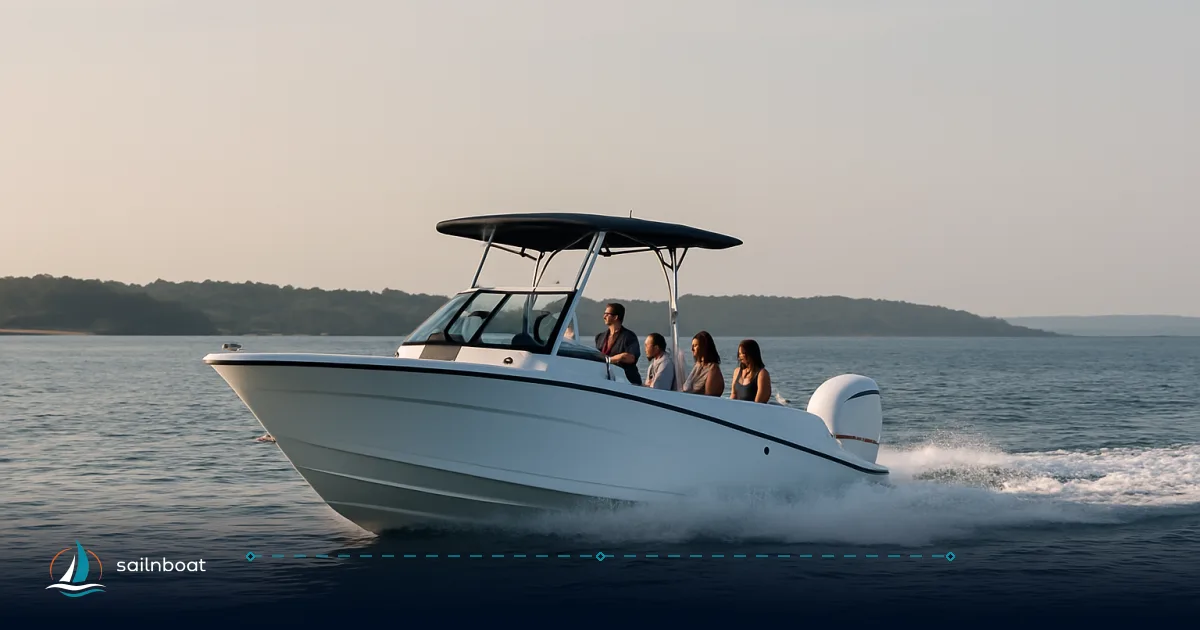
If you’re considering a sportsboat for a short coastal charter, your decision comes down to hull shape and size for local conditions, realistic passenger and gear capacity, and the operational costs—especially fuel, berthing, and certification. Small bowriders and deck boats (21–31 ft) are easy to board and sociable at moderate speeds, while performance center-consoles (40–60 ft) deliver much faster passages but bring higher running costs, more complex mooring, and stricter documentation.
Top Sportsboats for Coastal Cruising
The models below are proven on short coastal charters. For each, you’ll find practical strengths, operational trade-offs, and the numbers that matter—always confirm specifics with your charter operator, as engine fit, passenger limits, and fuel consumption can vary.
Cigarette Racing 59 Tirranna
- Type: “Super center-console” performance boat, typically 59 ft LOA, 14 ft beam.
- Speed: Manufacturer and independent tests report top speeds between 60–70 knots (70–80 mph), depending on engine fit (often 6 x 450 hp outboards).
- Capacity: Typically fitted for 20–26 guests in owner/operator configs, but legal passenger limits depend on local inspection and certification.
- Why pick it: Unmatched pace for long coastal legs; a showpiece for VIP or high-end charters.
- Trade-offs: Very high fuel burn (see table below), limited marina availability for such lengths, and often subject to commercial vessel inspection and higher crew requirements.
MTI V-42 Center Console
- Type: Aluminum/composite planing V-bottom or stepped-V center-console, ~42 ft LOA.
- Speed: Cruise speeds typically range from 35–50+ knots (40–58 mph), strongly dependent on engine package and sea state.
- Capacity: 8–12+ (subject to operator fit and certification).
- Why pick it: Agile at speed, with a social cockpit and serious range; flexible for fishing, fast day runs, or sport charters.
- Trade-offs: Performance setup (engine/prop choice) affects fuel burn and ride. Less shelter than a cabin cruiser.
- Fuel Burn: Figures vary widely by engine selection and load. Always request recent consumption data from your operator for your specific charter.
Sea Ray 320 Sundancer
- Type: Sport/express cruiser, ~32–33 ft LOA, with cabin for overnight.
- Speed: Practical cruise speeds are typically in the mid-20s to low-30s mph, depending on the engine and conditions.
- Capacity: 6–8; overnight layouts for small groups.
- Why pick it: Day comfort, simple overnighting, and better spray protection than open center-consoles.
- Trade-offs: Not as quick or nimble as performance center-consoles; more systems to maintain.
Sea Ray SPX 210
- Type: Bowrider/runabout, 21–24 ft LOA (varies by sterndrive vs outboard).
- Speed: 25–35 mph cruise (engine-dependent).
- Capacity: Certified for up to 12 passengers (U.S. standards), but actual safe fit varies by gear and sea state.
- Why pick it: Easy to handle, economical for short hops, simple boarding for sandbar and day trips.
- Trade-offs: Limited range and seakeeping in chop; best for protected waters and short coastal legs.
Sea Ray SDX 290
- Type: Deck boat, 29–31 ft LOA, wide beam, available in sterndrive and outboard.
- Speed: Manufacturer specs vary; typical cruise speeds are 25–35 mph, but confirm with operator for your engine fit.
- Capacity: “Yacht certified” layouts can accommodate larger groups, but legal limits depend on local rules and how the vessel is equipped.
- Why pick it: Spacious, stable deck for groups, easy movement, manageable handling.
- Trade-offs: Heavier and less fuel-efficient than smaller runabouts; more exposed to spray than a hardtop cruiser.
Sportsboat Comparison Table
| Model | LOA (typical) | Typical Cruise Speed | Passenger Capacity* | Fuel Burn (L/hr)** | Range (nm)*** | Best Charter Role |
|---|---|---|---|---|---|---|
| Cigarette 59 Tirranna | 59 ft | 50–60 kt (cruise) | 20–26 (operator fit) | 380–450 | 350–400 | High-speed VIP, specialist |
| MTI V-42 | 42 ft | 35–45 kt (cruise) | 8–12+ (fit/certification) | Varies by engine/load | 250–350 | Performance day/sport charters |
| Sea Ray Sundancer 320 | 32–33 ft | 25–32 mph (typical) | 6–8 (overnight possible) | 60–100 | 140–180 | Protected coastal, overnight |
| Sea Ray SDX 290 | 29–31 ft | 25–35 mph | 10–14 (operator fit) | 40–80 | 120–160 | All-day social, coastal hops |
| Sea Ray SPX 210 | 21–24 ft | 25–32 mph | 8–10 (operator fit) | 25–45 | 80–110 | Day trips, sandbars, short hops |
* Actual passenger limits depend on local certification, model year, and outfitting. Confirm with your charter operator. ** Fuel burn for MTI V-42 varies widely; always request recent operator data for your configuration. *** Range assumes 90% of usable fuel, moderate conditions.
Fuel Costs and Real-World Range
Fuel is the largest variable cost on a sportsboat charter. For high-performance models like the Cigarette 59 Tirranna, expect 380–450 L/hr (100–120 US gal/hr) at cruise, which can mean €600–900 per hour at current U.S. marina pump prices. For the MTI V-42, fuel burn is highly dependent on engine setup and load—always ask your operator for current, load-specific data.
Smaller deck boats and cruisers (Sea Ray SDX 290, Sundancer 320) typically burn €80–150 per hour at cruise, but again, real-world numbers depend on load, hull condition, and sea state. Always clarify with your operator whether fuel is included or billed at actual consumption, and request recent usage figures for your specific model.
Berthing and Mooring Logistics for Larger Sportsboats
Finding a berth for a 40–60 ft sportsboat is a different challenge than for a 25-footer. Rates and availability vary widely between the U.S, Mediterranean, Caribbean, and Australia.
- Marina fees: For boats in the 40–60 ft range, transient rates in major U.S. and Mediterranean marinas can range from €250–700 per night during high season, depending on exact location, amenities, and demand. In the Caribbean and Australia, expect a similar range, though in less-developed areas, rates may be lower.
- Smaller boats (up to 30 ft): These typically pay €60–150 per night, sometimes less in smaller harbors or with mooring balls.
- Availability: High-performance models with wide beams or unusual LOA may not fit all slips. Confirm berth dimensions with your operator and the marina in advance.
- Mooring options: In many regions, mooring balls are available and cheaper, but their size limits vary—many are suitable for boats up to 40–50 ft, depending on local regulations and mooring design.
- Utilities: Shore power and water are usually extra for transient berths; budget €10–30 per night for these services on top of the base fee.
- Mediterranean specifics: Stern-to mooring is common; many marinas require advance booking, especially in July–August. Fees can spike in peak season or in major yachting hubs.
- Caribbean/Australia: In the Caribbean, marina infrastructure varies; in popular islands, fees approach Mediterranean levels. In Australia, marina berth fees vary by city, with Sydney and Gold Coast among the highest.
Upholstery and Layout Considerations
Your choice of upholstery and layout directly affects comfort underway and at anchor.
Impact on Passenger Comfort
- Seats and bolsters: Prioritize high-quality bucket or pedestal seats with integrated bolsters, deep thigh support, and grab handles. Center-consoles tend to use sculpted bolsters; deck boats favor long bench seating.
- Materials: Look for UV-resistant, marine-grade vinyl, reinforced stitching, and quick-drain foam. Entry-level fabrics age quickly and can become a liability, especially in charter fleets.
- Ergonomics: Clear walkways and single-level cockpits with grab points are safer for guests unfamiliar with boats.
Layout Trade-Offs
- Open vs sheltered: Open cockpits maximize social space but expose guests to wind and spray. Hardtops, T-tops, and full windshields are worthwhile for comfort at speed.
- Storage vs seating: Over-seating can crowd out fuel and cooler storage. For day charters, prioritize accessible coolers and dry lockers.
- Systems: Wet bars, fridges, and sunpads add appeal but also maintenance. For multiple daily charters, simplicity speeds up turnarounds.
Passenger Comfort at High Speeds
Small design choices add up at 30+ knots.
Seating Design
- Bolstered seating is non-negotiable for extended high-speed runs. Adjustable seats and shock-absorbing pedestals reduce fatigue.
- Removable headrests and contoured designs help guests of all sizes stay comfortable, especially in rougher water.
Stability and Sea-Keeping
- Hull type: Deep-V planing hulls handle short, steep chop better than flatter hulls. Stepped hulls can improve ride at speed but are sensitive to load and trim.
- Wind and spray: At 25–30 mph and above, wind chill and spray are constant. T-tops, spray curtains, or enclosed helms are worth considering for guest comfort.
Sea-Keeping Limits and Performance Characteristics
Match the boat to the sea state you expect.
Understanding Performance Metrics
- Speed and range: Manufacturer and sea-trial data are best treated as ranges, not absolutes. Always confirm with your operator for your engine fit and load.
- Wave tolerance: Most sportsboats in the 21–35 ft class are designed for light to moderate seas. For offshore swells over 2–3 m, only larger, purpose-built sport yachts are suitable.
Comparative Analysis
- Speed vs. stability: Faster, narrower hulls are more agile but roll and pitch more. Wider deck boats are more stable but use more fuel.
- Operational best practice: Stay within the sheltered coastal band these boats are built for. When weather forecasts show building swell, shorten legs and seek shelter.
Local Regulations and Charter Requirements
Regulation shapes what you can do and what paperwork you’ll need. All specifics are subject to local authority and operator confirmation—never rely on a single source.
U.S. Passenger Vessel Certification (COI) and USCG Oversight
- Inspected vessels: The U.S. Coast Guard issues Certificates of Inspection (COI) specifying the maximum number of passengers, crew mix, and required safety gear. This is mandatory for most commercial charters above 6 passengers.
- Uninspected vessels: Vessels carrying up to 6 passengers for hire can operate as “uninspected passenger vessels” under different rules. This distinction is critical for charter planning and pricing.
Licensing and Crewing
- Merchant Mariner Credential (MMC): Operators of inspected vessels and most commercial captains require an MMC with appropriate endorsements. The USCG’s National Maritime Center manages these credentials. Missing or insufficient endorsements can affect liability and insurance in the event of an incident.
- Coastwise documentation: U.S. vessels operating in coastwise trade may require specific documentation and endorsements. Foreign-built vessels may be eligible for the Small Vessel Waiver Program, but this adds time and cost.
International Context
- Europe: Many Mediterranean countries require at least an ICC (International Certificate of Competence) or national equivalent for bareboat charters. Commercial charters may require local captain licensing and additional safety equipment. Passenger limits and manning requirements vary; always check with your operator for specifics.
- Australia: Skipper requirements vary by state; in New South Wales and Queensland, a recreational boat licence is generally required, with commercial operators needing additional certification.
- Caribbean: Requirements are variable. Some islands accept international qualifications (ICC, RYA Day Skipper), but local permits may be needed for bareboat charters.
- Other regions: Regulatory regimes range widely. Confirm with your operator what documentation and qualifications are needed for your itinerary and vessel.
Insurance and Deposit Practices
- Insurance: Most operators carry hull and liability insurance, but you may be responsible for a deductible—often in the €2,000–€6,000 range for sportsboats, though this varies by region and operator. Always request a summary of coverage and clarify your personal liability.
- Deposits: Security deposits or card holds are common and can range significantly—some operators require as little as €500, others several thousand euros, depending on vessel size, value, and operator policy. Some offer insurance buy-downs for an extra fee.
Typical Fuel Consumption and Range by Model
| Model | Fuel Burn at Cruise (L/hr) | Typical Range (nm) | Notes |
|---|---|---|---|
| Cigarette 59 Tirranna | 380–450 | 350–400 | 6 x 450 hp outboards, heavy load |
| MTI V-42 | Varies by engine/load | 250–350 | 3–4 x 400–450 hp outboards |
| Sea Ray Sundancer 320 | 60–100 | 140–180 | Twin sterndrives/outboards, typical load |
| Sea Ray SDX 290 | 40–80 | 120–160 | Outboard/sterndrive, depends on fit |
| Sea Ray SPX 210 | 25–45 | 80–110 | Single outboard/sterndrive, light load |
All figures are indicative only—confirm with your operator for the current setup and recent usage.
Berthing and Mooring Fees: What to Expect
- Large sportsboats (40–60 ft): In the U.S. and Mediterranean, expect €250–700 per night at major marinas in high season, with higher rates at sought-after locations.
- Mid-size (30–40 ft): €100–300 per night, with some variation by location and amenities.
- Small boats (<30 ft): €60–150 per night; mooring balls, if available, are usually cheaper.
- Utilities: Shore power and water typically €10–30 per night extra.
- Booking: Advance booking is strongly advised for boats over 40 ft or with unusual beam, especially in peak season.
Sample Short Coastal Charter Itinerary
Miami to Key Largo (Florida Keys)
| Leg | Distance (nm) | Typical Time (hr:min) | Sea State/Notes |
|---|---|---|---|
| Miami Beach → Elliot Key | 20 | 1:00–1:20 | Sheltered, typically light chop |
| Elliot Key → Ocean Reef/Key Largo | 18 | 1:00–1:10 | Open water, check wind/swell forecast |
| Total | 38 | ~2:15–2:30 |
- Berthing: Ocean Reef Club and marinas in Key Largo can accommodate 40+ ft sportsboats but book ahead in high season.
- Fuel: One-way at cruise for a 40–50 ft performance boat can easily run €200–400 in fuel costs.
- Weather: Plan for early departures; afternoon thunderstorms are common in summer.
- Options: For smaller boats, keep legs shorter and use protected Biscayne Bay routes.
Final Tips for Charterers
-
Checklist for First-Time Charterers:
-
Confirm the boat’s passenger certification and actual safe capacity for your route.
-
Ask for documented cruise speeds, fuel consumption at cruise, and range for your specific setup.
-
Check what is included: fuel (included or at cost), berthing, cleaning, crew.
-
Clarify the insurance deductible and deposit requirements—these can vary by operator and region.
-
Confirm the vessel’s documentation/certification (COI or equivalent).
-
Review local weather apps (Windy, NOAA, Navionics) and plan your route around weather windows.
-
Bring soft bags, non-marking shoes, sun protection, and motion sickness remedies if any guest is prone.
-
Know your operator’s cancellation and bad-weather policies.
-
Ask about accessibility features if you have guests with reduced mobility; many sportsboats have steps, narrow passages, or high freeboard.
-
Match the boat to your group: Social groups may prefer deck boats or cruisers; adrenaline-seekers may want a high-speed center-console.
-
Plan for weather: Keep coastal legs under two hours between shelter points. Avoid exposed overnight runs on boats designed for day use.
-
Book ahead: Especially for large or high-performance boats, marina space and operator availability are often tight.
-
Emergency procedures: Ensure you and your crew are briefed on lifejackets, VHF operation, and emergency contact protocols. Many operators provide a safety handover—don’t skip it.
-
Weather routing: Use up-to-date weather forecasts and avoid pushing through deteriorating conditions. In unfamiliar areas, request local pilotage advice.
Frequently Asked Questions
Manufacturers to consider include Cigarette Racing (59' Tirranna) for speed, MTI (V‑42) for high‑performance centre‑console capability, and Sea Ray models (SPX 210, SDX 290, Sundancer 320) for a balance of comfort and sporty performance; choose by route, passenger count and regulatory burden.
Firm, supportive bolsters and bucket seating reduce fatigue at speed; UV‑ and salt‑resistant single‑stitch vinyl and drainage under cushions improve longevity; open layouts increase usable deck space but give less shelter in spray.
Deep‑V planing hulls handle short chop and quartering seas better than flat‑bottoms, but most sportsboats are limited to coastal conditions (short to moderate seas, commonly under 2–3 m) where planing is safe—choose shelter or avoid exposed offshore runs.
In the U.S, inspected passenger vessels require a Certificate of Inspection (COI) from the USCG; crewing and officer requirements typically call for Merchant Mariner Credentials (MMC) with appropriate endorsements for vessels under inspection. Uninspected passenger vessels operate under different rules but still carry operational limits.
Regulations affect whether a given model can be used for pay‑per‑ride or number‑of‑passenger charters, whether the vessel needs coastwise documentation or a Small Vessel Waiver, and which crew credentials are required — all of which influence operating cost and logistic complexity.
For short hops and day charters: 21–24ft bowriders (Sea Ray SPX 210) or 26–31ft deck boats (Sea Ray SDX 290) for groups up to ~8–12, and 40–42ft centre‑consoles (MTI V‑42) if you want offshore speed and capacity; reserve 59'+ super centre consoles for specialised, higher‑cost charters.
Written by
Sailnboat Editorial
The Sailnboat editorial desk covers yacht and boat chartering worldwide — routes, bases, seasons, boat types, paperwork and the practical costs that decide a trip. We are a charter marketplace, not a boat owner or a local agency: what we sell is judgement and support, so our guides are written to help you make a decision, not to sell you a specific boat. Every guide is checked against live operator and marina data before it goes out.
Fact-checked against live operator and marina data, and published under our editorial standards. Last reviewed: .