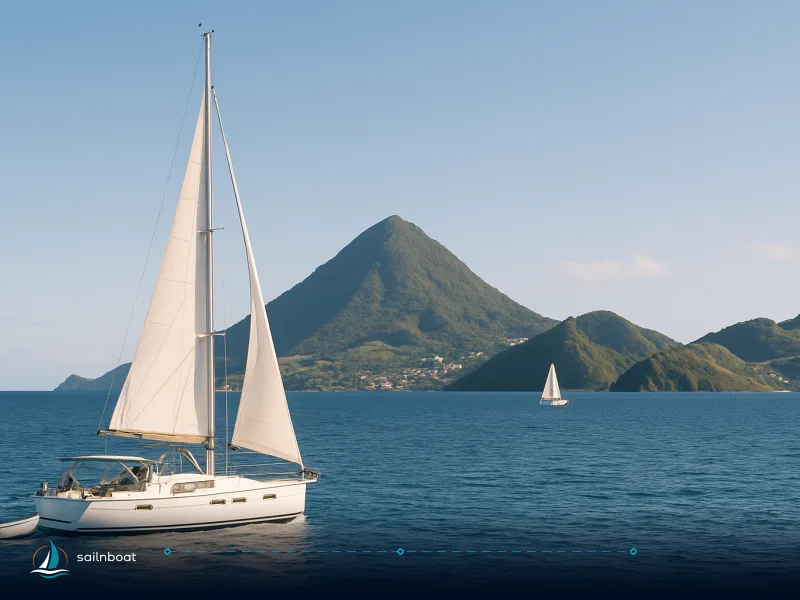
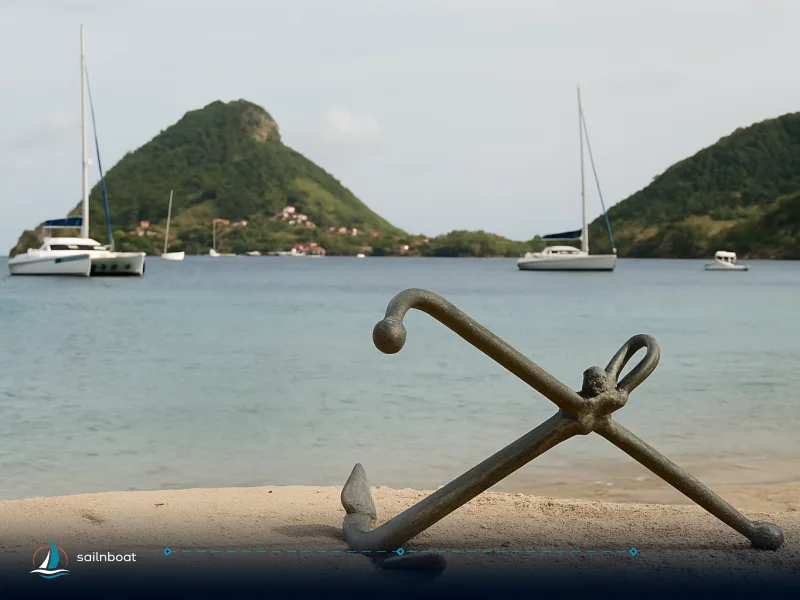
Exploring Fonds Blancs in Martinique: Top Sandbanks for Your Yacht
A practical skipper’s guide to Martinique’s fonds blancs — where to anchor, typical depths and swing‑room, safe approaches, and two compact half‑day itineraries from Le François and Le Robert.

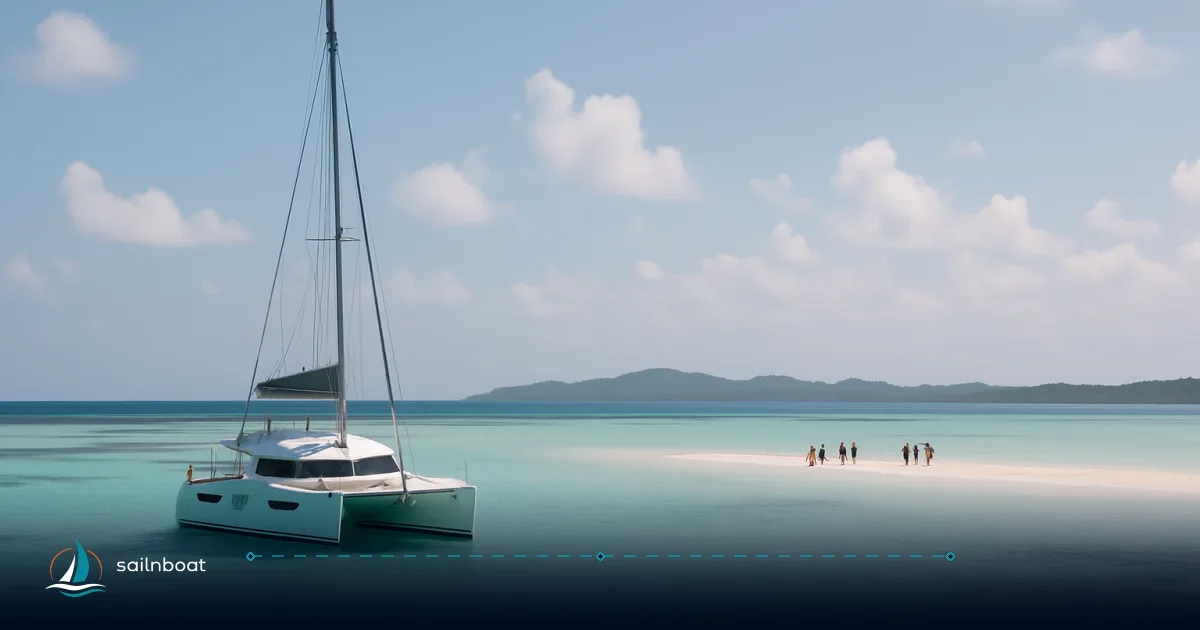
If your brief is “anchor, stand waist‑deep and hand out the punch,” Martinique’s fonds blancs deliver — most famously the Baignoire de Joséphine between îlet Oscar and îlet Thierry. These are shallow sandbanks where water commonly sits around half a metre to roughly one‑and‑a‑half metres, making them ideal for anchoring a charter, wading and short swims; they lie a few kilometres off the east coast, reached in minutes from Le François or a short hop from Le Robert.
Overview of Fonds Blancs in Martinique
What Are Fonds Blancs?
Fonds blancs are shallow sandbanks: wide, low plateaus of coral sand that remain submerged but with very shallow water above them. They form inside the reef system on Martinique’s Atlantic side and read as bright, milky‑turquoise patches from the surface because sunlight reflects off the white sand. These are not beaches — they are high, submerged flats you reach only by boat.
Why yacht charterers like them
- Immediate shallow water for safe, family‑friendly wading and beach‑style aperitifs without landing ashore.
- Reliable, sheltered lagoons formed by the reef and surrounding îlets — good protection from open Atlantic swell when conditions are settled.
- Short passages between scenic islets (Îlet Oscar, Thierry, Chancel, Madame) make half‑day rounds convenient for charter schedules.
Key Attractions
- Waist‑deep water pockets for standing, photo ops and casual snorkeling.
- Small, protected islets nearby that host iguanas, mangrove edges and ruins — useful short stops between swims.
Top Fonds Blancs to Visit
Below are the most practical sites for a charter yacht. The table gives the summary you will use when choosing a stop mid‑week.
| Site | Typical depth (reported) | Location / approach | Why pick it (charter reasons) |
|---|---|---|---|
| Baignoire de Joséphine | ~0.5–1.5 m (waist‑deep) reported. | Between îlet Oscar and îlet Thierry; ~2.5 km off Le François. Approach slowly, pick visible sandy patch between islets. | Iconic spot, frequent, short passage from Le François, great for photos and shallow wading. |
| Îlet Chancel / Trapèze (Baie du Robert) | Similar shallow sandbanks in the Trapèze sector; shallow at the flats. | In the Robert / François archipelago; easy approach from Robert or François, often paired with a visit to the iguanas on Îlet Chancel. | Quieter than Joséphine at times; natural landing possibilities and snorkel options. |
| Cap Est / Trou Cochon | Shallow lagoon/fonds blancs near Cape‑Est/Trou Cochon; boatable from Le François/Le Vauclin. | South of Le François toward Cap Est; often used for private charters seeking fewer crowds. | Good for combined mangrove + sandbank trips; sheltered anchoring pockets in calm weather. |
| Îlet Madame / Îlet Frégate | Small white‑sand flats and sheltered water close to the islets. | Inside the îlets chain east of Le François / north of Le Robert; treat islets as points of interest rather than full landings (some protected). | Good as a secondary stop and for short snorkel swims. |
Notes on the table: reported depths are the commonly published ranges for these popular flats; depths vary with tide, swell and seasonal sand movement. Use your chart and depth sounder to pick the exact sand patch before anchoring.
Baignoire de Joséphine
Practical summary: the Baignoire de Joséphine is a named fonds blanc set between îlet Oscar and îlet Thierry off Le François — repeatedly described in local guides as a shallow white sand plateau where water commonly ranges from under a metre up to roughly 1.5 m. It sits roughly 2.5 km offshore from Le François and is reached quickly from the Marina or port of Le François. Tour operators run regular half‑day trips that stop there for 30–60 minute swims/wades.
Approach details
- Confirm the charted reef line and steer in through the reef gaps used by local operators; approach slowly and look for the bright sand patch. Many excursion crews approach from the sheltered lee of the islets and drift into position.
Anchoring conditions
- Expect very shallow sand: anchor in sand (not on coral), use plenty of chain where possible and be prepared for very short swing radii. Popularity means you may share the sandbank with other boats — plan for minimal room.
Îlet Oscar
Short note: Îlet Oscar is the most visited of the François islets and lies immediately adjacent to the Baignoire de Joséphine; it is protected by a biotope order along with several nearby islets — treat landings and any wildlife contact with care.
Îlet Thierry
Short note: Îlet Thierry forms the eastern edge of the Joséphine bank. Like Oscar it is protected and part of local conservation measures; use the chart and avoid approaching close reef where indicated.
Îlet Chancel, Îlet Madame, Îlet Frégate
- Îlet Chancel (the “iguana islet”) is a standard excursion stop and commonly paired with a led stop at a neighbouring sandbank such as Trapèze; many trips combine Chancel + Trapèze + Joséphine into a half‑ or full‑day. Some islets have landing limits to protect fauna and flora — respect posted rules and local guidance.
Safe Navigation and Anchoring Practices
Navigational Tips
- Always run up‑to‑date electronic charts and use a depth sounder when approaching the fonds blancs — many cayes and reef fingers lie close to the sandbanks and can be awash at low tide. Local tour operators rely on GPS waypoints and visual cues; you should do the same.
- Approach at idle speed. Look for the pale, milky colour of the sand patch and approach from the sheltered side (usually the side between the islets and the reef). If you have passengers, brief them on heel, boarding and splash safety before you stop.
- Avoid anchoring on coral heads, seagrass meadows and marked protected zones. Coral damage is permanent and many islets sit within arrêtés de protection de biotope. If you must anchor in shallow water, find bare sand patches (visible from the surface on calm days).
- Be prepared to re‑position quickly if wind or swell increases — the flats offer limited room to ride out a blow.
Anchoring Guidelines
- Rode and scope: in open references the common planning numbers are roughly 5:1 scope in fair weather for day stops and up to 7:1 for overnight or rough conditions — expect to need less absolute line in a 1 m depth than in deep water, but scope ratio still matters. In crowded shallow flats skippers often use 4–5:1 for a short day stop with constant monitoring. Use chain where you can — it helps hold and absorbs chafe across sharp reef‑edges.
- Swing radius planning: plan your swing radius before you drop by adding the rode length you intend to pay out plus the vessel’s length (practical planning rule used by anchor‑planning tools). For example: a 12 m (40 ft) yacht in 1 m depth using 5:1 scope (≈5 m rode) yields a swing circle in the order of 5 m + 12 m ≈ 17 m radius — plan clearance accordingly. Conservative guidance treats the effective swing radius as rode + LOA to allow for bow‑to‑anchor offsets and sag.
- Two‑anchor or stern‑to? For short, busy stops in very shallow sand, consider setting a second anchor or stern‑to the sandbar (if the bar geometry and traffic allow). These techniques limit swing but complicate departure; use them only if you are practiced in recovery and the seabed is sand.
- Use an anchor alarm and set a conservative circle on your GPS. Many charter crews also keep an anchor watch or monitor with periodic position checks on autopilot/off.
Anchoring etiquette and legal notes
- Several îlets (Oscar, Thierry, Frégate, Lavigne and others) are protected by an arrêté de protection de biotope — avoid unauthorized landings, remove nothing, and follow local signage. Landing rules differ by islet; ask your base or excursion operator if you plan to step ashore.
Typical Depths and Swing‑Room Requirements
Depths at Popular Locations
- Baignoire de Joséphine: commonly reported between about 0.5 m and 1.5 m depending on tide and sand movement — shallow enough to stand in many places.
- Trapèze / Cap Est / Trou Cochon / Îlet Madame sectors: these popular flats show similar shallow ranges; local operators report waist‑deep patches interspersed with channels and deeper pockets — always check with your sounder.
Confidence ladder for these depth figures: these ranges are the commonly published, tourism and local guides’ reported figures (enough to plan a wadeable stop) — but exact depth on the sandbank you anchor will shift with tide, short‑term sand migration and swell. Always confirm with your own depth sounder at the chosen position.
Swing‑Room Considerations
- Practical rule: estimate a swing radius ≈ rode out + vessel LOA (or rode + 80% if you prefer the more conservative chart‑making approach). That gives you the circle you must keep clear of other boats, reefs and shore.
- Worked examples (planning numbers, not absolutes):
- 10 m boat, 1 m depth, 5:1 scope → rode ≈ 5 m → planning swing ≈ 5 + 10 = 15 m radius.
- 15 m boat, 1.5 m depth, 5:1 scope → rode ≈ 7.5 m → planning swing ≈ 7.5 + 15 = 22.5 m radius.
- If you cannot give that clearance because the sandbank is busy, reduce time at anchor to a short stop only, keep watch, or move to a larger anchorage. In stronger winds adopt more scope if the room allows; if not, consider a different anchorage.
Suggested Half‑Day Itineraries
Below are two practical half‑day plans that fit charter schedules and common base locations.
From Le François — compact 3‑hour loop (common operator format)
Typical duration and sequence used by local half‑day operators: Le François port → Baignoire de Joséphine → Îlet Chancel → return. Operators commonly run morning and afternoon half‑day services (roughly 3 hours), with the Joséphine stop lasting around 30–60 minutes and short visits to nearby islets. The Baignoire lies about 2.5 km off Le François (≈1.35 nm), so passage legs are measured in minutes at typical cruising speeds.
Practical timing (planning sample)
- 09:45 — departure from Marina/port (briefing, passenger safety).
- 10:00 — arrival at Baignoire de Joséphine (short approach & anchor or drift stop) — swim/wade/snorkel 40–60 min.
- 11:15 — short transfer to Îlet Chancel for viewing/brief landing (10–20 min) or a snorkel by the islet.
- 11:45–12:00 — return passage to port; back in harbour by ~12:30–13:00 depending on speed and time on the flats.
What to pack and brief your crew
- Long‑handled bucket or water shoes for walking on sand flats (some shells/urchins can be present).
- Anchor alarm set and a crew member assigned to watch.
- Sunscreen, hat, and a small reef‑safe first aid kit.
- Respect protected‑islet rules: avoid landing on protected islets unless the operator confirms permission.
From Le Robert — quieter route and the Trapèze stop
Le Robert’s launches commonly mix stops: îlet Chancel, Trapèze (a calmer fonds blanc), îlet Madame and short swims. The Trapèze area can be less crowded than Joséphine at peak times and is a straight option if you are based in or near Le Robert. Local guides list Trapèze as an attractive alternative and pair it with Chancel. Expect similar half‑day timing (≈3 hours) and the same anchoring planning constraints.
Practical checklist for your charter skipper
- Pre‑departure: download local waypoints for Baignoire de Joséphine and chosen fonds blancs; review weather, swell and tide. Confirm any islet landing restrictions with your base.
- Approaching the flat: idle in, visual check for sand vs coral, pick a bare‑sand patch, stop engines and set anchor under power if needed to avoid prop strikes.
- Anchoring: chain first where possible, set by backing down firmly, pay out planned scope (aim 4–6:1 for a short day stop in calm conditions), set anchor alarm and position watch.
- On the sandbar: warn guests about urchins and shells, limit trampling on seagrass, and keep rubbish on board. If you do a stern‑to or two‑anchor set, rehearse recovery before guests disembark.
- If weather freshens: lift anchor promptly and move to a more roomy anchorage — the Fonds Blancs are for fair‑weather stops, not for sheltering a blow.
Final decisions and trade‑offs
- Trade‑off #1 — Accessibility vs Crowds: Baignoire de Joséphine is closest and most iconic (fast turnaround), but busiest; Trapèze/Cap Est give quieter experience at slightly longer passages.
- Trade‑off #2 — Swing room vs photo time: limited swing room forces shorter stops, or more complex anchoring (stern‑to or second anchor). Decide in advance how long you want to linger.
Plan your route, pre‑position GPS markers for the sand patches you intend to use, and brief the crew to limit surprises. For a charterable half‑day the classic Marina du François → Joséphine → îlet Chancel loop is fast, reliable and leaves time for a solid swim and a beach‑style snack; choose Trapèze or Cap Est if you want fewer people and more space.
Frequently Asked Questions
The best are the Baignoire de Joséphine (between îlet Oscar and îlet Thierry), the Trapèze / îlet Chancel area near Le Robert, and the Cap Est / Trou Cochon sector south of Le François; all are shallow sandbanks ideal for standing and wading in warm water.
Use up‑to‑date charts/GPS, approach slowly at idle speed to visually identify sand patches, avoid marked reefs and protected islets, anchor in sand not coral, set sufficient scope and use an anchor alarm and anchor watch.
Typical depths at the popular fonds blancs range from about 0.5 m to 1.5 m at usual states; swing radius ≈ rode length plus the boat’s length (plan using 4–7× depth for rode depending on conditions and available room).
Yes — a common half‑day (≈3 hours) is: depart Marina du François → Baignoire de Joséphine (swim/wade ~45–60 min) → stop at îlet Chancel (short landing/viewing) → return; passage legs are short (tens of minutes at typical cruising speeds).
Baignoire de Joséphine generally lies in very shallow water — commonly reported between ~0.5 m and ~1.5 m — so you anchor in low depths with limited available scope and short swing radii; plan for minimal room and use conservative techniques (see anchoring checklist in the article).
Written by
Sailnboat Editorial
The Sailnboat editorial desk covers yacht and boat chartering worldwide — routes, bases, seasons, boat types, paperwork and the practical costs that decide a trip. We are a charter marketplace, not a boat owner or a local agency: what we sell is judgement and support, so our guides are written to help you make a decision, not to sell you a specific boat. Every guide is checked against live operator and marina data before it goes out.
Fact-checked against live operator and marina data, and published under our editorial standards. Last reviewed: .