Phang Nga Bay Anchorages: Your Guide to Sheltered Bays and Beaches
A practical, operational guide to Phang Nga Bay anchorages: where to anchor, how the tides behave, what national-park fees and restrictions apply, and the best beaches to reach by tender.

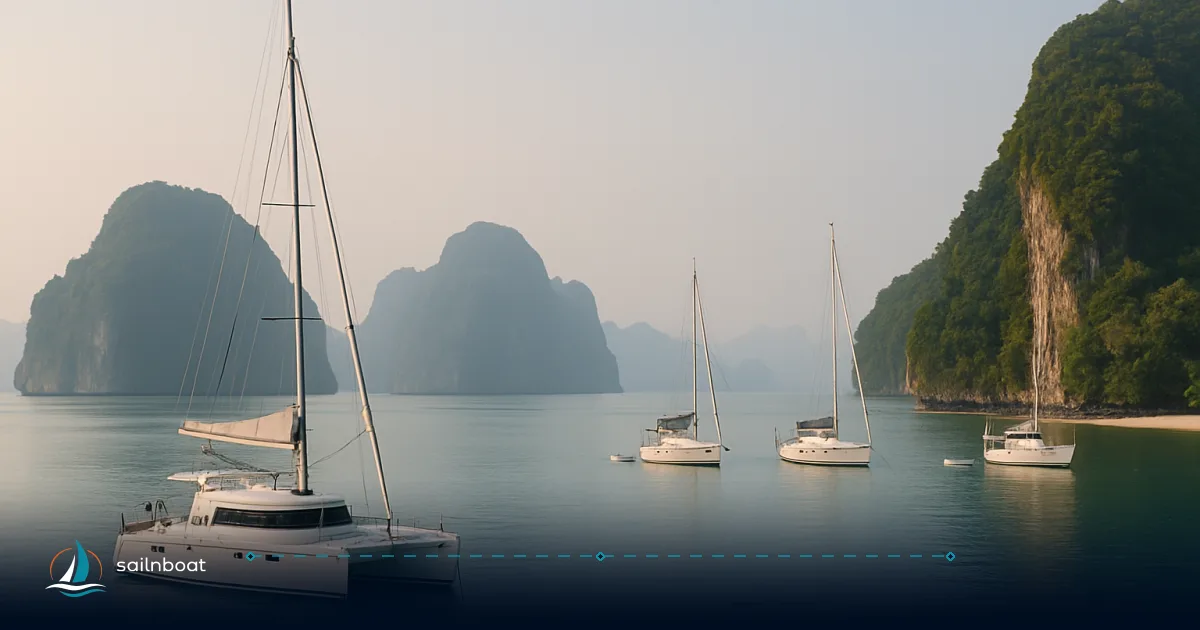
Phang Nga Bay anchorages are primarily inside Ao Phang Nga National Park and give reliably sheltered mud-and-sand anchorages, typically in the 3–10 m range with good holding — the practical choices are Koh Hong, the Koh Yao islands, Koh Panyee and the Panak/Panak‑cluster anchorages.
The remainder of this guide gives you decision‑grade detail: which coves to pick for shelter, how the tides shift depth and mudflats, the park fee routine, where your tender will safely land and what each beach actually offers for a cruising crew.
Sheltered Anchorages in Phang Nga Bay
Start with the simple rule: pick anchorages inside the island ring that faces away from the open Andaman Sea — they shelter you from swell and often from the prevailing wind. The bay is a shallow, island‑studded basin; holding is mostly mud and sand and good if you set properly.
Top Sheltered Bays
-
Koh Hong (Hong Island)
-
Why choose it: well‑sheltered lee anchorages around the outer karsts; the island is famous for its canoeable inner hong (lagoon) and scenic lee anchor spots. Note the lagoon itself is only entered by small craft at certain tides, and dinghy/sea‑canoe access is the usual route.
-
Typical depths and holding: typically 5–18 m with mud or soft sand holding; good for overnighting in settled weather.
-
Koh Yao Noi (east coast bays such as Tha Khao, Pasai)
-
Why choose it: predictable afternoon shade, local provisioning nearby, sheltered anchorages on both east and west shores depending on wind direction. Beaches here have restaurant and basic facilities, making tender trips straightforward.
-
Koh Yao Yai (Loh Pared)
-
Why choose it: very sheltered lee in northerly to easterly conditions; useful when you want calm water and an easy dinghy ride ashore.
-
Koh Panyee / Panak Islands / Khao Phing Kan cluster
-
Why choose it: Koh Panyee provides an interesting village stop and lunch options; nearby Panak and Panak‑style bays offer protected canoe routes and small beaches suitable for tender landings (watch tidal limits). Daytime anchoring and short overnight stays are common; expect boat wakes and day‑boat traffic near the James Bond Island area.
-
Lesser anchorages: small hongs, leeward coves and sheltered inlets between karsts
-
Why choose them: quieter and often shallower; appropriate for day stops or small crews but confirm depth at low tide before committing.
Comparison table — quick decision matrix
| Anchorage | Shelter (typical) | Typical depth (m) | Bottom / holding | Amenities & notes |
|---|---|---|---|---|
| Koh Hong (outer lee) | Excellent from open Andaman swell | 5–18 m | Mud/sand — good holding | Canoe lagoons, crowded on day trips; lagoon entry tide‑sensitive. |
| Koh Yao Noi (Tha Khao / Pasai) | Good from most directions | 3–8 m | Sand/mud — reliable | Restaurants, shops, easy tender landings. |
| Koh Yao Yai (Loh Pared) | Excellent lee in NE winds | 4–9 m | Mud/sand | Beach bars and local markets; calm anchorage choice. |
| Koh Panyee / Panak cluster | Good, but busy near Panyee | 3–8 m | Mud/sand | Stilt village pier, restaurants; expect day‑boat wakes. |
| Small hongs / inner bays | Variable — very sheltered in lee | 2–6 m (local) | Mud/sand — shallow at low tide | Quiet, but watch tidal exposure and access channels. |
Tidal Behavior and Its Impact on Anchoring
Tides are a very practical factor in Phang Nga Bay — they change water depth and expose broad mudflats, and they control access to narrow lagoons. Plan with tide tables and local pilotage in hand.
Tidal Ranges in Phang Nga Bay
- Typical range: around 1–3 m between low and high water in the bay; spring tides can reach roughly 2.8–3.0 m at some stations. Expect strong relative change on shallow leads and inside hongs.
- Operational effects:
- Low tide can expose shallow bars, reduce water under the keel and leave dinghies aground on soft mud if you land in the wrong place.
- Lagoons and inner hong entries are tide‑sensitive: enter only within the recommended tidal window (local skippers operate to the tide timetable).
- Anchor swing: in reversing tides expect the highest loads when current is strongest or when wind opposes current; at slack the load is usually lower though the boat may sheer as it turns. Use an anchor alarm and check the set after reversals and squalls.
Practical tidal actions
- Check local tide tables and use published secondary port corrections or local guidance for the specific lagoon/cave; do not assume a fixed offset. Plan entries near the locally recommended tidal window (often mid to high tide) and verify on scene.
- Give yourself extra depth margin at low tide: plan anchorages assuming the lower end of tides plus a safety margin and verify with echo sounder.
- If you expect strong or reversing flow, choose a more sheltered anchorage or use a Bahamian moor (two bow anchors 180° apart) or a bridle/riding sail to reduce yaw; avoid stern anchors in reversing tides.
Anchoring Regulations and Fees
Phang Nga Bay sits inside Ao Phang Nga National Park and is managed as a marine protected area; that matters for fees, permitted activities and where you may legally anchor.
Regulations in National Parks
- Park fee system
- The Ao Phang Nga National Park charges an entrance fee that is normally paid per person when a vessel enters the park; in current practice most operators and pier check‑ins list the foreign adult fee at about 300 THB and foreign children at about 150 THB (Thai rates are lower). Some operators include this fee in your charter price; if they do not, expect to pay it when you check in. Rangers will ask for the receipt.
- No‑anchor and protected zones
- The park has designated moorings and specific no‑anchoring areas to protect seagrass, coral and mangroves; rangers enforce these zones and may prohibit landings or anchoring in sensitive areas. Avoid anchoring on seagrass — moorings exist where necessary.
- Visitor conduct and local rules
- Fishing, shell collecting and damaging marine life are prohibited. Drone use, commercial filming and some landings may require permission; landing piers and paths are subject to park rules and seasonal closures in places.
Practical payment routine
- Confirm whether your charter/shore provider has included park fees in the contract; if not, carry local currency (THB) and be prepared to pay the fee at check-in or as directed by park staff.
Best Tender‑Accessible Beaches
Not every island in Phang Nga Bay is suitable for a walk ashore — some are rocky, some are protected, and some dry at low tide. This section lists sensible tender beaches for a cruising crew and what you can actually expect to find there.
Top Tender Beaches
-
Koh Yao Noi — Pasai, Klong Jark, Tha Khao
-
Facilities: small restaurants, basic shops, kayak rentals, public toilets at some spots (varies by beach). Tender approach is easy from calm anchorages off the east coast; watch for shallow sandbars at low tide on the northern shoals.
-
Koh Yao Yai — Loh Pared (west coast)
-
Facilities: beach bars and local markets a short walk; straightforward dinghy landing from the lee side where depths remain reasonable on most tides. Good option when you want supplies or a beach afternoon.
-
Koh Panyee (Koh Panyi)
-
Facilities: full stilt‑village experience with restaurants, a small walkway pier and shops; the village pier is the usual tender landing, but expect day‑boat traffic. The village is a practical lunch stop rather than a swimming beach.
-
Panak / Panak Island beaches
-
Facilities: minimal — small sand patches and sea‑canoe launching points; landing is possible in calm conditions at mid to high tide and is commonly combined with canoeing in the caves.
-
Koh Tapu / Khao Phing Kan (James Bond Island)
-
Facilities: very limited; the famous rock needle has effectively no landing and is controlled by park rules — commercial landings are organised from designated piers and many visits are photo stops; do not plan a beach picnic here.
Practical tendering guide
- Always approach beaches on the lee shore and at high or rising tide where possible; many beaches are backed by mangrove and have soft mud that will grab an outboard prop if you ground the dinghy at low water.
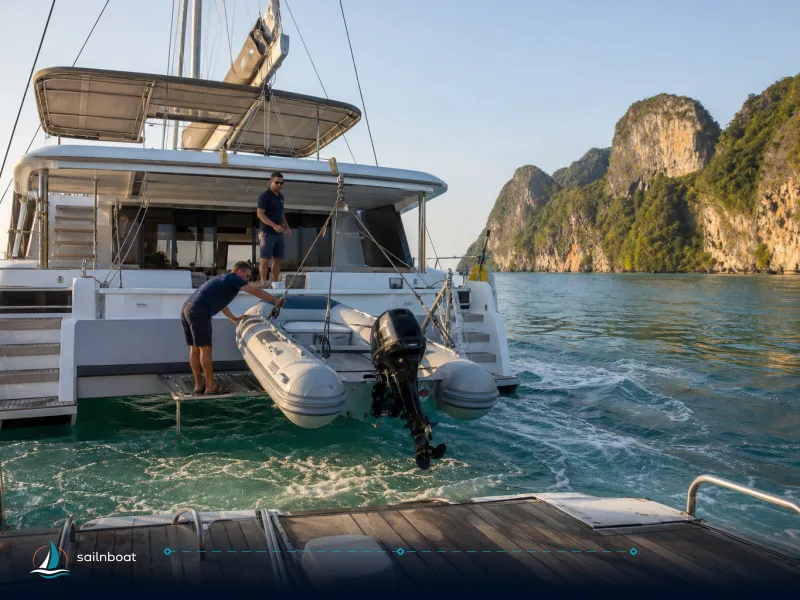
- Use a suitable painter and step out onto a firm patch or the beach with the outboard shut down and tilted up; if it’s soft mud, anchor or kedge the dinghy off in knee‑deep water and wade, or keep the prop raised and use oars/a line to refloat—do not run the engine in mud or near people.
- Expect facilities to be basic: food stalls, simple toilets, occasional cold showers; larger provisioning and fuel remain on Koh Yao Noi and mainland piers.
Monsoon Seasons and Sailing Conditions
The seasonal pattern in southern Thailand is dominated by two monsoons; they both change what is safe and comfortable offshore and in the bay. Plan charter dates to match your tolerance for rain, wind and open‑sea crossings.
-
Southwest monsoon (roughly mid‑May to mid‑October)
-
Effect: heavier rain, short‑period wind and greater chop on the open Andaman. Phang Nga Bay itself is more sheltered than open crossings to Phi Phi — it remains a preferred refuge in poorer months — but expect more rain and shorter weather windows for cross‑bay hops.
-
Northeast monsoon / cool season (roughly mid‑October to mid‑February)
-
Effect: drier, steadier winds and calmer seas; many charter operators prefer this as prime season for cruising the Andaman and for comfortable anchorages.
Operational tips
- If you must cross the Andaman (to Phi Phi or Racha), avoid doing it inside the peak of the southwest monsoon; Phang Nga Bay is the safer sheltered option on the Andaman side during the wet months.
- Always check local weather briefs and marine warnings the morning of your passage; wind direction shifts rapidly with monsoon fronts and squalls.
Practical Tips for Your Voyage
This section converts the facts above into an operational checklist that will keep your cruise smooth and legal.
Preparing for Your Trip
-
Park fees and paperwork
-
Confirm whether your charter or tour operator has included Ao Phang Nga park fees. If not, be ready with THB cash at check‑in; rangers expect the receipt and will board to check it.
-
Anchoring technique & equipment
-
Rode and scope: use conservative scope — for overnight in the bay expect 5:1 to 7:1 (more in strong wind); include a length of chain at the bow and a proper snubber to reduce shock loads. These scope ranges are standard seamanship practice and particularly important on tidal sites.
-
Anchor alarms and checks: set an anchor alarm on your plotter or phone, physically check the set after a strong tide change, and re‑set if the boat drags.
-
Holding: the bay is mostly mud/sand and normally holds well — but avoid beds of seagrass and marked reef; where moorings are provided, prefer them.
-
Tender operations
-
Use the lee, time landings with rising tide where possible, leave a painter secured, and avoid mangrove roots. Bring a folding anchor or shore‑stake for your dinghy in case of tidal drift.
Crew and Safety
- Watch for day‑boat traffic around James Bond Island and Koh Panyee — wakes can disturb anchored boats; anchor farther off if you want a quiet night.
- If visiting small caves or hongs by canoe, use local guides who know the tidal window; some entrances are only safe at mid to high tide.
Final checklist before you drop the hook
- Confirm whether park fees are included in your charter; if not, plan to pay ~300 THB per foreign adult at check‑in.
- Check tide tables for your chosen anchorage and choose a spot that maintains adequate depth at low water.
- Let out 5:1–7:1 scope for overnight; fit a snubber and use an anchor alarm.
- Avoid anchoring on seagrass, inside marked no‑anchor zones, or across navigational channels; use moorings where provided.
- Pick tender beaches for the right reason: provisioning and restaurants (Koh Yao Noi, Koh Panyee) versus short walks and cave access (Panak, Koh Hong lagoons).
Plan your anchorage strategy for a smooth sailing experience in Phang Nga Bay and factor tides, park rules and tender logistics into every stop.
Frequently Asked Questions
Shelter is best inside the Ao Phang Nga National Park: Koh Hong (the hongs and lee anchorages), anchorages off Koh Yao Noi and Koh Yao Yai, Koh Panyee/Panak clusters, and smaller lee bays on the east side of islands; these locations are protected from open Andaman swell and are the common choices for charter anchorages.
Tides in the bay typically range from about 1 to 3 metres, with spring tides reaching roughly 2.8–3.0 m at some locations; expect large exposed mudflats and changing depth at low water in many sheltered bays.
Yes — the bay lies inside Ao Phang Nga National Park. The park charges an entrance fee per person (commonly 300 THB for foreign adults and 150 THB for foreign children in current practice) and operates an e‑ticket/QR system; there are also designated moorings and no‑anchor zones intended to protect seagrass, coral and mangroves.
For practical tender landings: Koh Yao Noi (Pasai, Tha Khao), Koh Yao Yai (Loh Pared), Koh Panyee (stilted village pier and restaurants) and Panak Island (small beach and caves via canoe); Koh Tapu (the ‘needle’) has no visitor landing and limited amenities.
The southwest monsoon (roughly mid‑May to mid‑October) brings heavier rain and more open‑sea swell; the bay remains far more sheltered than the open Andaman but expect more rain, stronger winds and shorter comfortable windows. The northeast monsoon (about mid‑October to mid‑February) tends to bring drier, steadier conditions and favourable winds for many charter routes.
Written by
Sailnboat Editorial
The Sailnboat editorial desk covers yacht and boat chartering worldwide — routes, bases, seasons, boat types, paperwork and the practical costs that decide a trip. We are a charter marketplace, not a boat owner or a local agency: what we sell is judgement and support, so our guides are written to help you make a decision, not to sell you a specific boat. Every guide is checked against live operator and marina data before it goes out.
Fact-checked against live operator and marina data, and published under our editorial standards. Last reviewed: .