Yacht Charter Cost in Miami: Budgeting for Your Next Adventure
Understand what drives yacht charter cost in Miami and how to budget for day, weekend and week charters—base fees, crew, fuel, APA, taxes and typical ranges.

Intro paragraph (2–4 sentences) If you need a quick answer: plan on roughly $800–$11,000 for a private day charter in Miami, multi-day weekend rates vary widely; weekend (2–3 day) charters are often quoted by request and can be several times the day rate depending on vessel and inclusions and $10,000–$80,000+ for a week — the spread depends on boat size, whether the yacht is fully crewed, fuel burn and season. Those headline numbers hide the real drivers: base charter fee, crew/skipper charges, fuel, an Advance Provisioning Allowance (APA), taxes and marina/dockage fees. Read on for a decision‑ready breakdown and sample budgets you can use when you start quoting.
Understanding Yacht Charter Costs in Miami
The total price you pay for a Miami charter is the sum of several discrete components. Understand each one and you’ll avoid the “surprise” line items when the invoice lands.
Cost components
-
Base charter fee: the boat hire itself — quoted per hour, per day, or per week depending on operator and vessel. Miami listings show very wide ranges by vessel type: small day boats and center consoles sit at the low end while 50–80ft luxury motor yachts and superyachts sit at the high end. Market surveys in 2026 place common mid‑size day charter figures (8 hours) in the $1,500–$5,500 band; smaller craft and party boats sit lower and larger yachts much higher.
-
Skipper / crew fees: many day charters include a captain and at least one crew; if not included some operators may charge separate skipper fees if not included, but most Miami charters include crew in the base rate; confirm with your operator if crew is extra and what the daily charge is. For fully crewed week charters, crew salary is usually folded into the commercial cost structure and handled through APA and gratuity.
-
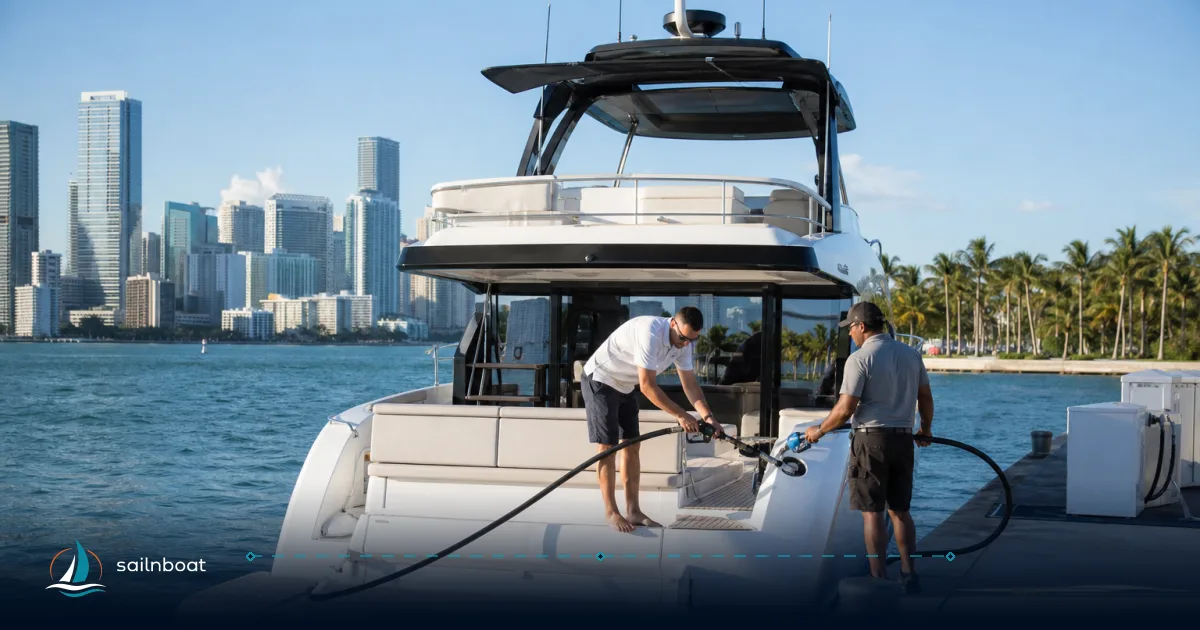
Fuel: fuel can be the single largest add‑on on motor yachts. Typical cruise burns vary hugely by size and speed — small boats may be single‑digit gallons per hour, fuel consumption varies widely by vessel and speed; for mid-size motor yachts, fuel burn can be substantial, and large fast yachts or center-consoles with multiple engines may use significantly more. Always ask the operator for typical fuel consumption for your specific charter. Multiply GPH × hours × local diesel price to estimate actual fuel cost for the trip.
-
Advance Provisioning Allowance (APA): an upfront float for variable running costs (fuel for long passages, provisioning, port/clearing fees, local taxes, water‑toys, and other out‑of‑pocket expenses). APA percentages used in the market commonly run between about 20% and 35% of the charter fee for crewed multi‑day charters; the exact percent depends on yacht type and itinerary. Captains usually provide receipts and refund unused balance.
-
Security deposit / damage waiver: operators commonly take a refundable damage hold (credit‑card pre‑auth or charged and refunded) or offer a damage waiver for a fee. Typical refundable holds for larger charter yachts vary from a few thousand dollars on mid‑size yachts to significantly higher amounts for larger vessels; operators also offer waivers that limit your liability for a non‑refundable daily fee.
-
Taxes and marina fees: state and local taxes, plus transient dockage and marina services, are regular extras. In Miami‑Dade the combined state + county sales tax commonly applied to taxable charter items is about 7% (6% Florida state sales tax + 1% Miami‑Dade surtax). Marina transient fees vary by facility and berth length.
-
Crew gratuity: customary and discretionary — industry guidance commonly suggests 10–20% of the base charter fee on crewed charters; many brokers list 15–20% as a practical expectation for very good service. Gratuity is usually paid in cash at the end of the charter or charged through APA.
Day, Weekend, and Week Charter Costs
Here’s how those cost components combine for different durations. Below are practical headline ranges drawn from active Miami listings and marketplace reports — use them to set a realistic budget before you request quotes.
| Duration | Typical vessel examples | Typical headline base fee (USD) | Common APA / fuel policy | Notes |
|---|---|---|---|---|
| Day (4–8 hrs) | Center console, 35–50ft express, small motor yachts | $500–$1,500 (small); $1,200–$5,500 (mid); $6,000–$12,000+ (large/day yachts) | Fuel often charged at cost; APA rarely used for pure day charters | Mid‑size day charters around $1,500–$5,500 for 4–8 hours in 2026 listings. |
| Weekend (2–3 days) | 40–70ft motor yachts, weekend‑ready catamarans | $3,000–$30,000 | APA commonly applies for multi‑day; owners may set a fuel band or require fuel at cost | Weekends scale quickly when fuel or hotel‑grade provisioning and an onboard chef are added. |
| Week (7 days) | 45–100ft crewed motor yachts / catamarans / superyachts | $10,000–$80,000+ (luxury boats much higher) | APA typically 20–35% (or higher for fuel‑hungry yachts); fuel often inside APA or billed to exhaustion | Many weekly crewed charters for comfortable 50–70ft yachts commonly sit in the tens of thousands per week; superyachts start much higher. |
Sample realistic budgets (example calculations)
-
Mid‑size day cruise (55ft motor yacht), 8 hours: Base fee $4,500; fuel burn estimate based on typical mid-size yacht consumption for this class; actual usage varies, so confirm with your operator. Using a diesel price of about $6.29/gal (October 2026 Gulf Coast average), fuel ≈ $1,760–$2,010. Add captain/crew day fees if not included ($200–$450/day range) and a small provisioning amount — expect an all‑in day around $6,500–$8,000 for that boat and day. (fuel math and burn ranges from industry consumption guides; diesel price per EIA weekly averages).
-
Weekend (2 nights) on same 55ft yacht: Base fee × 2 (or weekend rate) + APA (often applied for multi‑day), plus marina fees for any overnights, provisioning and gratuity — a practical weekend budget often runs 1.5–2.5× a single‑day all‑in cost depending on how many nights you spend in marinas vs anchored. Market listings show many weekend packages in the $6,000–$25,000 band depending on yacht and inclusions.
-
One‑week crewed charter (50–65ft motor yacht): Weekly base fees commonly run from the low tens of thousands to $50k+; add APA (20–35% commonly requested), taxes, provisioning and gratuity — your working budget should start with base fee + 25–35% APA + taxes + gratuity 10–20% as discretionary. Example: $30,000/week base → APA 25% = $7,500 float; tax ~7% on taxable items and discretionary gratuity 15% ≈ $4,500; run costs and marina fees extra.
Impact of Seasonality on Charter Pricing
Miami is a seasonal market with concentrated demand in the winter months.
-
High season: roughly December through April (peak around winter holidays and major events such as Art Basel and Miami Boat Show). Expect limited availability, earlier minimum‑book windows and commonly 20–50% higher headline rates on the most desirable boats and holiday weeks.
-
Shoulder / off‑season: May through November can offer lower rates and promotions, but note the Atlantic hurricane season (officially June 1–Nov 30) affects cancellation terms and insurance considerations; some owners set different policies and reduced deposits in summer. Always check the operator’s hurricane clause. Market data show operators offering discounts or flexible dates in the quieter months.
Trade‑offs
- If your priority is availability and choice of specific yacht, book early for high season and expect to pay a premium.
- If price is the priority and you accept a narrower fleet, booking outside the peak months or being flexible on dates will get materially better rates.
Understanding Additional Costs: APA, Taxes, and Fees
Advance Provisioning Allowance (APA)
- What it covers: fuel for long passages, provisioning (food & drink), port/harbor and customs fees, local permits, water‑toys consumables, docking charges away from base, additional fuel for tenders or toys, and any other incidentals the captain pays on your behalf.
- Typical size: commonly 20–35% of the charter fee on crewed multi‑day charters; yachts that burn more fuel or plan longer passages may ask for 30–40% in specific cases. Captains usually account and refund any unused balance after charter.
Taxes and local levies
- Miami‑Dade combined sales tax is commonly ~7% (6% Florida state sales tax + 1% county surtax) applied to taxable charter elements — check the invoice to see which line items are taxable (some services or items may be exempt or differently treated).
Marina and port fees
- Transient dockage varies by marina and berth length; municipal marinas publish per‑foot and flat transient rates, while private marinas typically charge premium per‑foot nightly or daily rates plus electricity and services. Municipal marina examples and published transient rate cards are a useful reference when judging dockage charges.
Crew gratuity and local charges
- Gratuity is discretionary but expected on crewed charters; industry practice commonly sits in the 10–20% range, with many brokers and operators suggesting 15–20% as a guideline for good service. Gratuity is normally separate from the crew wages and APA.
Negotiation Tips for Charter Rates
-
Request a fully itemised quote — insist the broker or operator break out the base fee, whether crew is included, APA %, fuel policy (fuel band vs fuel at cost), marina fees, cleaning, and any service fees. A fully itemised quote makes apples‑to‑apples comparison possible.
-
Compare multiple offers — shop at least 3 brokers/operators for the same boat or comparable models on the same dates. Marketplaces and local brokers publish representative rates you can use for leverage.
-
Negotiate inclusions, not only price — you often get more value by negotiating to include: chef, one overnight marina, a fuel band for a fixed number of cruising hours, or a reduced APA rather than a small headline discount.
-
Be flexible on dates and length — mid‑week departures, non‑holiday weeks and shoulder months often produce the best bargains.
-
Watch the cancellation and hurricane clauses — in Miami the seasonality and weather risks mean these clauses materially affect your financial exposure; if you need flexibility, accept a slightly higher price in exchange for a more forgiving cancellation policy.
-
Security deposit vs waiver — if the operator offers a damage waiver, price out the waiver vs the refundable deposit hold. Waivers can be convenient but may cost more than you’d lose with a small claim; a deposit hold preserves full refunds if no damage occurs.
Forming a Realistic Budget for Your Charter
Checklist — items to include in your working budget
- Base charter fee (day/week/weekend) — get the per‑hour, per‑day or weekly rate in writing.
- Skipper / crew fees — verify whether they are included and, if not, the exact daily charge and meal policy.
- Fuel estimate — calculate GPH × expected hours × current diesel price; get the operator to confirm typical burn for that boat and intended itinerary. Use current regional diesel prices for accuracy.
- APA (if crewed multi‑day) — typical 20–35% of the charter fee; ask what APA items are commonly charged and request sample receipts policy.
- Security deposit / damage waiver — note amount, method (pre‑auth vs charged), and refund timeline.
- Taxes — include Florida sales tax + Miami‑Dade surtax (~7%) on taxable items.
- Marina/transit fees — estimate per‑night dockage or anchoring permits if you plan overnight stops in private marinas.
- Provisioning & entertainment — food, drinks, cigarettes, alcohol, special menus, and paid activities ashore; for planning, many groups budget $50–$150 per person/day for provisioning depending on preference and chef service.
- Crew gratuity — plan 10–20% of the base charter fee as customary; many charters suggest 15% as a fair benchmark.
- Contingency — set aside an extra 10–15% of running expenses for overages (extra fuel, marina nights, repairs, unforeseen permits).
Quick budgeting example (rule‑of‑thumb)
- Start with the published base fee.
- Add APA at the stated % (or estimate 25% if not listed).
- Add estimated fuel (ask for GPH; otherwise use 20–60 GPH range for motor yachts and current diesel price).
- Add tax (~7% where applicable), gratuity (~15% guideline), marina fees and a 10% contingency.
- Ask the broker to produce a written “all‑in” price for your itinerary — that’s the figure you compare across operators.
Final practical checklist before you sign
- Get a fully itemised written quote with APA %, fuel policy, which fees are refundable, and the security deposit method.
- Confirm whether captain/crew are included and whether their meals are part of provisioning.
- Ask for a sample APA accounting or recent example so you can see what typically gets charged.
- Verify the cancellation, weather/hurricane, and insurance clauses — these control your exposure.
- Confirm local taxes and any transient marina surcharges that might be billed separately.
Start planning your charter and budget effectively today. When you request quotes, use the sample budgets and the checklist above — demand line‑item detail and compare total all‑in costs rather than the headline rate.
(CTA) Ready to get quotes? Use the budget checklist above when you ask brokers for an all‑in estimate and we can review the quotes with you to spot gaps or overcharges.
Frequently Asked Questions
Day charters: roughly $500–$10,000+ depending on vessel size and length of hire; weekend (2–3 days): roughly $3,000–$30,000; week charters: commonly $10,000–$80,000+ with luxury superyachts higher. Exact prices depend on boat size, season and inclusions.
The base charter fee is the headline cost; crew fees (captain/skipper and additional crew) are often charged separately or included for fully‑crewed offers; fuel is billed either inside an APA or at cost on return and can add thousands on motor yachts depending on burn rate and local diesel prices.
APA is an upfront cash float (commonly 20–35% of the charter fee) used to pay variable running costs during the charter—fuel, food, dockage, local taxes and incidental expenses; unused funds are usually refunded after charter accounting.
Florida state sales tax is 6% plus Miami‑Dade county surtax (commonly 1%), making a typical combined rate of ~7% applied to taxable portions of the charter; marina/transient dockage fees vary by marina and can be billed separately or as part of APA.
Miami’s winter high season (roughly December–April) usually commands higher rates and tighter availability—expect commonly 20–50% upward pressure on prices for popular boats and holiday weeks; off‑season (summer/early fall) can offer discounts but check hurricane‑season booking terms.
Ask for fully‑itemised quotes (base fee, APA %, fuel policy, crew gratuity guideline, security deposit), shop multiple brokers, be flexible with dates, and negotiate specific inclusions (e.g., fuel band, chef, or one overnight marina) instead of only asking for a lower headline price.
Budget for the base charter fee, crew/skipper fees, fuel, APA (or itemised provision costs), security deposit or waiver, taxes (~7% local), marina fees, provisioning, crew gratuity (customary 15–20%), and a contingency (10–15% of running costs).
Written by
Sailnboat Editorial
The Sailnboat editorial desk covers yacht and boat chartering worldwide — routes, bases, seasons, boat types, paperwork and the practical costs that decide a trip. We are a charter marketplace, not a boat owner or a local agency: what we sell is judgement and support, so our guides are written to help you make a decision, not to sell you a specific boat. Every guide is checked against live operator and marina data before it goes out.
Fact-checked against live operator and marina data, and published under our editorial standards. Last reviewed: .