Anse d'Arlet Anchorage: Mooring and Anchoring Guide
A skipper's guide to Grande Anse and Petite Anse d'Arlet: where to take a buoy, where you may anchor on sand, what depths and holding to expect, plus shore and snorkeling tips.

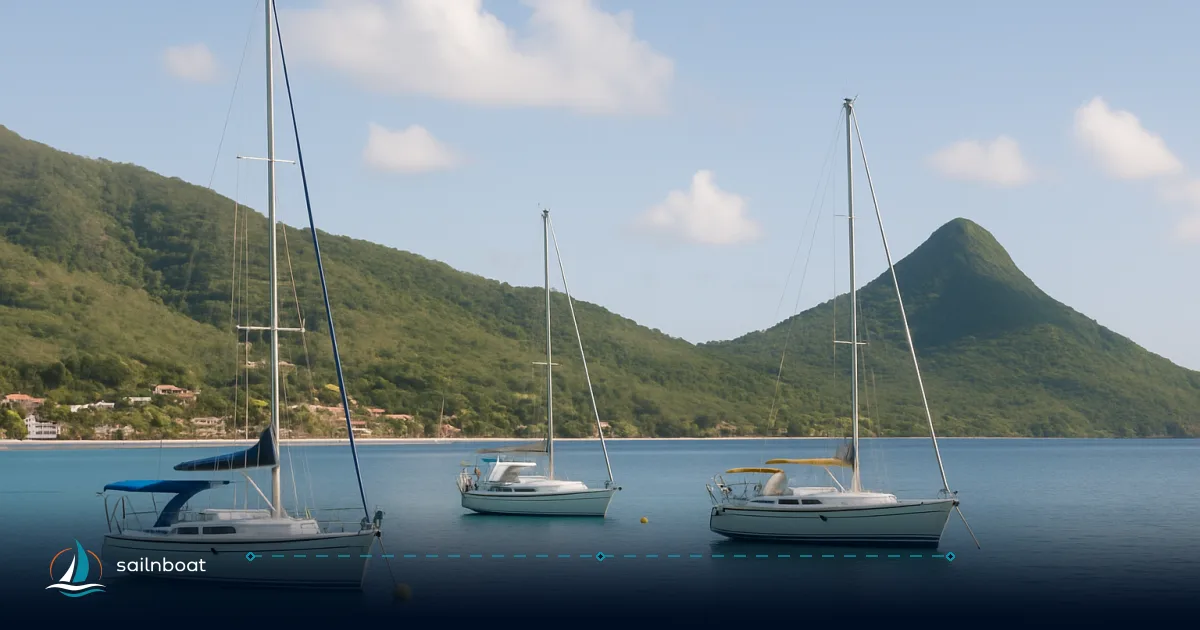
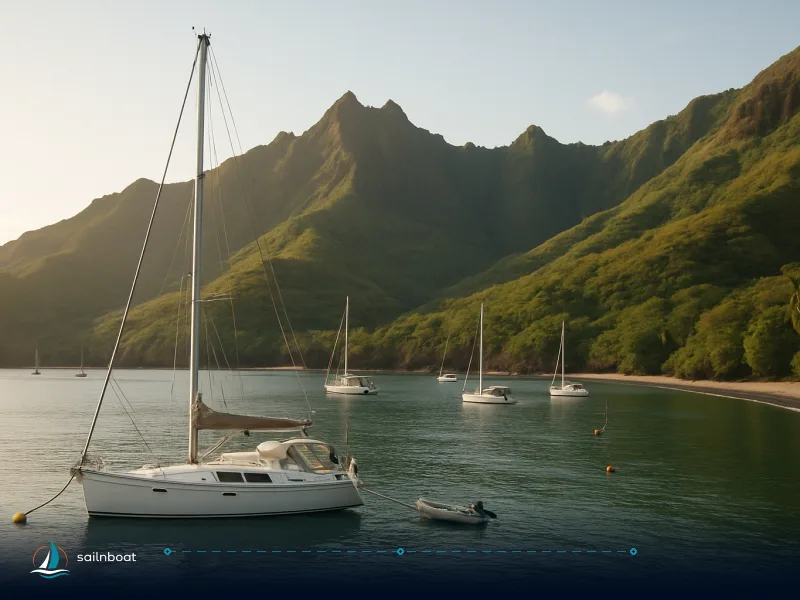
Anse d'Arlet anchorage is split between an organised buoy field at Grande Anse (managed by Espace Sud) and sandy anchor options at Petite Anse — that means you will usually be expected to take a municipal buoy rather than drop an anchor inside the marked field, while Petite Anse offers true sand anchoring in roughly 4–10 m with good holding outside the buoy zone. Read the notes below for approach, where you may legally anchor, what to expect ashore, and the simple actions (VHF, scope, wildlife etiquette) that keep your visit smooth.
Mooring Options in Grande Anse d'Arlet
Mooring Fees and Regulations
- The mooring field in Grande Anse is an organised municipal zone installed and managed by the Communauté d’agglomération de l’Espace Sud (Espace Sud). The scheme assigns buoys by vessel length and duration; agents guide placement and enforcement is by local arrêté (prefectoral order).
- Tariffs: Espace Sud charges for use and the fee is set according to boat length. A published, up-to-date tariff for the Anses-d’Arlet buoy field is not consistently available online; mooring agents are the operational contact (they work on VHF) and will confirm the nightly rate and payment method. Many municipal buoy systems in the region use low-double-digit euros per night for small boats, rising with length — treat that as a typical regional expectation rather than a definitive local price.
- Bookings & contact: On arrival hail the mooring agents on VHF channel 9 (Espace Sud mooring service) or use the Espace Sud contact channels to reserve/ask about availability. During some periods or events the authorities may close the zone or prohibit mooring — check notices before you arrive.
Mooring Facilities
- Scope of the field: Espace Sud reports the zone comprises a dedicated number of mooring devices designed to fit a range of vessel lengths (small boats <8 m, 8–15 m, 15–20 m categories are standard in their setup). Agents distribute boats to avoid damage and protect the seabed. Expect at-sea placement by mooring staff rather than self-clip-on in many cases.
- Capacity and seasonality: The field is popular and space is limited at weekends and in high season (December–April and Carnival period). Arrive before late afternoon if you want a buoy; if agents say the field is full you may need to move to an alternative harbour (Le Marin or Pointe du Bout) or anchor outside the managed zone where permitted.
- When the field is closed: Local authorities have, at times, closed the mouillage area (example: a closure/ban notice published December 28, 2025). Temporary closures are possible for safety, environmental protection or works — check local news and the Direction de la Mer / Espace Sud notices before planning to use the buoys.
Anchoring Conditions in Petite Anse d'Arlet
Anchoring Depths
- Typical depths in the Petite Anse / northern anchorage are in the order of about 4–10 m, with the best holding over sand. Charts and local guides report reliable sand bottom in the northern parts; larger yachts may anchor towards the deeper edges (around 10 m) well away from seagrass. Use your chart and sounder to confirm exact depths on approach.
- Recommended scope: For sand in 4–10 m, plan on a minimum of around 5:1 scope in calm conditions; increase to 7:1 or more if the anchorage is rolly or wind strength increases. Adjust scope to tide, planned swing-room and traffic. (This is conventional seamanship rather than a local regulation.)
Anchoring Restrictions
- Anchoring is regulated: the prefectoral regulation for Les Anses-d’Arlet and the Espace Sud rules prohibit anchoring on sensitive habitats and outside authorised areas. Specifically, anchoring on seagrass beds is forbidden because these are important turtle feeding grounds and protected habitats. Only anchor on sand patches outside the marked buoy field; do not anchor in the southern, reefed third of Grande Anse.
- Swim and dive zones: keep clear of the designated swim area around the village pier and slow your dinghy near swimmers. French environmental regulations and the Parc naturel marin support strict rules on wildlife interactions — no feeding or chasing of turtles. Violations can attract fines and enforcement.
Shore Access Points and Facilities
Access Points
- Dinghy landing: The village (Bourg / Petite Anse) offers a public dinghy landing area / small ponton used by visitors to come ashore; many skippers land on the beach at the village or use the village ponton where space allows. Larger vessels will usually use the buoy and transfer crew by tender. Local practice is to be discreet when landing — avoid crowding the village beach.
- Beach landings: Both Grande Anse and Petite Anse have sand beaches where you can beach a tender at low speed; choose an area clear of swimmers and follow local advice from mooring agents or restauranteurs. Watch tides and any submerged rocks near the headlands.
Facilities Available
- Village services are basic but practical: restaurants (the beachside caye and small restaurants), a handful of convenience shops and market outlets, and local dive operators based in the area. Full marina services (fuel, pump-out, water) are not guaranteed — plan fuel and water top-ups at Le Marin or larger ports if you need them.
- Toilets/showers: municipal facilities in the village may be limited; some restaurants will allow shore-side use for customers. Expect simple services and bring essentials from your base.
Snorkeling Opportunities and Marine Life
Best Snorkeling Locations
- Where to go: Snorkel from the tender near the pier and along the headlands beside both Grande Anse and Petite Anse; Anse Dufour and Anse Noire (nearby) are also popular local snorkel spots. Local dive and snorkel operators run short trips and guided swims—use them for a safe intro if you want an expert to point out the best reefs.
- Practical tips: Snorkel early morning for calmer water and better visibility; use a reef hook or tender anchor carefully in sand (never on coral or seagrass); keep a lookout for dive/snorkel traffic from tour boats.
Marine Life to Expect
- Expect frequent sightings of green and hawksbill sea turtles grazing near seagrass and around the pier; reef fish such as parrotfish, wrasse and sergeant majors are common on the fringing reef. Visibility and wildlife sightings vary seasonally and with recent weather conditions. Respect wildlife distances — Parc naturel marin rules and national directives prohibit feeding or harassing protected species.
Safety Considerations and Local Regulations
Safety Protocols
- Approach and watchouts: avoid the southern reef that runs off the headland — it is clearly marked on charts but sometimes hard to spot at low sun angles. The anchorage is protected from NE trade winds but is exposed to S / SW swell during unsettled weather; if strong SW swell or passing weather is forecast, be prepared to move to a harbour with better lee. Use anchor alarms and set an adequate scope for the conditions.
- Traffic and swimmers: the beach and pier attract swimmers at daytimes and weekend afternoons — keep slow speeds near the shore and monitor tender traffic. Use day-skipper judgement when dropping or picking up crew ashore.
Local Maritime Regulations
- Legal framework: The Direction de la Mer and the prefectoral arrêtés set the legal rules for navigation, mouillage and subaquatic activities in Les Anses-d’Arlet; these include the 2015 mouillage regulation and further decisions that define the buoy field, prohibited anchoring zones and penalties. Check the Direction de la Mer site or the Espace Sud information before arrival for the current legal status.
- Enforcement and temporary measures: Note that local authorities can temporarily close the mooring zone (example closure notice published December 28, 2025); closures are used for safety, environmental protection or maintenance. Do not assume the buoy field will always be available.
Quick checklist for visiting Anse d'Arlet anchorage
- Hail Espace Sud mooring agents on VHF 9 on approach; follow their placement instructions.
- If offered a buoy, take it — the zone is organised to protect seabed habitats; do not anchor in the buoy field.
- If anchoring in Petite Anse: confirm depth with your sounder chartplotter (typical 4–10 m), aim for clean sand patches, and avoid seagrass and reef.
- Respect wildlife: do not feed or chase turtles; maintain distance and follow Parc naturel marin recommendations.
- Plan logistics ashore: small shops and restaurants available; no guarantee of fuel/water/pump-out — schedule reprovisioning at a larger port if needed.
Comparison table — Grande Anse vs Petite Anse
| Feature | Grande Anse (village) | Petite Anse (northern/smaller bay) |
|---|---|---|
| Mooring availability | Organised Espace Sud buoy field (agents allocate buoys). | Fewer or no municipal buoys; anchoring on sand outside buoy field is the usual option. |
| Anchoring allowed? | Anchoring in the buoy field is regulated/prohibited; follow agents. | Anchoring on sand patches generally allowed; avoid seagrass and reef. |
| Typical depth | Variable in bay; buoys handle a range — deeper outer edges up to ~10 m. | Approximately 4–10 m over sand. |
| Facilities ashore | Village restaurants, shops, dinghy landing/ponton; limited marina services. | More sheltered and quieter beaching; fewer facilities in immediate area. |
| Snorkeling & wildlife | Excellent near the pier for turtles; busy weekends. | Good snorkeling on headlands; quieter water and sand for tender access. |
Plan your visit around the operational reality: Espace Sud runs the moorings and enforces the mouillage regulations, the Direction de la Mer publishes the legal arrêtés, and local closures or events can change availability at short notice — hail VHF 9 before committing to a place. Enjoy the snorkeling and the village, but treat the seabed and turtles as protected assets: take a buoy if offered, anchor only on sand, and leave the reef intact.
Frequently Asked Questions
Moorings in Grande Anse are managed by Espace Sud and charged per night according to boat length; the zone is organised and anchoring outside the designated devices is regulated—contact the mooring agents on VHF 9 or Espace Sud for the current tariff and availability.
Petite Anse typically has sandy bottoms in the range of about 4–10 m with good holding; anchor on sand only and avoid seagrass beds and the reefed southern sections.
You can land ashore at the village (Bourg) via the public dinghy landing/ponton or beach; the village offers restaurants and small shops but water, fuel and full marina services are limited—plan accordingly.
Expect sea turtles, reef fish such as parrotfish, and fringing coral near the headlands—snorkeling from the dinghy or shore is popular; follow park rules and keep distance from wildlife.
Follow the Espace Sud mooring procedures, respect the prefectoral arrêtés (regulations) for the mouillage zone, avoid anchoring on seagrass, monitor weather and swell (SW/SW exposure), and be aware that buoy fields and anchor zones are sometimes closed by local authorities.
Written by
Sailnboat Editorial
The Sailnboat editorial desk covers yacht and boat chartering worldwide — routes, bases, seasons, boat types, paperwork and the practical costs that decide a trip. We are a charter marketplace, not a boat owner or a local agency: what we sell is judgement and support, so our guides are written to help you make a decision, not to sell you a specific boat. Every guide is checked against live operator and marina data before it goes out.
Fact-checked against live operator and marina data, and published under our editorial standards. Last reviewed: .