Fiskardo Anchorage: Depths, Shelter, and Shore Services
Practical, skipper‑level guidance for anchoring in Fiskardo — where to drop, what depths to expect, how the anchorage handles northerly winds and what shore services are actually available.

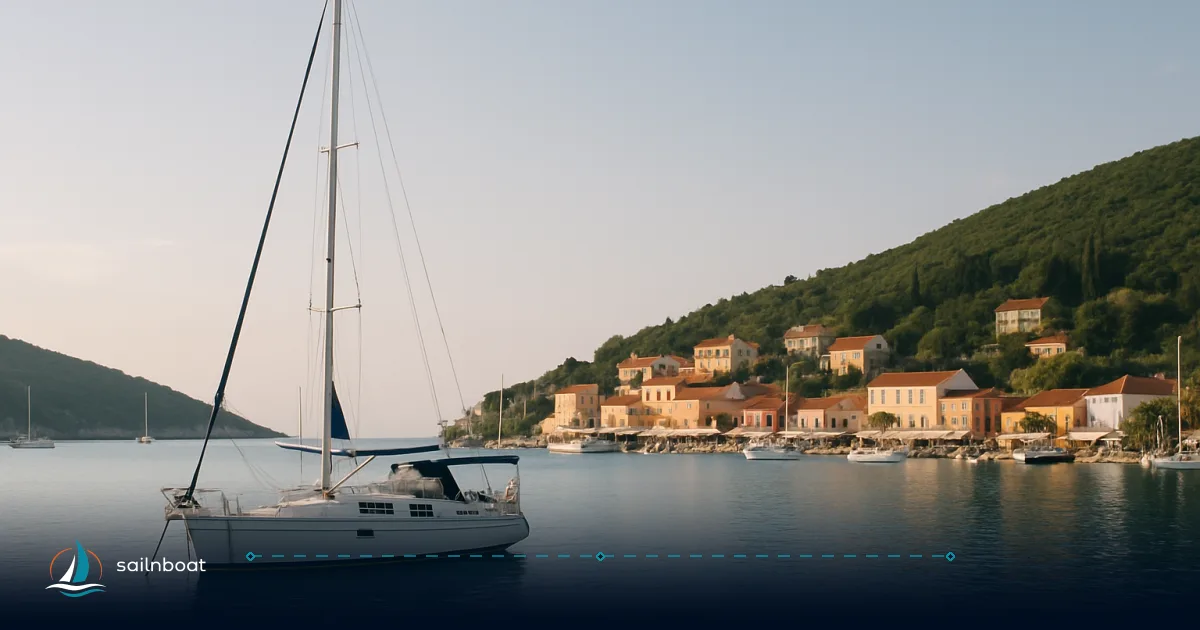
Fiskardo anchorage gives you a reliable north‑shore anchorage in 10–12 m with stainless steel rings for ashore lines, plus a deeper Panormos sector at roughly 8–15 m — expect limited quay berths in July–August and plan to arrive early.
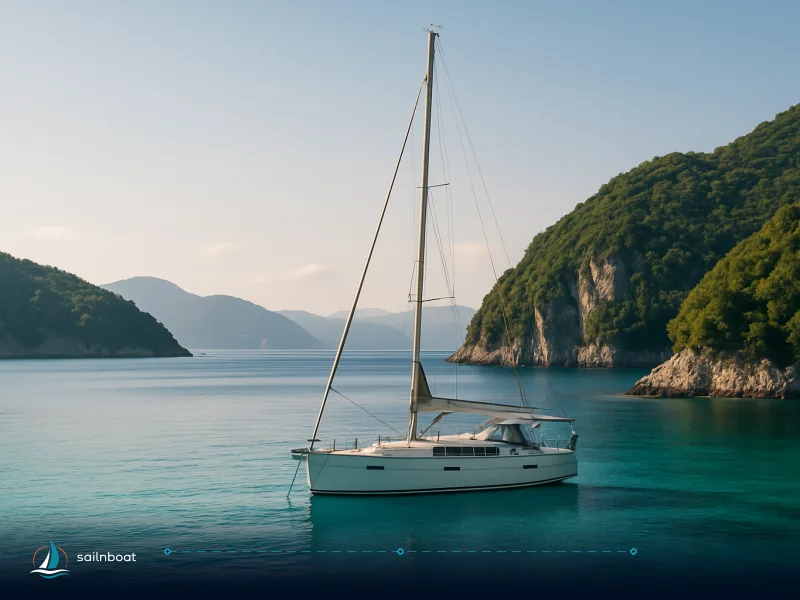
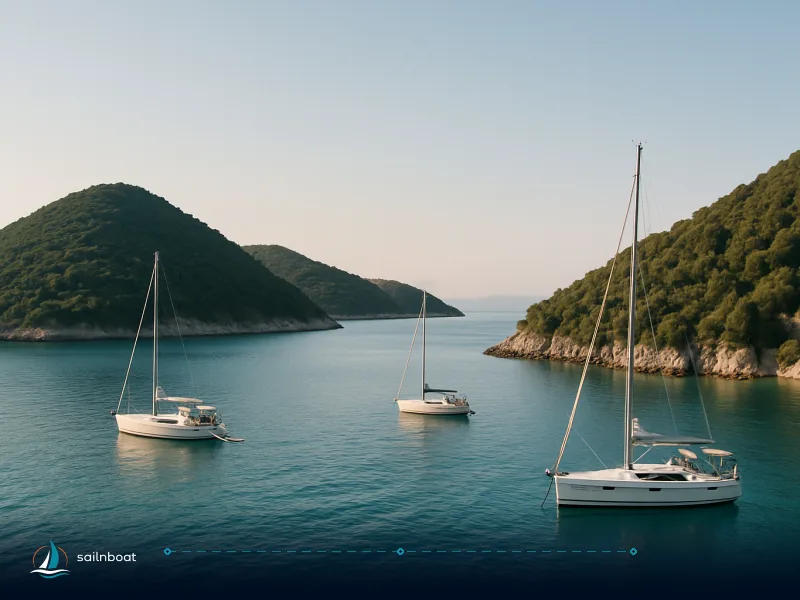
Anchoring Options and Depths at Fiskardo
Fiskardo’s small natural bay divides into three practical zones for visiting yachts: the north‑shore line‑ashore anchorage, the Panormos/SE approach, and the inner town quay (stern‑to). Each suits different boat sizes and priorities (easy shore access vs. space and depth). Use the table below to compare at a glance. Key numbers and characteristics are drawn from recent pilot guides and local cruising reports.
| Zone | Typical depth (m) | Bottom / holding | Protection | Practical note |
|---|---|---|---|---|
| North‑shore anchorage (lines ashore) | 10–12 m. | Sand, weed, some rock — fair holding. | Good from N, NW, W. | Space for ~10–12 yachts; stainless rings in the rock for stern lines. |
| Panormos / SE entrance | 8–15 m (depth drops off quickly near the headland). | Sand, weed — fair holding. | Sheltered from N/NW/W; more exposed to E/SE/S. | Deeper water, useful if quay/north filling; keep a long line or extra scope ready. |
| Inner quay (stern‑to) | ~2–4 m at wall. | Sand and weed; firm under the wall. | Very sheltered from NW; exposed to E/SE/S swell. | Limited berths; SW corner reserved for locals; quay may provide water/electric at some berths. Arrive early in high season. |
Depths at Fiskardo Anchorage
The most commonly used depths align with the table above: expect 10–12 m along the north shore where crews take lines ashore, and 8–15 m in the Panormos sector on the SE side of the entrance. The inner quay sits shallow, 2–4 m, suitable for stern‑to berths but not for deep‑draft vessels. These figures match recent cruising guides and anchor‑watch databases. Always confirm on your electronic chart and depth sounder on approach.
Mooring Options
- Stern‑to quay: the town quay fills early in season — expect a short, awkward stern‑to in a tight row of visiting boats; the SW corner is reserved for local fishing traffic. Some quay positions have shore power/water but not all.
- Lines ashore to rock rings: the north‑shore rings are the common solution for 10–12 boats; you run a stern line to the ring and leave your anchor set. This is efficient in crowded evenings but requires care with trip lines and neighbour anchors.
- Buoys and marina berths: permanent fuel pontoon is not standard — fuel is usually delivered by truck/tanker on request rather than via a fixed pontoon; formal marina-style visitor berths are limited. Call ahead if you need fuel delivered.
Shelter from Meltemi Cross‑Winds
Wind Protection Overview
Two important clarifications up‑front: the classic “meltemi” (the strong Etesian northerly that dominates the central Aegean) seldom impacts the Ionian; the Ionian’s typical summer wind is the Maistros (a north‑westerly thermal). Fiskardo is well sheltered from wind arriving from the north‑west, north and west, which is the usual pattern for the Ionian. However, Fiskardo is open to easterly, south‑easterly and southerly wind and swell — those directions produce the unpleasant motion you must plan around.
What that means for a skipper: if your weather model shows a typical NW Maistros, Fiskardo will be calm and well‑protected; if the forecast indicates an easterly or southerly system (sometimes linked to autumn frontal activity), the bay becomes rolly and may be untenable for small/medium yachts. Monitor forecasts and have a contingency plan (move to a more exposed quay position, head to a larger harbour such as Sami, or weigh anchor).
Wind Conditions and Holding Quality
- Holding: the seabed is mixed — sand with weed and occasional rock patches — so holding is generally fair but not uniformly excellent; anchors may need a positive set and visual check (snorkel where practical). Larger modern scooping anchors (Rocna/Spade type) perform well in the mixed ground.
- Wind effects: strong E/SE/S winds push swell straight into the inner bay and quay; when those directions are forecast, increase your scope if space allows and add stern lines ashore where possible, or relocate. If space is limited and you must use short scope, be aware of the increased risk and monitor holding closely. For NW maistro conditions the land blocks the wind effectively and nights are usually comfortable.
Operational trade‑offs: in the tight north‑shore band crews often use relatively short scope (3–4:1) because anchors are close together and crossings are common, while in open, deeper Panormos you can afford longer scope (5–7:1) to improve holding if space permits — choose based on space, neighbour traffic and forecast. SeaTV and anchor guides both emphasise short scope discipline in the quay area and stronger setting technique where exposure increases.
Shore Services Available for Visiting Yachts
Essential Services
- Water: fresh water is available at some quay berths; check on arrival which positions are connected.
- Fuel: Fiskardo does not have a permanent fuel pontoon in the way a full marina does; fuel is commonly delivered to the quay by truck/tanker on request — call ahead to arrange delivery. Do not count on walk‑up fuel service as you would in a busy marina.
- Provisions and chandlery: the town carries supermarkets, a competent chandlery and multiple waterfront tavernas; Fiscardo Chandlers and local suppliers can source parts quickly. Carry a small list for the chandler and allow a day for special orders.
- Pump‑out / waste: small harbours vary; some transient berth positions have waste facilities but do not rely on a universal service — ask the harbour office on arrival.
Practical booking note: quay berths are managed locally by the harbour office; some operators (flotilla companies, charters) arrange berths in advance during high season. If you require fuel delivery or shore power/water, phone ahead to the harbour or a local supplier — SeaTV recommends calling the fuel tanker in advance.
Dinghy Access to Town
The dinghy ride ashore is straightforward: the quay runs the length of the waterfront restaurants and shops and affords easy dinghy landings in calm conditions. If quay space is full and you anchor in the entrance, expect a 5–10 minute dinghy ride; in high season dinghy access to tables and the busiest restaurants is the quickest way to get ashore. Mind the ferry lane and keep to the small landing faces or the beach beside the ferry slip when busy.
Mooring your dinghy: use cleats or small landing walls and avoid blocking the ferry path; local tavernas expect dinghies but space is limited after 19:30 in July–August. Treat your dinghy like a second tender — lock it and keep valuables out of sight.
Best Time to Visit Fiskardo for Anchoring
Seasonal Considerations
- Peak season (July–August): extremely busy; quay berths fill early (SeaTV suggests before 14:00) and the town is lively but crowded. Plan an early arrival or accept an entrance anchor with a dinghy ride.
- Shoulder months (May–June, September–October): quieter nights, pleasant weather and less pressure on the quay — these months are preferred for comfortable anchoring and easier shore access. Safety Anchor Alarm and regional guides list May/June and Sept/Oct as the most comfortable windows.
Weather Patterns
Expect the Maistros (NW) to build midday in summer and calm by evening; it is predictable and generally pleasurable for sailing. Major meltemi events are an Aegean phenomenon and rarely shut the Ionian down — your real risk at Fiskardo is an unusual easterly or a southerly frontal gust (more likely in autumn). Keep an eye on national forecasts and local VHF/harbour bulletins before arrival.
Practical checklist for your Fiskardo overnight
- Arrive before 14:00 in July–August if you want quay space; north‑shore rings are taken quickly.
- Choose zone to match forecast: north shore for shelter and shore lines; Panormos for deeper water but more exposure.
- Set and test your anchor: give an active reverse set and, where feasible, snorkel to confirm the anchor is dug in. Use an anchor alarm and a trip line for stern lines.
- Scope discipline: in tight quay conditions crews commonly hold 3–4:1 to avoid crossed anchors; if space allows and the forecast demands, use longer scope (5–7:1).
- Fuel/provision calls: call ahead for fuel by tanker and for any special chandler requirements. Expect quick turnarounds for common parts.
Plan your next anchorage at Fiskardo with these specifics in your notebook: exact zone choice, expected depth, stern line options, and a call to arrange fuel if you need it. Fiskardo rewards careful timing and a small amount of local homework — arrive early, set carefully, and enjoy the waterfront hospitality.
Plan your next Fiskardo stop using the table above and this checklist; if you want we can draft a short route and timetable for your specific boat (draft, tender size, crew) and the dates you plan to visit.
Frequently Asked Questions
Depths vary by zone: north‑shore anchorage is typically 10–12 m; the Panormos (SE) sector ranges roughly 8–15 m; inner quay berths sit in 2–4 m.
Fiskardo offers reliable shelter from N, NW and W winds (the Ionian’s usual Maistros). The Aegean meltemi rarely reaches the Ionian; Fiskardo is exposed to E, SE and S winds.
Fresh water and provisioning are available on the quay, chandlery service operates in town and fuel can be delivered to the quay by tanker/truck with advance notice.
Yes — limited quay berths (stern‑to) and stainless steel rock rings on the north shore for stern lines; overall quay capacity is small so many boats anchor.
Holding is typically fair: mixed sand, weed and patches of rock; anchors may require extra set and a visual check.
NW maistro winds are well blocked; easterly or southerly winds can put swell into the bay and make the anchorage uncomfortable or untenable.
Anchoring itself is generally free; quay berthing is managed locally and may carry a small harbour or transient fee depending on the berth.
May–June and September–October give quieter conditions and pleasant weather; July–August is busiest and you should arrive early to secure quay space.
Written by
Sailnboat Editorial
The Sailnboat editorial desk covers yacht and boat chartering worldwide — routes, bases, seasons, boat types, paperwork and the practical costs that decide a trip. We are a charter marketplace, not a boat owner or a local agency: what we sell is judgement and support, so our guides are written to help you make a decision, not to sell you a specific boat. Every guide is checked against live operator and marina data before it goes out.
Fact-checked against live operator and marina data, and published under our editorial standards. Last reviewed: .