Exploring the Ionian Islands: A Complete Yacht Charter Guide
A practical, step‑by‑step guide to planning an Ionian Islands yacht charter: best months, where to start, typical winds and sea temperatures, must‑visit anchorages and the key costs and paperwork.

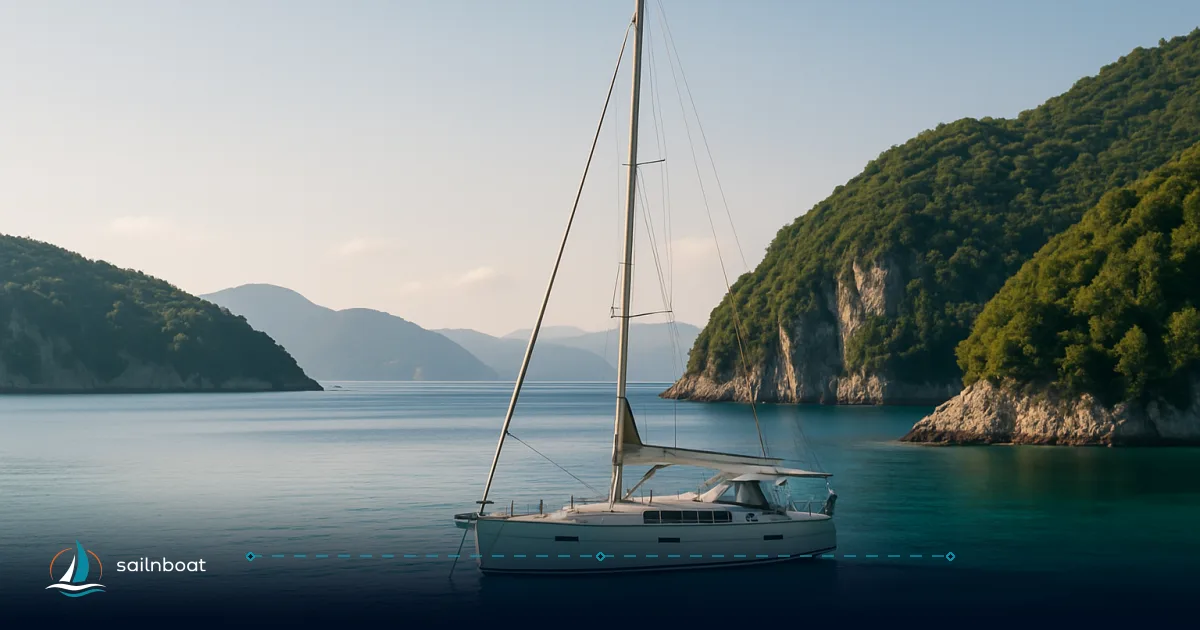
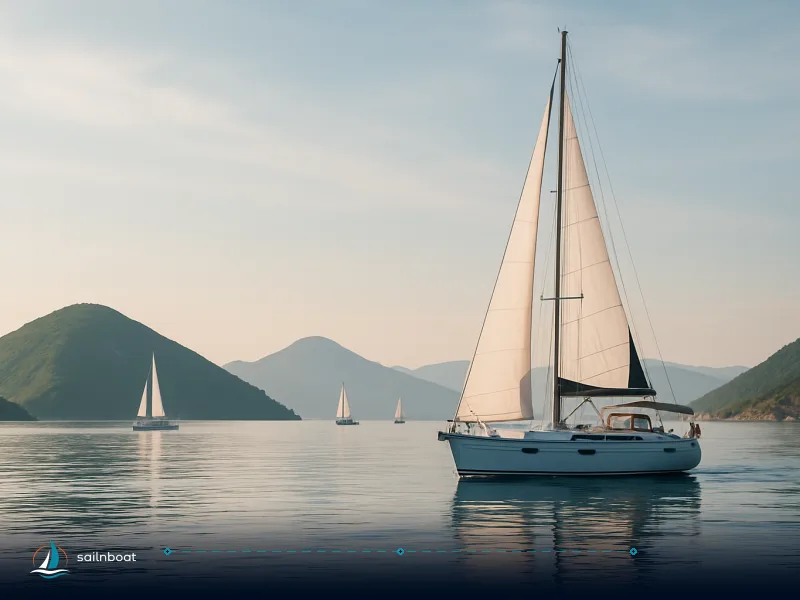
The Ionian Islands yacht charter is the easiest Mediterranean cruising region to sail in high summer: short hops, sheltered anchorages and warm water make a weeklong loop practical for an experienced skipper. For decision‑making: pick shoulder months (May–June or September–October) if you want lighter winds and fewer day‑boats; choose late June–early September when all services and bases are fully open and predictable.
Optimal Sailing Seasons in the Ionian Islands
Short answer for planning: May–June and September–October are the sweet windows (fewer crowds, reliable sunny weather, comfortable seas); late June–early September is peak season with maximum services, but more boats and higher prices. Use the shoulder months if you want quieter anchorages and easier berthing.
Peak and Shoulder Seasons
- Peak: late June → early September. Expect full charter schedules, daily boat excursions at popular beaches and busier marinas and waterfront tavernas.
- Shoulder: May–June; September–October. Quieter marinas, better availability, often lower berth and charter prices; some seasonal shore businesses may still be closed early in May or late in October.
- Off‑season (Nov–Apr): many charter bases close or run reduced services; winter maintenance is common.
Planning note: charter bases commonly publish a formal check‑in time (often late afternoon) and a check‑out time (usually mid‑morning) — specific times vary by operator, so confirm with your base at booking. Some bases list check‑in as ~17:00 and check‑out around 09:00, but operators differ.
Weather Considerations
- Air temperatures: in summer the Ionian islands typically see daytime highs in the mid‑20s to low‑30s °C; shoulder months are cooler but still warm for sailing.
- Sea temperatures: sheltered Ionian bays and southern pockets commonly reach mid‑20s °C (often 24–27 °C) in July–August; northern sheltered gulfs may be a degree or two cooler.
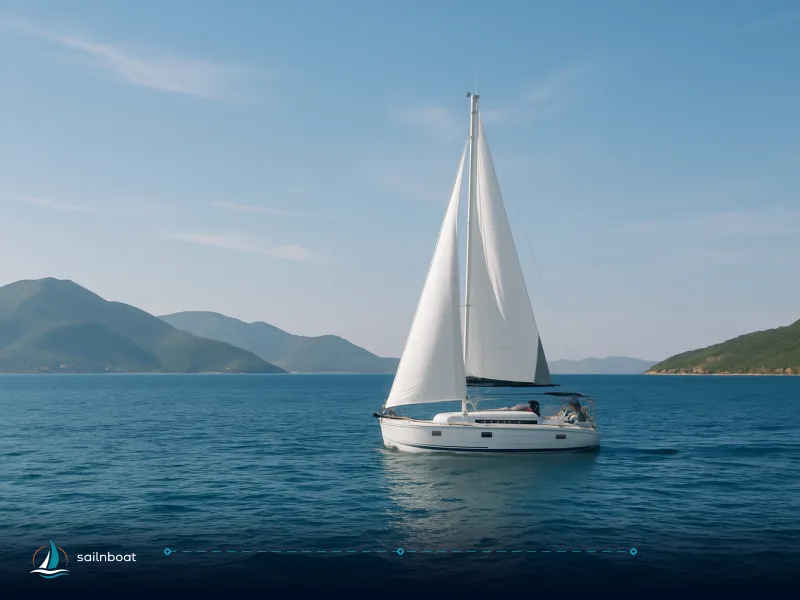
- Winds: the Ionian rarely suffers the strong Aegean meltemi; you should expect a light–moderate north‑west afternoon breeze (maistros) that fills in after midday and often eases at sunset — plan crossings for early morning where possible.
Ideal Embarkation Points for Yacht Charters
Choose your base to match the cruising loop you want, logistics (flights, transfers) and how often you want to visit marinas vs anchoring.
| Base | Best for | Practical logistics & facilities |
|---|---|---|
| Corfu (Gouvia / Corfu Town) | Northern Ionian, Paxos & Antipaxos loops; large fleet choices | Gouvia is a major full‑service marina ~6–8 km from Corfu airport with international links and strong charter infrastructure. Ideal if you need easy flight connections, provisioning and technical support. |
| Lefkada (Lefkada Town / Nidri / Vasiliki) | Sheltered, short hops, family sailing | Lefkada is connected to the mainland by a causeway and floating bridge — easy road access, multiple charter bases, and many sheltered anchorages close‑by (Nidri, Meganissi, Vasiliki). Good for crews who want short passages and reliable daytime winds. |
| Zakynthos (Zakynthos Town / Porto Vromi) | Southern Ionian, Blue Caves, Navagio viewpoint | Best starting point if your priority is the southern islands and the Blue Caves; ports serve both small yachts and larger charter vessels but check for seasonal restrictions around protected beaches. |
Corfu (Gouvia) is the most common international embarkation: fully serviced marinas, frequent charter handovers and an airport with summer scheduled flights to many European cities. Lefkada is the most convenient if you’re driving or want very short, sheltered hops. Zakynthos puts you nearest the Blue Caves and Navagio viewpoint but requires more attention to protected‑area rules.
Expected Weather Conditions and Sailing Conditions
Wind Patterns
- The Ionian’s summer pattern is generally lighter and more thermal in character than the Aegean meltemi. Expect a predictable afternoon NW breeze (maistros) that typically builds from late morning into the afternoon and drops after sunset. Offshore legs are calmer in early morning.
- Wind strength: in the Ionian typical summer winds are often in the Beaufort 3–5 range (light to moderate), but localized channels and sea funnels (for example Vasiliki on Lefkada) can produce stronger afternoon gusts; plan routes to avoid long coastal fetch on days with stronger forecasts.
Sea Conditions
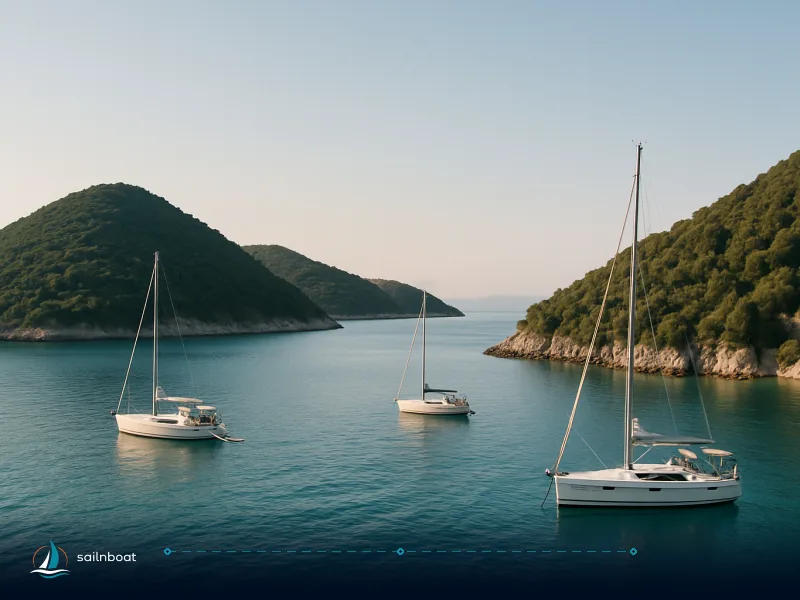
- The Ionian is one of the more protected cruising grounds in Greece — many anchorages are sheltered and sea states tend to be calm in mornings with small afternoon chop. Swells can appear on exposed passages or during unsettled weather; always brief the crew and set a conservative plan.
- Visibility is usually excellent in summer; water clarity around Antipaxos and Paxos is exceptionally good (great for snorkelling).
Practical weather routine: check a 72‑hour marine forecast each evening; plan open‑water crossings for first light when wind is typically lightest.
Notable Destinations and Attractions
You can tailor a week to shorter, sheltered legs (Corfu → Paxos → Antipaxos → Lefkada → Meganissi → Ithaca → Fiskardo) or a route that includes Zakynthos if you have the time. Below are the must‑see stops and what they deliver operationally.
Voutoumi Beach (Antipaxos)
- Why go: two of the Ionian’s clearest bays (Voutoumi and Vrika), excellent snorkel, shallow clear water and good holding in sand/pebble.
- Access: boat only; most skippers stop from Paxos (Gaios) and the run is short. Expect day‑boat traffic in high season — anchor early if you want space.
Navagio Beach (Shipwreck), Zakynthos
- Why go: iconic photo subject — the shipwreck framed by towering limestone cliffs.
- Practical reality: the beach is a sea‑enclosed cove with landing restrictions that have tightened recently after cliff instability; most operators now visit the bay offshore or use the clifftop viewpoint rather than land. Early‑morning boat runs give the clearest water and the smallest crowds; verify the current landing/anchoring rules before committing that stop.
Fiskardo (Kefalonia)
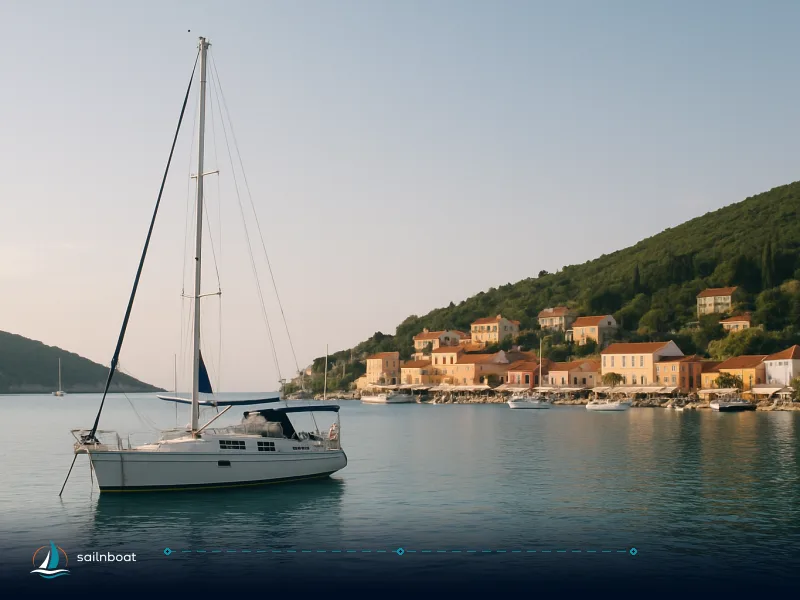
- Why go: the only Kefalonian port that preserved its pre‑1953 architecture; lively waterfront dining and secure berths for visiting yachts.
- Practical: berthing in peak season can be busy; book if you prefer a guaranteed berth ashore. Expect higher shore prices than the rest of Kefalonia — premium dining and a bustling port scene.
Corfu Old Town
- Why go: the Old Town is a UNESCO World Heritage site with Venetian fortifications, compact streets and plentiful provisioning options — useful as a start or end point for provisioning and clearances. Allow a half‑day ashore for customs/clearance and provisioning if you arrive late.
Suggested practical split: plan major provisioning at Corfu or Lefkada, use Paxos/Antipaxos and Kefalonia for scenic swimming and dining, and treat Zakynthos cautiously around protected turtle zones (see practical considerations).
Practical Considerations for a Successful Yacht Charter
This section lists the operational details you will use when making decisions at booking and at handover.
Mooring Fees and Marina Facilities
- Typical berth prices in Greece vary widely by marina and season, but recent price surveys show a median nightly berth in Greece around €30–40 for a 10–13 m vessel; private marina rates in premium locations can climb above €80–120/night in high season. Town quays can be much cheaper or free, but they lack shore power and services. Budget 2–4 marina nights in a week and expect anchoring for the rest.
- Facilities: most major Ionian marinas provide water, electricity, fuel, pump‑out, Wi‑Fi and basic technical support; superyacht services are limited outside larger hubs. Gouvia (Corfu) is a full‑service marina with easy airport transfers.
Table — illustrative berth cost guidance (indicative ranges for planning; final price is per marina and boat LOA)
| Marina type | Typical nightly range (10–13 m) |
|---|---|
| Town quay / municipal pontoon | €0–€30 |
| Mid‑size private marina (Ionian) | €30–€80 |
| Premium private marina / peak locations | €80–€200+ |
Local Regulations, Licences and Documentation
- Most Greek charter companies require an internationally recognised skipper qualification (such as ICC, RYA Day Skipper/Yachtmaster or equivalent) for bareboat charters; they may also request a VHF Short Range Certificate (SRC) or equivalent. Requirements vary by operator, so confirm with your charter company. Requirements vary by operator — send scans of certificates and a short sailing résumé when you book. If you lack accepted paperwork, book the yacht with a skipper.
- Paperwork and checks at handover: expect passport scans, skipper certificate, VHF certificate, credit card for deposit, and a logged sailing CV. Some operators perform a short practical competency check on the water or a hands‑on briefing.
Money, APA and Deposits
- APA: for crewed charters and larger yachts the Advance Provisioning Allowance (APA) is commonly charged and often falls within a percentage range of the base charter rate depending on yacht type and fuel consumption; it covers fuel, food, berths, permits and running costs and is reconciled at the end of the trip. Check with your charter company for the exact percentage. For bareboat weeklies you should still budget for provisioning, fuel and unknown fees — estimate a working fund for on‑route expenses.
- Security deposit: bareboat charters normally hold a security deposit on a credit card (typical ranges for small/medium yachts are often €1,500–€5,000; larger or high‑value boats are higher). Your reservation contract will state the exact amount.
- VAT, port taxes, and transit log: check whether VAT is included in the headline price and whether the charter includes a transit log/cruising permit (small administrative fees often apply).
Safety and Emergency Preparedness
- Emergency numbers: The EU emergency number 112 connects you to coastguard, police, or ambulance; always monitor VHF Channel 16 on passage and save local base and coastguard numbers in your phone. Confirm the current Hellenic Coast Guard emergency number with your charter operator or local authorities.
- Protected zones & rules: Zakynthos National Marine Park enforces strict seasonal rules (no anchoring in certain zones during nesting season, speed limits and approach distances), and Navagio (Shipwreck) has had landing/anchoring restrictions after cliff instability — check park rules before you go. Fines can be substantial for breaches.
- Onboard kit: confirm lifejackets for all crew, liferaft service dates, EPIRB, fire extinguishers and flares, functioning GPS and AIS (if fitted), and a charged handheld VHF. Plan a man‑overboard exercise before you leave the marina.
Handover checklist (what the base will look at and you should follow)
- Paperwork: skipper certificate, VHF/SRC, passports, credit card for deposit.
- Inventory and damage log: walk the boat with the base rep and sign the inventory; photograph any pre‑existing damage.
- Systems check: engine(s), fridge, nav lights, bilge pump, toilet systems, anchor windlass and ground tackle.
- Safety briefing: location of lifejackets, manual bilge pump, EPIRB and how to operate onshore chargers and shore power.
- Local brief: harbour entrance notes, any temporary notices to mariners, and the base recommended safe anchorages for your first night.
Example 7‑Night Itinerary and Practical Distances
Below is a compact 7‑night loop starting from Corfu that keeps daily passages short and focuses on anchorages popular with charterers. Distances are typical sailing distances between the named ports as published by charter operators; always check your specific base coordinates and plan to leave early for longer legs.
| Day | Passage | Typical NM |
|---|---|---|
| 1 | Corfu (Gouvia) → Paxos (Gaios) | 25–35 NM (varies by berth start point). |
| 2 | Paxos (Gaios) → Antipaxos (Voutoumi/Vrika) | 3–6 NM (short hop). |
| 3 | Antipaxos → Lakka (Paxos) → Lefkada (overnight approach) | 20–40 NM depending on route |
| 4 | Lefkada → Meganissi (Vathi) / Nidri | 8–15 NM |
| 5 | Meganissi → Ithaca (Vathy) → Fiskardo (Kefalonia) | 15–30 NM |
| 6 | Fiskardo → Sami / Kioni (Kefalonia area) | 10–25 NM |
| 7 | Sami → Zakynthos (if adding Zakynthos, allow a longer transit or reposition by ferry/car) | 35–70 NM depending on route |
Trade‑offs: adding Zakynthos to a Corfu start increases transit time significantly or requires an overnight reposition (or a base change). Many charters split the cruising region (north Ionian vs central/southern) to avoid long passages.
Final practical tips — what goes wrong and how to manage it
- Book marina nights and premium tavernas early in July/August; expect queues otherwise.
- If you lack an accepted skipper certificate, hire a local skipper for the week — this reduces stress and often improves the on‑water itinerary flexibility.
- Fuel planning: motor‑intensive legs and superyachts burn disproportionate fuel; ask the captain or charter company for realistic fuel estimates for your planned itinerary before departure.
- Take a weather window seriously: plan a seaworthy alternative (sheltered port) for every offshore leg; in the Ionian the safest tactic is to sail early and finish passages before the afternoon breeze peaks.
- Respect marine‑park and nesting rules, especially in Zakynthos (laganas/Marathonisi) — fines and vessel seizure are real enforcement risks in recent seasons.
Start planning your yacht charter in the Ionian Islands today — choose your base to match the loop you want, budget for APA and berths, confirm licences (ICC/RYA/SRC are commonly accepted) and build every day around the morning weather window for the calmest, most enjoyable sailing.
Prepare your skipper paperwork, shortlist two bases (Corfu and Lefkada cover most interests) and draw a 7‑night route that keeps passages under 40 NM unless you want a longer blue‑water day.
Frequently Asked Questions
Shoulder seasons (May–June and September–October) give calmer winds, warm water and far fewer day‑boat crowds; late June–early September is peak for weather and services but busier.
Choose Corfu (Gouvia) for international flights and big‑base logistics, Lefkada for the short sheltered loops and easy mainland access, and Zakynthos if you want the southern islands and Blue Caves.
The Ionian usually has lighter, afternoon north–west breezes (maistros) rather than the strong meltemi of the Aegean; sea temperatures in summer typically sit in the mid‑20s °C.
Must‑visits include Antipaxos (Voutoumi/Vrika beaches), Paxos (Gaios, Lakka), Navagio (Shipwreck) viewpoint on Zakynthos, Fiskardo on Kefalonia and Corfu Old Town (UNESCO).
Confirm berth and fuel arrangements, budget APA (commonly 20–35%), bring accepted skipper/VHF certificates, plan around protected zones (Zakynthos marine park) and prepare an onboard emergency and communications plan.
Written by
Sailnboat Editorial
The Sailnboat editorial desk covers yacht and boat chartering worldwide — routes, bases, seasons, boat types, paperwork and the practical costs that decide a trip. We are a charter marketplace, not a boat owner or a local agency: what we sell is judgement and support, so our guides are written to help you make a decision, not to sell you a specific boat. Every guide is checked against live operator and marina data before it goes out.
Fact-checked against live operator and marina data, and published under our editorial standards. Last reviewed: .