The Untold Truth About Yacht Charter Reviews: What to Look For
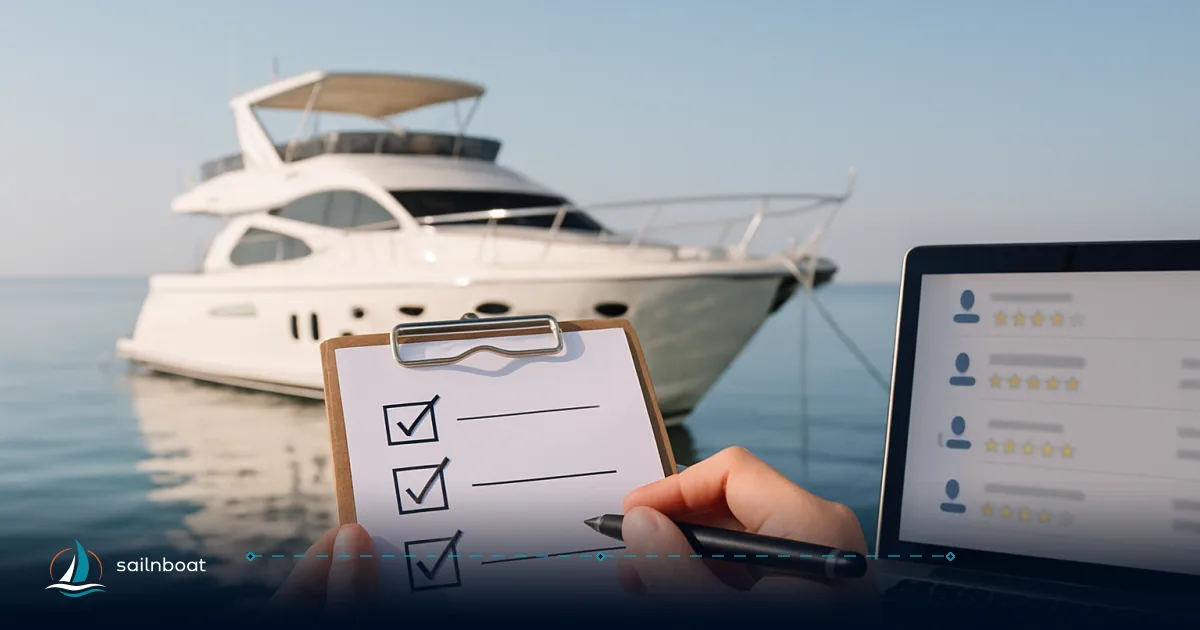
Read yacht charter reviews with a checklist: focus on yacht condition, crew professionalism and what the price does and does not include; use platform signals to spot authenticity.

Key Elements of Comprehensive Yacht Charter Reviews
Essential Aspects to Evaluate
Focus on these operational details in every review:
- Yacht Condition and Maintenance Reviews with specifics are gold. Look for statements like:
“Main sail replaced July 2023; no issues with furling gear all week.” “Generator tripped twice—captain reset and logged the fault. Service engineer called on day 3.” When you see multiple reviews mentioning the same technical fault (e.g., “air-con failed on two trips in June”), treat it as a pattern, not a fluke. One-off complaints—especially about minor wear—are less meaningful.
- Crew Professionalism and Service Quality The best reviews name the captain and crew, describe how they handled problems, and give clear examples:
“Captain Anna rerouted us safely when the wind shifted SW; handled port clearance in Split at 23:30.” “Steward kept the galley spotless, and meals ran to schedule—even with two vegetarians in the group.” Generic praise (“crew was great”) is just noise. Actionable detail is what matters.
- Destination Insights and Local Knowledge Operational comments help you plan:
“Marina Kastela fills by 16:00 in July—arrive early or book in advance. Berth fee was €85/night for 44ft.” “Fuel dock at Gouvia is busy on Saturdays; expect a 30-minute wait.” These details give you an edge when provisioning, booking berths, or planning your route.
Fast-Read Checklist
For any review, extract:
- What broke or exceeded expectations?
- How did the crew/operator fix or communicate about it?
- What was included in the price, and what ended up billed as extra (fuel, mooring, APA, tips)?
Typical Charter Costs to Watch For
- APA (Advance Provisioning Allowance): Most crewed charters ask for an APA, often 20–30% of the charter fee. This covers fuel, food, berthing, and other running expenses. If reviews mention “APA overrun,” ask for recent weekly breakdowns.
- Mooring and Marina Fees: Expect €40–90 per night for a 45-foot yacht in high season Mediterranean marinas; sometimes higher in Croatia and the South of France. Some reviews will mention local anchorages where you can save.
- Fuel: Typical weekly fuel costs for a 45-foot sailing yacht are €100–300, but a motor yacht can easily run €800–2,000/week, depending on speed and itinerary.
Identifying Reliable Sources for Authentic Feedback
Top Platforms for Yacht Reviews
Not every review site is equally reliable. Here’s what you can expect from major platforms:
| Platform | Verification / Review Policy | Strength | Common Caution |
|---|---|---|---|
| YachtCheck | Structured forms, booking verification | Technical & service detail | Lower volume; few day-charter posts |
| Boataround | “Verified boat” claims, Trustpilot record | Large inventory, transparent | Public disputes over deposit/refunds |
| Click&Boat | Peer reviews, insurance, booking badge | Strong for day-charter/owners | Owner/operator feedback mixed; dispute process varies |
| SamBoat | Platform review system, booking badge | Good for short-term/local rental | Review moderation limited; user responsibility |
| SeaRadar | Curated listings, emerging aggregator | Focused, transparent | Mixed early feedback; cross-check elsewhere |
| TripAdvisor, Trustpilot | Aggregator, open to public | Handles complaints about platforms | Reviews can be generic/unverified |
Booking Verification and Cross-Platform Checks
- Booking Verification Badges: Many platforms now show a “Verified Booking” badge for users who actually completed a charter. Treat these as a plus, but remember: badge systems differ and are not foolproof.
- Cross-Check Reviews: If a yacht or operator has only reviews on their own site, be cautious. Look for third-party confirmations on aggregators or marketplaces.
Platform-Specific Detail
- YachtCheck requires a booking reference to leave a review, and scores technical and service dimensions separately.
- Boataround reviews are tied to completed bookings, but public Trustpilot threads often reveal patterns in dispute handling.
- Click&Boat mixes owner-operator and peer-to-peer listings; review both the boat and the owner/operator profile.
- SamBoat puts dispute resolution responsibility on users; check the terms and ask how issues are handled.
- SeaRadar is newer—cross-reference feedback with established platforms.
Regional Differences in Review Culture
- In the Mediterranean, reviews often focus on technical maintenance and marina logistics.
- In the Caribbean, service style and provisioning feature more heavily.
- Regulatory environments also differ: in Croatia, for example, port authorities and charter companies may require stricter documentation, and reviews sometimes reflect this.
The Role of Reputation Management in Charter Companies
Impact on Client Trust
How a charter company manages feedback matters as much as the feedback itself:
- Response Speed and Tone: Operators who reply promptly, acknowledge issues, and offer fixes build trust. Defensive or silent responses are a red flag.
- Volume and Consistency: A steady flow of recent reviews (not just a cluster from one month) suggests genuine, ongoing business.
- Evidence of Improvement: The best companies update their listings with real improvements:
“AC unit replaced August 2023—see new photo in gallery.” Compare the operator’s claims with later reviews to confirm follow-through.
Booking Tip
If reviews mention the same problem repeatedly, ask the operator how and when it was resolved. For major repairs, request service receipts or updated inventory lists.
Evaluating Charter Ratings and Their Significance
Understanding Rating Systems
- Context Matters: A 4.8-star average means little without knowing the review count and recency. Five reviews from last season outweigh 20 from five years ago.
- Read Behind the Score: Star averages hide operational detail. Scan for the three most common praises and complaints—these are your likely experience.
- Prioritise Recency: Focus on reviews from the last 12–24 months for yacht and crew quality, and the last charter season for destination logistics.
Quantitative and Qualitative Signals
- Large Datasets: Hundreds of reviews dilute the effect of outliers.
- Tiny Samples: Three or four reviews (even if all positive) are not enough to assess reliability.
Discerning Genuine Reviews from Biased Ones
Red Flags to Watch For
- Generic Language:
“Best holiday ever!” “Crew was awesome.” These say nothing about the actual yacht or experience.
- Copy-Paste Patterns: Multiple reviews with identical sentences (“Food was delicious, captain was friendly, would book again”) suggest coordination.
- Operator-Only Reviews: If all reviews are on the operator’s site, search for independent feedback.
- Extreme Ratings Without Detail: Five-star reviews listing only trivial positives, or one-star reviews with no context, are less useful.
- Missing Dates or Crew References:
“We chartered in June 2023 with Captain Mark—he handled customs at 02:00 after a late arrival.” Specifics like this are more trustworthy.
Real vs. Fake Review Examples
Genuine:
“Generator failed on day 2—crew arranged a mechanic within 3 hours. Fuel cost came to €320 for the week, as estimated. Marina fees at Hvar were €90/night; captain secured a berth by calling ahead.”
Suspicious:
“Everything was perfect, 10/10, would recommend to anyone!” (No mention of the yacht, crew, route, or dates.)
Regulatory Oversight
Consumer protection authorities now emphasise transparency and enforcement around reviews. If a pattern feels suspicious, cross-check with public complaints records or national consumer authorities.
Best Practices for Interpreting Feedback
Creating a Balanced Perspective
- Checklist Before Reading: Maintenance, crew, inclusions, logistics, operator response. Tally mentions over the last 18 months.
- Prioritise Failures Over Service Style: Recurring mechanical or safety issues are more important than one-off complaints about food or decor.
- Ask Targeted Questions: When booking, request:
- Last full service date
- Recent photos of the yacht
- Crew CVs or credentials
- APA/fuel estimates (ask if capped or open-ended)
- Combine Qualitative and Quantitative Signals: Look for crew names, operational fixes, number of reviews, average rating, and percentage of recent 5-star ratings.
- Operator Replies: If a review flags a material issue, check for a thoughtful response. Remedial replies lower risk; silence or defensiveness increases it.
Sample Workflow: Pre-Booking Review Audit
- Collect Reviews: Two marketplaces plus one specialist site
- Extract Recurrent Themes: Three operational complaints, three praises
- Contact Operator: Ask direct, review-based questions
- Assess Responses: If vague or evasive, increase your contingency fund or choose another yacht
Visual Checklist
| Review Item | Appears in Reviews? | Operator Response? | Your Follow-Up |
|---|---|---|---|
| Maintenance issues | Yes/No | Yes/No | Ask for receipts |
| Crew quality | Yes/No | Yes/No | Request crew CV |
| Inclusions/APA | Yes/No | Yes/No | Confirm breakdown |
| Logistics advice | Yes/No | Yes/No | Ask about marinas |
Frequently Asked Questions
Focus on yacht condition (maintenance, last refit), crew professionalism (captain’s seamanship, service items), precise inclusions (fuel, berths, water toys, APA), and destination practicalities (marina access, customs, mooring fees).
Check for concrete details, consistent accounts across platforms, reviewer profiles or booking verification badges, dates and photos; avoid reviews that use vague praise or dramatic language without specifics.
How a company responds to negative feedback signals competence and accountability: timely, factual replies that offer remediation build trust more than silence or defensive posts.
Ratings are a quick filter but not a decision: use them to shortlist operators, then read the detailed reviews behind the score and check review volume and recency.
Look for identical phrasing across reviews, extreme extremes (all 5-star text without detail), missing dates or crew names, and reviews only on one platform.
Map recurring comments (both good and bad) into operational categories—maintenance, crew, provisioning, logistics—and ask the operator specific follow-ups based on those points.
Written by
Sailnboat Editorial
The Sailnboat editorial desk covers yacht and boat chartering worldwide — routes, bases, seasons, boat types, paperwork and the practical costs that decide a trip. We are a charter marketplace, not a boat owner or a local agency: what we sell is judgement and support, so our guides are written to help you make a decision, not to sell you a specific boat. Every guide is checked against live operator and marina data before it goes out.
Fact-checked against live operator and marina data, and published under our editorial standards. Last reviewed: .