Understanding Yacht Charter Excess Insurance: A Complete Guide
Yacht charter excess insurance limits the money you can lose after damage and commonly reduces the refundable security deposit held at handover. This guide explains how it works, what it usually covers and how to choose the best policy for your charter.

Start with the decision you must make: do you accept the charter operator’s security deposit arrangement, or do you buy a separate excess (bond) insurance product that reduces or replaces that deposit?
Yacht charter excess insurance (sometimes sold as a deposit bond, damage waiver or collision-damage waiver) transfers the financial risk represented by the yacht’s insurance excess from you to an insurer so the charter company does not need to hold the full excess on your card. Read the next sections to understand how it works, what it usually covers and how to choose the right product for your trip.
What Is Yacht Charter Excess Insurance?
Definition and Function
Yacht charter excess insurance insures the amount you would otherwise be liable for under the yacht’s hull or comprehensive insurance excess. When a charter company requires a refundable security deposit at handover, that sum typically equals the insurer’s excess on the yacht policy; an excess insurance product provides a contractual promise or bond to cover that exposure so the operator can accept a smaller deposit or no deposit at all. This is often marketed as a “deposit insurance”, “bond insurance”, or “excess reduction/waiver.”
How it functions operationally:
- You buy a policy or bond covering the excess amount (or a defined portion of it).
- The charter company either accepts the insurer’s bond certificate in lieu of taking the full refundable deposit, or they accept a reduced refundable deposit because the insurer will underwrite part/all of any claim.
- If damage occurs, the charter company claims against the yacht’s insurance and the insured excess; the excess insurer then meets the insured obligation according to its wording and any exclusions.
Note the difference in phrasing operators use: “deposit”, “excess”, “deductible” and “bond” all describe related pieces of the same exposure — the money the charterer is effectively on the hook for if the yacht is damaged.
How Excess Insurance Affects Your Security Deposit
Impact on Deposits and APA
Two practical outcomes buyers see most often:
-
Lower hold or no hold at handover: Many charter companies will accept an insurer’s bond or a third‑party deposit insurance certificate so they do not block your card for the full excess. The exact effect (zero hold, smaller hold, or capped hold) depends on the operator and the product you bought.
-
No change (but peace of mind) if operator does not accept the product: Some operators only accept their own damage-waiver product or a limited list of insurers, so buying independent cover does not always eliminate the deposit requirement. Confirm acceptance before you buy; a small number of insurers publish bond wording that charter companies prefer.
Advance Provisioning Allowance (APA)
- Excess insurance and APA are separate: APA covers on-board running costs (fuel, food, port fees) and is usually an interim float paid to the skipper or operator. Excess insurance and APA are typically handled separately; APA covers running costs and is not generally affected by deposit waiver arrangements, though a lower held deposit may free card capacity and make APA payment smoother. Always treat APA as a separate budget item.
Practical tip: ask the charter operator exactly how they will treat your booking after you buy a policy (zero deposit, reduced deposit or unchanged). If they require a smaller deposit, get that agreement in writing and carry the insurer’s bond certificate to handover.
Comparing Deposit Waivers and Independent Excess Insurance
Waivers vs. Independent Insurance
You have two common routes to reduce deposit exposure:
-
Charter-company deposit waivers / damage waivers: sold at handover or pre-booking as a non-refundable fee. They are convenient and guaranteed accepted by that operator but can be limited in scope (may exclude some items, apply per incident rather than per charter, or not be transferable).
-
Independent excess insurance / bond providers: specialist insurers (and some major marine insurers) publish charter excess insurance or bond products that you can buy externally. They can be cheaper or broader, and in some cases provide a formal bond the charter operator accepts — but acceptance is not universal; verify ahead. Examples of insurers that publish charter deposit/bond options include major marine insurers and specialist providers.
Compare them quickly in this table:
| Feature | Charter-company waiver | Independent excess insurance / bond |
|---|---|---|
| Acceptance at handover | Guaranteed (operator sells it) | Often accepted but must be verified with the operator |
| Price model | Single non-refundable fee set by operator | Varies by insurer; often cheaper for longer charters or repeat customers |
| Scope | May exclude certain damage types or have per-incident limits | Policy wording determines scope — can be broader or narrower |
| Portability | Tied to that operator/booking | Portable between charters if policy wording permits |
| Paperwork required | Minimal | Bond certificate or policy wording requested by operator |
When to choose which:
- Pick the operator waiver for simple, last-minute cover when acceptance is essential and convenience outweighs cost.
- Choose independent cover if you want potential cost savings, broader wording, or a formal bond — but confirm the operator will accept it before buying.
(References: operator waiver practices and independent bond products.)
Coverage Areas and Common Exclusions
Typical Coverage
Most excess or deposit-insurance products are written to respond to the charterer’s liability up to the insured deposit/excess and commonly include:
- Damage to hull and rented equipment (sails, rigging, electronics) within the insured limit.
- Loss or damage claims that the yacht’s insurer would expect the charterer to meet; sometimes this includes limited third‑party property damage tied to the charter claim.
Examples from published products demonstrate how insurers structure options: some insurers sell tiered deposit-bond packages that insure deposits up to defined amounts (e.g., €1,500 / €3,000 / €5,000 in sample product tables) and publish their premiums and per‑package caps. Larger policies may offer bonds up to €20,000 depending on the insurer and policy.
Common Exclusions
Exclusions appear in most policies; read them carefully. Typical exclusions include:
- Gross negligence, willful or criminal acts and deliberate damage. Many policies explicitly limit or exclude cover if the charterer acted recklessly or illegally.
- Wear-and-tear, pre-existing faults and gradual deterioration. These are management/maintenance issues, not insurable accidental damage.
- Racing, reckless operation or charter contracts that contain prohibited activities (some policies exclude regattas or high-speed events).
- Often variable treatment of dinghy and outboard motors: some policies include them explicitly, others exclude or limit them; policy wording must be checked.
How insurers treat dinghies/outboards: policies differ. Some bond products extend to small tenders and outboards as standard; others exclude them or require an extra premium/endorsement. If you will be using the dinghy frequently in rocky anchorages or alongside marinas, ensure it is covered.
Key Considerations When Selecting an Excess Insurance Policy
Evaluating Policy Terms
When you compare policies use this checklist:
- Insured deposit limit / bond amount: ensure the policy covers at least the yacht’s required deposit or excess figure stated in your charter contract. Insurers sometimes cap the insured limit; check the maximum indemnity.
- Per-claim and aggregate limits: find out whether the policy limit applies per claim or as a per-charter aggregate. Some products have per-claim caps within a higher aggregate.
- Treatment of gross negligence and willful acts: read exclusions and examples; insurers often exclude gross negligence or apply stricter assessment.
- Dinghy/outboard and personal effects: confirm whether dinghy, outboard, lifejackets and personal items are included or excluded.
- Claim process and proof required: insurers require documentation (charter inventory, incident reports, repair invoices, police reports for theft). Check expected timelines and whether the insurer pays the charter company directly or reimburses you.
- Insurer reputation and charterer familiarity: choose insurers or platforms known to charter companies if you want smoother handover acceptance. Some mainstream marine insurers publish charter-bond products that operators recognise.
Pricing and value
- Price varies by travel region, length of charter, deposit amount and the insurer’s underwriting. Some insurers publish sample premiums for bond tiers; others price on enquiry. Compare total cost against the operator’s waiver price and the convenience trade-off.
Practical Steps to Secure the Best Excess Insurance
Comparing Policies
- Confirm the required deposit/excess shown in your charter contract — this is the target sum you need to cover. The deposit commonly equals the yacht insurer’s excess; use the figure quoted in your charter confirmation.
- Ask the charter operator whether they accept independent bonds and which insurers or wording they prefer. Get the operator’s acceptance in writing (email) if possible.
- Request exact policy wording and a sample bond letter from the insurer before purchase; confirm it names an indemnity to the charter company or provides a formal bond. Policies that only reimburse you after you have paid the full deposit are operationally less useful.
- Compare price vs scope: a cheaper policy that excludes dinghy/outboard or that voids cover for ordinary mistakes may be a false economy. Confirm whether claims are handled by the insurer directly with the operator or by reimbursement to you.
- Buy with time: buy excess/bond insurance before handover — many providers will not issue a bond on the day the charter starts; processing time and paperwork matter.
Step-by-step checklist to present at handover
- Bring the insurer’s bond certificate or policy summary that the operator requested.
- Have the charter contract and the quoted deposit/excess available to match policy limits.
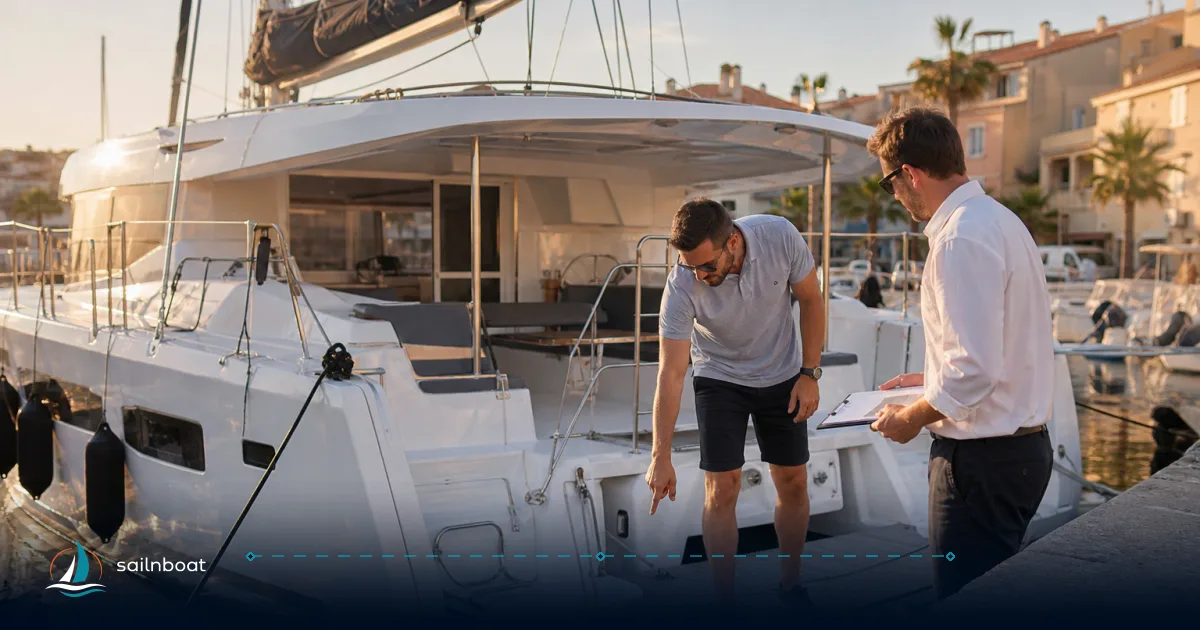
- Photograph the vessel during handover as additional evidence and ensure the charter inventory is signed by both parties. These documents speed any claim.
Final practical note: in many markets a small number of well-known insurers and specialist platforms dominate deposit/bond products and will be recognised by charter companies; using those providers reduces friction. Compare the operator’s waiver cost and convenience against the independent product’s cost, scope and the likelihood the operator will accept it.
Frequently Asked Questions
Yacht charter excess insurance insures the amount you would otherwise be liable for under the yacht’s hull/insurance excess. If damage occurs and the charter company claims against you up to that excess, the insurer pays the amount beyond any retained portion set by the policy, subject to terms and exclusions.
Many operators will accept an insurer’s bond or proof of cover instead of holding the full refundable deposit; others accept a reduced deposit after you buy cover. The result is usually a lower hold on your card or a smaller cash deposit, depending on the charter company’s policy.
Typical cover includes hull and equipment damage up to the insured excess, and sometimes elements of third-party liability related to charter claims; exact items covered vary by policy and insurer.
Waivers from the charter company are simple at checkout but can be more expensive and limited in scope; independent policies are often cheaper or broader but require you to provide specific documentation the operator accepts. Compare limits and exclusions before deciding.
Common exclusions include gross negligence, willful damage, illegal acts, wear-and-tear and sometimes dinghy/outboard damage or racing. Deductible structures and per-claim limits vary by insurer and product.
Compare the insured deposit limit, per-claim maximums, whether dinghy/outboard are included, treatment of gross negligence, policy price, and the insurer’s claim process and reputation; request sample policy wording and a bond letter you can present to your charter operator.
Written by
Sailnboat Editorial
The Sailnboat editorial desk covers yacht and boat chartering worldwide — routes, bases, seasons, boat types, paperwork and the practical costs that decide a trip. We are a charter marketplace, not a boat owner or a local agency: what we sell is judgement and support, so our guides are written to help you make a decision, not to sell you a specific boat. Every guide is checked against live operator and marina data before it goes out.
Fact-checked against live operator and marina data, and published under our editorial standards. Last reviewed: .