Yacht Charter Deposit Insurance UK: A Complete Guide
A practical guide for UK clients and brokers explaining how yacht charter deposit insurance works, what it typically covers and the documents and questions you need before you transfer funds.


Yacht charter deposit insurance UK answers whether the money you hand over at check‑in is actually protected and how to recover it if the operator withholds it. Yacht charter deposit insurance UK policies reimburse sums the charter company keeps from your security deposit after the trip; they do not replace the deposit itself.
Understanding Security Deposits in Yacht Charters
What is a Security Deposit?
A security deposit is the money the charterer pays as financial security against damage, theft or breach of the charter agreement. It can be taken as a credit‑card pre‑authorisation, a cash payment or a bank transfer and is returned after final inspection less any agreed deductions. On crewed charters the contract commonly lists the deposit amount and the stakeholder; the industry‑standard MYBA charter form explicitly sets out a Security Deposit clause.
Operational reality: the deposit often equals the owner’s hull insurance excess. That means the size of the deposit is driven by the yacht’s insurance arrangement rather than a fixed market percentage. Expect small bareboat charters and day boats to have deposits typically in the range of €1,000–4,000, while larger yachts and superyachts may require deposits up to around €14,200.
Why Security Deposits Matter
For owners, the deposit is a quick recovery mechanism for minor damage and items not covered by hull insurance. For charterers, the deposit is the single largest at‑risk payment during handover. That is why deposit insurance exists: it protects your personal funds if the operator withholds the deposit at checkout and you believe the deduction is unjustified. Specialist insurers and brokers emphasise that deposit insurance reimburses withheld funds after a claim — it does not prevent the operator from taking the deposit at the base.
Types of Yacht Charter Deposit Insurance in the UK
Standard Deposit Insurance (what you’ll commonly see)
Standard charter deposit insurance reimburses you for sums retained by the charter company up to the insured limit, with typical premiums ranging from 7–15% of the deposit amount. It covers damage to the vessel and sometimes loose equipment (lines, fenders, sails, tender) that the operator charges against your deposit. Policies are sold as single‑trip or annual covers. Typical pricing is modest compared with the deposit — for example a €2,500 deposit may attract a single‑trip premium in the low hundreds of euros depending on trip length and boat type.
Key operational point: deposit insurance does not waive your obligation to pay the deposit at handover. It reimburses you after the operator has processed a claim and either paid you back or after the insurer settles the dispute with the operator.
Comprehensive and Add‑on Options
Some insurers or brokers offer extensions that broaden cover:
- Tender/dinghy and water‑toy cover (often optional).
- Cover for loss through operator insolvency (a secured payment certificate product in some markets).
- Combined packages including trip‑cancellation/curtailment or skipper liability (useful when you want both deposit protection and third‑party cover).
Trade‑off: the more comprehensive the product (e.g., adding regatta cover or tender inclusion), the higher the premium, and some extensions require specific declarations (for instance, a commercial skipper or racing must be declared).
Common Exclusions in Deposit Insurance Policies
Typical Exclusions
Across leading providers you'll commonly see:
- Normal wear and tear and cosmetic abrasions.
- Fuel, cleaning, waste pump‑out charges and items described as standard operating costs.
- Theft of valuables and personal luggage (insurers usually exclude passenger belongings).
- Damage caused by deliberate acts or gross negligence — policy wordings differ on the line between negligence and gross negligence, so check carefully.
Understanding Policy Limitations
Policy limits, excesses and definitions matter. Two practical checks:
- Excess: some deposit insurance tariffs have their own excess or percentage deductible (0–10% examples exist).
- Territory/excluded waters: a few policies exclude specific high‑risk areas or racing events (regattas), or require notification for long ocean passages. Read territorial limits and permitted activities in the schedule.
Integrating Deposit Insurance with Charter Contracts
Key Contractual Elements
Look for these lines in the charter party or T&Cs:
- Exact deposit amount and currency.
- How the deposit is held (card pre‑authorisation, stakeholder account, broker client account).
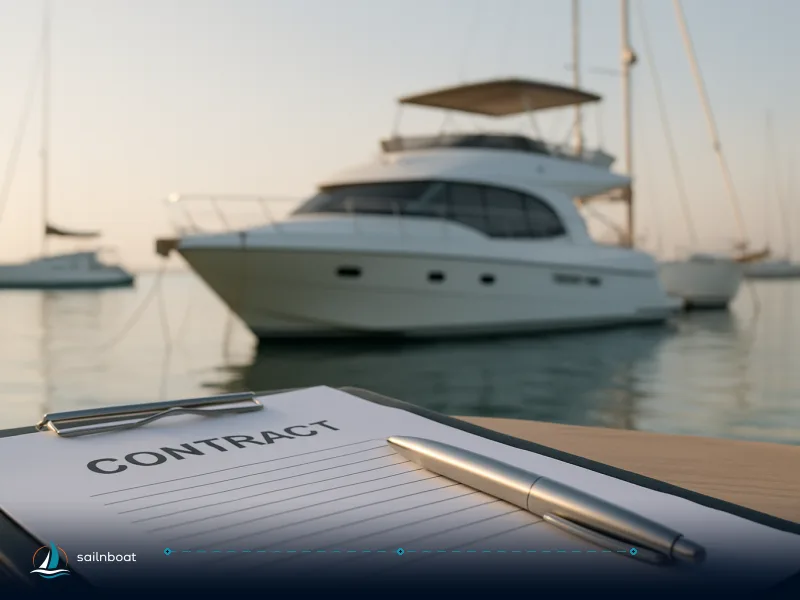
- Permitted deductions and the timeframe for returning the deposit. The MYBA form and most operator T&Cs specify the security deposit and the stakeholder handling it.
Operational recommendation: require your broker to add a written note identifying who will hold the deposit and confirming whether deposit insurance is accepted by the operator — get that in email before any transfer.
Ensuring Compliance
Deposit insurance interacts with the charter contract in two ways:
- The contract governs when and why the operator may withhold funds.
- The insurer reimburses you for amounts withheld under the contract, subject to policy terms.
If the insurer takes over recovery, they may subrogate and pursue the operator; some policies will pay disputed claims faster if you provide a full, signed damage report and supporting invoices. Confirm how quickly the insurer pays and whether they will pay on a contested deduction.
Documentation Required for Claims
Essential Documents (collect these at check‑in/check‑out)
- A signed copy of the charter agreement (charter party).
- The handover/check‑in condition report signed by you and the crew (show it to the base and keep a copy).
- Time‑stamped photographs or video of the boat at handover and at final check‑out.
- The operator’s damage/loss report and any itemised list of deductions.
- Repair invoices, cost estimates or supplier receipts showing the amounts charged.
- Proof of payment of the deposit (card pre‑auth statement, bank transfer receipt). Insurers typically insist on a complete claim file; delays or missing documents slow or can deny a payout.
Filing the Claim — practical steps
- Notify your insurer immediately after the operator advises a deduction; note all correspondence.
- Upload or send the signed charter agreement, check‑in/out reports, photos, the operator’s deduction statement and repair invoices.
- Keep originals and follow insurer deadlines for submitting claims — most policies expect notification within days of the incident and full documentation within weeks. NauticAssure and comparable brokers recommend asking the operator to prepare a formal damage report itemising each cost to speed a claim.
Key Questions to Ask Your Broker (before you transfer funds)
Ask each item and get the answer in writing (email is fine). If the broker hesitates, escalate to the operator.
Coverage and insurer
- Which insurer underwrites the deposit insurance or guarantee? Provide the insurer name and policy reference.
- Does the charter company accept deposit insurance from that insurer, or will they still require a card pre‑auth? (Most do require the deposit regardless.)
Scope and limits
- Exactly what is covered and what is excluded (sails, mast, tender, water toys, regatta use, gross negligence).
- Maximum sum insured and the insurer’s excess or deductible.
Operational mechanics
- Who holds the deposit at check‑in (owner, base, broker client account, stakeholder)?
- Timeline: how long after checkout does the operator have to return the deposit, and how long does the insurer take to process claims?
- What documents will the operator provide if they deduct from the deposit? Ask them to commit to an itemised, signed damage report.
Costs and disputes
- What is the premium, when is it due, and is there a refund if the deposit is not used?
- Will the insurer pay contested claims and then pursue recovery (subrogation), or only undisputed deductions?
Payments and fraud control
- If paying by bank transfer, to which legal entity and which bank account? Can you see corporate bank details and an invoice?
- If the broker asks for unconventional payment channels (Zelle, cash courier) insist on a written explanation and a corporate contract reference — reputable brokers and bases standardise bank transfers and card holds.
Checklist: what to take to the handover
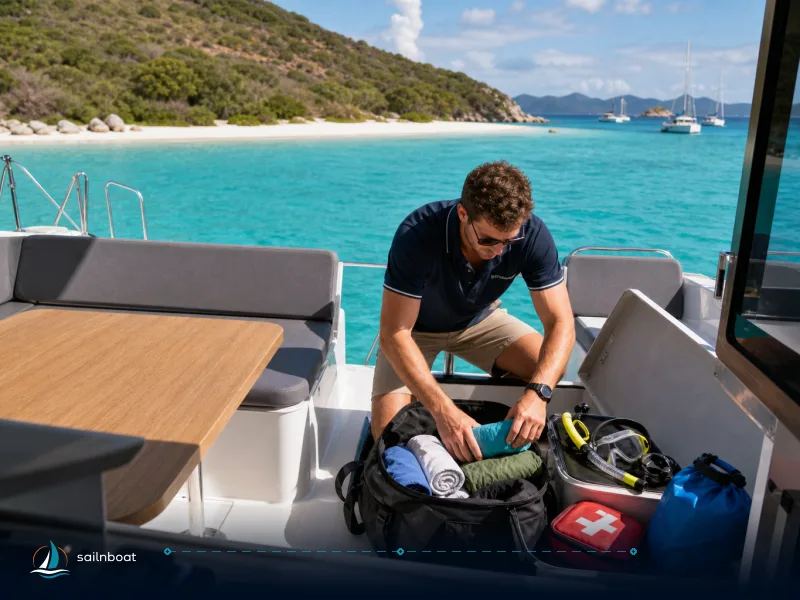
- Signed charter agreement, printed condition report, high‑resolution camera or phone for photos, an inventory list, credit card for pre‑auth and copies of any deposit insurance policy.
Quick comparison — deposit handling options
| Option | How it works | Pros | Cons |
|---|---|---|---|
| Card pre‑authorisation held at base | Card hold for deposit amount | Immediate, low admin | Funds tied up on card; refunded only after inspection |
| Cash or bank transfer to operator | Deposit paid and held by operator | No card limit problems | Less consumer protection; need receipts |
| Operator damage‑waiver (YDW) sold at base | Pay fee to reduce deposit or excess | Simplifies checkout | Can be expensive; terms vary |
| Third‑party deposit insurance (single‑trip/annual) | You pay premium; insurer reimburses withheld deposit | Lower immediate outlay than superyacht deposit; reimbursement if withheld | Must provide full claim pack; still pay deposit at handover |
Final practical advice
- Treat the deposit as at‑risk money until you have the signed check‑out report and credit‑card refund or bank remittance in hand.
- Buy deposit insurance when the deposit is large relative to your available credit, when the area has known dispute issues, or if you charter frequently (annual policies can reduce cost per trip).
- If a deduction occurs, obtain the operator’s itemised signed report immediately — that single document is the most important thing for a fast insurer payout.
Contact your broker to discuss deposit insurance options for your next yacht charter. Ask for the insurer’s name and policy number, a written confirmation of who holds the deposit, and a checklist of documents you must keep from handover — these three items protect your money and are the quickest way to avoid a ferrying‑back‑and‑forth claims fight.
Frequently Asked Questions
A security deposit (card pre-authorisation, cash or bank transfer) covers damage and losses the charterer may cause that fall below or outside the yacht’s hull insurance; it effectively matches the owner’s insurance excess and is held until after final inspection.
Charterers can buy single-trip deposit insurance or an annual policy; providers include specialist marine insurers that reimburse withheld deposits after a claim, and some brokers offer deposit-waiver products or damage-waivers sold at the base.
Typical exclusions are normal wear-and-tear, fuel and cleaning charges, theft of valuables, and in many policies damage caused by gross negligence or unauthorised regatta participation.
The charter contract (MYBA-style or operator T&Cs) specifies the deposit amount, when it is taken and who holds it; deposit insurance sits alongside that clause — it reimburses you if the operator withholds the deposit under the contract’s damage provisions.
Core documents are the signed charter agreement, handover/check-in report, the damage/loss report prepared by the operator, photographs, invoices or repair estimates, proof of deposit payment and any correspondence with the charter company.
Ask who holds the deposit and how; whether the charter company accepts deposit insurance and which providers; the insurer’s name and policy number; the policy excess and territorial limits; and the exact documentation and deadlines for claims.
Written by
Sailnboat Editorial
The Sailnboat editorial desk covers yacht and boat chartering worldwide — routes, bases, seasons, boat types, paperwork and the practical costs that decide a trip. We are a charter marketplace, not a boat owner or a local agency: what we sell is judgement and support, so our guides are written to help you make a decision, not to sell you a specific boat. Every guide is checked against live operator and marina data before it goes out.
Fact-checked against live operator and marina data, and published under our editorial standards. Last reviewed: .