What to Wear for Sailing Class: A Beginner’s Guide
Practical, decision-ready advice on clothing, footwear and basic safety kit for inshore sailing classes — layering, non‑marking shoes, lifejacket fit and a climate-aware packing list.

Short answer up front: for an inshore sailing class wear a three‑layer clothing system (moisture‑wicking base, insulating mid layer, waterproof outer), closed‑toe non‑marking shoes, and a properly fitted US Coast Guard–approved personal flotation device (PFD). That combination keeps you mobile, protects you from spray and sun, and ensures your instructor can teach without stopping to fix kit.
Understanding the Layering System for Sailing
The three‑layer approach is the practical standard for coastal and inshore sailing: base, mid and outer. Each layer has one job — don’t let layers compete.
Base, Mid, and Outer Layers
- Base layer — function: move sweat away from skin so you don’t cool down when wind or spray arrives. Choose lightweight merino wool or technical polyester blends. These materials wick moisture and dry quickly; avoid cotton undergarments and T‑shirts because cotton absorbs water and keeps it next to your skin.
- Mid layer — function: provide insulation when the temperature drops. A fleece or synthetic insulated top (Polartec, Primaloft or similar) traps warm air and still works when damp. For marginal temperatures carry a midweight and a lighter one so you can adapt on the water.
- Outer layer — function: block wind and spray. A breathable, waterproof jacket (often called a spray top or foulie) with adjustable hood and cuffs prevents wind‑chill and keeps driving spray off your mid layer. For extended wet work or cold water conditions a full set of sailing foulies or a dedicated drysuit is the safer option; most inshore classes expect a breathable spray top rather than a drysuit.
Practical packing rule: one base layer per day of sailing plus one spare, one or two mid layers depending on season, and a single high‑quality waterproof shell. Layering lets you react to wind, sun and exercise level without wasting space in your kit bag.
Choosing the Right Footwear for Sailing
Your shoes matter more than most students expect — they protect toes, give grip on a wet deck, and avoid scuffing the boat.
Non‑Marking and Slip‑Resistant Shoes
- Core attributes to look for:
- Closed‑toe construction to protect feet from lines and hardware.
- Non‑marking rubber outsole (light‑coloured or labelled non‑marking) so you won’t leave dark scuffs on fiberglass or teak.
- Good siping or tread pattern to channel water and maintain traction on wet, smooth surfaces.
- Drainage or quick‑dry materials so water doesn’t slosh inside the shoe.
- Typical options:
- Deck shoes / boat shoes — casual, breathable and fine for warm, calm conditions; look for modern synthetic soles rather than leather if you expect a wet deck.
- Sailing trainers — sport shoes engineered for marine use; usually non‑marking with aggressive siping and drainage.
- Neoprene booties — useful for very wet or colder conditions and for small dinghy classes where you might be in and out of the water.
- Avoid ordinary running shoes with hard, abrasive soles (they mark decks) and bare feet unless your instructor explicitly allows it. Good sailing footwear balances grip, protection and non‑marking soles.
Footwear quick‑reference table
| Type | Pros | Cons | Best use |
|---|---|---|---|
| Deck shoes (non‑marking) | Comfortable, breathable, tidy | Less aggressive grip in heavy spray | Warm, sheltered day‑sailing |
| Sailing trainers | Strong grip, drainage, non‑marking | Heavier; more technical | General-purpose, wet decks |
| Neoprene booties | Warm, good in surf/dinghies | Less durable on teak/hard decks | Dinghy/very wet work |
| Regular sneakers | Cheap, comfortable | Mark decks, poor siping | Not recommended for supervised courses |
If you don’t own dedicated sailing shoes, a light pair of non‑marking trainers with good tread is fine for a beginning course — but check with the school if they have a strict deck‑care policy.
Avoiding Cotton: Why Fabric Choice Matters
Cotton is comfortable on land but a poor choice at sea. It absorbs and retains water, loses insulating value when wet, and takes a long time to dry — all of which make you colder and can impair decision‑making. For safety and comfort select quick‑dry synthetics (polyester, nylon, polypropylene) or fine merino wool for base layers. Merino gives insulation when wet and resists odor, which is useful on multi‑day courses.
Practical notes:
- Swimwear made of nylon or polyester is fine for hot days; avoid cotton beach shirts.
- For underwear, use synthetic or merino briefs/boxers to avoid chafing and prolonged dampness.
- If you expect to get soaked, pack a spare full set of clothes in a dry bag so you can change ashore.
Essential Safety Equipment for Beginners
Safety gear on a class is both personal and shared. Understand what you need, how to check it, and what your school usually provides.
Lifejacket (PFD) Fit and Usage
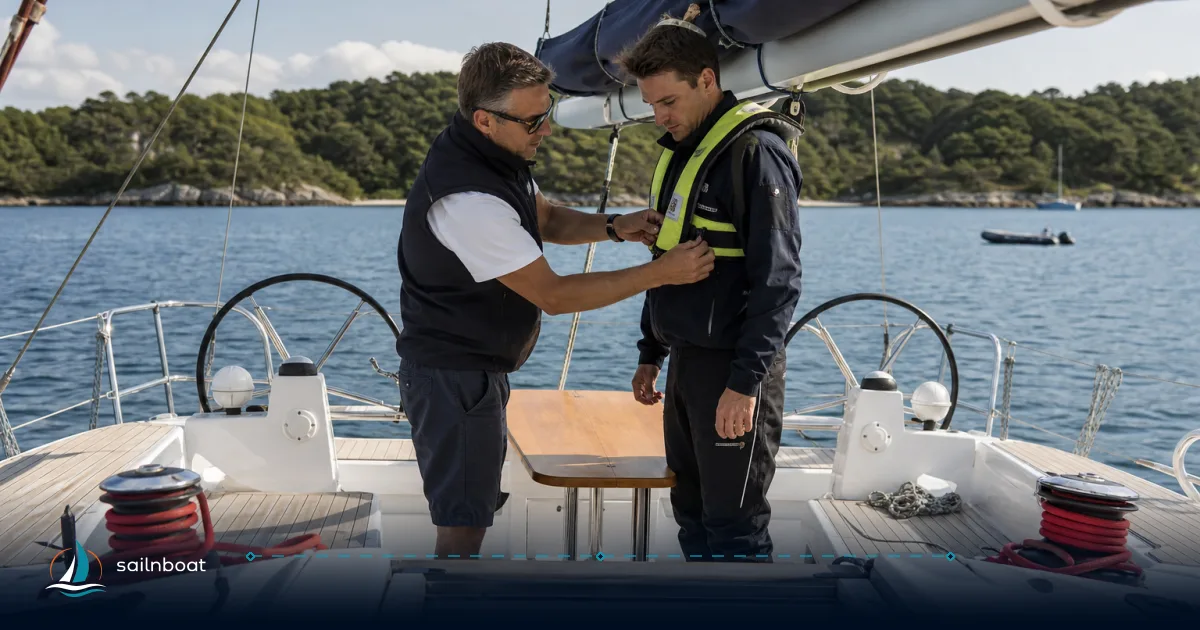
- Requirement and selection: choose a PFD appropriate for your activity. In the United States, the Coast Guard approves recreational lifejackets — these labels indicate compliance with buoyancy and performance standards. For inshore training a Type III (or similarly rated) PFD is common; inflatable PFDs are increasingly popular for comfort, but understand their maintenance and automatic vs manual inflation differences.
- Fit‑check you can do in the yard:
- Put the PFD on and fasten all zips and straps.
- Have a partner stand behind you and firmly pull up on the shoulders (or you can raise both arms like a “touchdown” signal and have someone lift the jacket from behind). The jacket should not ride up over your chin or ears; if it does, tighten straps or try a smaller size.
- Ensure full mobility: you must be able to sit, cough and turn your head while the PFD remains snug and secure.
- Instructor practice: many schools will fit PFDs for students and expect you to wear one while learning capsize recovery or on windy days. Bringing your own that fits correctly saves time and increases confidence.
Basic Harness Usage (what beginners need to know)
- Purpose: harnesses and tethers (clip‑in systems) keep you attached to the boat when deckwork is hazardous — think night watches, heavy weather, or offshore legs. Jacklines (long lines running fore‑aft) allow you to move while clipped on.
- For most inshore, daytime sailing classes: harnesses are not routinely required, but understanding the concept and how to clip on/off safely is useful. If your course includes offshore modules or heavy weather drills, expect instruction in harness fit, tether length selection and safe clip‑in technique.
- Safety caution: use modern, locking hardware and avoid non‑locking or suspect clips; inspect webbing and hardware before use. Practical Sailor and racing safety guidance have highlighted the importance of correct tether and clip selection because poor clips can release under off‑axis loads.
Packing Checklist for Your Sailing Class
Bring what you’ll actually wear; leave wardrobes ashore. Below is a compact, checkable list for a typical inshore course.
Essential clothing and small kit
- 2–3 quick‑dry base layers (merino or synthetic).
- 1–2 insulating mid layers (fleece or synthetic fill).
- Waterproof, breathable jacket with hood (spray top/foulie).
- Quick‑dry trousers or shorts; avoid heavy denim.
- Closed‑toe, non‑marking shoes + flip‑flops for shore use.
- Thin sailing gloves or fishing gloves (to protect hands when trimming lines).
- UV hat with chin strap and sunglasses with retainer (polarised preferred).
- Socks: synthetic or wool; one spare pair.
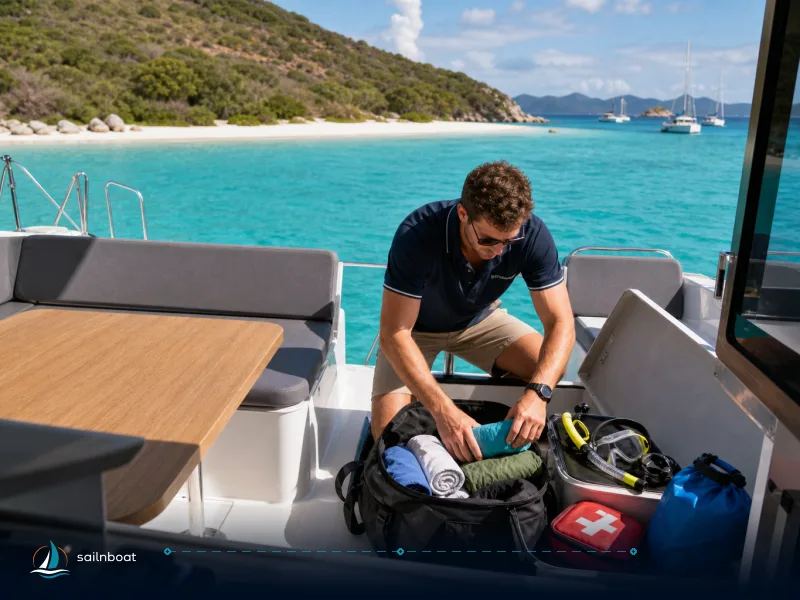
- Small towel and change of clothes in a dry bag.
Safety & miscellaneous
- Personal PFD (if you prefer your own) — label with your name.
- Whistle attached to PFD (many PFDs include one).
- Waterproof sunscreen (SPF 30+), lip balm with UV protection.
- Small first‑aid kit, water bottle, and a small dry bag for phone/keys.
- Headlamp if any evening practice is scheduled.
What to confirm with your school
- Whether PFDs are provided and if you need to bring a harness for any offshore modules.
- Recommended footwear policy (some schools insist on non‑marking soles).
- Any additional mandatory items (knife, personal medications).
Dressing for Varying Weather Conditions
Quick checklists by climate — decision‑grade adjustments you can act on.
- Warm / Tropical days:
- Lightweight, breathable long‑sleeve synthetic or UPF clothing to protect from sun and wind; hat and sunglasses with retainer essential.
- Bring a thin waterproof shell for sudden squalls; reef early if sun gives way to wind.
- Temperate / variable days:
- Layer base + light mid + waterproof shell. Expect windier conditions near headlands and sea breeze transitions; store spare mid layer in a dry bag on board.
- Use shoes with good siping; wet decks and humidity reduce traction quickly.
- Cool / windy days:
- Heavier fleece mid, thicker base layer (merino 200–250g if you have it), thermal socks and a robust waterproof shell.
- Consider neoprene gloves or lined sailing gloves for dexterity in cold spray.
- For near‑shore cold water or extended exposure, instructors may require or recommend an auto‑inflating PFD or even drysuit use depending on local risk assessment.
Final operational tip: pack your kit so you can put it on quickly on the dock — layer up before stepping aboard in cool conditions, and stow spares in a small dry bag that’s reachable while you’re still ashore.
On‑deck behaviour and simple kit checks (what instructors look for)
- Shoes on, PFD fastened or visible, gloves ready, sunglasses secured and no loose jewellery that might catch on winches.
- Instructor will often run a quick briefing: how to sit, where to hold on, which side of the boat to move on, and who clips in when. Being ready with correct clothing speeds handover and means more time actually sailing.
- If you bring personal safety gear, label it and ask where to stow it in the cockpit; instructors sometimes collect extra PFDs and stow them centrally.
Prepare for your sailing class by packing the right gear today. A well‑fitted PFD, quick‑dry clothing system and non‑marking shoes get you comfortable fast and let you focus on learning.
Frequently Asked Questions
Adopt a three‑layer system: a moisture‑wicking base layer (synthetic or merino), an insulating mid layer (fleece or synthetic fill), and a windproof/waterproof outer shell (breathable foulie or spray top).
Cotton retains water and dries slowly, causing heat loss and discomfort; choose quick‑dry synthetics or merino wool instead to maintain warmth and mobility.
Closed‑toe, non‑marking shoes with slip‑resistant rubber soles and good drainage are ideal—sailing trainers, dedicated deck shoes, or neoprene booties depending on conditions.
Use a USCG‑approved PFD sized to your weight/torso, fasten all straps, then have a partner pull up on the shoulder straps: the jacket should not ride above your chin or ears.
Quick‑dry base layers, mid layer (fleece), waterproof shell, non‑marking shoes, hat, sunglasses with retainer, gloves, personal PFD or confirmation that one will be supplied, sunscreen, and a small dry bag for valuables.
Layer: light breathable fabrics and sun protection for hot/tropical days; extra insulating mid layers and thicker outer shells for cool/windy conditions; add a drysuit or heavy waterproofs for cold or extended offshore work.
Written by
Sailnboat Editorial
The Sailnboat editorial desk covers yacht and boat chartering worldwide — routes, bases, seasons, boat types, paperwork and the practical costs that decide a trip. We are a charter marketplace, not a boat owner or a local agency: what we sell is judgement and support, so our guides are written to help you make a decision, not to sell you a specific boat. Every guide is checked against live operator and marina data before it goes out.
Fact-checked against live operator and marina data, and published under our editorial standards. Last reviewed: .