How to Pass the Boat License Test in California: A Practical Guide
Step-by-step practical guide to passing the California Boater Card exam: what’s on the test, approved courses, required ID and documents, common pitfalls, and how the card affects bareboat charters.

You need the California Boater Card to lawfully operate a motorized vessel in California — the requirement applies to all operators by January 1, 2025. Passing the boat license california test means completing a DBW‑approved boating safety course, passing that provider’s final exam, then applying to the Division of Boating and Waterways (DBW) and paying the one‑time $10 card fee plus a $1 service charge. Below is a focused, practical study plan, a breakdown of the exam subjects, exactly what to bring on exam/application day, common pitfalls, and how the card affects chartering.
Overview of the California Boater Card Requirements
Key Requirements
- Mandatory: the Boater Card requirement applies to all operators of motorized vessels in California as of January 1, 2025.
- Age rules: you must be 16 to operate a motorized vessel independently; persons aged 12–15 may operate only when supervised by someone 18 or older who holds a California Boater Card. (This supervision rule applies specifically to motorized vessels of 15 hp or more and PWCs.)
What this means for you right now
- If you plan to helm any powered boat in California, schedule and complete a DBW‑approved course before your next outing. Failure to carry a Boater Card when required is a legal exposure; boat rental and charter operators will often refuse a bareboat rental without it.
Exam Topics and Effective Study Strategies
Exam Content Breakdown
The official DBW study/subjects lists the topics you must know: safe boat operation and navigation rules, California Harbors & Navigation Code (state laws), fire prevention and the correct use of marine fire extinguishers, vessel maintenance and systems basics, required safety equipment and life jacket rules, and first aid/emergency procedures. The DBW for‑hire operator materials and the DBW course kit list these same subjects.
Typical exam structure (what most approved providers use)
- Providers commonly deliver a multi‑unit online course followed by a final exam (many use a 60‑question final; passing thresholds are commonly 80% on the final with unit quizzes at lower pass marks). Time on task is typically 3–5 hours for the full course and exam. These specifics vary by provider — read the provider’s exam rules before you start.
Study techniques that work (practical, time‑boxed plan)
- 1st session (3–4 hours): Complete the DBW or provider course modules straight through. Note sections where you score poorly on unit quizzes.
- 2nd session (1–2 hours): Run at least two full‑length practice exams under timed conditions. Focus on navigation rules, right‑of‑way, and the HP/supervision law text — these are frequent test items. Use provider practice tests and the DBW study checklists.
- 3rd session (1 hour): Drill the “safety checks” set — fire extinguisher types and placement, lifejacket rules by vessel and age, and emergency procedures (MOB, flooding, engine failure). Finish with a light review of the Harbors & Navigation Code summaries in the course materials.
Materials to prioritise (exact)
- The official DBW California Course for Safe Boating (online) or any DBW‑approved provider course.
- DBW subject sheets / exam booklet for for‑hire operator exams — these list exactly what DBW expects you to study (fire prevention, vessel maintenance, first aid).
- American Red Cross (or equivalent) first‑aid modules for basic CPR and bleeding control if you want stronger practical readiness — DBW lists first‑aid training in its study subjects.
Provider comparison (sample prices and formats)
| Provider | Format | Typical course cost (example) | Notes |
|---|---|---|---|
| Boat‑Ed | Online | $54.95 (example listing) | NASBLA/DBW approved; 3+ hours, 60‑question final. |
| At The Helm Training | Online | $49.99 (example listing) | Listed on DBW course list. |
| Boater Exam America | Online | $34.95 (example listing) | Low cost option on DBW course list. |
| Boat‑Ed+ | Interactive | $79.95 (example listing) | More features / interactive modules. |
(Prices above are sample current listings from the California Boater Card course directory — provider fees change, so expect variation across promotions and package types.)
Study techniques — practical tips
- Use the provider’s built‑in practice exams until your average score is comfortably above the pass threshold (many providers require 80% to pass the final).
- Don’t memorise questions — learn the rules and the why behind them. Navigation and right‑of‑way logic transfer between questions; rote memorisation fails when providers update question wording.
- If you plan to charter on tidal/coastal waters (SF Bay, Channel Islands), add a short local‑conditions checklist: traffic separation schemes, strong currents, and fog protocols. Charter operators expect local knowledge in addition to the Boater Card.
Essential Documentation for Exam Day
Required Documents
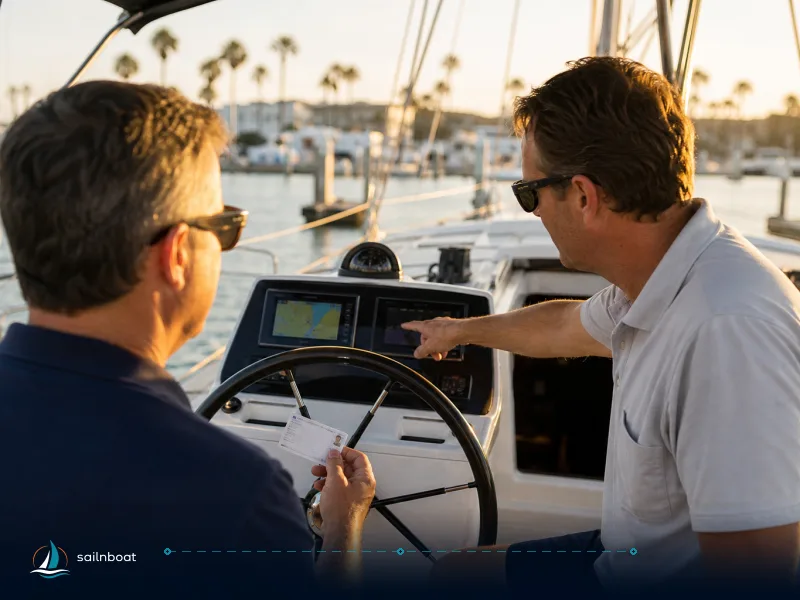
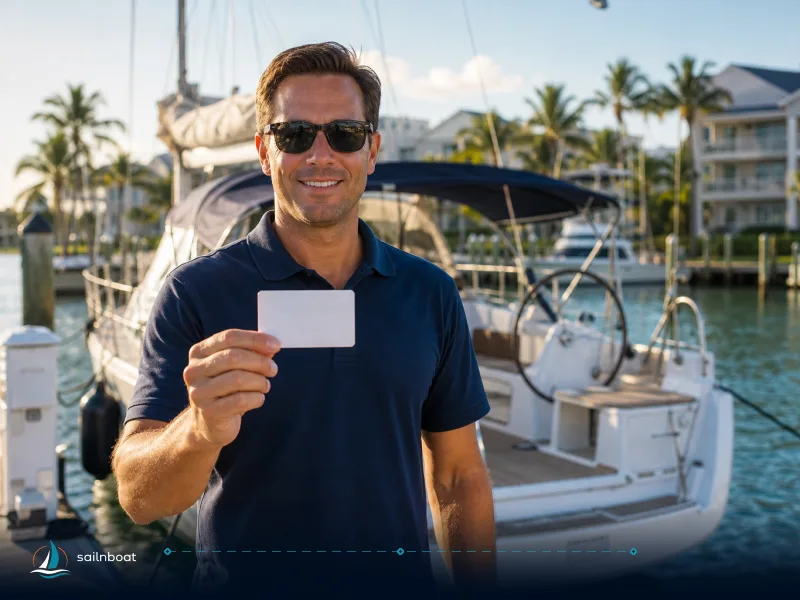
- A valid government photo ID (driver’s license or passport) — needed when you submit the DBW application and for many rental/charter companies.
- Your DBW Application ID: get this from the California Boater Card portal when you start an application; the provider will ask for it so they can submit proof of completion to DBW.
- Certificate of completion from your approved course (print and keep a PDF copy). Providers issue a completion certificate you must link to your DBW application.
DBW application fee and timing
- The one‑time DBW processing fee is $10 plus a $1 service fee paid when you apply for the card through the California Boater Card site. After DBW approves your application and proof of education, you can print a 90‑day temporary California Boater Card immediately and the permanent card is mailed — commonly within about 30 days. Processing times can vary.
Tips for a Smooth Exam and Application Experience
- Register for your DBW Application ID before starting the provider course — many providers require it at sign‑up and will not register you retroactively.
- Keep both a digital and a printed copy of your completion certificate, and copy your Application ID and payment confirmation into one folder on your phone. The mobile email with your 90‑day temporary card is legal to use while the permanent card processes.
- Minor operators: if under 18 and subject to special court orders or course consent rules, note that some paperwork may require parental/guardian consent. DBW and some classroom providers mention this in their FAQs.
Common Mistakes to Avoid During the Exam Process
Typical Errors
- Forgetting the DBW Application ID at provider sign‑up — the provider cannot submit proof of completion without it, which delays card issuance.
- Skipping practice tests or not reviewing incorrect quiz answers — providers regularly let you retake practice quizzes, use that to expose weak areas.
- Bringing the wrong ID or no certificate when applying — DBW requires proof the course was completed and a valid photo ID when you apply online.
Exam Day Tips
- Read every multiple‑choice question carefully; many fail by picking the first plausible choice under time pressure. Pace yourself — most course finals are untimed or lightly timed but unit quizzes may be.
- For navigation and right‑of‑way questions, picture the scenario on a simple sketch: identifying port/starboard and relative motion fixes many mistakes. This technique beats memorising rules in isolation.
Implications of the California Boater Card on Chartering
Chartering Options
- Bareboat charters (self‑drive): the Boater Card is the legal baseline — you must have it to operate a motorized bareboat in California. In practice, charter owners and private listings commonly require extra proof of experience (logbook hours, ASA certifications, or a local check ride) before releasing a larger or offshore vessel.
- Skippered charters (captain provided): passengers do not generally need a Boater Card if they are not operating the vessel; the captain/operator carries the required credentials. Still, if you expect to take the helm during the trip, clarify the operator rules with the company in advance.
At‑a‑glance charter comparison
| Charter type | Is Boater Card required to helm? | Typical operator checks by company |
|---|---|---|
| Bareboat / self‑drive | Yes — Boater Card mandatory. | Companies commonly require prior experience, local check ride, or extra deposit/insurance. |
| Skippered / captain provided | No for passengers (captain is responsible). | The company verifies captain credentials and commercial insurance; passengers are typically not required to hold a Boater Card unless they will operate the vessel. |
Benefits of Certification for Charterers
- Legally compliant: the card removes a legal obstacle and is often the minimum for owners to rent a boat to you.
- Commercial / insurance effects: having the Boater Card (and additional certifications or logged experience) can make you eligible for more and larger bareboat vessels and can reduce friction with owner/operators — some insurers or owners prefer operators with formal training or ASA/US Sailing certificates. Charter companies will state their own rules.
Practical trade‑offs
- The Boater Card gets you legal permission; it does not automatically substitute for on‑water experience. If you plan an offshore passage, add a skippered training day with a charter company or log local hours before booking an extended bareboat charter. Many operators require proof beyond the card for coastal or ocean passages.
Final checklist — before you book a course or a charter
- Create your DBW Application ID on the California Boater Card portal before enrolling in a course.
- Pick an approved provider that fits your budget and learning style; expect provider fees typically in the $30–$80 range (prices vary).
- Complete the course, pass the provider’s final exam, then submit your DBW application and the $10+$1 fee to receive a temporary card and have the permanent card mailed.
- If you plan to charter, confirm the operator’s additional requirements (experience, local endorsements, check rides) before you book.
Start preparing for your California Boater Card exam today — register for a DBW‑approved course, follow the focused study plan above, and bring your Application ID and photo ID when you apply.
Start preparing for your California Boater Card exam today.
Frequently Asked Questions
You must be at least 16 to operate a motorized vessel independently; persons aged 12–15 may operate motorized vessels only when supervised on board by an adult (18+) who holds a California Boater Card. The Boater Card requirement itself applies to all operators by January 1, 2025.
DBW approves a set of NASBLA‑compliant providers (Boat‑Ed, BOATsmart!, BoaterExam, At The Helm, Coast Guard Auxiliary Boat Ed, etc.); check the California Boater Card course list for current providers and prices.
Expect safe boat operation, California boating laws and the Harbors & Navigation Code, fire prevention and extinguishers, vessel systems and maintenance, required safety equipment, and basic first aid and emergency procedures.
DBW charges a one‑time $10 Boater Card fee plus a $1 service fee; providers charge the course/exam fee (typical range across providers is roughly $30–$80). After you apply, you can print a 90‑day temporary card immediately; the permanent card is mailed after DBW processes your application (commonly within about 30 days).
Common errors: skipping provider practice tests, failing to bring your DBW Application ID or photo ID when applying, misreading time‑limited questions, and not reviewing state‑specific rules (horsepower thresholds, supervision rules).
The Boater Card is the legal baseline: to operate a motorized boat yourself in California you must have it. Charter companies often add extra conditions — proof of prior experience, local check rides, or certifications (ASA/ASA equivalents) — so expect company‑level checks beyond the Boater Card.
Bring a valid government photo ID (driver’s license or passport), your DBW Application ID (from the California Boater Card portal), proof of course completion/certificate, and payment confirmation for the $10+$1 state fee when you apply for the card.
Written by
Sailnboat Editorial
The Sailnboat editorial desk covers yacht and boat chartering worldwide — routes, bases, seasons, boat types, paperwork and the practical costs that decide a trip. We are a charter marketplace, not a boat owner or a local agency: what we sell is judgement and support, so our guides are written to help you make a decision, not to sell you a specific boat. Every guide is checked against live operator and marina data before it goes out.
Fact-checked against live operator and marina data, and published under our editorial standards. Last reviewed: .