How to Get a Boating License in Florida: A Step-by-Step Guide
If you were born on or after January 1, 1988, you must hold a Florida Boating Safety Education ID Card to operate any motorboat of 10+ HP; this guide shows the exact steps, documents and timelines for charterers and recreational skippers.

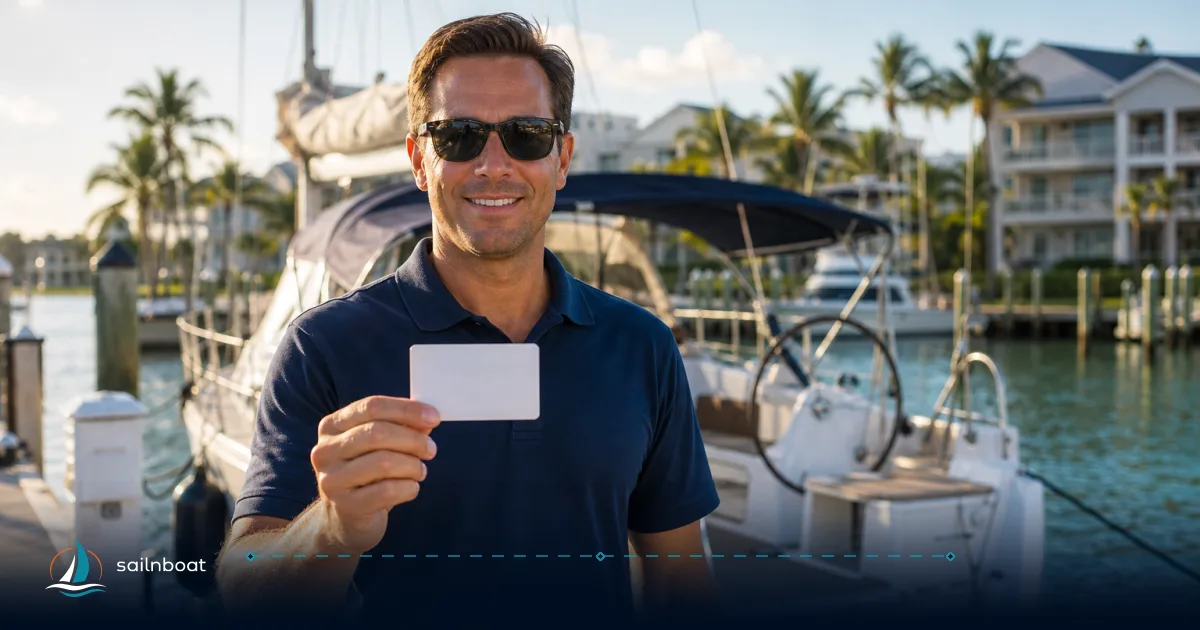
If you were born on or after January 1, 1988, you are required to hold a Florida Boating Safety Education Identification Card to operate any motorboat of 10 horsepower or more on Florida waters; the card proves you successfully completed an approved boating safety course.
This guide — written for charterers and recreational skippers — gives the exact, step‑by‑step actions, the documents you’ll need, typical timelines and the common pitfalls that slow down issuance. Follow the steps below and you’ll be ready to take the helm without surprises.
Eligibility for a Florida Boating License
Who Needs the License?
-
Primary rule: anyone born on or after January 1, 1988 who will operate a vessel with a motor of 10 horsepower or more in Florida must complete an approved boating safety course and carry the Boating Safety Education Identification Card together with a photographic ID. The card is not a “license” in the driver’s‑license sense — it is proof of course completion and does not expire.
-
Visitors and out‑of‑state certificates: Florida accepts proof of completion from another state if that certificate meets NASBLA standards; renters and livery operators may accept an out‑of‑state NASBLA‑approved certificate in place of the Florida card. If you plan to rent a boat, check the livery’s policy in advance.
-
Scope: the requirement is tied to birth year and engine horsepower (10 HP threshold) rather than vessel length. That makes the rule simple to apply at the ramp, but it does mean small engines on pontoons, PWCs and inflatables commonly pass the threshold — treat 10 HP as the operational cutoff.
Approved Boating Safety Courses
Course Options
-
Accepted formats: FWC lists both NASBLA‑approved online providers and classroom (in‑person) courses; both meet Florida’s legal requirement when the provider appears on FWC’s approved list. Popular national online providers on FWC’s list include Boat‑Ed, BoatUS Foundation, BoaterExam and others.
-
NASBLA standard: the course you choose must meet NASBLA (National Association of State Boating Law Administrators) standards; FWC’s approved‑course list indicates which providers and which state versions meet Florida’s rules.
Course Duration and Fees
-
Typical duration: online, self‑paced courses normally take about 3–8 hours to complete; classroom courses are usually scheduled from a half‑day up to a full day depending on format. Allow more time if you plan practice tests and review.
-
Typical fees: online course prices range widely — many FWC‑listed courses land between roughly $20 and $80; some courses are free (e.g., BoatUS offers a free option on FWC’s approved list). Classroom courses are set by the provider and often cost more. The FWC does not publish a single “card” fee on its ID card page; providers commonly bundle any card handling fee into their checkout price. Treat the course tuition as your primary cost and check the provider’s checkout for any state/card fees.
-
Practical trade‑offs:
-
Online: fastest and most flexible (self‑paced), immediate temporary certificate in most cases, usually cheaper; choose this if you need a card quickly or can study alone.
-
Classroom: better for hands‑on explanation and asking an instructor questions; choose this if you prefer structured learning or are arranging group training for a charter crew.
-
Temporary exam route (for rentals): the FWC Temporary Certificate Program is a 25‑question exam offered by approved vendors; passing gives a 90‑day temporary certificate for Florida use only. That’s useful if you need to rent the same day.
Course comparison (at a glance)
| Option | Typical duration | Typical cost (range) | How it works | Best when… |
|---|---|---|---|---|
| FWC‑listed online (Boat‑Ed, BoaterExam, Recademics, etc.) | 3–8 hours (self‑paced) | $0–$80 (many $25–$55) | Complete modules, pass exam; provider often submits completion to FWC. | You need speed and flexibility. |
| Classroom / Instructor‑led | Half‑day to full day | $50–$150+ (varies) | Attend class, pass instructor exam; instructor or provider may submit roster to FWC. | You prefer in‑person instruction or group training. |
| FWC Temporary Certificate exam | Quick (exam only) | Vendor fee (small) | 25‑question exam; passing grants 90‑day Florida‑only temporary certificate. | You need to rent/operate the same day; not for out‑of‑state use. |
Required Documentation
Enrollment Documents
-
For course registration you will typically need:
-
A valid photo ID (driver’s license, passport) for identity verification with the course provider. Many providers check age via DOB.
-
An email address to receive your completion certificate or temporary proof.
-
Residency: most online providers do not require proof of Florida residency to take the course; the FWC does offer some free options for Florida youth. If a provider requests residency documents, they will state that during registration.
Card Issuance Documents (what FWC needs)
-
What must be on the course completion certificate or provider submission: provider name; date of issue (date you passed); and the student’s first/middle/last name, date of birth and current mailing address. This list is required by the administrative rules the FWC follows. Keep a printed or electronic copy.
-
Photo ID for on‑water inspections: while your permanent FWC card is being processed you must carry the course completion certificate plus a photographic ID when operating a motorboat — law enforcement inspects the certificate and ID together.
Submission Process for the Boating Safety Card
How to Submit Proof
Follow this sequence — it’s the quickest path from course to card:
- Choose an FWC‑approved course provider and complete the course and final exam. Many reputable providers will show on the FWC approved‑course list.
- Ask the provider whether they will automatically submit your completion to FWC. Many online providers and classroom instructors will send the necessary roster or electronic submission on your behalf. If they do, the FWC states you should receive the card within about 2–3 weeks.
- If your provider does not submit for you, you must request the card from FWC yourself. Prepare:
- A copy (printed or electronic) of the course completion certificate that includes your name, DOB, date of completion and the provider’s name.
- Your name, date of birth, return mailing address and phone number.
- Email the completion certificate and those details to [email protected] or mail them to: Florida Fish and Wildlife Conservation Commission Division of Law Enforcement — Boating Safety Unit 620 South Meridian Street Tallahassee, FL 32399‑1600.
- Temporary compliance: if you passed an approved provider’s course you can use your course completion certificate immediately as temporary proof; if you used a temporary certificate exam for a rental, that temporary certificate is valid for 90 days, only in Florida.
Receiving Your Card
-
Validity: once issued, the FWC Boating Safety Education Identification Card is valid for life (it does not expire).
-
Typical timeline:
-
If your provider submits your information electronically to FWC: expect about 2–3 weeks for the physical card to arrive (FWC’s guidance). If you request the card yourself by email or mail, processing can vary and take longer — plan for additional time during high volume periods.
-
Lost card / duplicates: if you lose the card, FWC provides instructions to order a duplicate; the FWC contact number is 850‑488‑5600. Keep a copy of your course completion certificate as a short‑term backup.
Common Application Pitfalls
Avoiding Common Mistakes
-
Taking the wrong course: ensure the course is on FWC’s approved list and NASBLA‑compliant — not every online “boating safety” course meets Florida’s legal standard. Providers list which state versions they support; check the FWC approved course page before paying.
-
Assuming the provider submitted your card: ask the provider directly. If they say they will submit, get an estimated submission date and save the provider’s confirmation email. If they won’t submit, follow the FWC self‑submission steps immediately.
-
Losing required fields on the certificate: FWC requires the certificate to show your name, DOB, date of completion and mailing address; if the provider’s certificate omits any of these, request a corrected copy or the provider’s roster submission. Administrative rules specify these elements.
-
Relying on the temporary certificate outside Florida: the FWC temporary certificate (the rental/exam option) is valid only for Florida and cannot be used to obtain the lifetime FWC card. Use the temporary certificate only as short‑term proof.
Tips for a Smooth Process
-
Save everything: download and save a PDF of your completion certificate, confirmation emails and any transaction receipts from the provider; these are your evidence if data does not post correctly.
-
Check the provider’s submission policy before purchase: many reputable providers include the FWC submission in their fee; that saves you a step and normally shortens delivery to the 2–3 week window.
-
If you need it fast: take an approved online course from a vendor who explicitly says they submit student data electronically and who issues an immediate printable temporary certificate; use that temporary certificate + photo ID while waiting for the permanent FWC card. For same‑day rentals, use an FWC‑approved temporary exam vendor.
-
When in doubt, call FWC: for specific processing timelines, duplicate card requests, or questions about acceptable providers contact the FWC Division of Law Enforcement at 850‑488‑5600 or [email protected].
What this means for charterers and recreational skippers (practical decisions)
-
If you’re chartering a boat in Florida and were born on/after Jan 1, 1988, check the operator’s policy — many charter companies will ask for the FWC card or an acceptable NASBLA‑compliant out‑of‑state certificate before handing over the keys. Carry both the certificate and a photo ID until your FWC card arrives.
-
For short vacations: if you only need to operate a rented boat for one day, the Temporary Certificate Program lets you meet Florida’s requirement quickly; for repeat trips or long‑term Florida boating, complete a full FWC‑approved course to get the lifetime card.
-
For crew training on a charter vessel: schedule a classroom session (instructor‑led) if you need consistent, verifiable proof for multiple crew members — ask the instructor whether they will submit the roster to FWC or provide certificates so you can request cards centrally.
Begin the process to obtain your Florida Boating Safety Education Identification Card now: choose an FWC‑listed, NASBLA‑compliant course, save your completion certificate, and either let the provider submit your request or send the required materials to the FWC so you receive your lifetime card without delay.
Frequently Asked Questions
Anyone born on or after January 1, 1988 who will operate a vessel powered by a motor of 10 horsepower or more in Florida must complete an approved boating safety course and have a Boating Safety Education Identification Card plus a photo ID.
FWC accepts NASBLA‑compliant classroom and online courses listed on its approved‑course page; options include national providers (Boat‑Ed, BoatUS, BoaterExam, Recademics) and local classroom classes.
For enrollment, providers typically require a valid photo ID; for the FWC card you will need the course completion certificate that includes your name, date of birth, date of completion and mailing address.
Many course providers submit student data directly to the FWC (if they do, expect the card in roughly 2–3 weeks); if not, email your certificate and your name, DOB, return address and phone number to the FWC or mail them to the Boating Safety Unit in Tallahassee.
Common mistakes: taking a non‑NASBLA/non‑FWC‑approved course; losing the course certificate; assuming the provider submitted your card; and using a temporary certificate outside Florida (it isn’t valid out of state).
Written by
Sailnboat Editorial
The Sailnboat editorial desk covers yacht and boat chartering worldwide — routes, bases, seasons, boat types, paperwork and the practical costs that decide a trip. We are a charter marketplace, not a boat owner or a local agency: what we sell is judgement and support, so our guides are written to help you make a decision, not to sell you a specific boat. Every guide is checked against live operator and marina data before it goes out.
Fact-checked against live operator and marina data, and published under our editorial standards. Last reviewed: .