Understanding Boat License Costs in Queensland for Skippers
A practical breakdown of the real costs to get a Queensland boat licence — BoatSafe training, the Transport & Main Roads application fee, and how that compares with hiring a skipper for occasional use.

Queensland boat license cost QLD is a two-part bill: the BoatSafe training you pay to a provider, and the government application fee you pay to Transport & Main Roads. Expect the training element to vary by provider (commonly AUD 300–750 for boat-only or combined boat+PWC packages) and plan to add the government licence fee (AUD 132.40 as at 1 July 2026); together most new skippers budget roughly AUD 430–882 for initial certification, provider options and the application fee.
Overview of Boat License Costs in Queensland
This section lists the cost components you must budget for and the practical trade-offs for charterers and weekend skippers.
- Training (BoatSafe): provider-charged; theory + practical. Common provider ranges seen in 2026: about AUD 300–750 depending on whether you do boat-only or combined boat+PWC training. Examples from local providers show single-day practical models and combined packages in that bracket.
- Government application fee: the recreational marine driver licence (RMDL) application fee was AUD 132.40 (effective 1 July 2026) — this is paid at a Transport & Main Roads customer service centre or QGAP office when you submit your application form. Reported values in government fee schedules and secondary guides show that figure for 2026.
- Add-ons you may pay for: replacement statement of competency, reassessment fees if you need another practical/theory attempt, travel to a training centre, or combined PWC practical (if you want a PWC licence as well). Providers often publish their reassessment charges separately.
Practical note: the BoatSafe statement of competency is time-limited (commonly six months from issue), so plan to lodge your licence application within that window.
BoatSafe Course: Structure and Fees
BoatSafe is the competency-based training standard set by Maritime Safety Queensland; training providers deliver the course and charge their own fees. Understand what you’re paying for.
Course Content and duration
- Theory: online or face-to-face modules mapped to the BoatSafe workbook; most providers include access to the workbook and a multiple-choice theory assessment (50 questions with a 100% pass requirement on the BoatSafe paper as set by MSQ). You will usually be given a second attempt if you fail the first assessment.
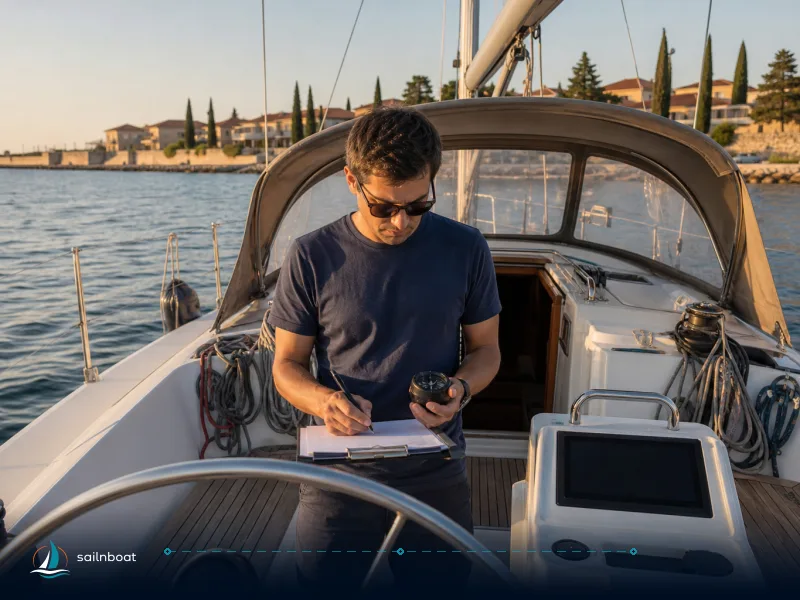
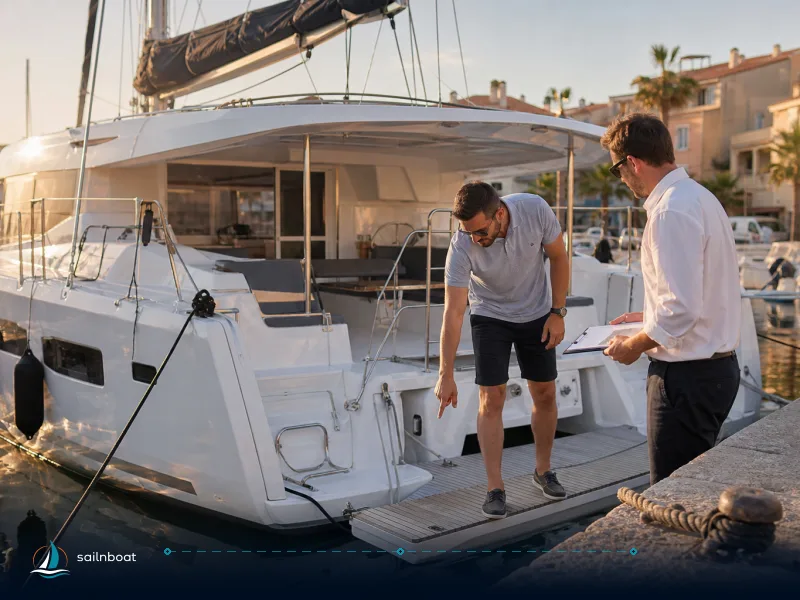
- Practical: on-water handling and competency checks (mooring, berthing, basic engine checks, man-overboard recovery and low-speed handling). Many providers run the practical the same day as the theory, but some split theory and practical across two dates.
- Typical course length: many courses are delivered in one practical day plus pre-course theory reading/study; where providers include an online theory module you may complete that in advance at your own pace. Provider schedules vary.
Typical provider fees and extra costs
- Provider fee range: commonly around AUD 300–750 depending on region, whether the course is boat-only or combined boat+PWC, and whether theory is included online or classroom. A combined boat+PWC package tends to sit at the top of the range. Providers publish sample prices in this band.
- Reassessment fees and extras: some providers charge for reassessments (example: a listed reassessment fee of AUD 100 at one provider), and extras such as additional training, public liability check-ins, or hire of personal protective equipment may apply. Factor these in if you’re short on prior experience.
Decision point: if you already have prior on-water experience, ask providers about Recognition of Prior Learning (RPL) — it can reduce the on-water training component and therefore the provider fee in many cases. Maritime Safety Queensland recognises RPL where appropriate.
Applying for a Marine Licence in Queensland
A clear step-by-step so you know what to bring and where you pay.
Required documents
- Your original statement of competency from a BoatSafe-accredited training organisation (valid for commonly six months from issue).
- Completed marine licence application form (F2334 or the version current at time of application).
- Proof of identity (a Queensland driver licence or other identity documents as required by Transport & Main Roads). If you use the Digital Licence app it can also be used to verify ID in some circumstances.
- Payment for the government licence fee (the RMDL fee was AUD 132.40 as at 1 July 2026). Provider course fees are paid separately to the training organisation.
Application process (practical flow)
- Complete BoatSafe training and pass the theory and practical assessments; receive your statement of competency.
- Complete the Marine Licence application form F2334 (available from Transport & Main Roads / customer service centres).
- Attend a Transport & Main Roads customer service centre or a QGAP office that provides marine licensing services. Bring your statement, ID and the licence fee.
- Pay the licence fee and receive a printed indicator receipt; the licence card or indicator appears in the mail or in the Digital Licence app depending on your existing Queensland licence status.
Timing: allow time for provider scheduling (practical days fill quickly in holiday season) and for travel to the centre. The statement of competency’s validity period typically requires you to apply reasonably promptly after training.
Licensed Operation vs. Skippered Charter: Cost Analysis
If you only plan occasional outings, weigh the one-off/annual costs of licensing and ownership against hiring a skipper or a skippered charter.
Comparison table (typical Australian dollars, illustrative examples)
| Item | Typical cost (AUD) | Notes |
|---|---|---|
| BoatSafe course (boat-only) | 300–500 | Provider-dependent; single-day practical models common. |
| BoatSafe course (boat + PWC) | 400–750 | Combined practicals raise the price. |
| Government RMDL application fee | 132.40 (as at 01/07/2026) | Paid at TMR customer service centre. |
| Typical total initial cost (training + fee) | 432.40–882.40 | Sum of the two ranges above. |
| Casual day boat hire (self-drive, small runabout) | ~350–700/day | Varies by region and boat type. |
| Skippered day charter (local) | ~300–1,500+/day | Day-skipper rates vary widely; examples in the Whitsundays show private day charters from ~AUD 600 for a small group to >1,300 for larger crewed fast boats. |
| Weekly skippered yacht charter (Whitsundays) | From ~3,500/week to much higher | Depends on yacht size, season and inclusions; skippered weekly charters can add several hundred to thousands AUD to the headline boat rate. |
How to read the table: if you need a licence once (to drive a family runabout several times a year) the straight arithmetic of course fee + licence fee may be cheaper than several skippered days; if you only expect one or two outings a year, hiring a skippered charter or a local day hire is often the lower cost and removes responsibility for maintenance, mooring and insurance. Use the per-day charter + skipper rates and multiply by your estimated use-days per year to compare against the initial licence cost plus likely annual ownership costs below.
Responsibilities and benefits
- Licensed operation: you control the boat and avoid paying daily skipper fees; but you take on insurance, mooring/berth fees, maintenance, antifoul, registration, and storage — these recurring costs can be several thousand AUD per year depending on boat size and location.
- Skippered charter: you avoid ownership overheads, gain local knowledge and save time, but pay higher per-day costs and usually a security bond, fuel and provisioning on top of the headline rate. Skippers are often hired at a daily rate and require food and a berth for overnight charters.
Budgeting Tips for Aspiring Boat Owners and Regular Skippers
You’ll make better decisions with a simple budget model and contingency plan.
Initial budget (one-off)
- Training + government fee: plan AUD 430–900 (rounded) to cover BoatSafe (provider variance) plus the TMR application. Use the provider’s published price list when booking.
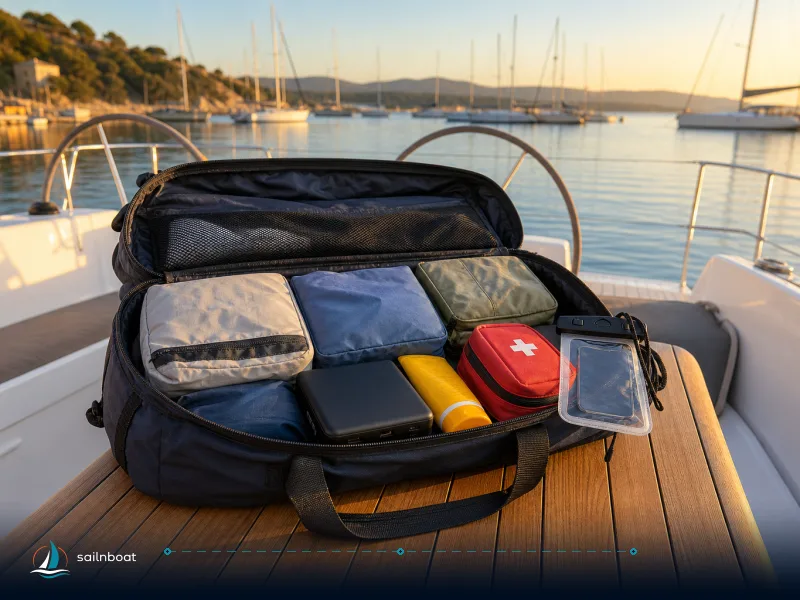
- Safety kit or mandatory equipment upgrades: add AUD 200–1,000 depending on what you already own (EPIRB, lifejackets to standard, flares, VHF if not included). Check the BoatSafe workbook for mandatory items.
Ongoing annual costs (rule-of-thumb)
- Mooring/berth/storage: wide range by location; casual visitor berths in regional marinas are sometimes ~AUD 50/night, annual marina pens for mid-size boats can run thousands to tens of thousands AUD depending on city and berth size. Use local marina schedules for precise numbers.
- Insurance, maintenance, antifoul, servicing: many owners budget 5–10% of the boat’s value per year for maintenance plus an insurance premium that can be hundreds to thousands AUD annually. For a small trailer boat your absolute running costs may sit in the low thousands per year; for harbour-kept yachts the bill is substantially higher.
- Fuel and consumables: fuel is usage-based; a plan that models your average hours and estimated litres per hour gives the best forecast.
Contingency and replacement planning
- Contingency fund: set aside a repair reserve (many owners aim for a minimum of AUD 2,000–5,000 per year for small boats or 5–10% of maintenance budgets for larger vessels) to avoid one-off shocks. This figure depends strongly on boat age, engine hours and planned usage.
- Scheduled maintenance calendar: keep an annual checklist (engine service, check batteries, antifoul as required, safety equipment expiry) and put those items on a dedicated monthly budget line.
Alternatives to full ownership
- Club membership or boat-share: spreads fixed costs across members and reduces per-person running costs. Good for those who want more days on the water without the full burden of ownership. Compare the annual share cost + per-use fees to your expected days afloat.
Verifying Official Fees and Regulations
Where to look and what to check before you pay.
Official channels
- Maritime Safety Queensland / Department of Transport and Main Roads — BoatSafe program information, BoatSafe accreditation details and the official list of approved training organisations and business rules. Check these pages for changes to training rules and provider obligations.
- Driver licensing fees and the official licence application — the government fee schedule (driver licensing fees) lists the recreational marine driver licence fee and the date the fee took effect (example: AUD 132.40 as at 1 July 2026). Use the current fee schedule when you apply.
- Service Queensland / Transport & Main Roads customer service centres — you pay the government licence fee at these offices and they can confirm whether the office handles marine licences. Ring ahead.
Staying informed
- Check fees on or just before booking training and before visiting a service centre — fee schedules are commonly updated on 1 July each financial year. Training provider prices and any advertised package deals change by operator and season.
- Subscribe to local marina newsletters or provider mailing lists if you plan to charter frequently — skippered-charter add-ons, seasonal discounts and visitor berth promotions appear regularly and affect your per-trip cost.
Final decision framework (quick): if you expect fewer than 4–6 days on the water per year, cost and convenience often favour hiring a skippered day charter or self-drive hire; if you expect regular weekend use or seasonal cruising, investing in BoatSafe training and getting your RMDL becomes more economical over time — but remember to model the annual fixed costs (berth, insurance, maintenance) into your decision.
Frequently Asked Questions
BoatSafe course fees are set by individual providers and commonly range from about AUD 300–750 depending on whether you do boat-only or a combined boat+PWC package; the Queensland government application fee for a recreational marine driver licence was AUD 132.40 (effective 1 July 2026).
Complete an approved BoatSafe course and get a statement of competency (valid six months), then submit form F2334 (marine licence application) with proof of identity and pay the licence fee at a Transport & Main Roads customer service centre or a QGAP office that handles marine licensing.
For infrequent use (a few days per year) skippered charters and day hires are usually cheaper; for regular seasonal use, licensing plus ownership or shared ownership becomes progressively more economical. Compare your annual days on water to the daily charter+skipper rate to decide.
Budget the one-off training and licence fee, plus recurring costs: marina or mooring rent, insurance, servicing, antifoul, fuel and a repair contingency; many owners use a rule of thumb of 5–10% of boat value per year for maintenance and set a separate contingency.
Use Maritime Safety Queensland / Department of Transport and Main Roads (BoatSafe pages and driver-licensing fees) and the Service Queensland customer service centres or app for licence payments and updates; provider prices remain separate.
Written by
Sailnboat Editorial
The Sailnboat editorial desk covers yacht and boat chartering worldwide — routes, bases, seasons, boat types, paperwork and the practical costs that decide a trip. We are a charter marketplace, not a boat owner or a local agency: what we sell is judgement and support, so our guides are written to help you make a decision, not to sell you a specific boat. Every guide is checked against live operator and marina data before it goes out.
Fact-checked against live operator and marina data, and published under our editorial standards. Last reviewed: .