A Week Afloat on the Canal du Midi: Homps to Carcassonne
A practical, day‑by‑day plan for a seven‑day cruise from Homps to Carcassonne on the Canal du Midi, with lock technique, mooring options and meal stops.

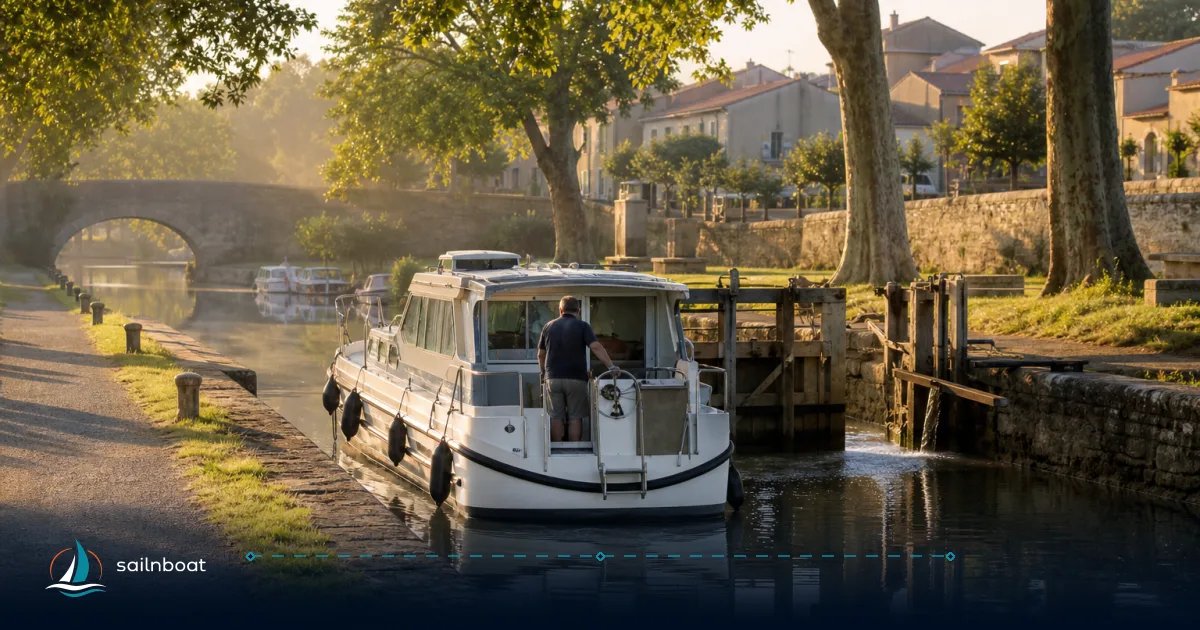
If you’re planning a week afloat between Homps and Carcassonne, the pace is determined by the locks, the mooring options, and how much time you want ashore. The canal route from Homps to Carcassonne is often described as a short stretch, but the actual one-way journey from Homps to Bram (via Carcassonne) typically covers around 65–70 canal kilometres and involves 18–20 locks, depending on mooring choices and how you count grouped locks. This is not a sprint: most crews cruise 2–4 hours per day, with the real decision being how to split up the locks, where to stop for meals, and how to balance time on the water with time in villages and at markets.
Daily Itinerary from Homps to Bram (via Carcassonne)
Carcassonne is not a charter base, so most one-way hires on this stretch start at Homps and finish at Port De Bram, passing through Carcassonne along the way. Expect a week-long passage with a gradual pace, one full day for Carcassonne, and manageable daily legs. The table below shows a realistic breakdown; actual daily distances and lock counts can vary slightly by exact mooring and lock groupings.
| Day | From | To | Canal distance (km) | Locks | Cruising time (h:mm) | Locks time (min) | Total underway |
|---|---|---|---|---|---|---|---|
| 1 | Homps | Le Somail | 12 | 2 | 1:30 | 24 | ~2:00 |
| 2 | Le Somail | Argens‑Minervois | 10 | 3 | 1:20 | 36 | ~2:00 |
| 3 | Argens‑Minervois | La Redorte | 7 | 2 | 0:56 | 24 | ~1:20 |
| 4 | La Redorte | Trèbes | 6 | 3 | 0:50 | 36 | ~1:25 |
| 5 | Trèbes | Carcassonne | 13 | 2 | 1:45 | 24 | ~2:10 |
| 6 | Carcassonne | Day ashore | — | — | — | — | Explore, markets |
| 7 | Carcassonne | Port De Bram | 18–20 | 4–5 | 2:30 | 48–60 | ~3:15 |
How the numbers add up:
- Total canal distance: ~66–70 km (Homps → Bram via Carcassonne; canal kilometres)
- Total locks: Typically 18–20, but can vary with mooring choices and lock groupings
- Typical daily cruising: 1–3 hours underway; longest leg is Carcassonne → Bram on the final day
- Lock time estimates: 12–18 minutes per lock for planning, but allow for delays at staircase locks or in high season
Navigating the Locks on the Canal du Midi
This stretch includes a mix of single, double, and staircase locks. Most are mechanised and managed by the VNF (Voies Navigables de France). Between Homps and Bram, expect to transit around 18–20 locks, but counts can shift slightly depending on where you moor and how lock groups are counted.
Lock routine:
- Approach: Reduce speed well before the lock. Assign at least two crew to lines.
- Securing: Use only bollards or cleats, never trees or posts. Place fenders both sides.
- Operation: Follow the éclusier’s instructions if present; at automatic locks, use the control panel. Charter bases supply a printed procedure.
- Inside: Keep lines taut but not jammed. Expect turbulence, especially in staircase locks.
Timing and queues:
- Estimate 12–18 minutes per lock in normal conditions, but expect longer waits in July–August or at complex multi-chamber locks.
- Staircase locks (multiple chambers) require more coordination; a second person ashore is useful.
Fees:
- Lock passage is free of charge for hire boats on the Canal du Midi. Mooring, water, and shore power are charged separately at most ports.
Safety:
- Keep inexperienced crew and children clear of lines and moving gates.
- Never jump from boat to bank.
- In summer, lock approaches can be congested—communicate with other crews and wait your turn.
Mooring Options in Homps, Carcassonne, and Bram
Homps (Port Minervois / Hire Base)
- Facilities: Water, electricity, showers, and a capitainerie. The hire base doubles as the main port for short-stay mooring. Overnight mooring is generally included if you book through the base.
- Fees: Expect moderate nightly mooring fees. Water and shore power are usually extra, either by meter or flat rate.
- Booking: In high season, reserve ahead if you need a berth with shore power.
Carcassonne (Port de Plaisance)
- Facilities: Full-service marina with water, electricity, showers, and managed berths. It’s a short walk or cycle to the medieval Cité.
- Fees: Nightly and weekly tariffs are posted by boat length. Water and electricity are often bundled or metered.
- Arrivals: If you arrive after hours, moor on the public quay and settle payment the following morning. Check with the capitainerie for up-to-date procedures.
Bram (Port De Bram)
- Facilities: Charter base with water, electricity, and handover facilities. Simple but functional for a final night or return.
- Booking: Notify your operator of your arrival in advance, especially during peak months. The port is straightforward to approach with space for overnight and handover.
Mooring cost breakdown:
| Mooring Type | Typical Fee Structure | Services Available |
|---|---|---|
| Locks | Free | — |
| Municipal port/pontoon | Nightly/weekly by length | Water, electricity, WC |
| Rural bank (unserviced) | Usually free | Rarely any |
| Private hire base (overnight) | Often included with booking | Full (at base) |
Note: In July and August, both official berths and informal canal-side moorings can fill by late afternoon. Arrive early or call ahead to secure a spot if you require shore power or water.
Dining Options Along the Canal
Along this section of the Canal du Midi, you’ll find a mix of canal-front restaurants, village bistros, and market stalls within walking or cycling distance of the water. Opening hours can be limited in small villages, especially outside April–October or on Mondays.
- Le Somail: Several canal-side restaurants (such as Comptoir Nature and L’Escale du Somail), a classic bookshop, and bakeries. Good for lunch or an afternoon break.
- Argens‑Minervois: La Guinguette serves simple Languedoc fare with canal views. There’s a small épicerie for basic groceries.
- Trèbes: The canal is lined with restaurants near the triple lock. Le Moulin de Trèbes is a popular dinner spot—book ahead in summer. Trèbes is a lively late-night stop.
Tips:
- Groups: Call ahead for groups or if you’ll arrive after 20:00.
- Payment: Most places accept cards, but carry cash for markets and small cafés.
- Markets: Carcassonne and Trèbes have weekly open-air markets, useful for fresh produce and provisioning.
Best Times to Cruise the Canal du Midi
- April–May / September–October: Pleasant weather, fewer boats, and local food festivals. Easier to find moorings and restaurant tables.
- July–August: Hot, busy, and high demand for berths. Locks can queue up, especially around Carcassonne. Book ahead for moorings and meals.
- Winter: Many stretches close for VNF maintenance or water management. Only a handful of hire bases and restaurants stay open off-season.
Practical Tips for Your Canal Journey
Pre-departure
- Briefing: Arrive at your base with enough time for a full handover. Most hire boats on the Canal du Midi are “license-free” for tourists, and bases give a lock-handling demonstration. Some larger or higher-powered boats may have different requirements—confirm with your charter operator.
- Fuel and pump-out: Not every stop has fuel or pump-out facilities. Fill tanks at Homps or Bram and check with staff about the next available point.
- Water and electricity: Rural moorings may not offer shore power or water. Plan to top up tanks before long stretches.
- Communications: Have a charged mobile phone and leave your itinerary with someone ashore. VHF is not required for most hire boats but can be helpful.
Mooring etiquette
- Use only provided bollards or cleats—never trees or signposts.
- Leave space for others and keep access clear for pedestrians.
- Respect informal time limits, especially in small villages.
Late-night mooring
- If you arrive after the capitainerie closes (especially at Trèbes or Carcassonne), use public quays or designated visitor berths. Secure your boat well and pay the next day.
- In summer, expect some foot traffic and noise near canal-front restaurants until late evening.
Trade-offs and Final Advice
The Homps–Carcassonne–Bram route is about how you want to balance your days: more time cruising and working locks, or more stops for meals and exploring ashore. The key trade-off is whether to push quickly to Carcassonne and spend extra time there, or spread out the locks and enjoy more village stops. For most crews, keeping daily cruising under three hours gives you the best balance of work and leisure.
Plan your Canal du Midi week for manageable cruising legs, comfortable nights in serviced ports, and plenty of canal-side meals. You’ll spend more time at the table or on the towpath than at the helm—just as most crews prefer. If you need help with timings, mooring options, or choosing a boat, reach out for advice.
Frequently Asked Questions
A practical week paces the 40 km one‑way route into short days (≈2–4 hours cruising) averaging 6–8 km/h and adding about 10–15 minutes per lock; the sample itinerary breaks 40 km and 13 locks into six short cruising legs and a day ashore in Carcassonne.
Most locks on the Canal du Midi are mechanised or staffed by VNF; hire companies brief you at handover; lock passage itself is not charged per ecluse for pleasure craft, but marina moorings and services carry fees.
Homps (Port Minervois / hire bases) offers water, electricity and showers with short‑stay fees typical in the low‑teens of EUR; Carcassonne’s Port de Plaisance publishes set daily and weekly tariffs (varies by boat length) and accepts reservations for peak season.
Le Somail (canal‑front cafés and Comptoir Nature), Argens‑Minervois (La Guinguette on the canal) and Trèbes (Le Moulin de Trèbes by the triple locks) are reliable canal‑side options for regional dishes and local wines.
April–May and September–October offer mild weather, fewer hire boats and good lock availability; July–August is busiest and you’ll encounter longer lock queues and higher mooring demand.
Written by
Sailnboat Editorial
The Sailnboat editorial desk covers yacht and boat chartering worldwide — routes, bases, seasons, boat types, paperwork and the practical costs that decide a trip. We are a charter marketplace, not a boat owner or a local agency: what we sell is judgement and support, so our guides are written to help you make a decision, not to sell you a specific boat. Every guide is checked against live operator and marina data before it goes out.
Fact-checked against live operator and marina data, and published under our editorial standards. Last reviewed: .