Best Anchorages in Mljet: Polače, Pomena & Hidden Coves
Clear, decision-ready anchoring advice for Polače, Pomena, Saplunara and Okuklje: permitted zones, typical depths, buoy rules and how to avoid fines while protecting Posidonia.

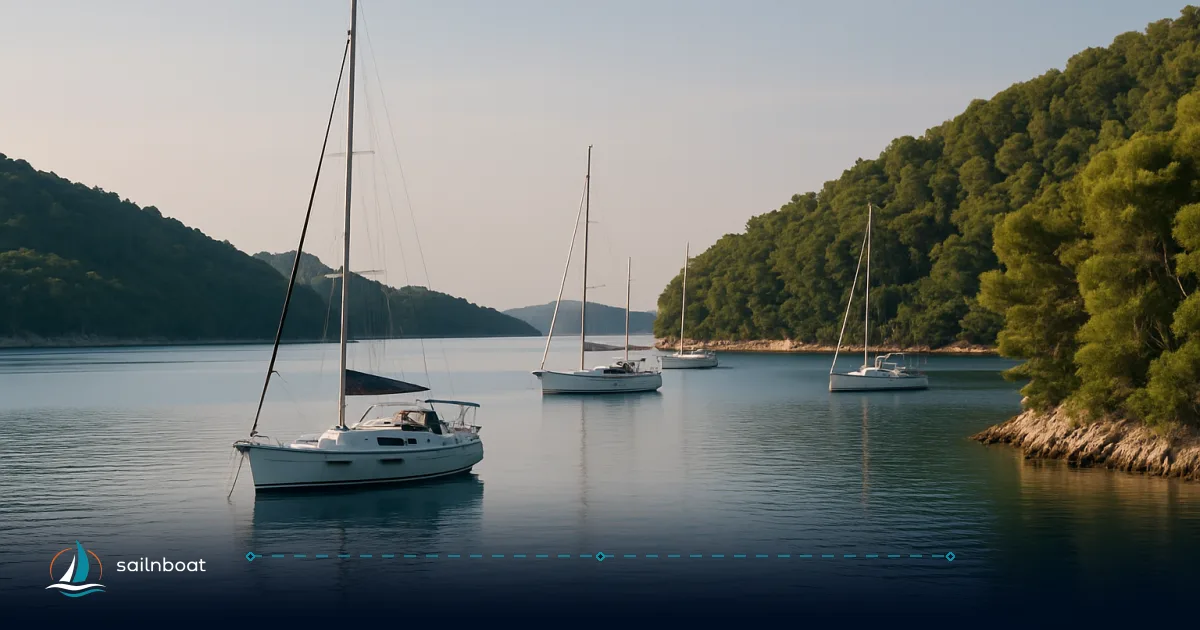
Mljet’s two permitted National Park anchorages — Polače and Pomena — are the practical starting point for any charter that wants to visit the lakes and monastery; outside the park you’ll find Saplunara and Okuklje, which offer freer anchoring and different shelter characteristics.
Overview of Mljet National Park Anchorages
Mljet National Park limits anchoring and mooring to designated areas to protect the lakes and marine habitat; the park’s visitor rules explicitly allow anchoring/berthing in Polače and Pomena while prohibiting indiscriminate anchoring elsewhere inside the park boundary. Rangers regularly patrol the park waters and will direct boats to the sanctioned mooring areas.
Key operational points
- Park entry is charged (per person or per-vessel models vary by park); Mljet commonly charges per person and the park ticket typically covers access to the lakes and the official overnight mooring/anchor areas. Pre-purchasing tickets often reduces the price.
- Inside the NP free anchoring is effectively replaced by mooring buoys or organised berths — expect to pay buoy/concession fees in high season and to be asked to use restaurant buoys that expect you to come ashore.
- Environmental rules are strict around Posidonia oceanica; the park and international conservation bodies emphasise permanent protection of these meadows and prohibit anchoring that damages them. Enforcement can include fines and being ordered to move.
Polače: The Main Anchorage
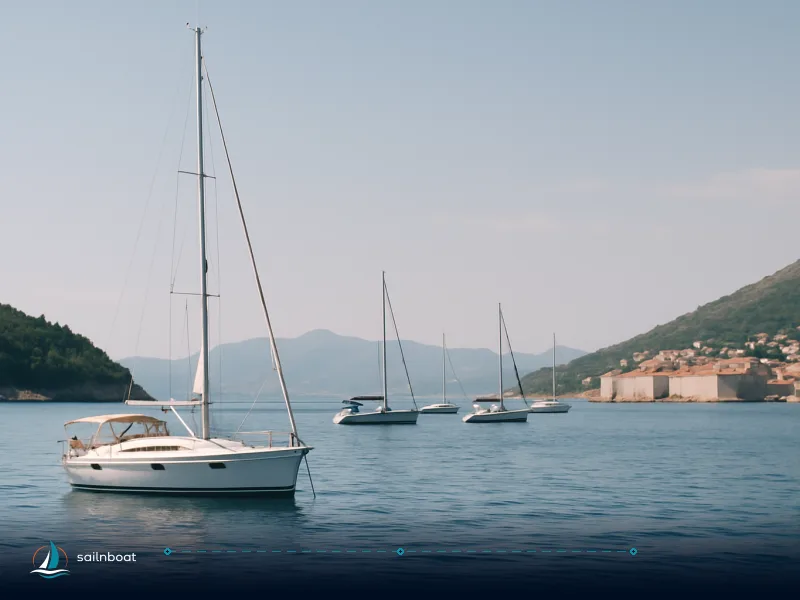
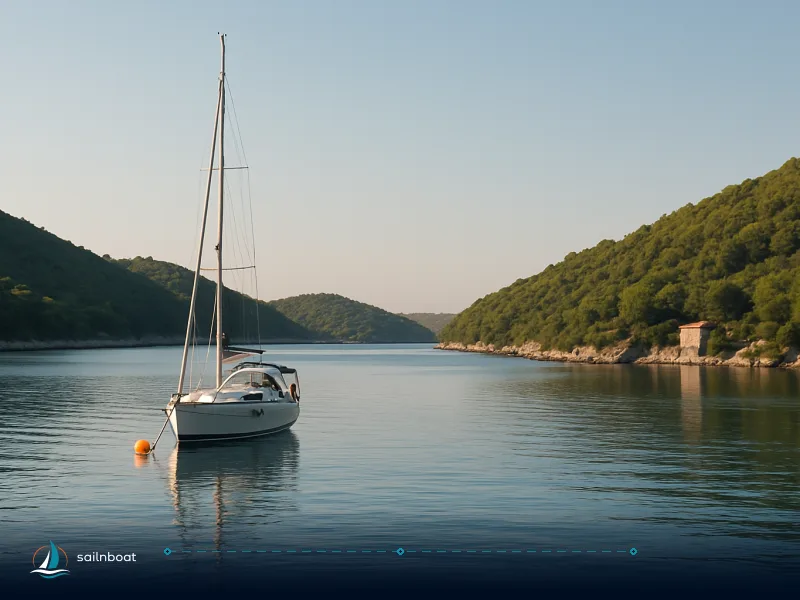
Polače is the park’s principal harbour for visiting yachts: a deep, well-sheltered inlet with a mixture of restaurant/quay berths and formal buoy fields that are used for overnight stays. It is the most convenient base for visiting Veliko Jezero and the St. Mary islet.
Mooring Buoy Requirements
- Mooring buoys are the standard overnight option in Polače; the park enforces use of designated buoys in many parts of the NP. Buoys may be run by concession holders (often local konobe/restaurants) or by the park; ownership and payment method varies by buoy. In July–August expect buoys to fill early — arrive before mid-afternoon to secure one.
- Fees: operators’ rates depend on boat length, season and whether a park ticket is bundled. Typical planning ranges for mooring buoys in Croatian popular bays are roughly €30–€100/night for a 10–14m yacht in high season; some buoy prices will include the park ticket or be offset if you dine ashore. Budget conservatively during peak weeks.
Depths and Holding Conditions
- Typical depths in Polače vary by position; guides often describe shallow to moderate depths, with sand/mud holding that sets well for anchors. Confirm specific depths with current charts for your chosen spot. Deeper water lies nearer the bay’s throat and quays. Use up‑to‑date charts; depths change with position.
- Practical anchoring: plan for 4:1–7:1 scope depending on conditions (some park guidance suggests a minimum 3:1 in light conditions and more in heavier winds), always snorkel to confirm the bottom before committing. If you take a buoy, be prepared to stern-to the quay where allowed (you may be expected to come ashore).
Pomena: A Convenient Stop
Pomena is the park’s western gateway and the location of the visitor centre and the boat shuttle to St Mary’s islet. It’s smaller and slightly more exposed than Polače, but it is an official NP mooring point and a useful alternative when Polače is full.
Anchoring Regulations
- Inside the National Park boundary the rule of thumb is: use designated buoys/berths in Pomena; free anchoring is generally not permitted in NP waters. Pay the park ticket and follow the park’s instructions on berths. Operators will check tickets on arrival.
- Buoys in Pomena are generally available but limited — many are run as concessions; the “konoba‑buoy-for-dinner” is common practice (call the restaurant or VHF ahead to reserve).
Depths and Holding Conditions
- Depths in Pomena vary by position; guides describe sand and mud bottom in the sheltered parts, with deeper water near the bay mouth. Confirm actual depths with up-to-date charts. Holding is typically good on sand/mud but check for Posidonia patches and place the anchor in visible sand. Expect slightly more chop under W/NW winds than in Polače.
- Practical tip: if the forecast shows strong NW or bora winds, favour Polače or move to Okuklje (outside the NP) for all-round shelter.
Saplunara: A Secluded Anchorage
Saplunara sits on Mljet’s far south-eastern tip and lies outside the National Park boundary — that means free anchoring on sand is permitted (subject to standard Croatian rules), but the bay is open to SE winds. It’s an excellent daytime stop or overnight in settled weather.
Permitted Areas and Fees
- Because Saplunara is outside the NP, there’s no NP buoy mandate or NP ticket for anchoring; standard national cruising and local mooring rules still apply (eNautička permit and local regulations as applicable). No park fee for visiting Saplunara itself.
Depths and Conditions
- Depths: sandy bottom gives excellent holding in the main beach bay, with depths and capacity varying by position. Confirm with charts and on-site observation; the bay accommodates a modest number of yachts. The exposure to S/SE (jugo) is the chief risk — a jugo can make the bay untenable quickly.
- Practical anchoring: anchor in mid‑bay over sand, use long scope (7:1 is a safe summer standard in 2–6m), snorkel to confirm no Posidonia, and be ready to leave if the forecast turns SE. Keep clear of any marked beach exclusion zones in high season.
Okuklje: A Hidden Gem
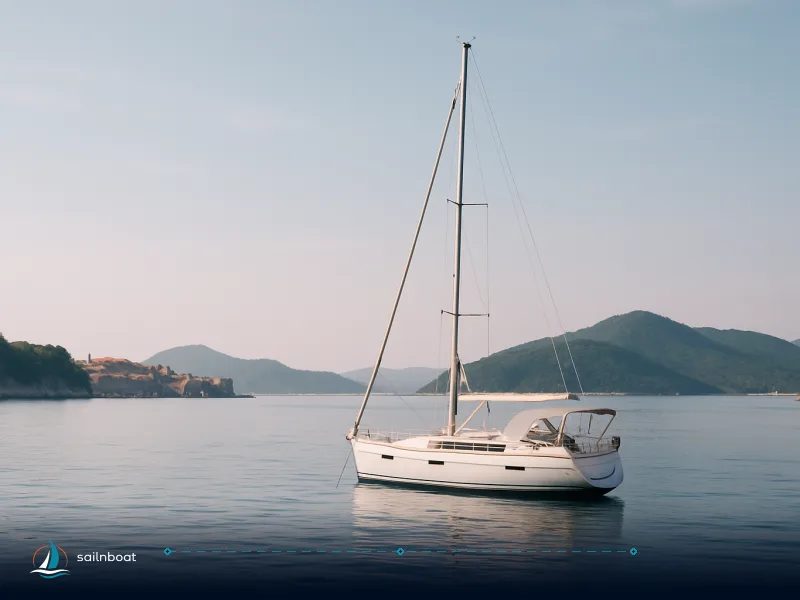
Okuklje is a nearly enclosed circular bay on the SE side of Mljet (outside or at the edge of the NP depending on where you cross the boundary); its narrow throat and bowl shape give exceptional shelter — a favourite storm hole for skippers.
Mooring and Anchoring Guidelines
- Okuklje offers free anchoring and some restaurant quays/buoys; services are minimal compared with Polače/Pomena so expect limited electricity or water. If you plan to use a restaurant buoy, call ahead. In stronger winds the bay’s narrow entrance filters swell well.
Depths and Holding Conditions
- Typical depths reported: 4–10m over sand/mud, with excellent holding and near‑complete shelter from most wind directions once inside. Check charts for local shallows at the entrance and approch slowly.
- Practical strategy: Okuklje is an excellent alternative if the NP buoys are full or if the forecast shows a developing jugo/bora quadrant that makes the NP headlands uncomfortable.
Comparison table — quick glance
| Anchorage | NP zone? | Typical depth (m) | Bottom / holding | Buoys/berths | Good for |
|---|---|---|---|---|---|
| Polače | Inside NP (official) | Varies by position | Sand/mud — good | Buoy fields & quays; buoys commonly mandatory | Lakes access, sheltered overnight in NP. |
| Pomena | Inside NP (official) | Varies by position | Sand/mud — good | Buoys & hotel quay; buoys commonly mandatory | Visitor centre, shuttle to St Mary’s, alternative NP base. |
| Saplunara | Outside NP | Varies by position | Sand — excellent | No NP buoys; free anchoring (seasonal exclusions) | Day stop, beach visits, family swimming (beware SE exposure). |
| Okuklje | Outside / edge of NP | ~4–10 | Sand/mud — excellent | Some konoba buoys/quays; also free spots | All‑weather shelter, storm hole. |
Practical Anchoring Tips
Avoiding fines and the right paperwork
- Buy Mljet park tickets or vessel/person permits before crossing the park boundary when possible — pre-purchase is usually cheaper and saves time at the quay. Mljet’s fees are typically charged per person in peak season (planning figures for recent seasons show adult ticket rates in the mid‑€20s to low‑€30s in high season). Rangers will check and can issue on‑the‑spot fines or higher in‑park rates for late purchases.
- Every foreign yacht should carry the Croatian cruising permit (eNautička) or the appropriate cruising vignette — charters normally handle this, but keep the documentation and crew list on board. Enforcement is routine in the region.
Protecting Posidonia meadows
- Posidonia meadows are protected under national and international rules; anchoring on them damages habitat that can take decades to recover. Always:
- visually confirm sand patches before dropping the hook,
- snorkel to check the anchor has set on clean sand,
- use mooring buoys where provided,
- avoid dragging anchor or using excessive scope that swings across beds.
- Penalties vary by case and jurisdiction; they can reach several hundred to several thousand euros depending on the damage and local enforcement. Don’t treat the penalty as the only deterrent — the ecological loss is permanent.
Anchor technique and safety
- Scope: plan 4:1–7:1 scope in sheltered summer conditions; longer scope is prudent in wind or current. The park guidance and several professional cruising guides recommend longer scope for deeper sites.
- Set and verify: reverse under power to set the anchor solidly, then snorkel or use the chartplotter anchor‑alarm to confirm no creep; check again after 30 minutes and after any forecast wind shift.
- Stern lines/shore ties: when stern‑to on a quay or using a long shore line, make sure you have adequate fendering and a crew on the point to secure the line quickly; many konobas expect you to go ashore and may ask for a dinner reservation if using a buoy.
Seasonality and booking
- July–August: busiest — buoys and quays fill early; arriving before mid‑afternoon increases your chance of securing a buoy. Consider Pomena as a backup to Polače or plan Okuklje/Saplunara outside NP for freer anchoring.
- Shoulder season (May–June, Sept): quieter, easier to find buoys and swim spots; weather is typically favourable and park fees may be lower.
Final checklist before you drop the hook
- Park tickets/vignette: purchased or onboard for all crew.
- Buoy availability: call the konoba or park office on VHF on approach if you intend to use a buoy.
- Chart & depth check: confirm depths with current charts for your chosen position.
- Bottom check: snorkel to verify sand/no Posidonia before committing.
- Scope & set: deploy 4:1–7:1 scope depending on depth and conditions; double‑check anchor holding after setting.
Plan your route and paperwork before you cross the park boundary, arrive early in high season, and favour moorings or outside-NP coves if you want simpler, cheaper overnighting.
Plan your anchorage route in Mljet National Park today.
Frequently Asked Questions
Anchoring inside Mljet NP is limited to designated locations (notably Polače and Pomena); free anchoring across the lakes and park bays is not permitted and mooring buoys are commonly compulsory. Park tickets and vessel permits apply.
The primary NP anchorages are Polače and Pomena; outside the park consider Saplunara (SE tip) and Okuklje (sheltered bay) for calmer conditions or free anchoring.
Typical depths — Polače ~3–15m (mud/sand, generally good holding), Pomena ~3–7m (sand/mud, good holding), Saplunara 2–6m (sandy, excellent holding), Okuklje 4–10m (sand/mud, excellent shelter). Depths vary by position; consult current charts.
Buy the correct park/vessel tickets before entry where possible, use only designated mooring buoys in the NP, avoid anchoring on Posidonia meadows, and follow park rules on waste and sewage.
Mooring buoys are widely used and often mandatory inside the park; buoys may be managed by restaurants or concessionaires, and fees (by boat length/season) commonly apply and sometimes include the park ticket.
Anchor only on visible sand patches, snorkel to verify the seabed before setting, use adequate scope, avoid dragging, and use permanent moorings where provided.
Written by
Sailnboat Editorial
The Sailnboat editorial desk covers yacht and boat chartering worldwide — routes, bases, seasons, boat types, paperwork and the practical costs that decide a trip. We are a charter marketplace, not a boat owner or a local agency: what we sell is judgement and support, so our guides are written to help you make a decision, not to sell you a specific boat. Every guide is checked against live operator and marina data before it goes out.
Fact-checked against live operator and marina data, and published under our editorial standards. Last reviewed: .