Best Sailing Routes for Beginners in the Caribbean
Three beginner-friendly Caribbean routes — a 7‑day BVI loop, a 10–14 day Grenadines circuit and a 7‑day Martinique–St. Lucia loop — with distances, timings and practical safety and provisioning advice.

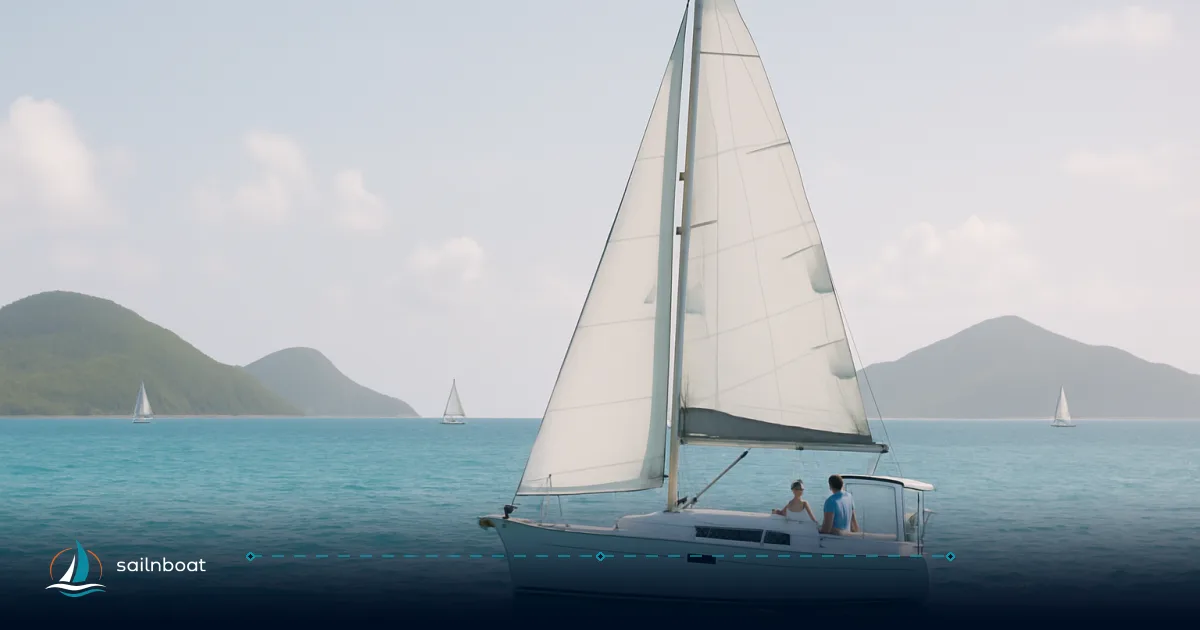
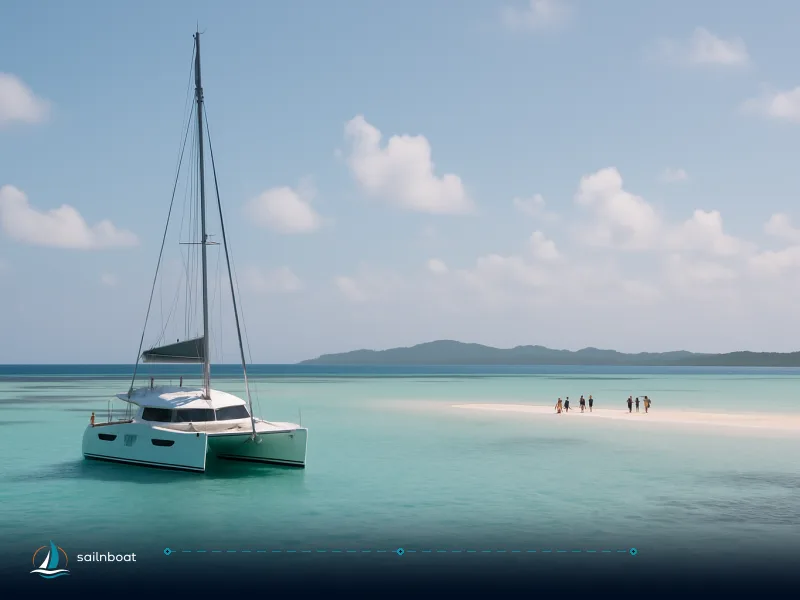
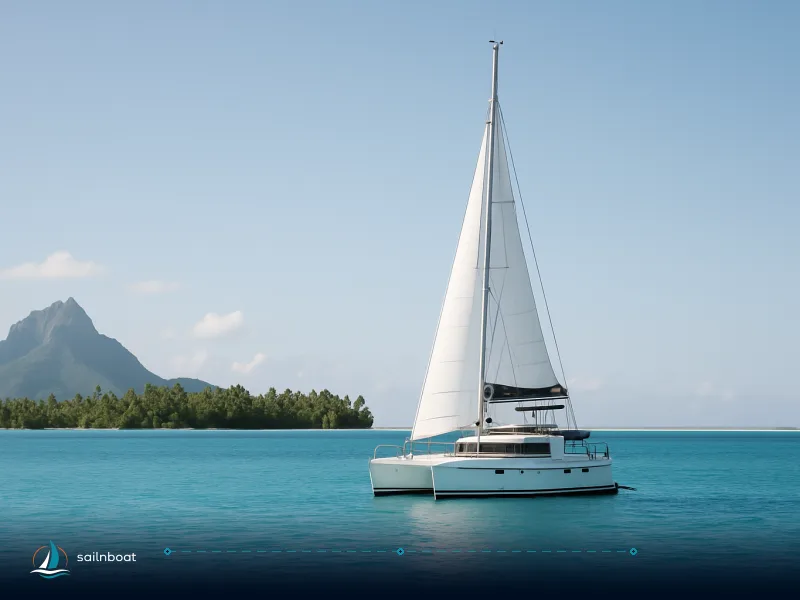
Choose island chains where you can sail short daily hops and find protected moorings: the British Virgin Islands, the Grenadines, and the Martinique–St. Lucia loop consistently rank as the most beginner-friendly sailing routes in the Caribbean. These areas offer passages of 5–20 nautical miles per day, reliable trade winds, and well-marked anchorages. Here you can practice sail handling, anchoring, and navigation with the reassurance of nearby support and plenty of safe overnight options. Below, you’ll find operational itineraries, typical distances and sail times, calibrated fee examples, and the key checks you’ll need to plan your first Caribbean charter with confidence.
Caribbean Sailing Routes for Beginners: The Key Options
If you’re new to Caribbean sailing, your main decision is which island group suits your crew’s comfort with navigation, daily distances, and support infrastructure. The BVI, the Grenadines, and the Martinique–St. Lucia corridor are the three most popular for first-timers. Each offers a different mix of passage lengths, mooring options, and shore facilities.
7-Day Itinerary in the British Virgin Islands
The BVI is the region’s classic beginner charter area. Expect short legs, steady easterly trade winds, and an extensive mooring-buoy system at many popular stops, which means you can often avoid anchoring on coral. Most daily passages are under 20 NM, so you spend more time sailing and less time managing fatigue or complex navigation.
Day-by-Day Breakdown
| Day | Route | Distance (NM) | Approx. sail time (monohull 5–7 kt / cat 7–9 kt) | Overnight / notes |
|---|---|---|---|---|
| 1 | Tortola (Road Town / base) → Jost Van Dyke (White Bay / Great Harbour) | 10 | 1.5–2.0 h (mono) / 1.0–1.5 h (cat) | Moor in The Bight or pick up mooring at White Bay; popular beach bars. |
| 2 | Jost Van Dyke → Cooper Island Beach Club | 12 | 1.75–2.5 h / 1.25–1.75 h | Small marina/mooring at Cooper Island; good for provisioning and snorkel. |
| 3 | Cooper Island → The Baths (Virgin Gorda; day visit) | 5 | 0.75–1.0 h / 0.5–0.75 h | Day-use moorings only at The Baths. Plan shore time to explore the rocks. |
| 4 | The Baths → Virgin Gorda (Spanish Town / North Sound options) | 6 | 0.9–1.2 h / 0.7–0.9 h | Overnight in Spanish Town/North Sound; both offer protected anchorages. |
| 5 | Virgin Gorda → Anegada (Setting Point / Loblolly Bay) | 15 | 2.0–3.0 h / 1.5–2.25 h | Open water leg; Anegada is a shallow atoll—use marked channels, watch depths. |
| 6 | Anegada → Cane Garden Bay (Tortola north coast) | 18 | 2.5–3.5 h / 2.0–2.5 h | Popular anchorage, good for swimming and crew training. |
| 7 | Cane Garden Bay → Tortola (return to base) | 8 | 1.0–1.5 h / 0.9–1.2 h | Morning sail back; complete return checks with base. |
Total distance: 74 NM for this loop. Most local 7-day itineraries fall in the 70–110 NM range, depending on anchorages. If a leg feels long for your crew, you can break it up with stops at Norman or Peter Island.
Practical notes
- Moorings and park buoys: The Baths and other BVI National Parks offer day-use moorings only (overnight stays generally not allowed at park buoys). Plan your overnight anchorage accordingly. Mooring buoys typically cost €25–35 per night for a 40–45 ft yacht, but exact rates can vary by location and season—confirm at each stop.
- Navigation: Anegada is especially shallow (approaches less than 2 m in places). Enter via the marked channel and post a bow lookout.
- Customs and clearance: If arriving from abroad, allow time for customs/immigration at Road Town or West End. Fees and processing times vary; environmental levies in the BVI are around US$10 per person, but total clearance costs and timing can differ—ask your charter base for current details.
Exploring the Grenadines: A 10–14 Day Route
The Grenadines form a linear chain that lets you sail from St Vincent southward, with each island offering a new anchorage and character. Start at Blue Lagoon or Young Island Cut on St Vincent—these are the main charter bases for the region.
Key Stops and Distances
| Leg | Route | Distance (NM) | Typical notes |
|---|---|---|---|
| 1 | St Vincent (Blue Lagoon / Young Island Cut) → Bequia (Port Elizabeth) | 9 | Easy first hop; Bequia has good provisioning and lively anchorage. |
| 2 | Bequia → Mustique (Britannia Bay) | 8–14 | Short run; Mustique is exclusive, moorings are limited. |
| 3 | Mustique → Canouan | 12–15 | Quiet harbours, check berth availability in high season. |
| 4 | Canouan → Tobago Cays | 10–12 | Marine park, mooring buoys, excellent snorkeling. |
| 5 | Tobago Cays → Mayreau | 4–6 | Salt Whistle Bay is a classic beach anchorage. |
| 6 | Mayreau → Union Island (Clifton) | 9 | Union offers small harbours and lively shore scene. |
| 7 | Union Island → Carriacou (or south toward Grenada) | 12–35 | Longer leg, can be split; distance varies by final stop. |
Total distance: The core Bequia–Carriacou chain usually totals 60–70 NM, depending on your anchorages. Allow at least two days in the Tobago Cays for snorkeling and beach time.
Practical notes
- Mooring and park fees: Tobago Cays Marine Park charges EC$60 per boat per 24 hours (about €20–25) and EC$15 per person per day (about €5–7). These fees are collected in cash by park rangers—rates can change, so check current fees with your base or upon arrival.
- Customs and clearance: You will clear out of St Vincent before heading south and into Grenada at Carriacou if continuing. Clearance fees and processes vary by island—expect a range of €10–30 per person, but always confirm locally as requirements and costs can change, especially in busy periods.
- Fuel and supplies: Not all cays have fuel. Top up in Bequia, Union Island, or Carriacou. Diesel prices are subject to change and can differ between islands; check with local marinas for current rates before departure.
- Provisioning: Bequia and Union Island have the best markets and supply options for re-stocking. Choice and prices fluctuate with the season.
Martinique–St. Lucia Loop: A 7-Day Sailing Adventure
This route links the French provisioning hub of Martinique with St Lucia’s harbours and the iconic Pitons. It’s a good choice for those who want a mix of easy coastal sailing and reliable marina facilities.
Daily Sailing Plan
| Day | Route | Distance (NM) | Approx. sail time (mono / cat) | Overnight / notes |
|---|---|---|---|---|
| 1 | Fort‑de‑France → Les Anses‑d’Arlet | 7–10 | 1.0–2.0 h / 0.8–1.25 h | Easy coastal hop, good snorkeling. |
| 2 | Les Anses‑d’Arlet → Sainte‑Luce | 8 | 1.25–1.6 h / 0.9–1.15 h | Seaside towns, fresh fish. |
| 3 | Sainte‑Luce → Soufrière (The Pitons) | 12 | 1.75–2.5 h / 1.3–1.7 h | Arrive early for mooring, visit the Pitons. |
| 4 | Soufrière → Rodney Bay (north St Lucia) | 15 | 2.0–3.0 h / 1.6–2.0 h | Main yachting hub for provisioning and customs. |
| 5 | Rodney Bay → Marigot Bay | 10–14 | 1.5–2.5 h / 1.2–1.8 h | Narrow, sheltered bay, marina moorings advised. |
| 6 | Marigot Bay → Castries | 6 | 1.0–1.5 h / 0.7–1.0 h | Quick hop for supplies and exploring the capital. |
| 7 | Castries → Fort‑de‑France (return) | 12 | 1.5–3.0 h | Final passage back to base, allow time for check-out. |
Total distance: 60–70 NM, depending on anchorages. Coastal winds and currents can affect times, and gusts near the Pitons are common.
Practical notes
- Moorings: Marigot Bay and Soufrière use mooring buoys. Fees vary by season and vessel size—expect to pay a moderate nightly fee (often in the €20–30 range for a 40–45 ft yacht), but always confirm with the marina or local authorities as prices can change.
- Customs: Martinique and St Lucia are separate jurisdictions; clear in and out at your first and last port. Fees typically range from €10–20 per person, but requirements and costs can vary.
- Fuel: Best availability in Fort-de-France, Le Marin, Rodney Bay, and Marigot Bay. Prices fluctuate—ask marinas for current rates before departure.
Choosing Between Monohull and Catamaran for Beginners
Your choice between a monohull and a catamaran will shape your experience, especially as a first-time Caribbean charterer. Here’s a quick comparison:
| Vessel Type | Typical draft | Stability | Living space | Ease of mooring | Pros | Cons |
|---|---|---|---|---|---|---|
| Monohull | 1.8–2.2 m | Heels under sail | Less than cat | Easier in tight spaces | Classic sailing feel, upwind performance | More rolling at anchor, less space |
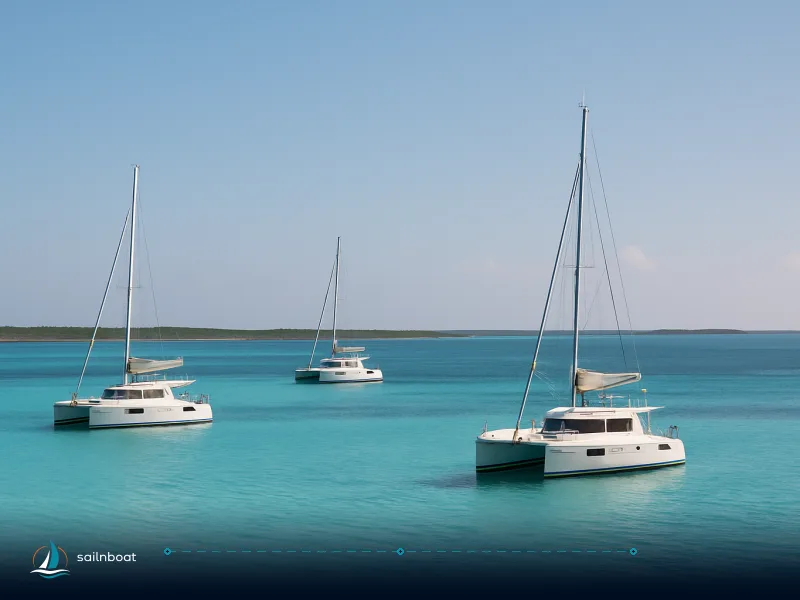
| Catamaran | 1.0–1.5 m | Level, stable | More deck and cabin space | Needs more mooring/anchoring room | Shallow draft for beach access, stable platform | Higher mooring fees, more windage, can be awkward in crowded marinas |
For beginner crews, a catamaran offers more space, a stable ride, and shallower draft for beach approaches. However, monohulls are often easier to handle in tight marinas and can be less expensive to moor.
Seasonal Weather Patterns and Best Months for Each Route
- Trade winds: The Caribbean’s prevailing easterly trade winds are strongest December–April, offering steady conditions for beginners. Expect 15–25 knots most days, with the most reliable weather from mid-December through early June.
- Hurricane season: Runs June 1 to November 30. Most charter operators restrict bookings in August–October due to higher storm risk. If you sail during this period, have a contingency plan and stay in daily contact with your charter base.
- Rainfall: The wettest months are typically July–November, with squalls possible at any time. The driest, sunniest conditions are December–April—these are also the busiest and most expensive months.
- Best months for beginners: December through April offers the most predictable sailing and the lowest risk of tropical storms.
Charter Requirements for Beginners
Before booking your first Caribbean charter, check the following requirements:
Licenses and Qualifications
- ICC (International Certificate of Competence): Widely accepted by charter companies in the Caribbean, though not legally required in every country. Many bases will accept an RYA Day Skipper or equivalent practical experience. It is common for the skipper to be asked for a sailing CV or logbook.
- VHF/SRC certificate: Many operators, especially in the Eastern Caribbean, prefer at least one crew member with a VHF (Short Range Certificate) or equivalent.
- Experience: Most charter companies expect the skipper to have skippered a similar-sized yacht on at least one previous trip, or to have logged 200–300 NM as skipper or first mate.
- Insurance: Third-party liability insurance is standard. Many operators offer or require a refundable security deposit (often €2,000–4,000) or a non-refundable damage waiver (typically €250–500 for a week). Insurance options and requirements differ—review your contract and clarify with your charter provider before departure.
Check-Out Procedures
- Briefing: You’ll get a chart and vessel briefing, including a check of safety gear, engine, sails, and systems.
- Inventory check: The base will walk you through the equipment list; note any missing or damaged items before departure.
- Security deposit: Paid by card or cash; refunded after a clean return and inspection.
Safety Tips for Beginner Sailors in the Caribbean
Key Safety Considerations
- Weather and seasons: The Atlantic hurricane season runs June 1 to November 30. Most charters avoid August–October, when storm risk is highest. If you must sail during this window, have a hurricane plan: know the nearest hurricane holes (e.g., North Sound, Grenada’s inner harbours), stay in daily contact with your base, and be prepared to alter course or return to port at short notice.
- If caught by a tropical system: Seek shelter in a recognised hurricane hole, secure all loose gear, double up mooring lines, and monitor VHF Ch. 16 for Coast Guard updates. Follow base instructions and do not attempt to outrun a storm.
- Moorings vs anchoring: Use park moorings where provided (e.g., The Baths, Tobago Cays) to protect coral. Mooring fees in the Caribbean typically range from €15–35 per night, but always check local rates and pay in cash if requested.
- Passage planning: File a float plan with someone ashore. For open-water legs (e.g., Anegada, St Lucia–Bequia), check the weather and plan for daylight arrivals.
- Anchoring drills: Practice setting and retrieving your anchor in a quiet bay before attempting crowded or reef-fringed spots. Carry a snubber or bridle for mooring lines.
- Emergency contacts: VHF Ch. 16 is monitored by the local Coast Guard in all major Caribbean islands. In the BVI, dial 999 or 911 for emergencies; in St Vincent and the Grenadines, use 999; in Martinique and St Lucia, 112 or 999. Store these numbers and VHF procedures in your cockpit.
- Medical and emergency access: In the event of injury or illness, your first call should be to the charter base and local Coast Guard. Most islands have clinics and hospitals in main towns, but access can be slow from remote anchorages. Carry a well-stocked first-aid kit and basic medical supplies.
- Safety kit: Ensure lifejackets for each crew, throwable flotation, VHF radio (preferably with DSC), EPIRB or PLB, a basic tool kit, spare lines, and a stocked first-aid kit. For night passages, use safety harnesses and clip points.
Essential Provisioning Tips for a Week-Long Caribbean Sailing Trip
- Drinking and onboard water: Plan for 2–3 L of bottled drinking water per person per day, plus additional for cooking and washing. Without a watermaker, expect to top up at marinas or carry jerry cans. Water prices typically range from €0.50–1.00 per litre at marinas, but local rates can vary—confirm before departure.
- Food and fridge space: Plan meals by day, using UHT/long-life items where refrigeration is limited. Prioritise fresh produce for the first two days; use root vegetables and sealed proteins for later. Most islands have small groceries, but choice is best at main bases.
- Fuel and diesel: Check your tank before departure. Diesel is not available on every cay—top up in main harbours (Bequia, Union, Rodney Bay, Fort-de-France). Prices fluctuate, so ask at the marina for the current rate.
- Cash and payments: Small islands often prefer cash for mooring fees and local vendors. Bring a mix of local currency and cards. Park mooring fees (e.g., Tobago Cays) are usually collected by rangers in cash.
- Provisioning services: Many bases offer provisioning delivery to your boat if you order in advance, saving time at check-in. Confirm details and cut-off times with your charter company.
Must-Visit Spots for Novice Sailors in the Caribbean
- The Baths, Virgin Gorda (BVI): Day-use moorings only, with easy dinghy access to granite rock formations and beaches. Arrive early, as mooring buoys fill up by mid-morning, especially in high season.
- Tobago Cays (Grenadines): Marine park with mooring buoys, shallow reefs, and excellent snorkeling. The anchorage is exposed in some conditions; plan to stay at least one full day and confirm park fee collection procedures on arrival.
- Jost Van Dyke (White Bay): Calm anchorage with classic beach bars and lively shore scene. White Bay is popular for day stops; overnight options include Great Harbour, which is better protected.
- Rodney Bay and Marigot Bay (St Lucia): Rodney Bay offers a full-service marina, good provisioning, and easy customs clearance. Marigot Bay is a narrow, sheltered inlet with marina moorings—ideal for a scenic overnight and access to restaurants and hiking trails.
- Soufrière Bay & the Pitons (St Lucia): Secure a mooring near the dramatic volcanic peaks. Local guides can assist with mooring lines. Take a shore trip to rainforest trails and volcanic springs.
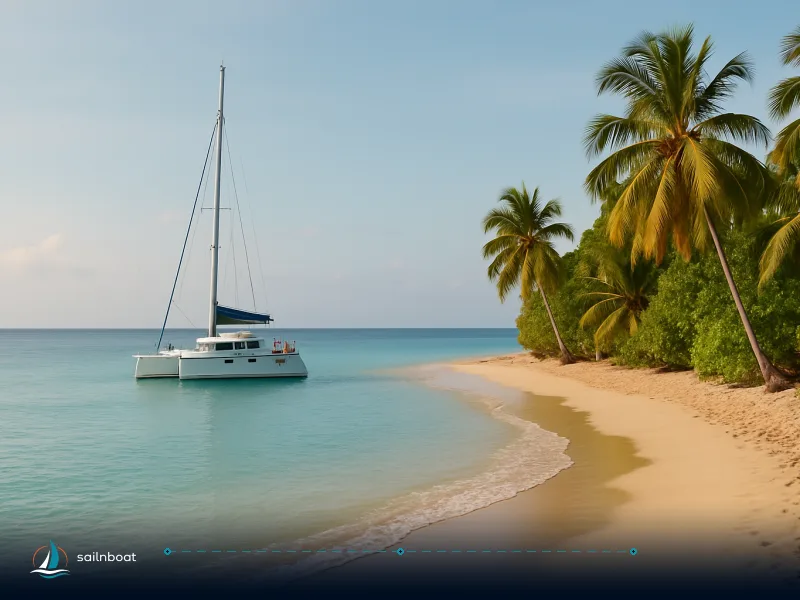
- Alternative stops: For the BVI, Norman Island offers snorkeling caves and protected anchorage. In the Grenadines, Salt Whistle Bay on Mayreau is a classic palm-fringed anchorage. In Martinique, Les Anses-d’Arlet offers calm waters and good snorkeling for beginners.
Route Comparison Table
| Route | Typical duration | Total NM (example) | Best for | Difficulty |
|---|---|---|---|---|
| BVI 7‑day loop | 7 days | ~74 | Short hops, many day moorings, easy sailing practice | Beginner (short passages, protected waters) |
| Grenadines 10–14 day | 10–14 days | ~60–70 (core chain) | Longer chain cruising, Tobago Cays snorkel days | Beginner→Intermediate (longer open legs possible) |
| Martinique–St. Lucia loop | 7 days | ~60–70 | French provisioning + St Lucia scenery | Beginner (coastal navigation, gusts near peaks) |
Final Checklist Before You Cast Off
- Review the five-day weather forecast and official tropical outlook (hurricane season: June 1–Nov 30).
- Confirm mooring/park fees for your planned stops and carry small cash for collection points.
- Run through a mooring pickup and anchor-setting drill with your crew before reaching your first bay.
- Provision drinking water (2–3 L/person/day), basic spares, and a small tool kit; consider a provisioning delivery to save time.
- Store emergency contacts (local Coast Guard, VHF Ch. 16) and procedures in the cockpit.
- Double-check your insurance coverage and understand what is included in your security deposit or damage waiver.
Your first Caribbean charter is about balancing comfort, safety, and adventure. With short passages, reliable winds, and plenty of support ashore, these routes let you focus on building skill and enjoying the rhythm of island sailing. Confirm all details locally before departure, and don’t hesitate to ask your charter base for up-to-date advice—they’re there to help you succeed.
Frequently Asked Questions
Focus on short‑hop, sheltered island chains: the British Virgin Islands for day‑sail loops, the Grenadines for an easy multi‑day chain, and the Martinique–St. Lucia loop for French/English island hopping.
Use a Tortola round trip that limits daily legs to 5–20 NM, stage through Jost Van Dyke, Cooper Island, The Baths (Virgin Gorda), Anegada and Cane Garden Bay, and allow relaxation time ashore.
Key stops: St Vincent (clearance), Bequia, Mustique, Canouan, Tobago Cays, Mayreau, Union Island and Carriacou — plan several snorkel days in the Cays.
Monitor trade winds and tropical advisories, use park moorings rather than anchoring on reefs, file a float plan, and carry basic safety kit (life jackets, throwable, flares, VHF, repair kit).
The Baths (Virgin Gorda), Tobago Cays, Jost Van Dyke (White Bay/Soggy Dollar), Rodney Bay and Soufrière (the Pitons) are high‑value stops that are accessible and sail‑friendly for beginners.
Written by
Sailnboat Editorial
The Sailnboat editorial desk covers yacht and boat chartering worldwide — routes, bases, seasons, boat types, paperwork and the practical costs that decide a trip. We are a charter marketplace, not a boat owner or a local agency: what we sell is judgement and support, so our guides are written to help you make a decision, not to sell you a specific boat. Every guide is checked against live operator and marina data before it goes out.
Fact-checked against live operator and marina data, and published under our editorial standards. Last reviewed: .